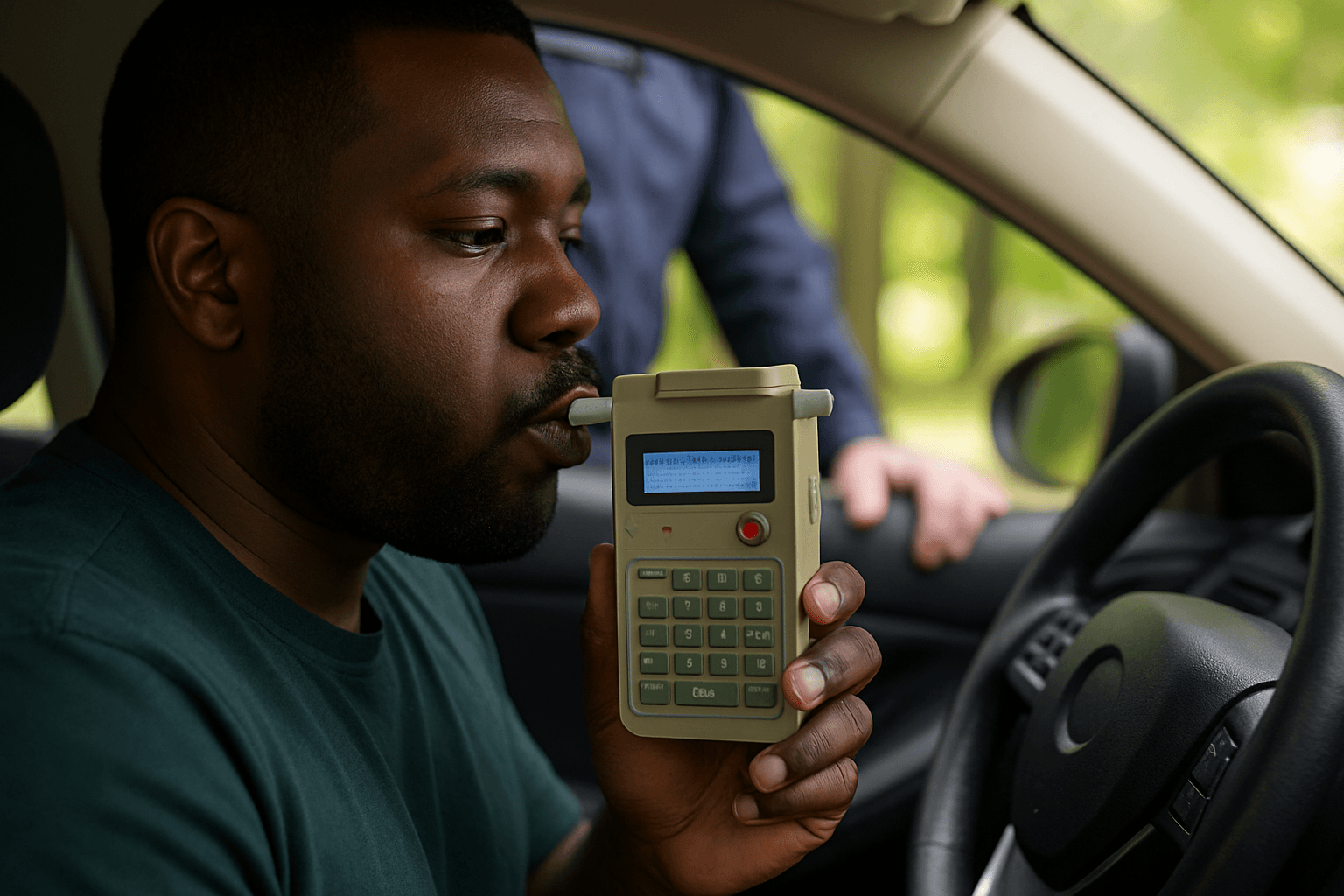
West Virginia's Alcohol Test and Lock Program (ATLP) is the only route to restricted driving after DUI suspension. The DMV administers eligibility after a mandatory hard suspension, not the court.
Who Controls Restricted License Eligibility in West Virginia
The West Virginia Division of Motor Vehicles administers restricted license eligibility through the Alcohol Test and Lock Program (ATLP), not the circuit court that handles your criminal DUI case. This administrative separation confuses most first-time applicants: your criminal attorney can negotiate plea terms, but the DMV controls when and whether you qualify for restricted driving privileges.
West Virginia imposes two parallel DUI suspensions. The administrative revocation begins the day the DMV receives notice of your arrest or refusal under WV Code §17C-5A. The criminal suspension begins after conviction. Both suspensions run independently. ATLP eligibility applies only to the administrative suspension, and approval does not terminate the criminal suspension. If your criminal suspension is longer, you remain ineligible to drive even after ATLP approval until both periods resolve.
For first-offense DUI, the administrative revocation carries a mandatory hard suspension period before ATLP eligibility opens. WV Code §17C-5A-3a sets the floor at approximately 15 days for first offense, but this period varies by offense tier and blood alcohol content. The DMV will not process an ATLP application until the hard suspension expires, regardless of what your attorney negotiates in criminal court.
What the ATLP Restricted License Permits You to Drive For
ATLP approval grants defined-route restricted driving between your home and specific approved destinations: employment, medical appointments, educational institutions, and court-ordered obligations including DUI education classes. The DMV specifies permissible destinations in the approval letter. Routes are not negotiable after approval.
Time restrictions do not appear in WV statute, but the DMV typically limits ATLP driving to daylight or business hours depending on your employment schedule. If you work third shift, document your schedule with employer verification on the application. Missing this detail delays approval or results in restrictions that make compliance impossible.
Recreational driving, errands, social visits, and any destination not listed in the approval letter violate ATLP terms. A single violation triggers immediate revocation without hearing. The DMV does not issue warnings. If your circumstances change after approval (new job, different address, medical provider switch), you must file an amendment request before driving the new route.
Compare car insurance rates in your state
Get quotes from licensed carriers — no obligation, no spam, results in minutes.
Get Your Free Quote✓ No Obligation Required✓ Licensed Carriers Only✓ Available Nationwide✓ Free to Compare
Ignition Interlock Device Installation and Compliance Requirements
ATLP approval is conditional on ignition interlock device (IID) installation before you resume any driving. WV Code §17C-5A mandates IID for all post-DUI restricted and reinstated licenses. You cannot drive to the installation appointment under ATLP authority; arrange transportation to the service provider or request mobile installation.
The IID service provider reports directly to the DMV. Every failed startup attempt, every rolling retest failure, every missed calibration appointment appears in the DMV compliance file. Three failed startup attempts in a 30-day period or one missed calibration triggers an administrative review. The DMV will revoke ATLP privileges without advance notice if the compliance report shows a pattern of violations.
Calibration appointments occur every 30 to 60 days depending on the service provider. Missing an appointment by even one day flags as noncompliance. Most revocations happen here: drivers treat calibration as optional or reschedule repeatedly. The service provider cannot grant extensions. If you cannot make the scheduled appointment, contact the DMV compliance office before the deadline, not after.
How to Apply for ATLP After the Hard Suspension Period Ends
ATLP applications are submitted directly to the West Virginia Division of Motor Vehicles, not through the court. The required documentation package includes proof of employment or medical necessity, the SR-22 insurance certificate filed by your carrier, a completed ATLP application form available on the DMV website, and payment of applicable fees.
The base reinstatement fee is $50, but ATLP applications carry additional DUI-specific reinstatement fees that vary by offense number. Verify the current total with the DMV fee schedule before submitting payment; underpayment delays processing by weeks. IID installation costs run $70 to $150 upfront, plus $60 to $90 monthly monitoring fees. These costs are paid to the service provider, not the DMV.
Processing time for ATLP applications is not specified in statute. Most approvals or denials are issued within 14 to 21 business days if the documentation is complete. Incomplete applications are returned without review. The DMV does not call to request missing documents; you receive a denial letter and must reapply from scratch. Double-check employer verification signatures, SR-22 filing confirmation, and proof of IID installation before mailing the packet.
SR-22 Filing Duration and Insurance Cost Stack After DUI
West Virginia requires SR-22 financial responsibility filing for 3 years after DUI conviction, measured from the date the DMV receives the filing, not the conviction date or arrest date. Your carrier files the SR-22 certificate electronically with the DMV on your behalf. The filing itself costs $15 to $50 depending on the carrier, but the premium increase is the real cost.
DUI conviction moves you into the high-risk insurance tier. Monthly liability premiums for drivers with DUI typically range from $140 to $240 per month in West Virginia, compared to $70 to $110 for clean-record drivers. This premium differential persists for 3 to 5 years even after SR-22 filing ends, because the conviction remains on your motor vehicle record.
If you do not own a vehicle, non-owner SR-22 insurance satisfies the filing requirement at lower cost. Non-owner policies provide liability coverage when you drive someone else's vehicle and meet the DMV's proof-of-insurance mandate without insuring a specific car. Monthly cost for non-owner SR-22 in West Virginia runs $50 to $90, significantly less than standard policies. This option works only if you will not drive a household vehicle regularly.
Points Accumulation and Non-DUI Causes: Does ATLP Apply
ATLP is a DUI-specific program. Suspensions triggered by points accumulation, unpaid tickets, insurance lapse, or uninsured motorist violations do not qualify for ATLP restricted driving. West Virginia does issue restricted licenses for non-DUI causes, but the application path and eligibility rules differ.
For points-based suspensions, the DMV evaluates hardship petitions on a case-by-case basis under WV Code §17B-3-6. The standard is stricter than ATLP: you must demonstrate that suspension would cause severe and unusual hardship, not merely inconvenience. Employment alone is rarely sufficient; medical necessity, sole caregiver responsibilities, or documented inability to access public transit strengthen the petition.
Uninsured motorist suspensions do not qualify for restricted driving during the suspension period. West Virginia statute requires full reinstatement after proof of insurance and payment of the reinstatement fee. If your suspension was triggered by letting your insurance lapse, the only path forward is to obtain a policy, file SR-22 if required by the suspension notice, pay the $50 reinstatement fee, and wait for DMV clearance.
What Happens If You Are Denied or Violate ATLP Terms
ATLP denial letters state the reason: incomplete documentation, failure to satisfy the hard suspension period, outstanding court fines, invalid SR-22 filing, or disqualifying offense history. The DMV does not provide pre-application eligibility review. If denied, you must correct the deficiency and reapply. Each application requires a new fee payment.
Violating ATLP terms triggers automatic revocation. Driving outside approved routes, driving outside approved hours, tampering with the IID, or accumulating failed breath tests all result in immediate loss of restricted privileges. The DMV does not hold a hearing before revocation for IID noncompliance; the service provider report is dispositive. Once revoked, you cannot reapply for ATLP until the full original suspension period expires.
If you are caught driving on a revoked ATLP license, West Virginia treats it as driving on a suspended license under WV Code §17B-3-6. The criminal penalty includes up to 6 months in jail and fines up to $500 for first offense. The civil penalty is extension of the suspension period by an additional 6 to 12 months, resetting your timeline to full reinstatement.