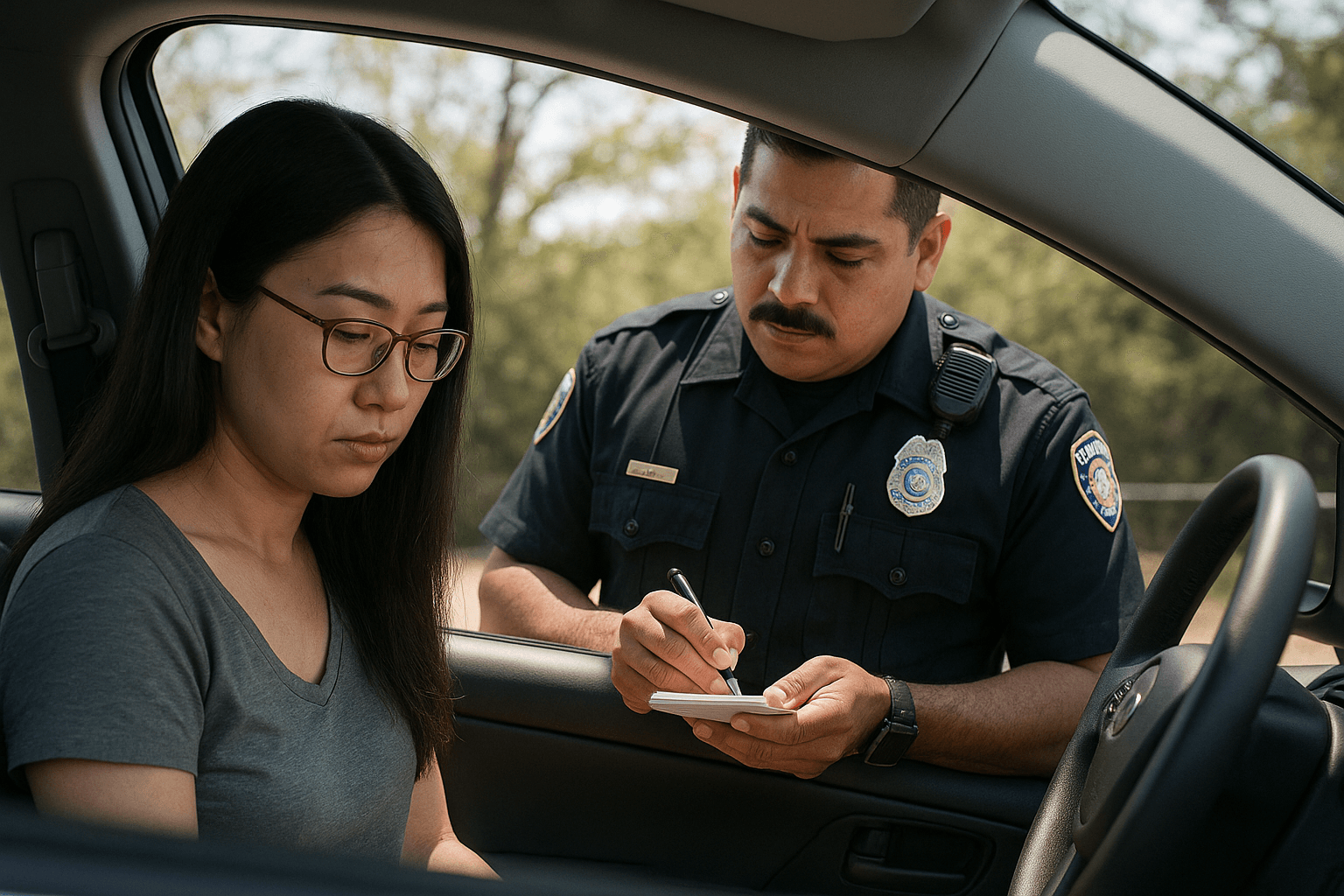
Virginia's restricted license comes through the court system, not DMV. The judge sets your hours, routes, and conditions—while DMV handles FR-44 and ignition interlock mandates. Here's how the two-agency split works and what documentation survives scrutiny.
Why Virginia's Court-First Application Path Confuses Most Filers
Virginia requires you to petition the court for a restricted license, not apply through DMV. The judge—not a DMV clerk—decides whether to grant restricted driving privileges, what routes you can drive, and what hours apply. This is the opposite pathway from states like Florida or Texas where DMV processes hardship applications administratively.
The confusion compounds because even after a judge approves your petition, DMV still controls your actual driving privilege. If you fail to file FR-44 insurance proof within the timeframe specified in your court order, DMV will not issue the physical restricted license regardless of the judge's approval. The two-agency split creates a coordination gap most petitioners miss until their DMV appointment.
Virginia Code § 18.2-271.1 governs the court's authority to issue restricted licenses. The statute allows judges broad discretion to define restrictions based on employment, education, medical necessity, and court-ordered treatment participation. That discretion is both the opportunity and the risk: judges in different circuits apply different standards, and no statewide template exists for acceptable petition language.
What Triggers Qualify for Virginia Restricted License Petitions
Virginia restricted licenses are available for DUI/DWI suspensions, points-based suspensions, unpaid fines suspensions, and uninsured driving suspensions. This is broader eligibility than most states offer. Pennsylvania and Washington, for example, bar uninsured-cause drivers from hardship programs entirely.
DUI first offense carries a 12-month revocation, and Virginia allows restricted license petitions after a portion of that period. Second DUI within 10 years triggers a four-year revocation with no restricted license available for the first year—a notably harsh hard suspension period. Third DUI within 10 years results in permanent revocation with no restricted license option at all under § 18.2-271.1.
Points-based suspensions and unpaid fines suspensions carry shorter hard periods, but the court petition pathway is the same. For uninsured driving, the court will require proof of FR-44 or SR-22 filing before approving the petition. The judge cannot waive DMV's insurance filing requirement—this is a statutory mandate separate from the court's restricted license authority.
Compare car insurance rates in your state
Get quotes from licensed carriers — no obligation, no spam, results in minutes.
Get Your Free Quote✓ No Obligation Required✓ Licensed Carriers Only✓ Available Nationwide✓ Free to Compare
How FR-44 Doubles the Minimum Liability Limits for DUI Restricted Licenses
Virginia is one of only two states requiring FR-44 certificates instead of SR-22 for DUI/DWI offenders. FR-44 mandates $50,000 per person, $100,000 per accident bodily injury, and $40,000 property damage liability limits—double the standard SR-22 minimums of $25,000/$50,000/$20,000.
The FR-44 filing requirement applies for the entire duration of the restricted license period, and most DUI-based restricted licenses run for the full suspension term. If your DUI suspension is three years, your FR-44 filing obligation is three years. A lapse of even one day triggers immediate DMV notification, and your restricted license is suspended until you refile and pay reinstatement fees.
For non-DUI suspensions—points, unpaid fines, uninsured driving—Virginia requires SR-22 filing at standard $25,000/$50,000/$20,000 minimums. The difference matters: FR-44 policies cost approximately $140–$190 per month for a driver with one DUI and clean prior record. SR-22 policies for the same driver profile without alcohol involvement run $85–$120 per month. The elevated limits requirement is the cost driver, not the filing itself.
Why Ignition Interlock Is Mandatory for the Full Restricted License Period
Virginia requires ignition interlock device installation for any DUI-based restricted license, and the requirement runs for the entire restricted period—not just a portion of it. This is stricter than states like Ohio or Michigan, where interlock may apply only to the first six or twelve months.
You enroll through Virginia's Alcohol Safety Action Program (ASAP), which administers interlock compliance monitoring. The court order granting your restricted license will specify ASAP enrollment as a condition. If you miss two consecutive ASAP classes or fail interlock calibration appointments, ASAP notifies the court, and your restricted license is revoked without a separate hearing in most circuits.
Interlock installation costs approximately $75–$150, with monthly monitoring and calibration fees of $60–$90. Over a 12-month restricted license period, total interlock cost runs $800–$1,200. Over a 36-month period for second DUI, total cost exceeds $2,500. This is in addition to FR-44 premium costs and the court petition filing fee.
What Routes and Hours the Court Actually Approves in Restricted License Orders
The court defines your allowed routes and hours in the restricted license order. Virginia law does not publish a statewide list of approved purposes—the judge applies discretion based on your petition. The most commonly approved purposes are travel to and from work, school, medical appointments, court-ordered treatment programs including ASAP, and childcare.
Your employer letter must state your exact work address, shift hours, and confirmation that public transportation is unavailable or impractical for your commute. Judges deny petitions when the employer letter is vague or when the petitioner lists multiple job sites without explaining why all are necessary. Most courts require the employer letter on company letterhead, signed by a supervisor or HR representative, and dated within 30 days of the petition filing.
Time restrictions are court-defined, and no uniform standard exists. Some judges approve 24-hour driving for shift workers or on-call employment. Others restrict driving to specific hours listed in the order. Route restrictions are similarly specific: the order will list approved destinations by street address, and driving outside those addresses—even for another legitimate purpose—is a violation that can result in immediate revocation and new criminal charges under § 18.2-272.
How ASAP Enrollment Functions as Both Condition and Enforcement Mechanism
All DUI restricted license holders must enroll in and comply with Virginia's Alcohol Safety Action Program (ASAP). ASAP is not optional—it is a statutory condition of restricted license issuance under § 18.2-271.1. Violation of ASAP terms results in immediate license revocation.
ASAP monitors your ignition interlock compliance, administers alcohol education classes, and reports violations to both the court and DMV. If you miss two consecutive classes, ASAP files a violation report with the court. The court then issues a show-cause order or revokes your restricted license outright, depending on circuit practice.
ASAP enrollment fees vary by local program but typically run $250–$400 for intake and assessment, plus $10–$25 per class session. A standard ASAP program for first DUI runs 10–20 weeks with weekly sessions. Total ASAP cost over the program term is approximately $400–$700, separate from interlock costs and FR-44 premiums.
What Documentation Survives Court Scrutiny in Restricted License Petitions
Your petition must include proof of hardship, proof of insurance filing, and payment of DMV reinstatement fees. Proof of hardship means an employer letter for work-related driving, school enrollment documentation for education-related driving, or medical appointment schedules for health-related driving. Generic statements that you "need to drive" are insufficient.
Proof of insurance means FR-44 certificate filing for DUI suspensions or SR-22 for other suspension types. The carrier must file the certificate with DMV electronically before your court hearing—bringing a policy declaration page to court is not sufficient. The judge will verify DMV receipt of the filing before signing the restricted license order.
DMV reinstatement fees must be paid before DMV will issue the physical restricted license, even after court approval. The base reinstatement fee is $145, but drivers with multiple suspensions or certain violation types face higher fees under § 46.2-411. You pay reinstatement fees at DMV after the court grants your petition, not as part of the court filing process.
How Insurance Coverage Works After Restricted License Approval
Once the court approves your restricted license and you file FR-44 or SR-22, you need an active auto insurance policy meeting Virginia's minimum liability limits. For FR-44 filers, that means 50/100/40 coverage. For SR-22 filers, that means 25/50/20 coverage.
If you do not own a vehicle, you need a non-owner FR-44 policy or non-owner SR-22 policy. Non-owner policies provide liability coverage when you drive a vehicle you do not own—this includes employer vehicles, borrowed vehicles, or rental cars. Non-owner FR-44 policies cost approximately $90–$150 per month for a DUI-suspended driver in Virginia.
Carriers writing FR-44 in Virginia include Geico, Progressive, Allstate, Nationwide, State Farm, USAA, The General, Bristol West, Dairyland, and National General. Not all carriers write non-owner FR-44 policies; Geico, Progressive, The General, Bristol West, and Dairyland confirm availability via published product pages. Quote all available carriers—monthly premium spread for identical coverage can exceed $60 depending on carrier risk pricing.