You Cannot Drive Under Suspension Without DMV Authorization
Your New York driver license was suspended yesterday and you have a work shift Monday morning. Driving on a suspended license in New York triggers Vehicle and Traffic Law violations that add civil penalties, extend your suspension period, and create additional insurance verification requirements through the state's electronic monitoring system. The suspension notice you received does not automatically authorize any driving.
New York offers a Restricted Use License program administered by the DMV for drivers who can prove essential driving needs during the suspension period. The program is not called a hardship license or conditional license in New York statute — the official name is Restricted Use License, and the application process differs significantly from states using SR-22 certificate systems. Most online guides describe SR-22 filing procedures that do not apply in New York because the state verifies insurance electronically through the Insurance Information and Enforcement System without requiring paper certificates.
Compare car insurance rates in your state
Get quotes from licensed carriers — no obligation, no spam, results in minutes.
Get Your Free QuoteNY Restricted Use Application Fee
$25
The DMV application fee for a Restricted Use License is $25, processed at the time of filing form MV-500 series documentation. This fee is separate from any suspension termination fees, civil penalties for insurance lapses under VTL §319, or reinstatement costs that apply when the full suspension period ends.
NY DMV fee schedule (dmv.ny.gov)
New York Uses Electronic Insurance Verification, Not SR-22
New York does not participate in the SR-22 certificate system. The state operates the Insurance Information and Enforcement System, a real-time electronic database where admitted carriers report policy issuance, cancellations, and lapses directly to the DMV. When you apply for a Restricted Use License, the DMV verifies your insurance status through this electronic system by querying your carrier directly — no paper SR-22 form exists in New York's regulatory framework.
Drivers moving to New York from SR-22 states often submit SR-22 certificates with their Restricted Use License applications, assuming the filing satisfies New York's proof-of-insurance requirement. The DMV rejects these applications because SR-22 certificates are not recognized under New York Vehicle and Traffic Law. Your carrier must be admitted to write policies in New York and must participate in the IIES electronic reporting framework. Non-admitted carriers and out-of-state policies that do not report through IIES cannot satisfy the insurance verification step.
The IIES system monitors your coverage continuously during the Restricted Use License period. If your carrier reports a lapse or cancellation, the DMV receives electronic notification within days and suspends both your vehicle registration and your Restricted Use License automatically under VTL §319. There is no grace period once the lapse is confirmed — the suspension is immediate and triggers an $8-per-day civil penalty capped at $900 for a 90-day period, plus a $50 civil penalty for failure to surrender plates if applicable.
New York DMV rejects Restricted Use License applications that include SR-22 certificates because the state does not use the SR-22 framework — insurance verification happens electronically through IIES.
Restricted Use License Covers Essential Driving Only
The Restricted Use License authorizes driving to and from work, school, medical appointments, and other court- or DMV-approved essential activities. The specific route and time restrictions are set by the DMV at the time of approval and are printed on the license itself. Drivers may not use the Restricted Use License for errands, social visits, childcare outside of approved routes, or any purpose not explicitly listed on the license. Violating the restriction terms triggers immediate revocation of the Restricted Use License and adds new violations to your driving record under VTL §511.
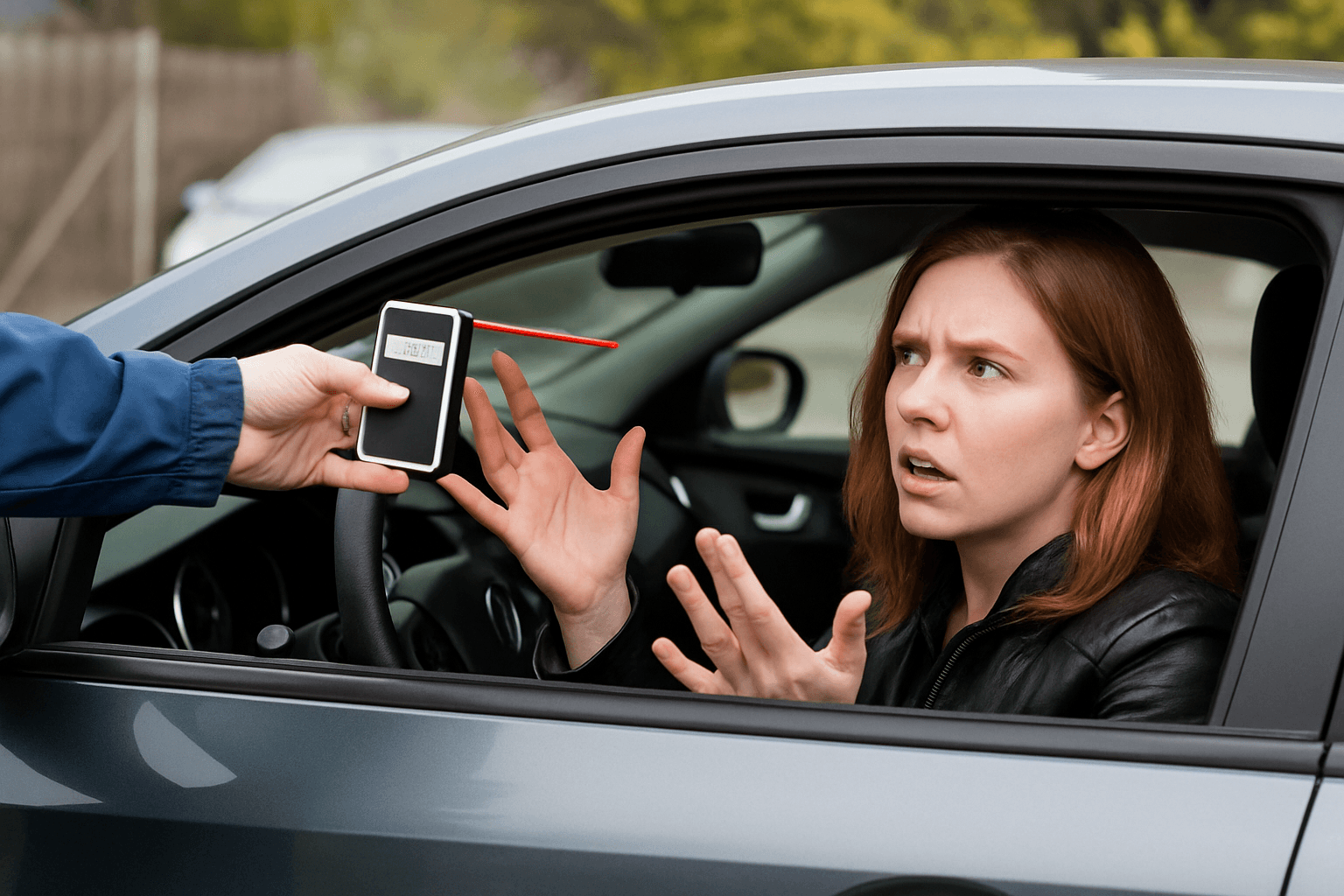
For DWI or DWAI convictions under VTL §1193, Leandra's Law mandates ignition interlock device installation as a condition of any Restricted Use License during the interlock period. The interlock requirement applies to all persons convicted of alcohol-related driving offenses, not just repeat offenders. The DMV will not issue a Restricted Use License for a DWI-related suspension without proof of IID installation from an approved vendor. The interlock period typically runs for the duration of the suspension, and the monthly monitoring cost adds $70–$100 to your expense stack on top of the application fee and insurance premium increase.
Related Articles

Application Requires DMV Form MV-500 Series and Proof of Need
The Restricted Use License application requires submission of DMV form MV-500 series, proof of employment or necessity for driving, proof of insurance verified through IIES, and suspension clearance or eligibility confirmation from the DMV. The specific MV-500 form number varies by suspension type — the DMV will specify which variant applies to your case when you request the application packet. Most applicants must submit the form in person at a DMV office; online filing is not available for Restricted Use License applications.
Proof of employment typically means a letter from your employer on company letterhead stating your work address, shift hours, and confirmation that you need to drive to perform job duties. Self-employed drivers must provide business registration documents, client contracts, or tax records showing active business operations. The DMV has broad administrative discretion in evaluating proof of need — applications that appear overly general or do not demonstrate genuine hardship are denied without appeal.
The DMV does not publish a standard processing time for Restricted Use License applications. Actual turnaround varies significantly by regional DMV office and case complexity. Drivers with prior suspensions, multiple DWI offenses, or outstanding civil penalties face longer review periods and higher denial rates because the DMV evaluates prior record and conduct when determining eligibility. Multiple DWI offenses trigger extended hard revocation periods, and some drivers are categorically ineligible for a Restricted Use License due to permanent revocation status.
For DWI-related suspensions, completion of the New York Impaired Driver Program is typically required before the DMV will approve a Restricted Use License application. The IDP is a state-mandated education and assessment program administered by county-level providers. The program fee is approximately $225–$275 depending on county, and the course runs over multiple sessions spanning several weeks. Drivers who miss two consecutive IDP classes face automatic revocation of their Restricted Use License without prior warning — the DMV monitors attendance electronically through program provider reporting.
NY Insurance Lapse Civil Penalty
$750–$1,500
Vehicle and Traffic Law §319 imposes a civil penalty of $750 for a first insurance lapse up to 90 days, and $1,500 for a second lapse within 36 months, in addition to the $50 suspension termination fee. These penalties are separate from any base reinstatement fee and apply even when no accident or violation occurred during the lapse period.
NY VTL §319
Insurance Costs Rise During Restricted Use Period
New York carriers categorize Restricted Use License holders as high-risk drivers, and your premium will increase significantly compared to your pre-suspension rate. The exact increase depends on the violation that triggered your suspension. DWI convictions typically add $1,200–$2,400 per year to your base premium; uninsured driving suspensions add $800–$1,600 per year; points-accumulation suspensions add $400–$900 per year. These are estimates based on available industry data — individual rates vary by driving history, vehicle, coverage selections, and location.
If you do not own a vehicle but need to drive for work using an employer's vehicle or rental cars, a non-owner liability policy satisfies New York's insurance verification requirement for Restricted Use License eligibility. Non-owner policies provide liability coverage when you drive vehicles you do not own, and most New York-admitted carriers offer this product. The DMV verifies non-owner policies through IIES the same way it verifies standard auto policies — your carrier must report the policy electronically or the DMV will not recognize it as valid proof.
Compare New York Carriers That Report Through IIES
Your insurance carrier must be admitted to write policies in New York and must participate in the IIES electronic reporting system or the DMV will reject your Restricted Use License application. Carriers writing in New York that handle high-risk drivers and report through IIES include Geico, Progressive, State Farm, National General, and Bristol West. Not all carriers accept Restricted Use License holders — some decline to quote drivers with recent DWI convictions, multiple suspensions, or lapse-related civil penalties on record.
Request quotes from at least three carriers before purchasing a policy to support your Restricted Use License application. Rates vary by hundreds of dollars per year between carriers for the same coverage limits, and the carrier you used before suspension may not offer the most competitive rate for high-risk drivers. Confirm with each carrier that they report policy status to the New York DMV through IIES — if the carrier does not participate in electronic reporting, the DMV will not verify your coverage and your application will be denied. Compare New York high-risk auto insurance carriers through the site's comparison tool to find coverage that meets DMV requirements and fits your budget during the Restricted Use License period.