New York's Restricted Use License requires DMV-verified insurance, proof of necessity, and IID installation—but most applicants don't realize their hardship eligibility window starts at conviction, not suspension notice.
What Documentation Does New York DMV Require for a Restricted Use License Application?
New York DMV requires four core documents for a Restricted Use License (RUL) petition: the completed MV-500 series application form specific to your suspension type, written proof of employment or necessity justifying driving privileges, current insurance verification through the IIES system (not an SR-22 certificate—New York doesn't use SR-22 forms), and suspension clearance or eligibility confirmation from DMV showing you've satisfied the minimum revocation period or program requirements.
The proof-of-necessity requirement is where most first-time applicants stumble. DMV wants employer letterhead confirming your work schedule, specific job site addresses, and a statement that public transportation cannot reasonably serve the route. If you're applying for medical necessity, you need physician documentation on office letterhead describing the condition requiring regular treatment, treatment facility address, and appointment frequency. Generic necessity statements get denied immediately.
Insurance verification happens automatically through New York's Insurance Information and Enforcement System. Your carrier reports your active policy directly to DMV—you don't submit paper proof. The catch: IIES updates can lag 24–72 hours after policy purchase. If you file your RUL application before your new policy appears in IIES, DMV processes the petition as incomplete and denies it without notification. Wait three business days after buying coverage before submitting your application.
How Does Ignition Interlock Installation Affect the RUL Application Timeline?
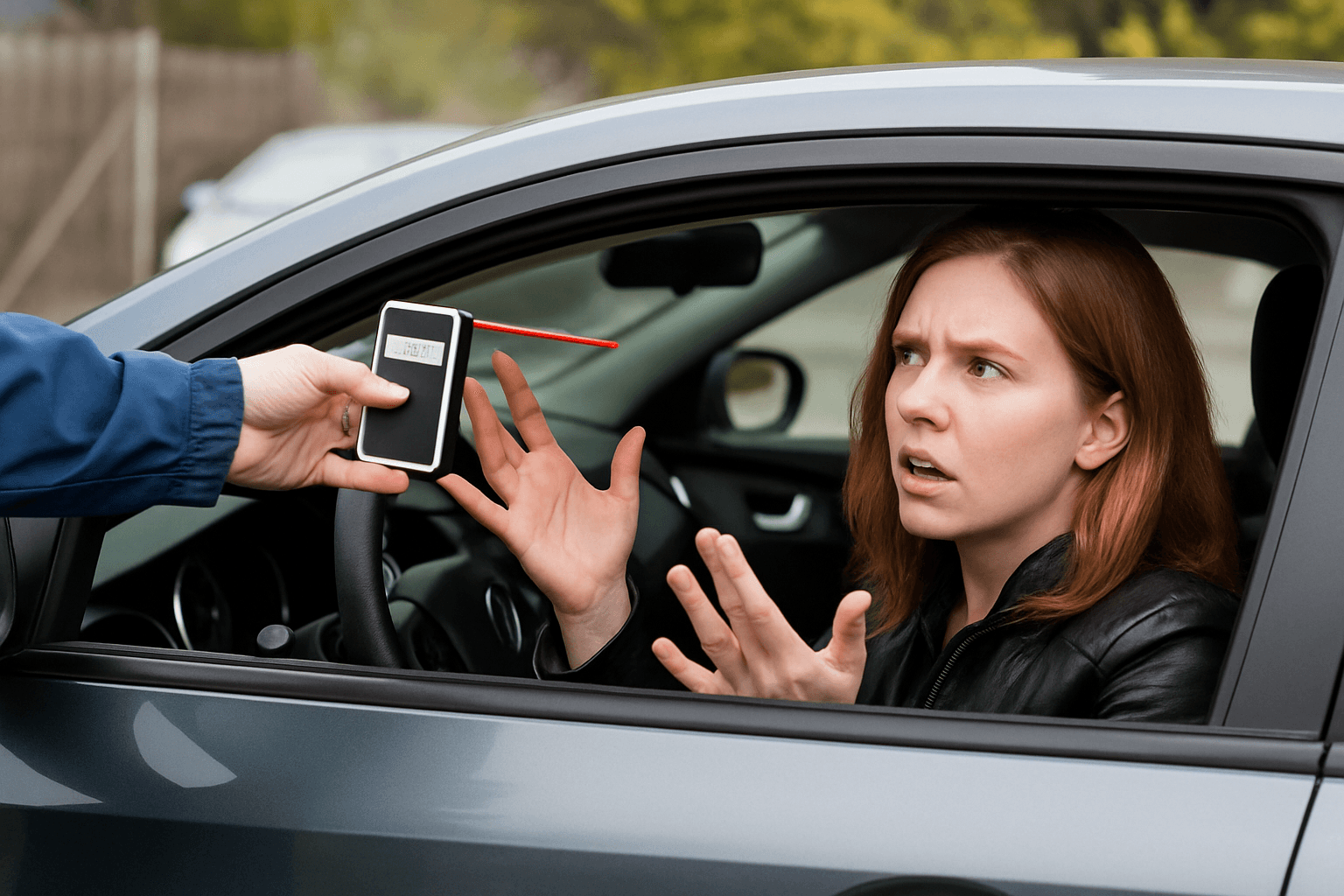
Leandra's Law (Vehicle and Traffic Law Section 1198) mandates ignition interlock device installation for all DWI convictions as a condition of any driving privilege, including Restricted Use Licenses. You cannot receive RUL approval until proof of IID installation reaches DMV—the device must be installed and the monitoring agreement active before the hardship petition is processed.
The installation-first requirement creates a timing squeeze most applicants miss. IID vendors charge $70–$150 for installation plus $70–$100 monthly monitoring fees. These costs start accruing before you know whether DMV will approve your RUL petition. If your petition is denied, you've paid for a device you can't legally use. The financially safer path: confirm your eligibility with DMV's administrative review unit before scheduling IID installation, even though it delays your application by 10–15 days.
Once the device is installed, the vendor reports installation to DMV electronically. Allow 5 business days for that report to appear in DMV's system before filing your RUL application. Premature filing triggers the same incomplete-application denial as missing insurance verification. The total pre-application timeline for DWI-related RUL petitions: 3 days for insurance IIES reporting, 7–10 days for IID installation scheduling and completion, 5 days for vendor-to-DMV reporting, then application submission. Budget 3 weeks minimum from policy purchase to petition filing.
Compare car insurance rates in your state
Get quotes from licensed carriers — no obligation, no spam, results in minutes.
Get Your Free Quote✓ No Obligation Required✓ Licensed Carriers Only✓ Available Nationwide✓ Free to Compare
What Are New York's Approved Purposes for Restricted Use License Driving?
New York restricts RUL driving to employment, education, medical treatment, and court- or DMV-mandated appointments. The statute does not permit general errands, childcare drop-offs unrelated to work or school, religious services, or social obligations. Each approved destination must appear on the route schedule you submit with your MV-500 application.
Employment driving covers direct routes between your residence and job site, required job-related travel during work hours (with employer documentation), and any second job if both appear on your route schedule. If your work schedule varies weekly, you must submit a worst-case route map covering all possible job sites. Fixed routes work in your favor—DMV grants broader time windows for applicants with consistent Monday-through-Friday schedules than for drivers with rotating shifts.
Education purposes include undergraduate and graduate coursework, vocational training programs, and GED classes. DMV does not recognize continuing education seminars, professional development workshops, or non-credit courses as qualifying education. Medical necessity covers recurring treatment appointments (dialysis, chemotherapy, physical therapy) but not routine checkups or elective procedures. Each medical destination requires separate physician documentation. The tighter your approved-purpose list, the higher your approval odds—applicants seeking 8+ destinations face denial rates above 60%.
How Does the $25 Application Fee Fit Into Total RUL Costs?
The RUL application fee is $25 payable to New York DMV at petition filing. This fee is non-refundable whether your petition is approved or denied. The application fee represents roughly 2% of your total first-year restricted driving cost when you account for ignition interlock installation ($70–$150), monthly IID monitoring ($70–$100/month for 12 months), and insurance premium increases.
Insurance costs dominate the expense picture. Drivers approved for RUL after DWI face premium increases of 80%–150% over pre-conviction rates. A $110/month liability-only policy before conviction typically jumps to $200–$275/month post-conviction with RUL-compliant coverage. Multiply that monthly increase across the 12-month minimum IID period and you're looking at $1,080–$1,980 in additional annual insurance costs alone.
The full first-year cost stack for a DWI-related RUL in New York: $25 application fee, $100 average IID installation, $900 average annual IID monitoring (at $75/month), $1,500 average additional insurance premium (at $125/month increase over prior rate), and $50 suspension termination fee when your full license is eventually restored. Total: approximately $2,575 in year one. These are median estimates for Upstate New York drivers; New York City and Long Island applicants typically see 20%–30% higher costs across all categories.
What Happens If Your RUL Application Is Denied?
DMV denies RUL petitions for three primary reasons: incomplete documentation (missing employer verification, outdated medical letters, no IIES insurance record), ineligibility based on prior suspension history (multiple DWI convictions within 10 years often trigger categorical denial under administrative discretion rules), or insufficient necessity showing (routes served by public transit, non-essential destinations, vague employment documentation).
When DMV denies your petition, you receive a written denial notice explaining the deficiency. You have 30 days from the denial notice date to cure the deficiency and refile. The $25 application fee is not refundable, and you must pay another $25 to refile. If the denial was based on incomplete documentation and you can provide the missing proof within 30 days, your refiled petition typically processes within 10–15 business days. If the denial was based on discretionary ineligibility (prior record, insufficient necessity), your odds on refile remain low unless your circumstances materially change.
Applicants denied for discretionary reasons often face 12–24 month full-suspension periods with no hardship relief. At that point your options narrow to: completing the full suspension term and applying for standard reinstatement, relocating to a household member's address where public transit eliminates the necessity argument, or seeking employment within walking or cycling distance of your residence. There is no administrative appeal process for RUL denials in New York—the denial is final unless you refile with materially different facts.
How Do You Maintain Insurance Compliance During the Restricted Use License Period?
New York's IIES system monitors your insurance status continuously while you hold a Restricted Use License. If your carrier cancels your policy or you allow coverage to lapse for any reason, IIES notifies DMV within 24 hours and your RUL is automatically suspended. There is no grace period and no warning letter—the suspension is immediate and non-negotiable.
To avoid automatic suspension, set up auto-pay with your carrier and monitor your policy status monthly through your carrier's online portal. If you need to switch carriers (because your current carrier non-renewed you or you found a lower rate), purchase the new policy before canceling the old one. Overlap coverage by at least 3 business days to ensure IIES reflects continuous coverage without a gap. Even a single-day lapse triggers suspension and requires you to restart the entire RUL application process from scratch, including paying a new $25 fee.
Carriers writing high-risk drivers in New York include Geico, Progressive, Bristol West, and National General. Monthly premiums for minimum liability coverage (25/50/10 plus PIP and uninsured motorist as required by state law) range from $140–$240/month for drivers with one DWI conviction and an active RUL. Drivers with multiple violations or those requiring ignition interlock insurance endorsements see rates 30%–50% higher. Compare quotes from at least three carriers before committing—rate spreads for RUL-eligible drivers in New York regularly exceed $80/month between the highest and lowest quotes for identical coverage.