Wyoming requires a 90-day hard suspension before you can apply for a probationary license after a first DUI, and ignition interlock installation is mandatory throughout the probationary period. Most drivers don't realize the hard suspension clock starts at arrest, not conviction.
When Wyoming's Probationary License Application Window Opens
Wyoming requires a 90-day hard suspension period before you can apply for a probationary license after a first-offense DUI. The clock starts at your arrest date under the administrative per se suspension, not your court conviction date. Most drivers wait for their court hearing to finish before counting days, which delays their application by weeks or months.
The administrative suspension from Wyoming Driver Services runs parallel to any court-ordered suspension. For a first DUI, the administrative per se suspension is 90 days. During this period, no restricted driving is allowed. After the 90 days expire, you can petition for a probationary license if you meet the ignition interlock and SR-22 filing requirements.
Second and subsequent DUI offenses carry longer mandatory hard suspension periods before probationary eligibility opens. Wyoming statutes extend these periods significantly: second-offense administrative suspensions run 18 months. The probationary license pathway remains available after the hard period expires, but the wait is substantial.
Which Suspension Causes Qualify for Wyoming Probationary Licenses
Wyoming's probationary license program is open to DUI suspensions and point-accumulation suspensions. The program is not restricted to employment-only driving. Approved purposes include work, school, medical appointments, and other essential needs as defined by the court or Driver Services.
Uninsured-motorist suspensions and unpaid-fines suspensions are not explicitly confirmed as eligible in Wyoming's published guidelines. The manual review flag in state records suggests these pathways require case-by-case review with Driver Services. If your suspension stems from insurance lapse or unpaid tickets, contact Wyoming Driver Services in Cheyenne before assuming probationary eligibility.
Wyoming does not offer probationary licenses for administrative child-support suspensions or failure-to-appear suspensions. These require full compliance with the underlying obligation before any restricted driving privileges can be considered.
Compare car insurance rates in your state
Get quotes from licensed carriers — no obligation, no spam, results in minutes.
Get Your Free Quote✓ No Obligation Required✓ Licensed Carriers Only✓ Available Nationwide✓ Free to Compare
Ignition Interlock Device Requirements Throughout the Probationary Period
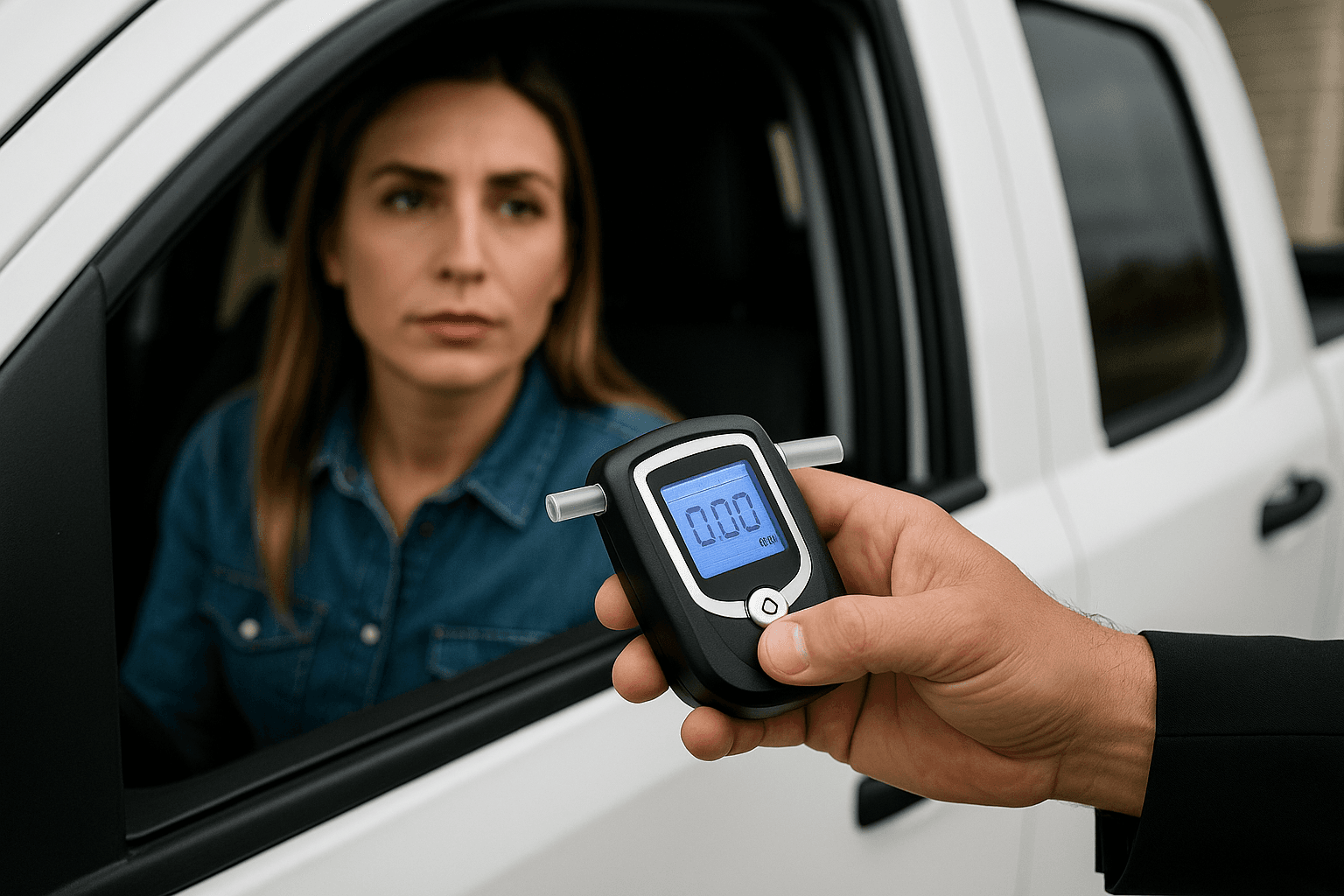
Every probationary license issued after a DUI conviction in Wyoming requires ignition interlock device installation as a statutory condition. The device must be installed before you submit your probationary license application. Wyoming Statute 31-5-233 codifies this requirement: the probationary license is valid only when the vehicle is equipped with a functioning, state-approved interlock.
The interlock requirement runs for the entire probationary period, which typically matches the remaining suspension duration. For a first DUI with a six-month total suspension, the interlock must remain installed for the three months following the 90-day hard suspension. For longer suspensions, the interlock period extends accordingly.
Violating the interlock requirement during the probationary period triggers automatic revocation of the probationary license. A single missed calibration appointment, a failed startup test, or an attempt to drive a non-equipped vehicle can end your restricted driving privileges without additional court review. Wyoming's centralized driver records system tracks interlock compliance through service provider reporting.
Application Path: Wyoming Driver Services, Not Circuit Court
Wyoming administers probationary license applications through Wyoming Driver Services, part of the Wyoming Department of Transportation. The application is an administrative process, not a court hearing. You submit documentation to Driver Services in Cheyenne, either by mail or in person at the headquarters office.
Required documentation includes proof of need for restricted driving, proof of SR-22 insurance filing, a completed application form, and proof of ignition interlock installation if your suspension stems from DUI. Employment verification typically requires a letter from your employer on company letterhead stating your job title, work address, and required commute schedule. Educational need requires a class schedule and campus address.
Processing time is not published in state guidelines. Wyoming's small population means Driver Services staffing is limited; complex cases involving multiple simultaneous suspensions can take longer than comparable applications in larger states. Budget two to four weeks for routine applications. If your case involves stacked suspensions or out-of-state license history, expect additional review time.
Application Fee and Reinstatement Cost Stack
Wyoming charges a $50 reinstatement fee per suspension action. If you have multiple simultaneous suspensions, you owe $50 per suspension. A driver with both a DUI suspension and an uninsured-motorist suspension from the same incident period owes $100 in reinstatement fees once both suspensions are resolved.
The probationary license application fee is not separately published in state records. Contact Driver Services at 307-777-4800 for current application fee amounts. The reinstatement fee is distinct from the application fee: reinstatement fees apply when your full license is restored at the end of the suspension period, not when you receive probationary privileges.
Ignition interlock costs run approximately $75–$100 for installation and $60–$80 per month for monitoring and calibration. Over a six-month interlock period, total device costs approach $450–$550. SR-22 filing fees from your insurance carrier typically add $25–$50 to your first premium payment, then appear as a policy surcharge for the duration of the filing period.
Route and Time Restrictions Under Wyoming Probationary Licenses
Wyoming probationary licenses restrict driving to specific purposes defined in the license document. Typical approved purposes include travel to and from work, school, medical appointments, court-ordered obligations, and grocery or household errands. The license specifies whether you are restricted to certain hours or routes.
Route restrictions depend on the approving authority's discretion. Some probationary licenses define exact routes between home and work. Others allow any reasonable route to approved destinations. Time restrictions are less common in Wyoming than in states like Texas or Florida, but Driver Services can impose them if your suspension history or violation type suggests higher risk.
Violating the restrictions terminates your probationary license immediately. Wyoming law enforcement has access to your restriction details through the central driver database. A traffic stop outside approved hours or at an unapproved location triggers revocation without a hearing. The remaining suspension period resumes in full, with no credit for time driven under the probationary license.
SR-22 Filing Duration and Insurance Cost Impact
Wyoming requires SR-22 filing for three years after a DUI conviction. The three-year period begins at your conviction date, not your license reinstatement date or your probationary license issue date. If your full suspension lasts six months and you hold a probationary license for three of those months, your SR-22 filing obligation still runs three years from conviction.
SR-22 filings for point-accumulation suspensions typically run shorter durations, often one to two years. The exact period depends on the violation that triggered the suspension. Wyoming Driver Services issues a notice at the time of suspension specifying the SR-22 duration required for reinstatement.
Premium increases after a DUI suspension and SR-22 filing typically range from 60% to 120% over your prior rate. A driver paying $110 per month before suspension can expect to pay $175–$240 per month with an SR-22 filing and a DUI conviction on record. Rates vary by carrier, age, and county. If you do not own a vehicle, non-owner SR-22 policies provide the required filing at lower cost than standard auto policies, typically $30–$60 per month.