Oregon calls it a Hardship Permit, not a hardship license—and unlike most states, you can apply within 30 days of a DUII suspension if you enroll in Diversion. Here's what qualifies, what doesn't, and exactly how ignition interlock changes the timeline.
What Oregon Calls a Hardship License and Who Issues It
Oregon uses the term Hardship Permit, not hardship license. You apply through the Oregon DMV (Driver and Motor Vehicle Services Division), not through a court—even for DUII-related suspensions. This procedural distinction matters because you won't receive hardship permit paperwork at your criminal hearing; you must initiate the DMV application separately.
The Hardship Permit exists to preserve essential driving during administrative or judicial suspensions. It restricts you to stated purposes only: employment, medical appointments, school, or other documented necessity. Route and time limitations are case-specific—the DMV defines your approved hours and destinations based on what you submit in your application.
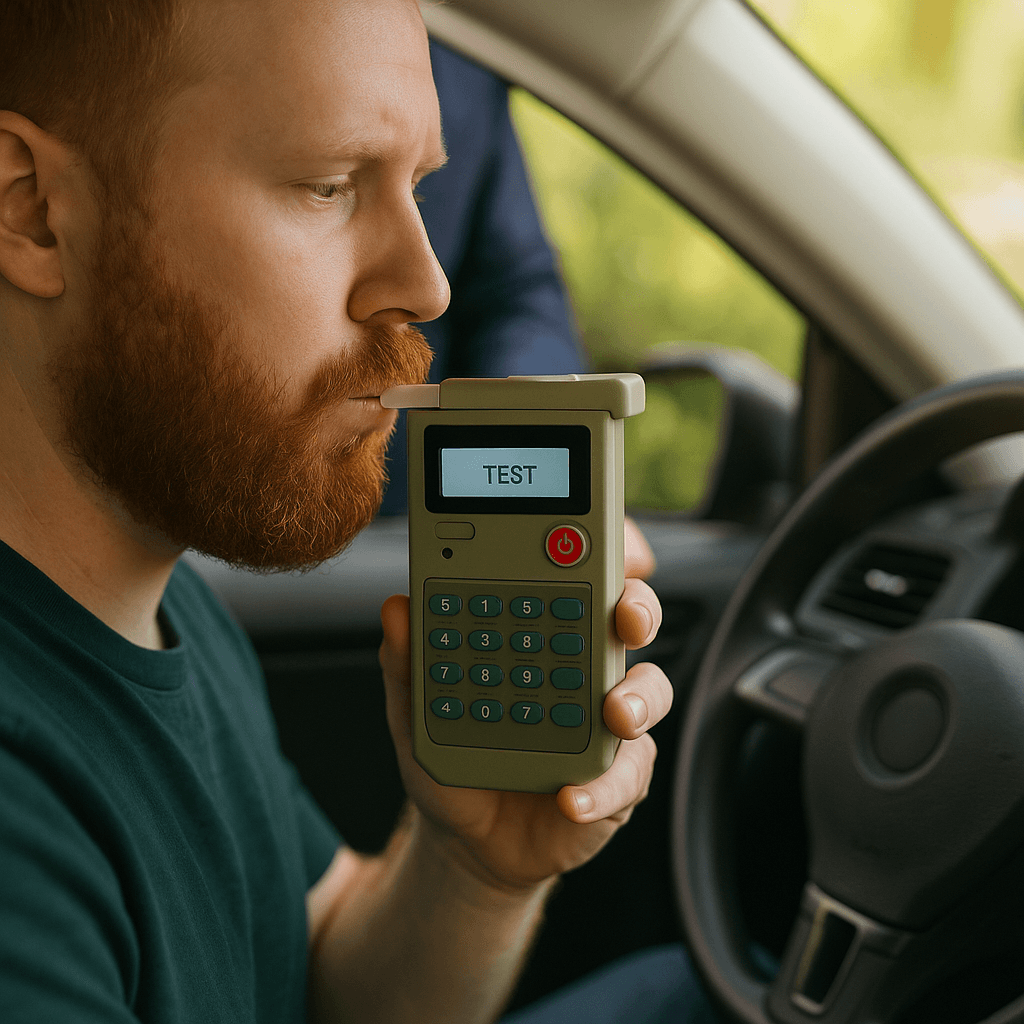
Oregon requires an SR-22 insurance certificate for most hardship permit applications, and ignition interlock device (IID) installation is mandatory for any DUII-related suspension. The IID requirement is governed under ORS 813.602 and applies to both the hardship permit period and full reinstatement after suspension ends.
DUII Suspensions and the 30-Day Diversion Window
Oregon offers a narrow but powerful pathway for first-time DUII offenders: the DUII Diversion Program under ORS 813.200. If you enroll in Diversion and install an ignition interlock device, you can apply for a Hardship Permit after a 30-day hard suspension—measured from the date of your administrative suspension, not your criminal conviction date.
This 30-day window applies specifically to BAC failure cases under Oregon's implied consent law (ORS 813.410). If you refused the breath test, the initial hard suspension period is longer—typically one year with no hardship eligibility for the first 30 days. Refusal cases carry stricter timelines than failure cases.
The critical procedural trap: you must apply for DUII Diversion before your criminal case closes. Once you plead guilty or are convicted in criminal court without entering Diversion first, the pathway closes permanently. This is not advertised clearly on DMV paperwork, and many drivers miss the narrow enrollment window while focused on their criminal defense. If you're eligible for Diversion, file the petition immediately after arraignment—do not wait for a plea hearing.
Compare car insurance rates in your state
Get quotes from licensed carriers — no obligation, no spam, results in minutes.
Get Your Free Quote✓ No Obligation Required✓ Licensed Carriers Only✓ Available Nationwide✓ Free to Compare
Points, Uninsured Driving, and Unpaid Fines Eligibility
Oregon allows Hardship Permits for points-based suspensions and DUII cases, but eligibility depends heavily on your specific suspension type. Points accumulation suspensions typically qualify, but you must demonstrate that loss of driving privilege creates documented hardship—employment, medical need, or educational necessity.
Uninsured driving suspensions are handled separately. Oregon suspends vehicle registration under ORS 806.010 when you fail to maintain required liability coverage, but this is a registration suspension, not a driver license suspension. The DMV will not issue a Hardship Permit to circumvent an insurance lapse—you must reinstate your registration by providing proof of coverage and paying the reinstatement fee (typically $75).
Unpaid fines and failure-to-appear suspensions generally do not qualify for Hardship Permits. Oregon DMV treats these as administrative compliance suspensions—your driving privilege is held until you resolve the underlying court order. Payment plans may allow you to lift the suspension entirely, which is faster than pursuing a hardship application.
What the Application Requires and Where It Goes Wrong
Oregon Hardship Permit applications require proof of essential need—an employment verification letter, medical appointment documentation, or school enrollment confirmation. The DMV evaluates whether your stated need is genuine and whether alternative transportation (public transit, rideshare, family assistance) could reasonably meet that need. Generic claims like "I need to drive for errands" rarely succeed.
You must also submit an SR-22 insurance certificate before the DMV will approve your application. This means contacting an SR-22 provider before you file—most carriers can issue the SR-22 electronically within 24 hours, but the DMV will not process your hardship application without it. The SR-22 filing fee is separate from your insurance premium, typically $25–$50 depending on the carrier.
If your suspension is DUII-related, you must provide proof of ignition interlock installation from an Oregon-approved IID vendor. The DMV maintains a list of approved vendors on its website; installation typically costs $75–$150, with monthly monitoring fees of $60–$90. The IID vendor submits compliance reports directly to the DMV—missed calibration appointments or tampering violations will result in automatic revocation of your Hardship Permit without advance warning.
The most common failure mode: applicants submit incomplete employer verification. Oregon requires a letter on company letterhead stating your job title, work address, required work hours, and a statement that no alternative transportation is available. A handwritten note or an email from a supervisor will be rejected. The DMV does not notify you of deficiencies before denying your application; you discover the denial when you receive the rejection letter two to three weeks later, and you must restart the process from the beginning.
Route, Time, and Purpose Restrictions on the Permit
Oregon Hardship Permits are purpose-limited and route-specific. The DMV defines the exact hours you're permitted to drive and the destinations you may travel to. If you state in your application that you work Monday through Friday, 8:00 a.m. to 5:00 p.m., your permit will restrict you to those hours and the direct route between your home and workplace.
You may not deviate for errands, side trips, or personal convenience. Driving outside your approved hours or to unapproved locations is a criminal offense under Oregon law—most counties treat hardship permit violations as Driving While Suspended, which carries mandatory jail time in some jurisdictions and automatic revocation of your Hardship Permit.
If your circumstances change—new job, new work hours, medical appointments at a new location—you must file an amendment with the DMV before driving to the new destination. The amendment process takes 10 to 15 business days. Drivers who change jobs mid-permit often violate their restrictions unknowingly, assuming the permit applies to "work in general" rather than the specific employer and address stated in the original application.
How Much the Full Process Costs
Oregon Hardship Permit costs stack quickly. The application itself is processed through the DMV, and while the exact application fee is not uniformly codified across all suspension types, expect to pay administrative fees when submitting your petition. If your suspension is DUII-related, add ignition interlock installation ($75–$150), monthly monitoring fees ($60–$90), and the SR-22 filing fee ($25–$50 upfront, then a premium increase of $300–$800 annually for three years).
Reinstatement at the end of your suspension period costs an additional $75 base fee, but DUII-related revocations carry a higher reinstatement fee—potentially $100 or more. The SR-22 must remain on file for three years, regardless of when your suspension ends, so the total insurance cost over the filing period can reach $2,400 to $3,000 depending on your driving history and the carrier.
The ignition interlock requirement extends beyond the Hardship Permit period in most DUII cases. Oregon often requires IID installation as a condition of full reinstatement, meaning you'll continue paying monthly monitoring fees for one to two years after your suspension ends. Verify your specific IID duration with the DMV before budgeting—the requirement varies by BAC level, refusal status, and prior DUII history.
What Happens If You're Denied or Your Permit Is Revoked
Oregon DMV denials are final unless you file an administrative appeal. The appeal process requires submitting a written request within 30 days of the denial notice, along with additional documentation addressing the deficiencies cited in the rejection letter. Most applicants do not appeal—they reapply with corrected documentation instead, which adds another two to three weeks to the timeline.
If your Hardship Permit is revoked mid-suspension—typically due to missed IID calibration, driving outside approved hours, or a new violation—you cannot reapply until the original suspension period ends. Revocation is permanent for that suspension cycle. Drivers who violate their permit terms and are caught driving afterward face Driving While Suspended charges, which extend the suspension period by an additional 90 days to one year depending on the circumstances.
Habitual Traffic Offender (HTO) status under ORS 809.600 is the most severe consequence. If you accumulate three major violations or 20 minor violations within five years, Oregon imposes a 10-year revocation with no hardship permit eligibility for several years. HTO revocations are distinct from standard suspensions—most drivers in HTO status will not qualify for any form of restricted driving until years into the revocation period.