Virginia issues restricted driving privileges through circuit court orders, not DMV administration. The court defines every permitted route and time window—and violation triggers immediate revocation without appeal.
Virginia Restricted Licenses Are Court Orders, Not DMV Permits
Virginia does not operate a DMV-administered hardship license program. Every restricted license originates as a circuit court order issued by a judge after a petition hearing. The DMV executes the court's directive but cannot modify terms, grant extensions, or issue the license independently.
This structure creates jurisdiction-specific variability. A Fairfax County judge may approve broader route definitions than a judge in Virginia Beach for identical violation profiles. No statewide uniform standard governs route or time restrictions beyond the statute requiring essential purposes.
The petition must demonstrate hardship—employment necessity, medical treatment access, court-ordered program attendance, or dependent care obligations. The judge evaluates credibility, reviews employment verification, and writes the specific terms into the order. That order becomes the legal framework for your driving privilege during suspension.
Required Documentation for the Petition Hearing
Virginia courts require four categories of evidence before granting restricted privileges. First: proof of hardship. Employment verification must come from the employer on letterhead, state job title and address, specify work hours, and confirm no alternative transportation exists. Medical necessity requires a physician's letter detailing treatment frequency, appointment locations, and why you cannot use rideshare or public transit. School enrollment needs registrar confirmation showing class schedule and campus location.
Second: proof of insurance with the correct certificate filing. DUI or DWI suspensions require FR-44 certificates showing 50/100/40 liability limits—double the standard SR-22 minimums. Other suspension types require SR-22 filing with 25/50/20 minimums. The certificate must be active and filed with DMV before the hearing date.
Third: payment confirmation of the $145 DMV reinstatement fee. The court will not issue the order until DMV records show fee payment. Fourth: enrollment confirmation from Virginia's Alcohol Safety Action Program if the suspension stems from DUI. ASAP participation is mandatory for all DUI restricted licenses; the court order will condition driving privileges on continued ASAP compliance.
Compare car insurance rates in your state
Get quotes from licensed carriers — no obligation, no spam, results in minutes.
Get Your Free Quote✓ No Obligation Required✓ Licensed Carriers Only✓ Available Nationwide✓ Free to Compare
Route Restrictions: What the Court Order Defines
The judge specifies exact addresses for each permitted route category. Work routes require employer street address, not just city. Medical routes require facility name and address for each provider. Court-ordered program routes require program location address and attendance schedule.
The order lists authorized purposes: travel to and from employment, medical appointments, court-ordered treatment or education programs, school or university classes, and religious worship services. Some judges add grocery shopping or dependent transportation; others do not. The order is not a general driving privilege—it is a point-to-point authorization for named locations only.
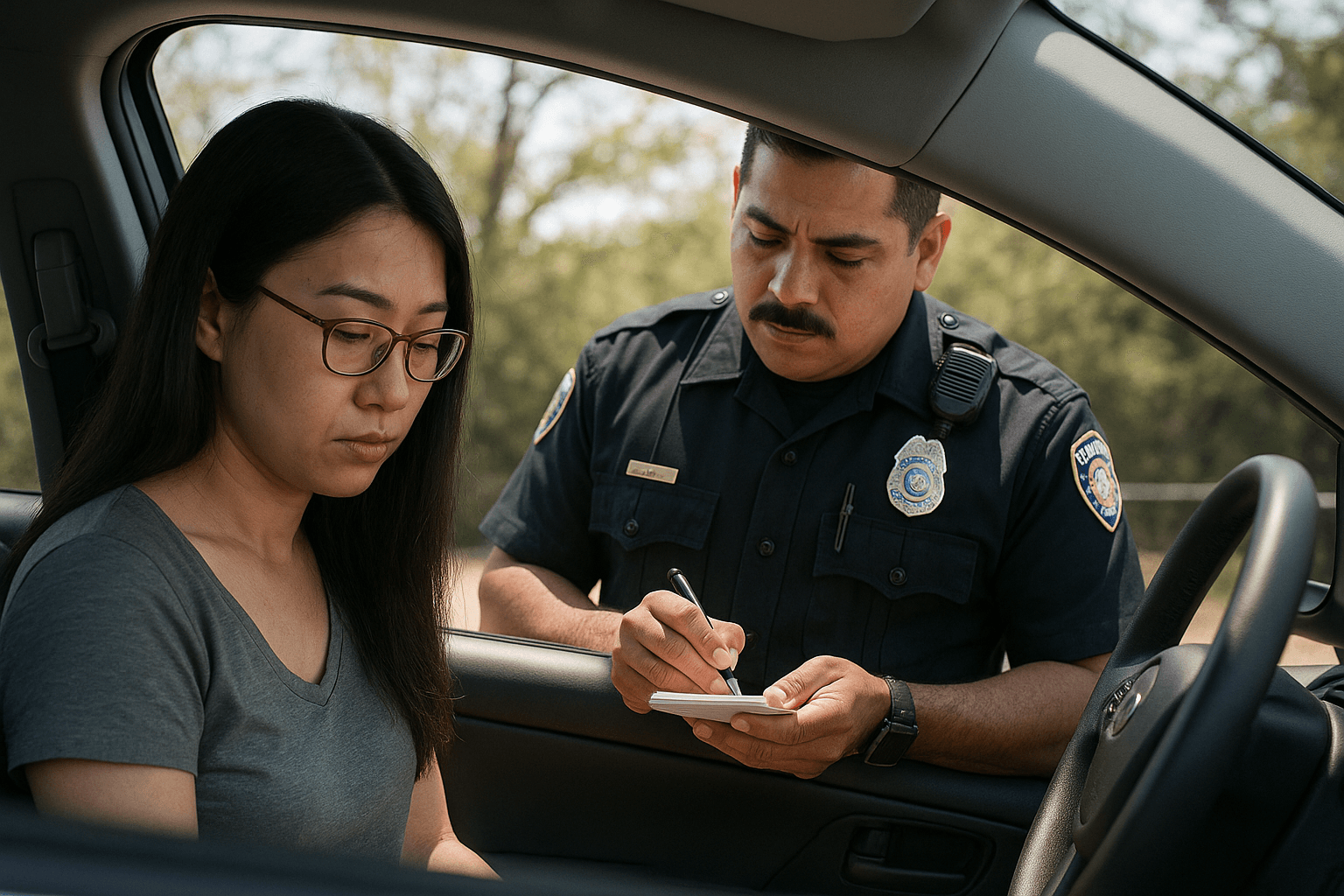
Virginia does not permit discretionary travel under restricted licenses. Visiting friends, attending social events, or running errands not listed in the order violates the restriction. Officers verify route compliance during traffic stops by comparing your location and travel direction against the court order terms. Deviation from authorized routes or purposes triggers immediate revocation proceedings.
Time Restrictions: When You Can Drive
The court order specifies permissible driving hours tied to each authorized purpose. Work restrictions typically mirror employment hours plus reasonable commute buffer—if your shift runs 8 a.m. to 5 p.m., the order might authorize driving between 7:30 a.m. and 5:30 p.m. on workdays only.
Medical appointment restrictions authorize driving only during the appointment window plus travel time. If your physical therapy runs Tuesday and Thursday at 3 p.m., the order authorizes driving those two days within a defined time block—not general weekday authorization.
Some judges issue broader time windows; others write narrow constraints. A judge concerned about compliance history may restrict driving to daylight hours only or exclude weekends entirely even if work requires weekend shifts. The order controls—not DMV regulations, not general hardship license conventions from other states. You drive when the paper says you can drive.
Ignition Interlock Requirement and Duration
Virginia requires ignition interlock devices on all DUI-related restricted licenses for the entire restriction period. The court order will specify IID installation as a condition of driving privileges. You cannot drive any vehicle without a functioning, calibrated interlock during the restriction term.
Installation must occur at a Virginia-approved service center before driving begins. The device logs every start attempt, every failed breath test, and every trip. ASAP monitors compliance through monthly download reports. A single failed start attempt—whether from alcohol detection or skipped rolling retest—generates a violation report to ASAP, which reports to the court.
The interlock requirement applies to the full duration of the restricted license, which typically matches the underlying suspension length. A first-offense DUI carries 12-month revocation; the restricted license and interlock requirement run the full 12 months. Second-offense DUI carries mandatory 4-year revocation with no restricted license available for the first year, then 3 years with interlock if privileges are granted. Third-offense DUI within 10 years results in license revocation with no restricted license available under Virginia Code § 18.2-271.1.
Insurance Filing Requirements: FR-44 vs SR-22
Virginia is one of two FR-44 states. DUI and DWI suspensions require FR-44 certificates, not SR-22. The FR-44 mandates 50/100/40 liability limits: $50,000 bodily injury per person, $100,000 per accident, $40,000 property damage. This is double the standard SR-22 minimum of 25/50/20.
Suspensions not involving alcohol—points accumulation, uninsured violations, unpaid fines—require SR-22 filing with standard 25/50/20 minimums. Both certificate types function identically: the insurer files electronically with DMV, and any policy lapse triggers immediate DMV notification and suspension.
FR-44 premiums run significantly higher than SR-22 because the higher liability limits increase carrier exposure. Expect monthly premiums between $140 and $240 for minimum FR-44 coverage depending on county, age, and violation history. SR-22 premiums for non-DUI suspensions typically range $85 to $150 monthly. Both figures assume minimum liability limits with no physical damage coverage.
Carriers writing FR-44 in Virginia include Geico, Progressive, Allstate, Nationwide, State Farm, National General, Dairyland, Bristol West, The General, and USAA. Not all carriers write FR-44; standard-market insurers often decline DUI risks entirely. Non-standard carriers specialize in high-risk filings but charge higher premiums.
What Happens When You Violate Restriction Terms
Virginia treats restricted license violations as separate criminal offenses under Virginia Code § 46.2-301. Driving outside authorized routes, times, or purposes is a Class 1 misdemeanor carrying up to 12 months in jail and $2,500 fine. The conviction adds a new suspension on top of the existing one.
The court simultaneously revokes the restricted license. Revocation is immediate—no grace period, no appeal to DMV, no modification hearing. You return to full suspension status and must wait out the remainder of the original suspension term before petitioning for reinstatement.
ASAP violations trigger the same outcome. Missing two consecutive classes, failing a random drug test, or accumulating failed interlock attempts generates a violation report to the court. The judge revokes the restricted license and may add jail time depending on violation severity and compliance history.
Insurance lapses end restricted driving privileges automatically. When your FR-44 or SR-22 policy cancels and DMV receives the electronic notification, your restricted license suspends within 48 hours. Virginia operates a real-time electronic verification system; carriers report cancellations immediately. Reinstatement requires new certificate filing, paying a second $145 reinstatement fee, and petitioning the court again for a new order.