Utah courts set your Limited License route and time restrictions case by case. Most petitioners fail because they submit vague schedules instead of mapped, time-stamped routes that judges can enforce.
Why Utah's Limited License Route Restrictions Are Court-Defined, Not DMV Standard
Utah's Limited License program operates entirely through the court system, not the Driver License Division. When you petition for a Limited License after suspension, the judge sets your specific route restrictions and time windows in the court order itself. The DLD then reflects those restrictions on your driving record, but the agency does not create or modify them.
This court-control structure means outcomes vary significantly by county and judge. One judge may approve a 20-mile radius for work and medical appointments. Another may require you to document every turn and stoplight between your home address and your employer's parking lot. There is no statewide template or standardized form defining acceptable routes.
Because Utah lowered its DUI threshold to 0.05% BAC in December 2018, the lowest in the nation under Utah Code § 41-6a-502, more drivers face DUI-triggered suspensions and corresponding Limited License petitions than in most states. Judges have responded by tightening documentation requirements to ensure compliance.
What Documentation Utah Courts Actually Require for Limited License Petitions
Utah courts require a petition to the court, proof of need such as employment verification or medical appointment schedules, and an SR-22 financial responsibility certificate filed by your insurer. Most counties also require an employer letter on company letterhead that includes your shift schedule, work address, and supervisor contact information. Medical need cases require appointment documentation from the provider showing recurring visit dates and addresses.
The SR-22 certificate must be active before the court hearing. Utah requires SR-22 filing for three years following DUI and insurance-related suspensions. Carriers licensed to write SR-22 in Utah include State Farm, Geico, Progressive, Dairyland, The General, Bristol West, GAINSCO, National General, and USAA. Non-owner SR-22 policies are available if you do not own a vehicle but need to demonstrate financial responsibility to the court.
If your suspension stems from a DUI, the court will also require proof of ignition interlock device installation before issuing the Limited License order. The IID program is administered through the Driver License Division and must be completed before full license restoration. Limited License approval does not waive the IID requirement; you will drive with the device installed during the restricted period.
Compare car insurance rates in your state
Get quotes from licensed carriers — no obligation, no spam, results in minutes.
Get Your Free Quote✓ No Obligation Required✓ Licensed Carriers Only✓ Available Nationwide✓ Free to Compare
How to Map Routes That Utah Judges Will Approve
Utah judges reject petitions that describe routes generically. "Commute to work" is not a route. "Travel to medical appointments as needed" is not a route. The court needs a mapped, time-stamped path it can enforce if you are stopped by law enforcement during the restricted period.
For employment routes, submit a document showing your home address, your employer's address, the specific roads you will use in sequence, estimated travel time, and your work schedule including start time, end time, and days worked per week. If your job requires travel to multiple sites, document each site address and the days you visit each location. Judges are more likely to approve a petition showing four fixed addresses with a rotating weekly schedule than a petition requesting countywide driving privileges.
For medical appointments, submit the provider's address, appointment frequency (weekly, biweekly, monthly), typical appointment day and time window, and the route from your home. If you have multiple providers, document each separately. Recurring appointments carry more weight than vague "as needed" language. If you attend court-ordered DUI education or treatment programs, include the program address, class schedule, and route documentation in the same format.
What Time Restrictions Utah Courts Typically Impose
Utah courts set time restrictions based on your documented need. If your employer letter shows a shift from 7:00 AM to 3:30 PM Monday through Friday, the court will typically approve driving privileges from 6:00 AM to 4:30 PM on those days, allowing travel time before and after your shift. You cannot drive outside those hours or on non-work days unless the court order explicitly permits additional travel.
Medical appointment time windows are usually limited to a two-hour block around the scheduled appointment. If your recurring therapy session is Wednesdays at 10:00 AM, the court may authorize driving from 9:00 AM to 12:00 PM on Wednesdays only. If you need to combine work commute privileges with medical appointment privileges, both must be documented separately in the petition and will appear as distinct time blocks in the court order.
Education-related restrictions follow the same pattern. If you are enrolled in college classes, submit your class schedule showing days, times, and campus address. The court will set driving privileges that match your class schedule plus reasonable travel time. Most judges deny requests for open-ended "school-related" driving that could encompass social or extracurricular activities.
Why Ignition Interlock Requirements Affect Your Route Documentation
If your suspension stems from a DUI, Utah requires ignition interlock device installation as a condition of Limited License approval. The IID records every trip: start time, end time, route duration, and breath test results. Judges review IID data when evaluating compliance during the restricted period and when considering full license reinstatement after the suspension ends.
This means your documented routes must align with your IID trip logs. If your court order authorizes home-to-work travel Monday through Friday from 6:00 AM to 4:30 PM, but your IID shows Saturday trips or evening trips outside the authorized window, the court can revoke your Limited License without a hearing. Violation of restriction terms triggers automatic revocation in most Utah counties.
The ignition interlock requirement also affects the type of vehicle you can drive. If you own a vehicle, the IID must be installed in that vehicle and you cannot drive any other vehicle during the restricted period. If you do not own a vehicle but need Limited License privileges to drive an employer-owned vehicle, you must provide written employer consent for IID installation in the company vehicle, and the employer must agree to cover the installation and monthly monitoring fees.
How Limited License Restrictions Differ by Suspension Cause in Utah
Utah courts grant Limited License relief for DUI suspensions, points-based suspensions, and some other administrative suspensions. Eligibility and documentation requirements vary by cause. DUI suspensions carry the strictest scrutiny: judges require proof of SR-22 filing, proof of IID installation, and proof of enrollment in a court-ordered alcohol education or treatment program before approving the petition.
Points-based suspensions resulting from multiple moving violations carry lighter documentation requirements. You still need proof of need and SR-22 filing, but ignition interlock is not required unless one of the underlying violations was alcohol-related. Judges are more likely to approve broader route privileges for points-based suspensions than for DUI cases.
Suspensions for uninsured driving, unpaid tickets, or child support arrears are generally not eligible for Limited License relief in Utah. The court views these as compliance-based suspensions that can be resolved by addressing the underlying issue rather than by granting restricted driving privileges. If your suspension stems from failure to maintain insurance, reinstatement requires proof of insurance and payment of the $30 reinstatement fee to the Driver License Division, not a court petition.
What Happens If You Drive Outside Your Approved Route or Time Window
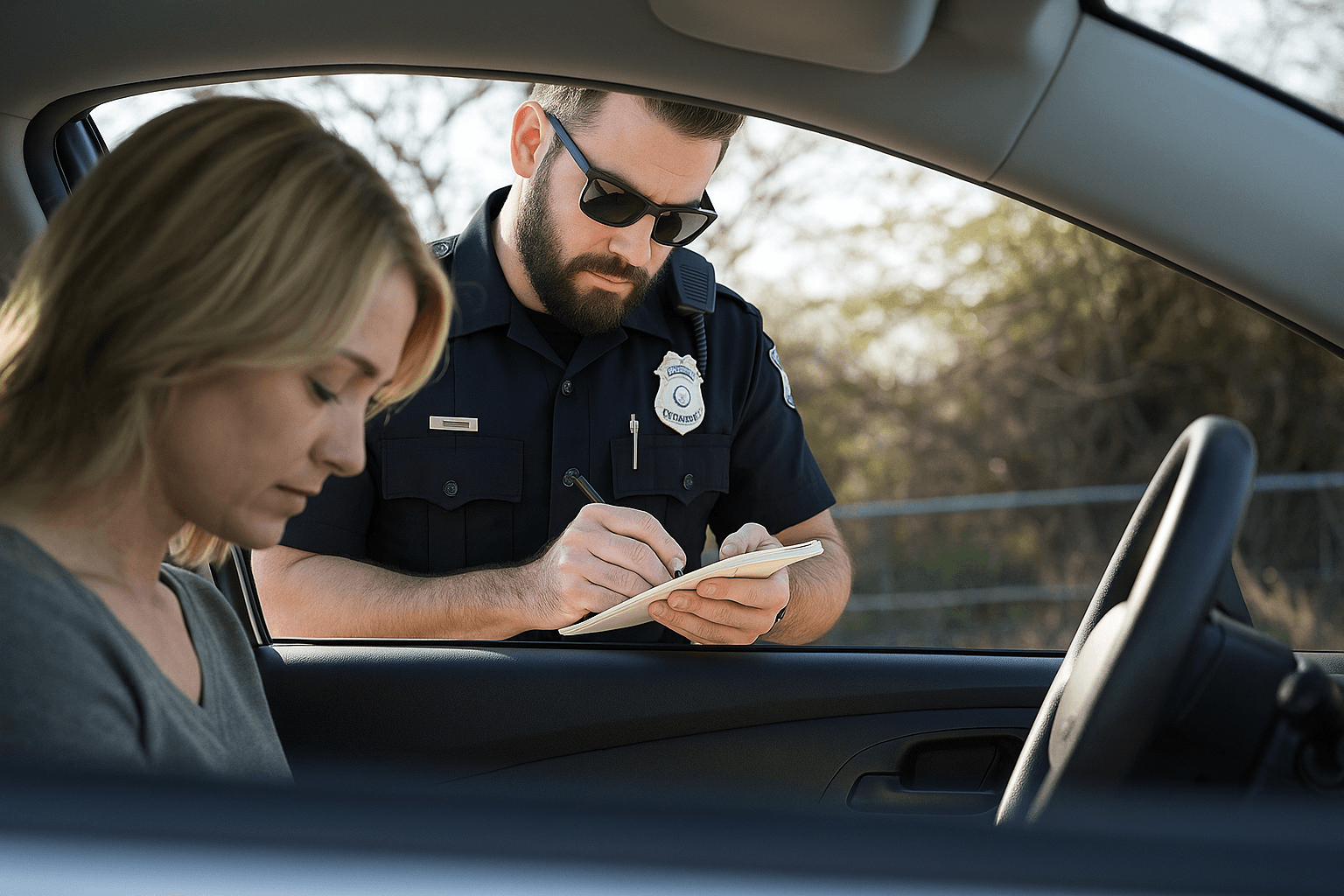
Driving outside your court-authorized route or time restrictions is a separate criminal offense in Utah. If you are stopped by law enforcement while driving on a Limited License, the officer will verify your current location and time against the court order. If you are outside the approved parameters, you can be charged with driving on a suspended license even though you hold a Limited License.
Conviction for violating Limited License terms results in immediate revocation of the Limited License, extension of the underlying suspension period, and potential jail time. Most Utah judges also deny future Limited License petitions from drivers who violated previous court orders, making it substantially harder to regain driving privileges even after the extended suspension ends.
Your ignition interlock device records every trip if your Limited License requires IID installation. The Driver License Division and the court both have access to this data. Trips outside approved hours or locations appear in compliance reports even if you are not stopped by law enforcement. Judges review IID logs at reinstatement hearings and use violation patterns to deny full license restoration.