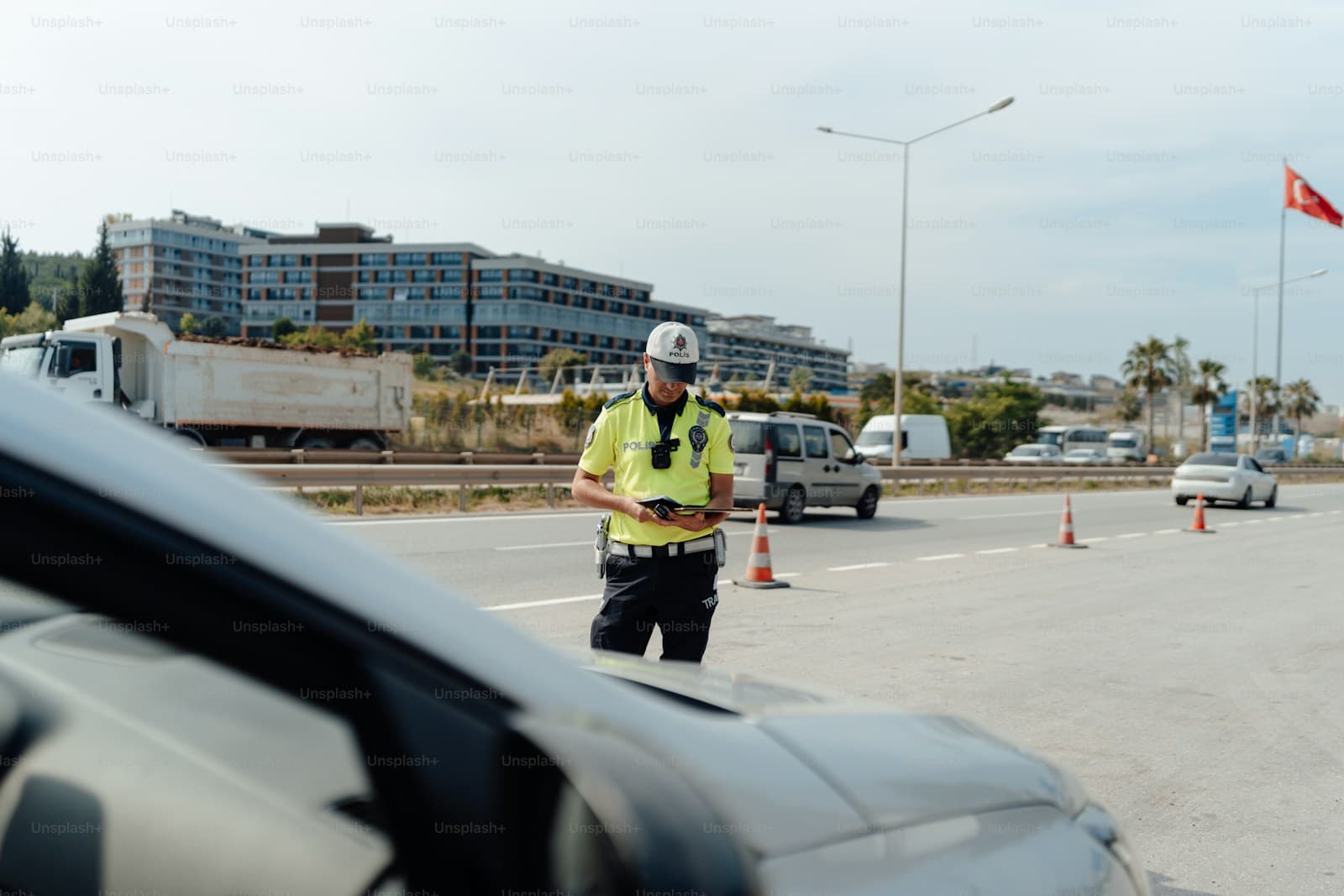
California, Florida, Georgia, Illinois, Pennsylvania, and Washington close their hardship license programs to drivers suspended for unpaid traffic tickets or court fines. Your state's eligibility rules determine whether you can drive legally before paying.
Which States Close Hardship Driving to Unpaid-Fines Suspensions
Six states explicitly close their hardship license programs to drivers suspended for unpaid traffic tickets or court fines: California, Florida, Georgia, Illinois, Pennsylvania, and Washington. These states treat unpaid-fines suspensions as administrative compliance failures rather than safety-based restrictions. The logic: if you have not paid the ticket, the suspension is leverage to compel payment, not a penalty requiring restricted driving relief.
The other 44 states plus DC vary. Michigan, Minnesota, Oklahoma, Texas, Virginia, and Wisconsin explicitly permit hardship licenses for unpaid-fines suspensions. Most other states handle unpaid-fines cases through discretionary review, meaning approval depends on your county DMV or judge's interpretation of eligibility rules. In those states, you can apply, but approval is not guaranteed.
If you live in California, Florida, Georgia, Illinois, Pennsylvania, or Washington and your suspension notice lists unpaid tickets or court fines as the cause, hardship driving is not available to you. Your path forward is payment, payment plan negotiation with the court, or waiting out the suspension. Some states offer license reinstatement fee waivers or reduced fines for low-income drivers. Contact your county clerk's office or the court that issued the original ticket to ask about payment plan options or fee reduction programs.
Why These States Close Hardship Programs to Unpaid-Fines Cases
States distinguish between punitive suspensions and administrative suspensions. Punitive suspensions penalize unsafe driving: DUI, reckless driving, excessive points accumulation. Administrative suspensions enforce compliance: unpaid tickets, unproven insurance, failure to appear in court, child support arrears.
Hardship license programs exist to mitigate the economic harm of punitive suspensions. The state acknowledges your DUI or reckless driving conviction warrants suspension, but also recognizes that total license loss can cost you your job, housing stability, or ability to care for dependents. Hardship licenses let you drive for work, medical appointments, education, and sometimes childcare during the suspension period.
Unpaid-fines suspensions do not fit that framework. The state's position: you were not suspended because you drove dangerously. You were suspended because you ignored a legal obligation. The suspension is leverage to compel payment. Allowing hardship driving removes that leverage. If you can drive to work with a hardship license, the suspension no longer pressures you to pay.
California, Florida, Georgia, Illinois, Pennsylvania, and Washington apply this reasoning explicitly. Their hardship programs are open to DUI cases, points accumulation, and sometimes even uninsured-driving suspensions, but closed to unpaid-fines cases. The policy is not hidden. It appears in state administrative code, DMV handbooks, and court documents. Most drivers do not discover it until they file a hardship application and receive a denial letter citing ineligibility.
Compare car insurance rates in your state
Get quotes from licensed carriers — no obligation, no spam, results in minutes.
Get Your Free Quote✓ No Obligation Required✓ Licensed Carriers Only✓ Available Nationwide✓ Free to Compare
What Happens If You Apply for Hardship Driving in a Closed State
If you apply for a hardship license in California, Florida, Georgia, Illinois, Pennsylvania, or Washington while suspended for unpaid fines, your application will be denied. Most DMVs issue denial letters within 15 to 30 days citing ineligibility based on suspension cause. Some states charge a non-refundable application fee even when the outcome is denial. Georgia charges $25. Illinois charges $50. Pennsylvania charges $68. You lose the fee whether you are approved or denied.
A denial does not extend your suspension or create additional penalties. It simply means you cannot drive legally under any circumstances until you resolve the underlying cause. In unpaid-fines cases, that means paying the ticket balance, entering a court-approved payment plan, or performing community service if your county offers that option as an alternative.
Some drivers assume they can appeal the denial or argue hardship circumstances to a judge. In these six states, appeals are rarely successful. The closure is statutory or regulatory, not discretionary. A judge cannot override the rule unless your suspension cause was misclassified on your record. If your suspension notice lists unpaid tickets as the cause and that classification is accurate, the denial stands.
States That Allow Hardship Licenses for Unpaid-Fines Suspensions
Michigan, Minnesota, Oklahoma, Texas, Virginia, and Wisconsin explicitly permit hardship licenses for drivers suspended due to unpaid traffic tickets or court fines. These states frame unpaid-fines suspensions as economic barriers rather than safety concerns. Their hardship programs prioritize employment protection over payment leverage.
Texas calls its program an occupational driver's license. You apply through the court that issued your ticket, not the DMV. The court evaluates your need for driving privileges and issues an order authorizing restricted driving. Texas requires SR-22 insurance even for unpaid-fines cases. Processing typically takes 30 to 45 days. The filing fee is $10 plus court costs, which vary by county.
Michigan offers a restricted license through the Secretary of State. You file a petition, attend a hearing, and present evidence of employment or medical need. Michigan does not require SR-22 for unpaid-fines suspensions. The application fee is $45. Processing takes 45 to 60 days.
Oklahoma, Minnesota, Virginia, and Wisconsin follow similar pathways. Each state uses its own terminology: Oklahoma calls it a modified license, Minnesota a limited license, Virginia a restricted license, and Wisconsin an occupational license. All six states require proof of employment, proof of insurance, and documentation of your inability to use public transit or rideshare to meet work obligations.
What To Do If You Live in a State That Closes Hardship to Your Case
If your state closes hardship licenses to unpaid-fines suspensions, your options narrow to three: pay the balance in full, negotiate a payment plan, or wait out the suspension.
Most courts offer payment plans for ticket balances over $200. Contact the clerk's office for the court listed on your suspension notice. Ask whether payment plans are available, what the minimum monthly payment is, and whether entering a plan lifts the suspension or only prevents additional penalties. In some jurisdictions, agreeing to a payment plan triggers license reinstatement once you make the first payment and file proof with the DMV. In others, the suspension remains in effect until the balance is paid in full.
Some states offer community service programs that convert unpaid fines into work hours. California, Illinois, and Georgia operate these programs in select counties. You perform volunteer work at a nonprofit or government agency; the court credits your account at a rate of $10 to $15 per hour worked. Community service does not reinstate your license immediately, but it reduces the balance you must pay before reinstatement.
If you cannot pay and cannot arrange a plan, the suspension remains in effect. Most unpaid-fines suspensions are indefinite, meaning they last until you pay. Driving on a suspended license for an unpaid-fines case carries the same penalties as any other suspended-license violation: additional fines, possible jail time, and extension of the suspension period. The risk is not worth it.
Insurance Requirements After Resolving an Unpaid-Fines Suspension
Most unpaid-fines suspensions do not require SR-22 or FR-44 filing. You pay the balance, submit a reinstatement application to your state DMV, and your license is restored without additional insurance documentation. California, Florida, Georgia, Illinois, Pennsylvania, and Washington do not require SR-22 for unpaid-fines cases.
Texas is the exception. Texas requires SR-22 filing for all suspensions that result in hardship license applications, including unpaid-fines cases. If you apply for an occupational license in Texas, you must carry SR-22 insurance for the duration of your suspension plus the full reinstatement period. That typically means 2 to 3 years of SR-22 filing even after your hardship license expires.
If your suspension involved multiple causes, your filing requirement follows the most serious cause. A driver suspended for both unpaid tickets and uninsured driving may face SR-22 requirements even in states that do not require it for unpaid-fines cases alone. Check your suspension notice. If it lists uninsured driving, DUI, reckless driving, or excessive points alongside unpaid fines, assume SR-22 is required and contact a licensed agent to confirm.
SR-22 is not a separate policy. It is a certificate your insurer files with your state DMV confirming you carry at least minimum liability coverage. SR-22 insurance costs the same as standard liability insurance plus a one-time filing fee, typically $15 to $50. Your premium may increase due to your driving record, but the SR-22 itself does not add monthly cost.
Comparing Eligibility Across All 50 States
Unpaid-fines eligibility for hardship licenses breaks into three tiers. Tier one: states that explicitly allow it. Tier two: states that close it. Tier three: states that leave it to discretionary review.
Tier one (explicitly allow hardship for unpaid-fines suspensions): Michigan, Minnesota, Oklahoma, Texas, Virginia, Wisconsin. These states permit restricted driving applications from drivers suspended for unpaid tickets. Approval is not automatic, but the program is open.
Tier two (explicitly close hardship to unpaid-fines suspensions): California, Florida, Georgia, Illinois, Pennsylvania, Washington. These states bar hardship applications from drivers whose suspension cause lists unpaid traffic tickets or court fines. No exceptions, no discretionary review.
Tier three (discretionary review or unclear eligibility): the remaining 38 states plus DC. Most of these states do not publish explicit rules about unpaid-fines eligibility. Your application is reviewed case by case. Approval depends on your county DMV examiner, the judge assigned to your hearing, or the administrative law officer reviewing your petition. Some drivers are approved. Others are denied. The variance is county-specific, not statewide.
If you live in a tier-three state, assume hardship is available but not guaranteed. File your application, present proof of employment and insurance, and document your inability to use public transit. The worst outcome is denial and a lost application fee. The best outcome is restricted driving permission while your suspension remains in effect.