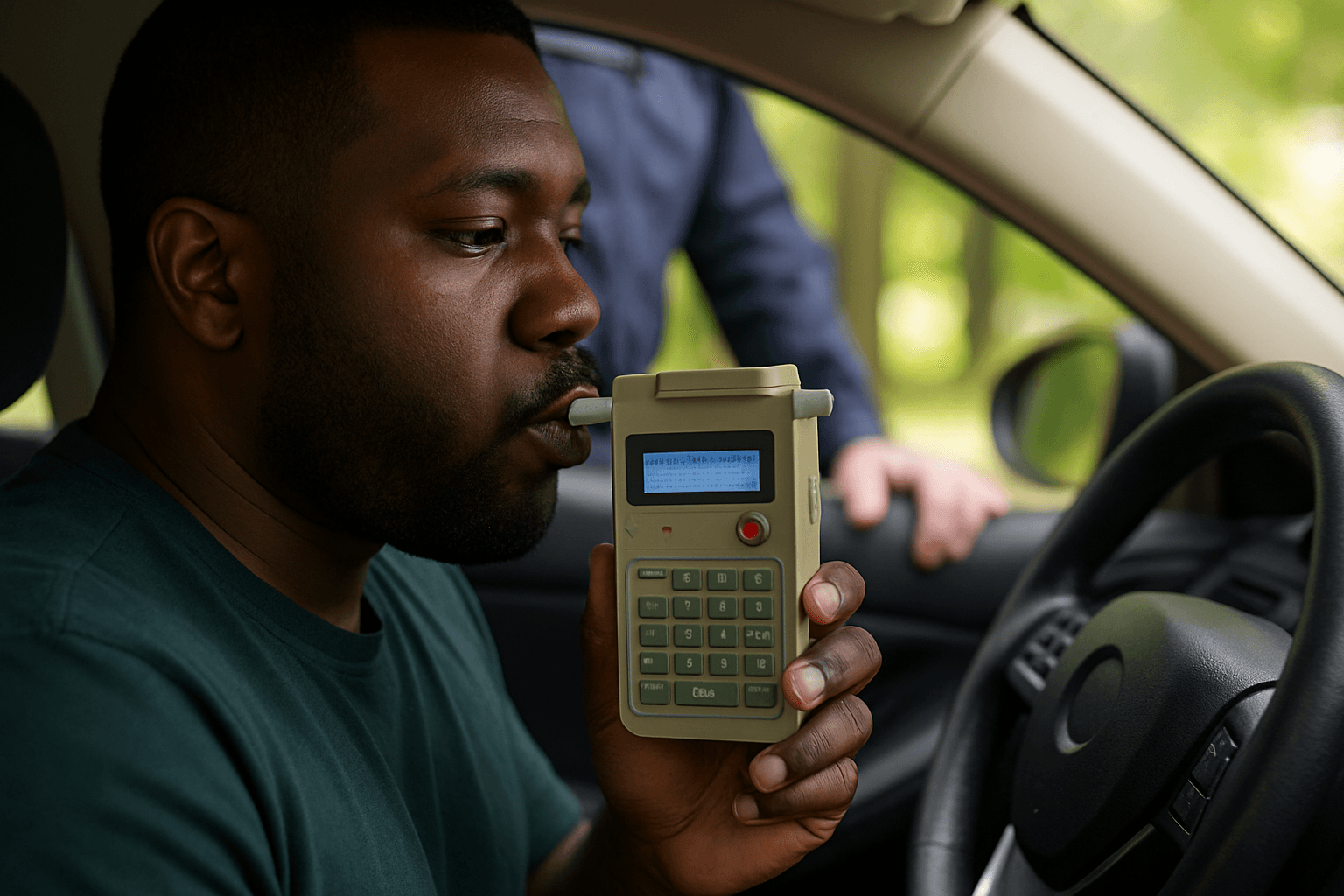
Oklahoma requires SR-22 filing before your Modified Driver License application is reviewed, and the 3-year clock starts from your filing date — not from the date you're eventually granted restricted driving. Most applicants learn this too late and lose months of their filing period to the hard suspension window.
Why Oklahoma Requires SR-22 Before Your Modified License Application Is Reviewed
Oklahoma DPS will not review your Modified Driver License application until you file SR-22 proof of financial responsibility with the state. This applies to DUI-triggered administrative revocations under 47 O.S. § 6-205.1 (Egan's Law), uninsured motorist suspensions under 47 O.S. § 7-606, and most other administrative suspension types.
The SR-22 filing requirement is distinct from the Modified License itself. SR-22 is an insurance certificate your carrier files with DPS proving you maintain continuous liability coverage at or above Oklahoma's state minimums: $25,000 bodily injury per person, $50,000 per accident, and $25,000 property damage. Oklahoma calls this certificate "proof of financial responsibility," and DPS requires it on file before your hardship application moves forward.
Most applicants assume they can file SR-22 after the Modified License is granted. This assumption costs them weeks or months. DPS processes hardship applications in the order received, but only after all required documentation is complete — and SR-22 is required documentation for most suspension types. The application sits in pending status until your carrier transmits the SR-22 certificate electronically to DPS.
The Timing Problem: Hard Suspension Periods Burn SR-22 Filing Time You Already Paid For
Oklahoma's Egan's Law imposes a mandatory 30-day hard suspension period before you are eligible to apply for a Modified Driver License after a first-offense DUI administrative revocation. During those 30 days, you cannot drive under any circumstances — no work commute, no school runs, no emergency medical trips.
Here is the timing problem most applicants miss: the 3-year SR-22 filing requirement starts the day your carrier files the certificate with DPS, not the day your Modified License is granted. If you file SR-22 on day 1 of your suspension but don't receive your Modified License until day 60, you have already used 60 days of your 3-year filing period without any driving privileges.
The hard suspension window is non-waivable. Even if you file SR-22 immediately, submit your Modified License application on day 1, and provide every required document, DPS will not grant the Modified License until the 30-day hard period expires. If your application is incomplete or DPS requests additional documentation, the approval can stretch to 45 or 60 days. Every day between SR-22 filing and Modified License approval burns a day of your 3-year filing clock while you sit unable to drive.
This structure penalizes fast filers. Applicants who wait until day 28 to file SR-22 and day 29 to submit their Modified License application lose only 2-3 days of filing time. Applicants who file everything on day 1 can lose a full month or more.
Compare car insurance rates in your state
Get quotes from licensed carriers — no obligation, no spam, results in minutes.
Get Your Free Quote✓ No Obligation Required✓ Licensed Carriers Only✓ Available Nationwide✓ Free to Compare
What the 3-Year SR-22 Filing Period Actually Controls in Oklahoma
Oklahoma requires continuous SR-22 filing for 3 years for most administrative suspension triggers, including DUI administrative revocations and uninsured motorist suspensions. The 3-year period is a legal compliance window, not just an insurance requirement.
During those 3 years, your carrier must maintain an active SR-22 certificate on file with DPS. If your policy lapses, cancels, or you switch carriers without filing a new SR-22 certificate, DPS receives an electronic notification within 10 days and immediately re-suspends your license. The re-suspension is automatic — no hearing, no warning letter, no grace period.
The 3-year clock does not pause when your Modified License ends and you reinstate to full unrestricted driving. If you were granted a Modified License for 6 months, then paid the $125 reinstatement fee and restored full driving privileges, you still owe 2.5 more years of continuous SR-22 filing. Many drivers assume SR-22 ends when the Modified License ends. It does not. The Modified License is a temporary restricted privilege during the revocation period. The SR-22 requirement is a separate 3-year financial responsibility obligation that runs concurrently with the revocation and extends beyond it.
If you allow your SR-22 to lapse at any point during the 3 years, the clock resets. Oklahoma does not credit partial compliance. A driver who maintains SR-22 for 2 years and 10 months, then lets the policy cancel, must start a new 3-year filing period from the date they refile.
What Oklahoma DPS and Courts Require Before Your Modified License Application Is Reviewed
Oklahoma operates a dual-track hardship application system: district court petitions for criminal conviction-based suspensions, and DPS administrative applications for administrative license revocations. The correct track depends on the nature of your suspension.
For DUI administrative revocations under Oklahoma's Implied Consent Law (47 O.S. § 6-205.1), you apply through DPS. Required documentation includes: proof of SR-22 insurance filing, proof of employment or essential travel need (employer affidavit, school enrollment letter, medical appointment records), court order or DPS approval depending on suspension type, and payment of applicable fees. DPS does not publish a standardized application fee for Modified Licenses, and processing times vary by district office. Plan for 15-30 business days after all documents are submitted.
For suspensions triggered by criminal traffic convictions, you petition the district court that imposed the suspension. The court reviews your employment documentation, SR-22 proof, and any other conditions it deems relevant. Court hearings for Modified License petitions are scheduled at the court's discretion and can take 30-60 days from petition filing to hearing date.
Ignition interlock device installation is mandatory for DUI-triggered Modified Licenses in Oklahoma. You must install an IID with a DPS-certified provider before your Modified License is granted. The IID requirement applies during the entire Modified License period and often extends beyond it as a condition of full reinstatement. IID costs in Oklahoma typically run $75-$125 for installation and $60-$90 per month for monitoring and calibration.
How to Minimize the Filing Time You Lose to the Application Process
The most effective strategy is to delay SR-22 filing until you are 5-7 days away from the end of your hard suspension period. This minimizes the number of days your SR-22 clock runs while you have no driving privileges.
If your DUI administrative revocation began on March 1 and you face a 30-day hard suspension, file SR-22 on March 24 or 25. Submit your Modified License application on March 28 or 29, at the earliest point DPS will accept it. DPS typically requires applicants to wait until the hard period is nearly complete before applications are processed. By filing late in the hard suspension window, you compress the gap between SR-22 activation and Modified License approval.
This approach assumes you have all other required documentation ready: employer affidavit, IID installation receipt, court order if applicable, and any DPS-required forms. If any document is missing, DPS will hold your application in pending status until you provide it. Every day in pending status burns a day of your SR-22 filing period.
Some applicants cannot delay SR-22 filing because their carrier requires it as a condition of issuing or maintaining the underlying liability policy. Non-standard carriers writing high-risk policies sometimes require SR-22 filing within 24-48 hours of policy inception. If your carrier imposes this rule, you cannot use the delayed-filing strategy and will lose the hard suspension days regardless. Confirm your carrier's SR-22 filing timeline before you purchase the policy.
What Happens If Your SR-22 Lapses During the Modified License Period
If your SR-22 lapses at any point during your Modified License period, DPS revokes the Modified License immediately. Oklahoma's Uninsured Vehicle Identification System (UVIS) monitors SR-22 certificates in real time. When your carrier cancels your policy or files an SR-22 termination notice with DPS, the system flags your driver record within 10 days.
DPS sends a notice of re-suspension to your last known address, but the re-suspension is effective from the date of the lapse, not the date you receive the notice. If you continue driving on the Modified License after your SR-22 lapses, you are driving on a suspended license — a misdemeanor criminal offense in Oklahoma that carries jail time, additional fines, and extension of your original suspension period.
To reinstate after an SR-22 lapse, you must refile SR-22, pay a new $125 reinstatement fee, and in some cases reapply for a new Modified License. The 3-year SR-22 filing clock resets from the date you refile. If you had 18 months remaining on your original 3-year period, you now owe a full 3 years from the new filing date.
Repeat SR-22 lapse offenders may be required to maintain SR-22 for longer than 3 years as a condition of reinstatement. Oklahoma DPS has discretion to impose extended filing periods for drivers with multiple compliance failures. Some repeat offenders are required to file SR-22 for 5 years or more.
Finding Coverage That Meets Oklahoma's SR-22 and Modified License Requirements
Not all carriers write policies for drivers under administrative revocation or Modified License restrictions. Oklahoma requires SR-22 filing through a carrier licensed to do business in the state, and the policy must meet or exceed Oklahoma's minimum liability limits.
Carriers confirmed to write SR-22 policies in Oklahoma include Bristol West, Geico, National General, Progressive, State Farm, and The General. Bristol West, National General, and The General specialize in high-risk and post-suspension coverage and typically offer the most competitive rates for drivers with recent DUI revocations or uninsured suspensions. Progressive and Geico write SR-22 policies for some suspended-license applicants but may decline coverage for drivers with multiple violations or very recent DUI convictions.
Monthly premiums for SR-22 liability policies in Oklahoma typically range from $110 to $210 per month for minimum state limits, depending on your age, violation history, and ZIP code. Non-owner SR-22 policies — for drivers who do not own a vehicle but need to file SR-22 to maintain their Modified License — typically cost $40-$80 per month. Non-owner policies satisfy Oklahoma's SR-22 filing requirement and provide liability coverage when you drive a vehicle you do not own, but they do not cover a vehicle titled in your name.
The SR-22 certificate itself is an administrative filing, not a separate insurance product. Most carriers charge a one-time SR-22 filing fee of $15-$50 when they transmit the certificate to DPS. A few carriers waive the filing fee. The fee is separate from your premium and is due at policy inception.
Compare quotes from multiple carriers before you commit. Rate variation for suspended-license applicants in Oklahoma is significant. The difference between the highest and lowest quote can exceed $100 per month for identical coverage.