Nebraska splits hardship access into two permit systems—Employment Driving Permit for general suspensions and Ignition Interlock Permit for DUI cases—and most applicants file for the wrong one. Setup timing, SR-22 filing sequence, and duration depend entirely on which permit your suspension qualifies for.
Nebraska's Dual Hardship Permit System: EDP vs IIP
Nebraska operates two parallel restricted-driving permit systems, not one. The Employment Driving Permit (EDP) covers most suspension causes—points accumulation, uninsured driving violations, unpaid tickets—and allows work, school, medical, and court-approved purposes. The Ignition Interlock Permit (IIP) is the mandatory track for DUI suspensions and requires installation of a state-certified ignition interlock device for the entire permit period. The programs are governed by separate statutes: Neb. Rev. Stat. § 60-4,118 for EDP, § 60-6,211.05 for IIP.
Which permit you apply for determines your SR-22 filing timeline, device requirements, and processing sequence. Applying for an EDP when you need an IIP delays your application by weeks and guarantees denial. The Nebraska DMV does not automatically redirect you to the correct program—they deny the application and you start over. DUI and alcohol-related suspension notices should explicitly state IIP eligibility, but administrative license revocations (ALR) issued at the traffic stop sometimes do not make the distinction clear.
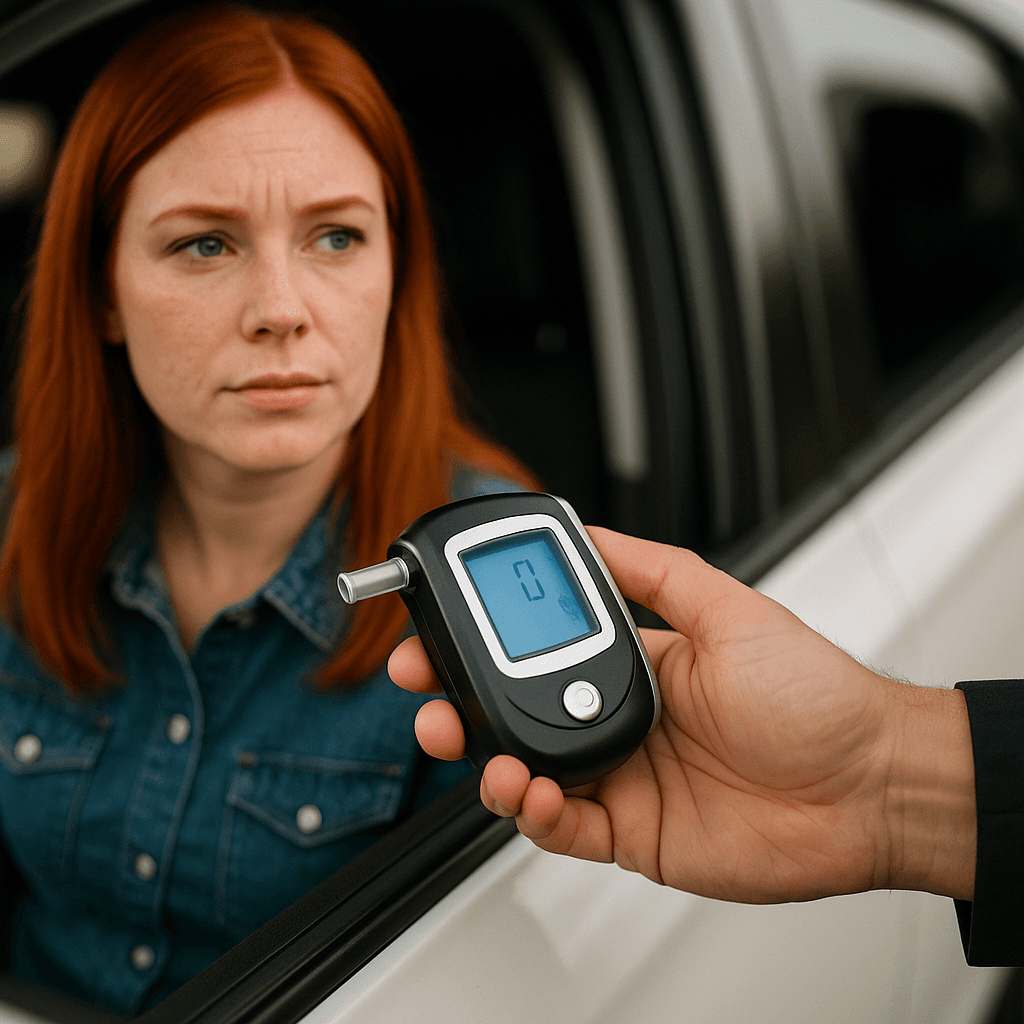
If your suspension stems from a DUI arrest, test refusal, or OWI conviction, you are pursuing the IIP track. All other suspensions use the EDP track. The confusion point: many drivers receive both an administrative DMV suspension (ALR) immediately after arrest and a later court-ordered suspension after conviction. The ALR may be phrased generically, but the DUI trigger still requires the IIP pathway.
SR-22 Filing Timing for Employment Driving Permit Applications
For EDP applications, SR-22 filing is often required but not universally required. The Nebraska DMV requires SR-22 for uninsured-driving suspensions, some points-related suspensions, and certain financial responsibility cases. Unpaid-ticket suspensions and child support arrears suspensions typically do not require SR-22 unless the underlying violation carried a separate insurance requirement.
You must file SR-22 before submitting your EDP application if the suspension notice lists SR-22 as a reinstatement condition. The DMV will not process the application without proof of filing already on record. The carrier files electronically with the Nebraska DMV through the state's Insurance Verification System (ISVS) under Neb. Rev. Stat. § 60-3,168. Confirmation appears in the DMV system within 24-48 hours of carrier submission. Wait for that confirmation before mailing or delivering your EDP application packet.
The application fee is $50 and must accompany the application form, proof of employment or qualifying need (work schedule letter on employer letterhead, school enrollment verification, or medical appointment documentation), and the SR-22 proof of insurance confirmation. Processing time is not published by the DMV and varies by county, but applicants report 7-14 business days from submission to approval or denial notification. The permit itself is restricted to the hours and routes listed on the approval—no general driving is allowed.
Compare car insurance rates in your state
Get quotes from licensed carriers — no obligation, no spam, results in minutes.
Get Your Free Quote✓ No Obligation Required✓ Licensed Carriers Only✓ Available Nationwide✓ Free to Compare
Ignition Interlock Permit Timeline and Hard Suspension Period
IIP applications follow a different sequence because Nebraska imposes a mandatory 60-day hard suspension period for first-offense DUI before the IIP becomes available. You cannot apply for the IIP during those first 60 days—the application will be rejected. Second and subsequent DUI offenses carry longer hard suspension periods. The clock starts on the date of the administrative license revocation (ALR), not the conviction date.
During the hard suspension, no restricted driving is allowed. After the 60-day period expires, you may apply for the IIP if you have completed the following: enrollment in a court-ordered alcohol education or treatment program, installation of a state-certified ignition interlock device by an approved vendor, and filing of SR-22 insurance. The SR-22 must be filed before applying for the IIP—the DMV will not process the application without it.
The ignition interlock device must be installed before you submit the IIP application. Nebraska maintains a list of certified vendors; installation by a non-certified vendor voids the application. Installation costs typically run $75-$150, with monthly lease fees of $60-$90 and calibration appointments every 30-60 days at $50-$80 per visit. The IIP application fee matches the EDP fee at $50. SR-22 filing fees are $15-$50 depending on carrier, and the premium increase for SR-22-required policies averages $85-$140/month over non-SR-22 rates.
SR-22 Filing Duration by Suspension Cause
SR-22 filing duration depends on the violation that triggered the suspension, not the permit type. DUI and OWI suspensions require 3 years of continuous SR-22 filing from the date of reinstatement, not from the date of conviction or arrest. The clock does not start until your full license is reinstated—the restricted driving period under the IIP does not count toward the 3-year requirement.
Uninsured-driving suspensions typically require 1-2 years of SR-22 filing depending on whether it is a first or subsequent offense. Points-related suspensions may or may not require SR-22 depending on the underlying violations that accumulated the points. If SR-22 is required, the duration is usually 1-3 years. Child support arrears and unpaid-ticket suspensions do not require SR-22 unless a separate financial responsibility issue exists.
The filing period must be continuous. If your policy lapses or is canceled for non-payment and the carrier files an SR-26 cancellation notice with the Nebraska DMV, your license is re-suspended immediately and the filing clock resets to zero when you refile. There is no grace period. Reinstatement after a lapse-triggered re-suspension requires paying the $125 reinstatement fee again, refiling SR-22, and waiting for DMV processing—typically 3-5 business days for electronic filings.
What Happens If You Apply for the Wrong Permit
The Nebraska DMV does not process cross-permit applications. If you submit an EDP application for a DUI suspension, the DMV denies the application and refunds nothing. The $50 fee is forfeited. You must resubmit using the correct IIP application form, pay the $50 fee again, and wait for the new processing cycle.
The denial letter typically does not explain the permit-type error in clear terms—it states that the application does not meet eligibility criteria. Many applicants interpret this as a documentation problem and resubmit the same EDP form with additional paperwork, which the DMV denies again. The correct response is to confirm the suspension cause with the DMV Driver and Vehicle Records division (online at dmv.nebraska.gov or by phone) and determine whether EDP or IIP applies before resubmitting.
If you are working with an attorney or DUI case manager, they should clarify which permit track applies at the time of sentencing or plea agreement. If you are applying without legal representation, call the Nebraska DMV directly before purchasing SR-22 insurance or paying the permit application fee. The DMV will not volunteer the EDP/IIP distinction unprompted, but they will confirm which program your suspension qualifies for if you ask explicitly.
Cost Stack for EDP and IIP Applications
The total cost to obtain and maintain a Nebraska hardship permit includes application fees, SR-22 filing fees, premium increases, and device costs if applicable. For EDP applications without ignition interlock, expect: $50 application fee, $15-$50 SR-22 filing fee, and a $60-$120/month premium increase over non-SR-22 policies. Total first-month cost: $125-$220. Monthly cost after setup: $60-$120.
For IIP applications with ignition interlock, add device costs: $75-$150 installation, $60-$90/month lease, and $50-$80 calibration every 30-60 days. Total first-month cost including SR-22 and permit application: $310-$490. Monthly cost after setup: $145-$250 including device lease and insurance. Over a 12-month IIP period, total cost runs approximately $2,050-$3,490.
Non-owner SR-22 policies are available for drivers without vehicles, covering liability requirements when driving borrowed or rented vehicles. Monthly premiums for non-owner SR-22 policies in Nebraska typically range $40-$85/month. Non-owner policies do not satisfy ignition interlock requirements—you cannot use a non-owner policy for an IIP application because the device must be installed in a specific registered vehicle tied to your policy.
Finding Coverage That Meets Nebraska Filing Requirements
Not all carriers write SR-22 policies in Nebraska, and among those that do, some refuse IIP-related filings or decline drivers with recent DUI convictions. Geico, Progressive, State Farm, and The General all file SR-22 in Nebraska and accept online applications for most suspension causes. Dairyland and Bristol West specialize in high-risk and post-DUI coverage and typically offer competitive rates for IIP filings.
Request quotes from at least three carriers because rate spreads for SR-22 policies can exceed $100/month between the highest and lowest quotes. Provide accurate information about your suspension cause, permit type (EDP or IIP), and vehicle information during the quote process. Misrepresenting the permit type or suspension trigger delays filing and may void coverage.
Once you select a carrier, request immediate electronic SR-22 filing with the Nebraska DMV. Confirm that the filing appears in the DMV system before submitting your permit application. Most carriers file within 24 hours of policy binding, but processing delays occur during high-volume periods. Check your DMV record online at dmv.nebraska.gov or call the Driver Records division to confirm filing status before mailing your application.