Montana district courts require SR-22 proof before issuing a probationary license, but carriers won't file until you have a policy number. The sequence determines whether you wait 7 days or 45.
Why Montana's Court-Issued Probationary License Requires SR-22 Before the Hearing
Montana Code Annotated § 61-5-208 grants district courts authority to issue probationary licenses, but the petition requires proof of financial responsibility at the time of filing. Montana Motor Vehicle Division (MVD) treats SR-22 as the only acceptable proof for DUI-triggered suspensions under MCA § 61-8-402, which means your carrier must submit the certificate to MVD before the judge reviews your petition.
The timing gap appears because carriers require an active policy before filing SR-22. Most standard carriers refuse to bind coverage until your license status changes from "suspended" to "probationary," but the court won't change your status without the SR-22 already on file. This creates a procedural loop that suspends your application unless you approach the sequence correctly.
District courts in Montana do not issue probationary licenses pending SR-22 filing. The certificate must be on file with MVD before the hearing date, which means you need a carrier willing to bind coverage and file immediately, typically within 24-48 hours of policy purchase. Standard carriers process SR-22 filings within 3-7 business days; non-standard carriers specializing in high-risk policies often file same-day or next-day.
How to Structure the Filing Sequence for Court Approval
Contact a non-standard carrier licensed in Montana that writes SR-22 policies for suspended drivers before your petition is filed. Carriers such as Bristol West, The General, National General, Progressive, and Geico operate in Montana and accept applications during active suspensions. Request immediate SR-22 filing at the time of policy binding.
Provide the carrier with your full name, date of birth, Montana driver's license number, and the suspension case number from your MVD notice. The carrier files electronically with MVD, and the certificate appears in the MVD system within 1-3 business days for electronic filers. Once the SR-22 is logged in the MVD database, print a confirmation letter from the carrier showing the filing date and certificate number.
File your probationary license petition with the district court in the county where the violation occurred, attaching the SR-22 confirmation letter, proof of employment or essential travel need, and the completed petition form. Montana courts define "essential travel" broadly given the state's rural geography, and route restrictions are typically more flexible than urban states. Judges review the SR-22 status directly in the MVD system at the hearing, so the filing must be complete before the scheduled date.
Compare car insurance rates in your state
Get quotes from licensed carriers — no obligation, no spam, results in minutes.
Get Your Free Quote✓ No Obligation Required✓ Licensed Carriers Only✓ Available Nationwide✓ Free to Compare
What Happens If You File the Petition Before SR-22 Is in the MVD System
Montana district courts deny probationary license petitions when SR-22 proof is not on file at the time of the hearing. The denial requires refiling the petition, paying a second court filing fee (varies by county, typically $50-$150), and waiting for a new hearing date, which can add 30-60 days to the process.
Some counties allow amended petitions if the SR-22 is filed within 10 days of the original hearing, but this is discretionary and depends on the judge's docket. Counties with higher case volume are less likely to accommodate amendments. Refiling also extends your hard suspension period because probationary license eligibility under MCA § 61-8-402 does not begin until the court grants the license, not when you file the petition.
If your carrier delays SR-22 filing beyond the expected window, contact MVD directly at 406-444-3933 to confirm whether the certificate has been received electronically. Carriers sometimes report "filed" when they have submitted internally but not yet transmitted to the state. MVD can verify the filing date and certificate number in real time.
How Long SR-22 Filing Lasts After Montana Probationary License Is Granted
Montana requires 3 years of continuous SR-22 filing for DUI-related license revocations, measured from the date the MVD receives the initial SR-22 certificate, not the date the probationary license is granted. If your SR-22 filing lapses at any point during the 3-year period, MVD suspends your driving privileges immediately under Montana's electronic insurance verification system.
The 3-year requirement applies even if you complete your probationary license period early or reinstate to a full unrestricted license. The SR-22 filing obligation is independent of license status and runs concurrently with probation, not sequentially. Canceling your policy or allowing it to lapse triggers an automatic MVD notification, and the suspension takes effect within 10-15 days unless you file a replacement SR-22 from a new carrier.
Carriers charge approximately $15-$50 annually for SR-22 filing fees, separate from premium costs. Monthly premium estimates for SR-22 policies in Montana range from $140-$220 for drivers with a single DUI, depending on vehicle, age, and county. Estimates based on available industry data; individual rates vary by driving history, coverage selections, and location.
Montana Ignition Interlock Requirement for DUI Probationary Licenses
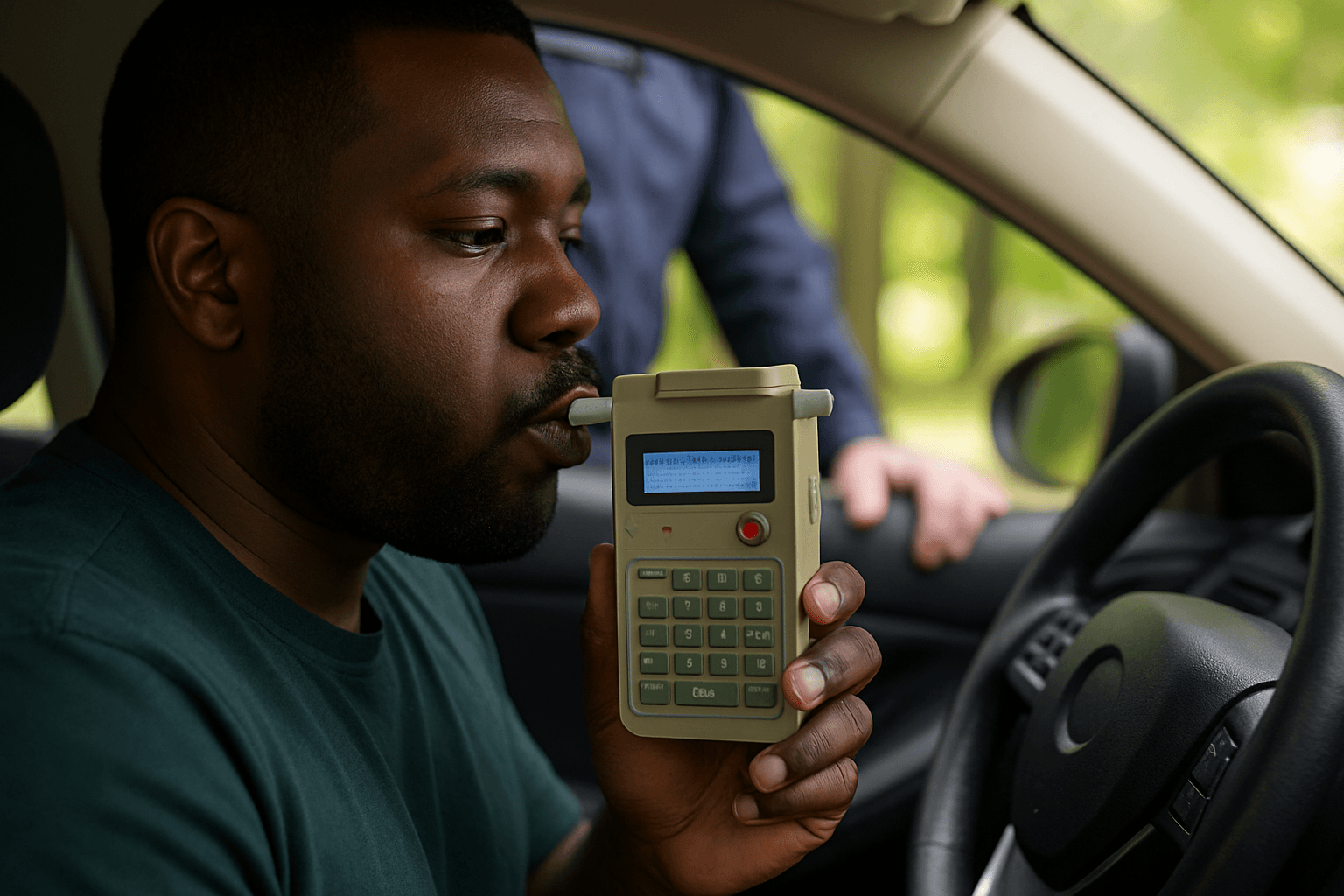
MCA § 61-8-442 requires ignition interlock devices (IID) for all DUI-related probationary licenses in Montana. The court order granting your probationary license will specify IID installation as a condition, and you must provide proof of installation to MVD before the probationary license becomes active.
IID providers in Montana charge approximately $70-$100 for installation and $60-$90 per month for monitoring and calibration. The device must remain installed for the duration of the probationary license period, which varies by offense: first-offense DUI probationary licenses typically last 6-12 months, while subsequent offenses extend to 12-24 months depending on the judge's order and the severity of the violation.
Your SR-22 policy must list the IID-equipped vehicle. If you do not own a vehicle, Montana allows non-owner SR-22 policies, but the probationary license still requires IID installation in any vehicle you operate. Some employers provide IID-equipped fleet vehicles for employees with restricted licenses; if this applies to you, confirm with your attorney whether the court will accept employer-provided IID documentation in lieu of a personal device.
What to Do If Your Carrier Won't File SR-22 During Active Suspension
Standard carriers such as State Farm, Allstate, and Nationwide often decline to write new policies for drivers with active DUI suspensions, even when the policy is required for probationary license petitions. If your current carrier cancels your policy or refuses SR-22 filing, contact non-standard carriers immediately.
Non-standard carriers specialize in high-risk policies and accept applications during suspension periods. Request same-day or next-day SR-22 filing when binding the policy, and confirm the carrier's electronic filing capability with MVD. Paper SR-22 filings take 7-14 days to process and will delay your court hearing.
If cost is prohibitive, apply for a non-owner SR-22 policy, which provides liability coverage when you drive vehicles you do not own. Non-owner policies cost approximately $40-$70 per month in Montana and satisfy the SR-22 filing requirement for probationary license petitions. You cannot drive your own vehicle on a non-owner policy, but it allows court approval while you arrange access to an employer or family member's IID-equipped vehicle.