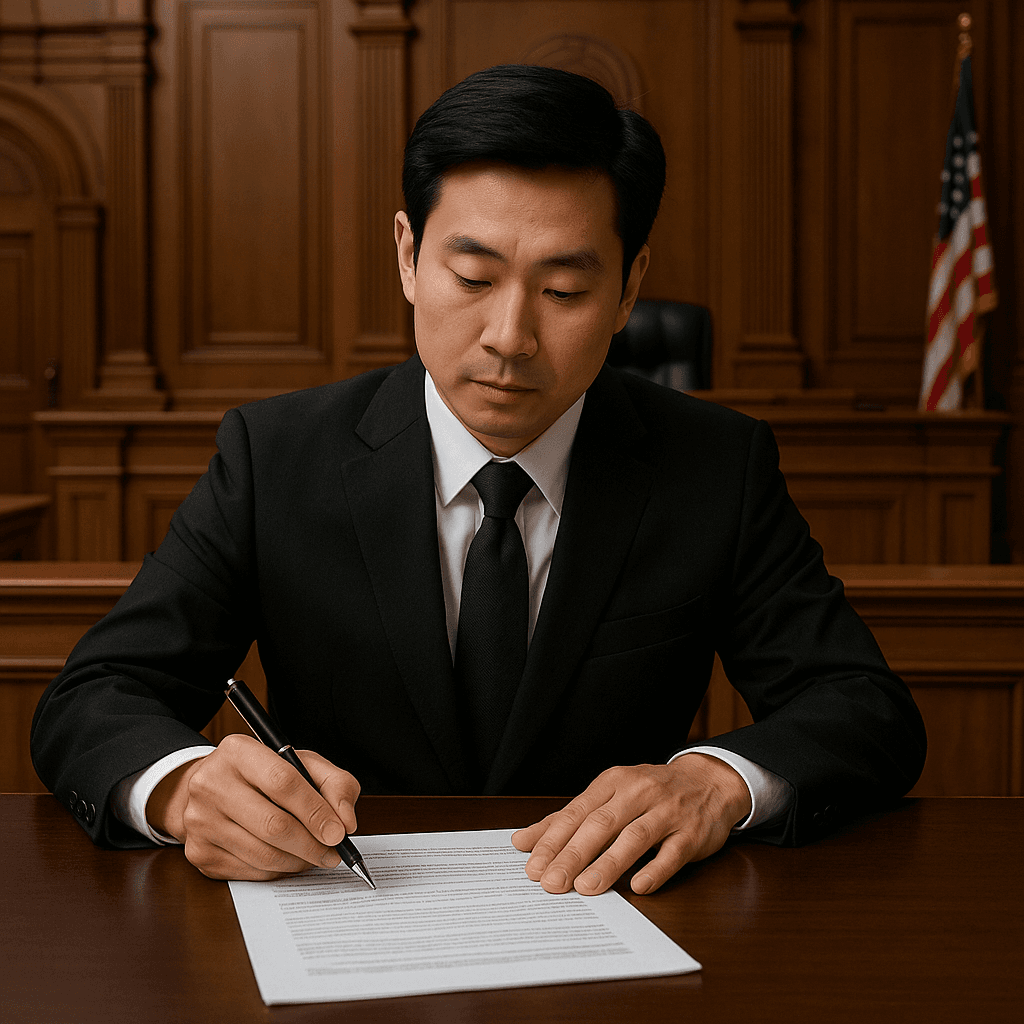
Kentucky requires SR-22 filing before the District Court will consider your hardship license petition, and the filing must remain active for the full suspension period—not just the restricted-driving term. Most applicants miss the sequence.
Why Kentucky Requires SR-22 Before the Hardship Petition, Not After
Kentucky requires proof of SR-22 financial responsibility filing as part of your District Court hardship license petition. You cannot petition without it. Most drivers assume they file SR-22 after the court grants the hardship license, but Kentucky's court-based application path reverses the sequence: file SR-22, gather documentation, then petition.
The Kentucky Transportation Cabinet (KYTC) enforces this requirement independently of the court. Even if a judge grants your hardship license, KYTC will not issue the restricted credential until SR-22 appears in their system. This dual-gate structure means delays in SR-22 processing translate directly into delays in restricted driving.
Because applications go through individual District Courts rather than a centralized DMV process, processing times and specific filing fees vary by county. Jefferson County (Louisville) and Fayette County (Lexington) may have different administrative procedures than rural district courts, but the SR-22-first sequence applies statewide.
How Long You Must Maintain SR-22 Filing in Kentucky
Kentucky typically requires SR-22 maintenance for 3 years after a DUI conviction. The clock starts from the conviction date, not the filing date or the hardship license issuance date. If your suspension period is 12 months but your SR-22 requirement is 3 years, you must maintain filing for the full 3-year term even after full license reinstatement.
Letting SR-22 lapse at any point during the required period triggers a new administrative suspension and requires full reinstatement before KYTC will restore your license. The hardship license itself does not shorten the SR-22 obligation. The restricted-driving period and the SR-22 filing period operate on separate timelines.
Non-DUI suspensions (insurance lapse, uninsured accident involvement, certain other offenses) also carry SR-22 requirements, but the duration varies by trigger. DUI consistently carries the longest filing period. Verify your specific SR-22 duration with the court order or KYTC suspension notice before purchasing coverage.
Compare car insurance rates in your state
Get quotes from licensed carriers — no obligation, no spam, results in minutes.
Get Your Free Quote✓ No Obligation Required✓ Licensed Carriers Only✓ Available Nationwide✓ Free to Compare
The Court Petition Sequence and Required Documentation
Kentucky hardship applications require a petition to the District Court in the county where you reside or where the suspension was ordered. Required documentation includes the petition itself, proof of hardship (employment records, medical necessity documentation, or school enrollment), proof of SR-22 insurance, and payment of applicable court costs. Court costs vary by county.
The hardship route and time restrictions are court-defined. Most petitions result in approval for travel between home and work, school, medical appointments, or other court-approved purposes, limited to specific hours necessary for those purposes. The court does not approve general errands, social visits, or recreational driving.
First DUI offense requires a 30-day hard suspension before hardship eligibility under KRS 189A.410. Second offense requires 12 months. Third and subsequent offenses generally render hardship unavailable. These tiers are statutory and the court cannot waive them. Timing your petition before the hard period expires wastes filing fees and court costs.
Ignition Interlock Requirement and the IIL Alternative
Kentucky requires ignition interlock device (IID) installation for DUI offenders seeking hardship licenses. The IID must remain installed and functional for the duration of the restricted-driving period. Monthly IID lease and calibration costs typically range $70–$100, paid directly to the IID vendor, not included in SR-22 premium.
Kentucky's 2020 SB 133 created the Ignition Interlock License (IIL) as a distinct alternative to the traditional hardship license for DUI offenders. Drivers who install an approved IID may obtain an IIL, potentially bypassing the hard suspension period entirely for first-offense DUI. This is a significant bifurcation of the DUI hardship framework.
The IIL path operates through KYTC under KRS 189A.340, not through District Court petition. Eligibility, processing, and restrictions differ from the court-based hardship system. Most first-offense DUI drivers now pursue the IIL track rather than petitioning for a traditional hardship license because the IIL avoids the 30-day hard period. Verify which pathway applies to your suspension type before filing SR-22 or petitioning the court.
What Hardship License SR-22 Costs in Kentucky
SR-22 filing itself carries a one-time carrier processing fee, typically $15–$50 depending on the insurer. This fee is separate from your premium. The premium increase from adding SR-22 to a liability policy in Kentucky typically ranges $50–$90/month above standard rates for drivers with DUI convictions. Clean-record drivers filing SR-22 for insurance lapse suspensions see smaller increases, typically $20–$40/month.
Non-owner SR-22 policies (for drivers without vehicles) typically cost $30–$60/month in Kentucky, including the SR-22 endorsement. Non-owner coverage satisfies the state's financial responsibility requirement but does not provide collision or comprehensive coverage for any vehicle you drive.
Total cost stack for a Kentucky DUI hardship license over the first year: court petition filing fee (varies by county, typically $100–$200), SR-22 filing fee ($15–$50), premium increase ($600–$1,080 annually), IID installation ($75–$150), IID monthly lease and calibration ($840–$1,200 annually), and reinstatement fee upon full license restoration ($40). Estimates based on available industry data; individual results vary.
How to Get SR-22 Coverage That Meets Kentucky Requirements
Kentucky accepts SR-22 certificates from any licensed auto insurer authorized to write policies in the state. Not all carriers write high-risk policies. Carriers confirmed to write SR-22 in Kentucky include Geico, Progressive, Bristol West, Dairyland, National General, and State Farm. Non-owner SR-22 is available through Geico, Progressive, and Dairyland.
Request SR-22 endorsement when purchasing or renewing your policy. The carrier electronically files the certificate with KYTC. Processing typically takes 1–3 business days. Print confirmation from the carrier before your court petition date. Judges deny petitions when SR-22 proof is absent or not yet processed in the state system.
If you already hold an active policy with a carrier that does not write high-risk coverage, you must switch carriers to add SR-22. Letting your current policy lapse before the new SR-22 policy takes effect creates a coverage gap that triggers a new suspension. Coordinate effective dates carefully. The new carrier files SR-22 electronically once the policy is active.