South Carolina's Route Restricted License ties your driving privilege to court-defined routes and hours specified on the license itself. Most drivers miss the route documentation requirement that judges use to approve or deny petitions.
What South Carolina's Route Restricted License Actually Restricts
South Carolina's Route Restricted License limits you to court-defined or SCDMV-defined routes. The license document itself specifies which addresses you may drive between and during what hours. This is not a statewide work-permit concept where you simply drive to work and home. The restriction is geographic and temporal: specific streets, specific times, specific purposes.
The restriction typically covers work, school, medical appointments, and other essential travel as the court or SCDMV specifies on the license. Hours are often tied to employment schedules or treatment program requirements. If your work shift is 8 a.m. to 5 p.m., the license may specify driving hours of 7 a.m. to 6 p.m. on the route between your home address and work address. Driving outside those hours or to a location not listed violates the restriction.
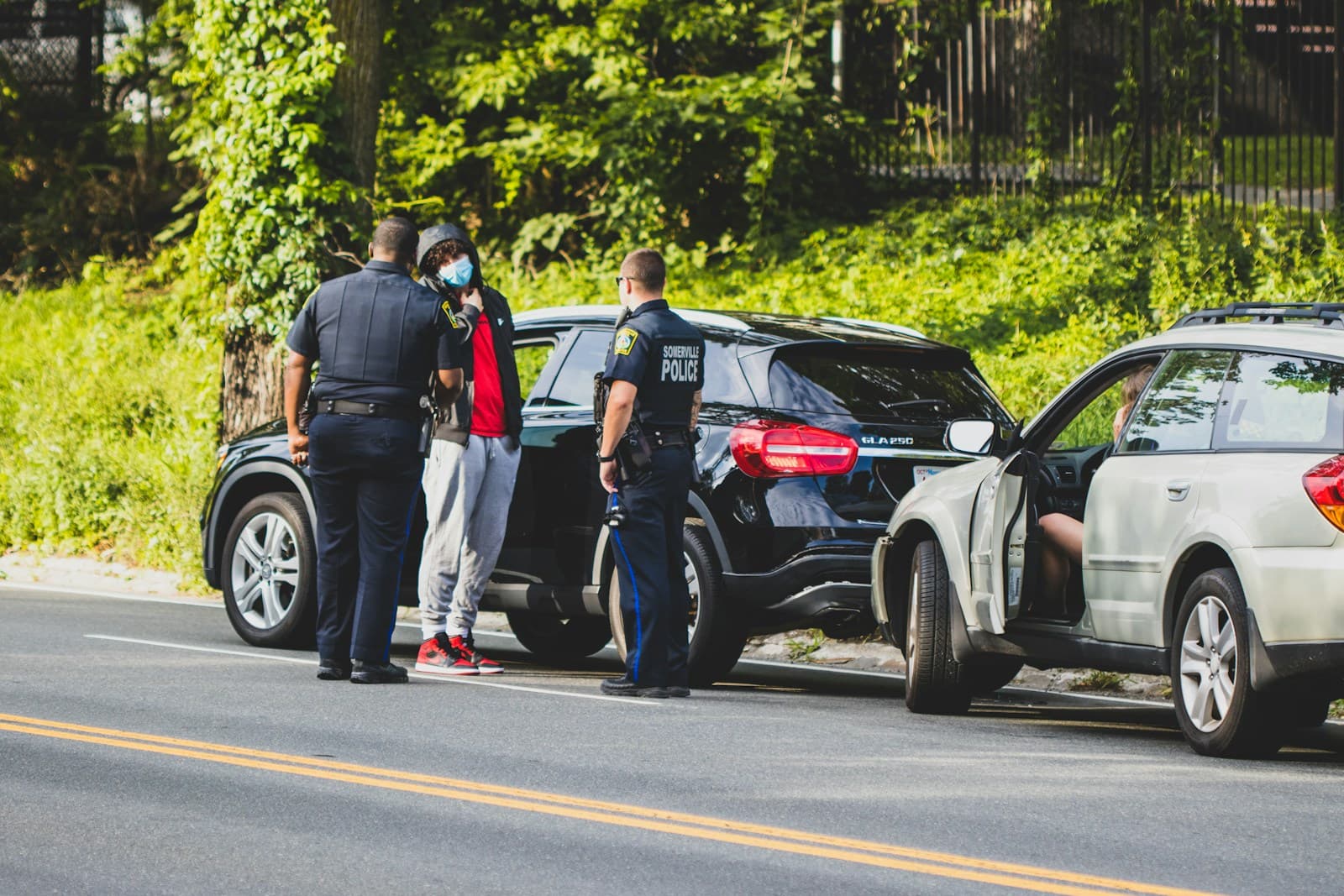
Violating route or time restrictions triggers automatic revocation. Law enforcement officers check the license document during traffic stops. If you are stopped at 9 p.m. on a route not listed on your license, the officer can arrest you for driving on a suspended license even though you hold a Route Restricted License. The restriction is the license.
Who Qualifies for a Route Restricted License in South Carolina
South Carolina grants Route Restricted Licenses to drivers suspended for DUI, uninsured motorist violations, and certain point accumulation cases. The application path is through SCDMV for most administrative suspensions and through the court for DUI-related suspensions. Eligibility does not mean automatic approval. The state weighs the suspension cause, your driving history, and the documented need for restricted driving.
DUI suspensions require a 30-day hard suspension period before restricted driving privileges can begin. During those 30 days, no driving is permitted for any reason. After the hard period, you may apply for a Route Restricted License if you meet Emma's Law requirements, which mandate ignition interlock device installation for all DUI offenders as a condition of any restricted privilege. This applies to first offenses.
Uninsured motorist suspensions and point accumulation suspensions do not trigger the 30-day hard period. You may apply for a Route Restricted License immediately after suspension. SR-22 proof of insurance is required for uninsured motorist cases. Point accumulation cases sometimes require SR-22 and sometimes do not, depending on whether the underlying violations involved accidents or lapses in coverage.
Compare car insurance rates in your state
Get quotes from licensed carriers — no obligation, no spam, results in minutes.
Get Your Free Quote✓ No Obligation Required✓ Licensed Carriers Only✓ Available Nationwide✓ Free to Compare
How to Apply: Court Hearing vs SCDMV Administrative Path
DUI suspensions require a court hearing to obtain a Route Restricted License. You file a petition with the court that handled your DUI case. The judge reviews your petition, your documented need, and your compliance with ADSAP (Alcohol and Drug Safety Action Program) requirements. ADSAP completion is mandatory for DUI reinstatement in South Carolina. The judge has discretion to approve or deny the petition. If approved, the judge defines the routes and hours on the license.
Administrative suspensions for uninsured motorist violations or point accumulation are processed through SCDMV directly. You submit an application to SCDMV along with proof of insurance, SR-22 filing if required, payment of the $100 application fee, and documentation of the addresses you need to drive between. SCDMV reviews the application and issues the Route Restricted License if you meet eligibility criteria.
Both paths require you to document your need. Employment verification, school enrollment confirmation, medical appointment schedules, or treatment program schedules are the standard documentation. Judges and SCDMV staff deny petitions when the documented need is vague or when the applicant cannot prove the restriction is necessary for employment or essential travel. Most denials stem from incomplete documentation, not from the suspension cause itself.
The Route Documentation Requirement Judges Use to Decide
Judges approve Route Restricted License petitions based on specific, verifiable routes. Your petition must include your home address, your work address, the street route between them, and your work schedule including shift hours. If you need to drive to medical appointments, include the appointment schedule and the clinic address. If you are enrolled in a treatment program, include the program schedule and address.
Judges deny petitions when the route is not defined. A petition that states "I need to drive to work" without specifying the work address, the route, or the hours is denied. A petition that lists multiple work locations without explaining which days or shifts apply to each location is denied. Judges cannot approve a restriction they cannot define on the license document.
SCDMV applies the same standard for administrative suspensions. The application form asks for addresses and schedules. If you leave fields blank or provide incomplete information, SCDMV sends a notice requesting clarification. If you do not respond within the specified timeframe, the application is denied. Reapplying requires another $100 fee.
Ignition Interlock Device Requirements Under Emma's Law
Emma's Law mandates ignition interlock devices for all DUI offenders in South Carolina, including first offenses, as a condition of any restricted driving privilege. The device prevents the vehicle from starting if alcohol is detected on your breath. You must install the device in every vehicle you drive during the restricted period. Installation costs approximately $70 to $150. Monthly monitoring and calibration fees range from $60 to $80.
The ignition interlock provider reports all violations to SCDMV. Violations include failed breath tests, missed calibration appointments, and attempts to tamper with the device. SCDMV revokes your Route Restricted License after a violation. Revocation is automatic. You do not receive a warning or a grace period. The ignition interlock requirement runs for the duration of your restricted license period and often extends into the full reinstatement period.
SR-22 insurance is required in addition to the ignition interlock device for DUI suspensions. The SR-22 filing proves you carry liability coverage at or above South Carolina's minimum limits: $25,000 per person for bodily injury, $50,000 per accident for bodily injury, and $25,000 for property damage. Uninsured motorist coverage is required by state law. Your insurer files the SR-22 electronically with SCDMV. The filing typically remains on file for 3 years from the conviction date.
What Happens If You Violate Route or Time Restrictions
Driving outside the specified routes or hours on your Route Restricted License is a criminal offense. Law enforcement treats it as driving on a suspended license. If you are stopped outside your approved hours or on a route not listed on the license, the officer can arrest you on the spot. The charge carries fines, potential jail time, and automatic extension of your suspension period.
SCDMV revokes the Route Restricted License immediately after a violation. You lose the restricted privilege and revert to a full suspension. Reapplying for a new Route Restricted License after revocation requires starting the application process over, paying the $100 fee again, and attending another court hearing if your suspension stems from a DUI. Judges are less likely to approve a second petition after a violation.
Most violations happen because drivers assume the restriction is less literal than it is. A detour to pick up groceries on the way home from work violates the restriction if the grocery store is not on the approved route. Driving to a friend's house on a Saturday violates the restriction if Saturday is not an approved driving day. The license document is the rule. Any deviation from the written restriction is a violation.
How to Find Coverage That Meets SR-22 Filing Requirements
Not all carriers write policies for drivers with active suspensions or DUI convictions. Standard-tier insurers often decline to quote. Non-standard and high-risk carriers specialize in SR-22 filings and restricted license coverage. In South Carolina, carriers that write SR-22 policies include GEICO, Progressive, State Farm, The General, Dairyland, Bristol West, GAINSCO, Acceptance Insurance, Direct Auto, and National General.
Non-owner SR-22 policies cover drivers who do not own a vehicle but need to maintain an SR-22 filing. This is common for drivers whose vehicle was impounded or sold after suspension. Non-owner policies cost less than standard policies because they do not cover a specific vehicle. Monthly premiums for non-owner SR-22 in South Carolina typically range from $40 to $80, depending on your driving history and the suspension cause.
Comparing quotes from multiple carriers produces the widest rate range. High-risk premiums vary significantly by carrier. One insurer may quote $180 per month while another quotes $95 for identical coverage. The rate difference reflects each carrier's appetite for risk and their claims experience in South Carolina. Shopping three to five carriers before selecting a policy is standard practice for suspended-license drivers.