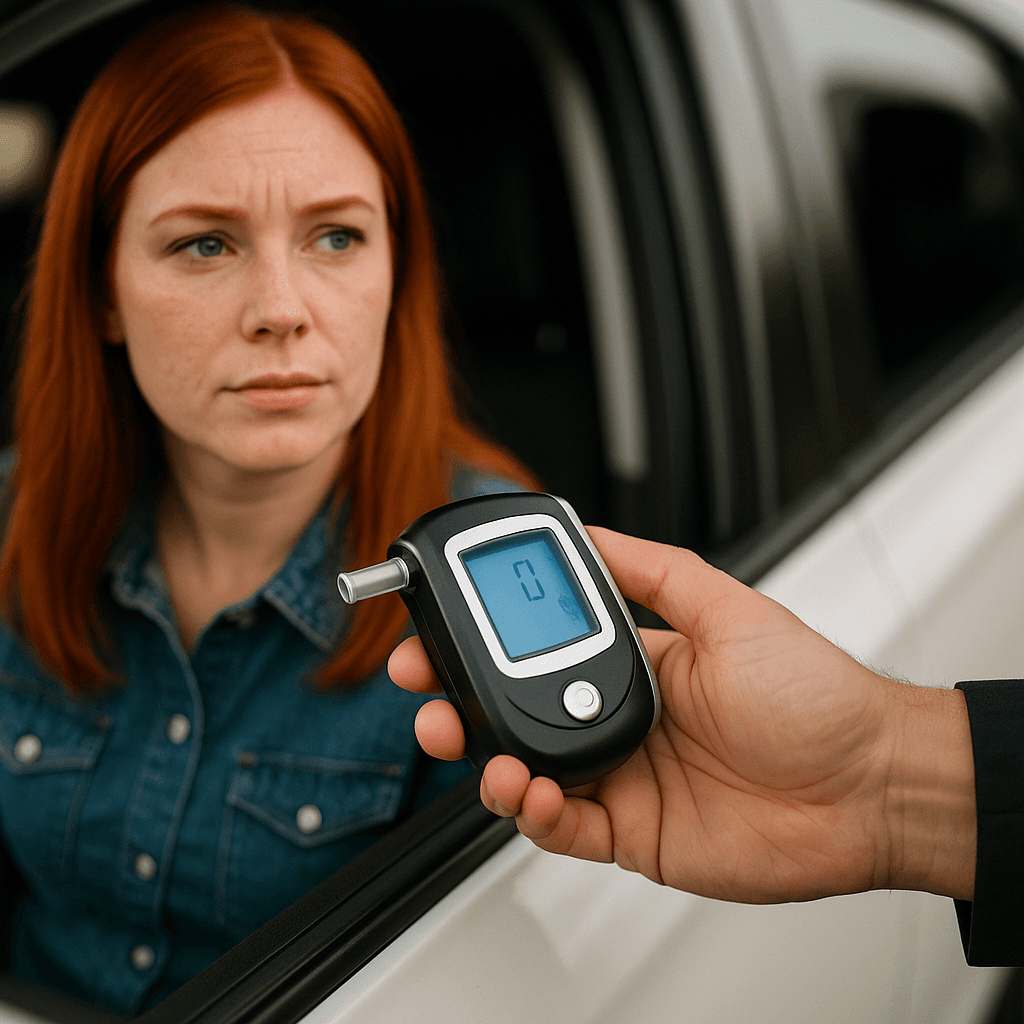
Pennsylvania courts grant Occupational Limited Licenses with IID requirements, but PennDOT administers the ignition interlock monitoring compliance separately. Drivers who install before court approval risk wasted fees; drivers who delay installation after OLL approval face revocation.
Why Installation Timing Matters More Than Court Approval
Pennsylvania Occupational Limited License (OLL) petitions are filed with the court of common pleas, but ignition interlock device installation is monitored by PennDOT's Bureau of Driver Licensing. The timing gap between court approval and PennDOT enrollment creates a failure mode most drivers don't anticipate: installing the IID before the court signs the OLL order means paying installation fees, monthly monitoring fees, and calibration costs without legal authority to drive. The device sits idle in your vehicle while you wait for the court to process your petition, which varies by county from 14 to 60 days.
PennDOT's ignition interlock program operates under 75 Pa.C.S. § 3805, which mandates IID installation for DUI-suspended drivers seeking restricted driving privileges. The statute requires proof of installation before PennDOT will issue the restricted license credential, but the court issues the OLL order independently. Drivers assume installation triggers approval. The opposite is true: court approval triggers the installation window.
Installing too early means mounting fees with no driving authority. Installing too late—more than 10 days after court approval in most counties—means the court can revoke the OLL for noncompliance before PennDOT ever processes your enrollment. The installation window is narrow, and PennDOT does not notify you when it opens.
What Happens Between Court Filing and IID Installation
You file your OLL petition with the court of common pleas in your county of residence. The petition requires proof of employment or occupational necessity, proof of financial responsibility (SR-22 insurance), documentation of the suspension reason, and payment of court costs. Court costs vary by county; there is no statewide uniform fee. Philadelphia County charged $250 in recent filings; Allegheny County charged $175; Lancaster County charged $100. You cannot predict your county's fee from statewide data.
The court schedules a hearing, typically 21 to 45 days after filing. At the hearing, the judge evaluates whether your occupational need justifies restricted driving and whether you have satisfied all DUI-related requirements: completion of Alcohol Highway Safety School (AHSS), proof of treatment if ordered, payment of fines and restitution, and proof of SR-22 filing. If the judge grants the OLL, the court issues a signed order specifying the permitted routes, times, and purposes. The order also states the IID installation requirement and the monitoring period, typically the remaining suspension term.
PennDOT does not receive the court order automatically. Most courts mail the order to PennDOT's central office in Harrisburg within 5 to 10 business days. PennDOT processes the order and updates your driving record to reflect OLL eligibility. Until PennDOT processes the order, you cannot install the IID and maintain compliance. Installing before PennDOT processes the order means the device vendor reports your installation to PennDOT, but PennDOT has no record of your OLL approval. The installation appears in the system as unauthorized, and you continue driving under full suspension.
Compare car insurance rates in your state
Get quotes from licensed carriers — no obligation, no spam, results in minutes.
Get Your Free Quote✓ No Obligation Required✓ Licensed Carriers Only✓ Available Nationwide✓ Free to Compare
How PennDOT's IID Monitoring System Works
PennDOT contracts with approved IID vendors: Intoxalock, LifeSafer, Smart Start, and Guardian Interlock. You select a vendor after the court approves your OLL. The vendor installs the device at a certified service center and registers the installation with PennDOT's ignition interlock program. Installation costs range from $70 to $150 depending on vendor and vehicle type. Monthly monitoring fees range from $60 to $90. The device requires calibration every 30 days, included in the monthly fee.
The IID records every engine start attempt, every breath sample, and every failed or skipped test. The device uploads data to the vendor's server at each calibration appointment. The vendor transmits compliance reports to PennDOT monthly. PennDOT reviews reports for violations: failed breath tests (BAC above .025%), skipped rolling retests, tampering attempts, or missed calibration appointments. A single failed test does not trigger automatic revocation, but PennDOT flags the violation on your record. Three failed tests in a 12-month period, two missed calibration appointments, or any tampering attempt triggers a compliance review and probable OLL revocation.
PennDOT does not notify you when a violation is flagged. The vendor notifies you of the failed test or missed appointment, but the vendor does not represent PennDOT's enforcement decision. Many drivers assume passing subsequent tests clears the violation. It does not. The violation remains on your compliance record until the OLL period expires. PennDOT's Bureau of Driver Licensing conducts periodic audits of IID compliance reports. If the audit identifies disqualifying violations, PennDOT sends a notice of proposed revocation to your address of record. You have 30 days to request a hearing. Most drivers do not receive the notice because they did not update their address after moving, and the revocation becomes final by default.
What the Compliance Report Actually Tracks
The monthly compliance report transmitted to PennDOT includes: number of engine start attempts, number of successful starts (BAC below .025%), number of failed starts (BAC above .025%), number of rolling retests administered while driving, number of passed rolling retests, number of failed or skipped rolling retests, number of calibration appointments completed on time, number of missed calibration appointments, and any tampering or circumvention events detected by the device. The report also logs GPS data if your court order requires location monitoring, though most Pennsylvania OLL orders do not include GPS tracking.
PennDOT's compliance threshold is not published in the statute or regulations. Based on revocation notices reviewed, PennDOT applies the following enforcement pattern: one failed start per month is tolerated if all rolling retests pass and calibration appointments are met on time. Two failed starts in a single month trigger a warning letter but not immediate revocation. Three failed starts in any 12-month period trigger a compliance review and probable revocation unless the driver provides documentation of a technical malfunction or medical condition causing a false positive. Any skipped rolling retest is treated as a failed test. Any missed calibration appointment beyond the 5-day grace window is treated as noncompliance.
The compliance report does not differentiate between a failed test caused by alcohol consumption and a failed test caused by mouthwash, medication, or food residue. The device measures breath alcohol concentration, not intent. Drivers who fail a test due to recent mouthwash use face the same enforcement action as drivers who consumed alcohol. PennDOT's policy is strict liability: the failed test is the violation, regardless of cause. You can challenge the violation at a hearing by presenting evidence of the alternative cause, but the burden is on you to prove the device malfunctioned or the reading was caused by a non-alcoholic source.
Why Drivers Lose OLL Before the Suspension Ends
The most common revocation cause is missed calibration appointments. The device requires calibration every 30 days. The vendor schedules the appointment when you install the device. If you miss the appointment, the vendor notifies you and gives you a 5-day grace period to reschedule. If you do not calibrate within the grace period, the device enters lockout mode: it will allow a limited number of starts (typically 5 to 10) before requiring immediate calibration. Each start displays a lockout warning. Once the start limit is reached, the device prevents the engine from starting until calibration is completed.
Drivers who ignore the lockout warning and continue driving on the remaining starts often miss the calibration deadline entirely. The vendor reports the missed appointment to PennDOT. PennDOT treats the missed appointment as evidence of noncompliance and issues a notice of proposed OLL revocation. The notice is mailed to your address of record. If you moved and did not update your address with PennDOT, you will not receive the notice. The revocation becomes final 30 days after the notice is mailed, whether you received it or not.
The second most common revocation cause is skipped rolling retests. The IID administers random rolling retests while you are driving, typically every 20 to 40 minutes. The device beeps and displays a prompt to blow into the handset within 6 minutes. If you do not provide a breath sample within the 6-minute window, the device logs a skipped retest and activates the horn and lights until the vehicle is turned off. The skipped retest is reported to PennDOT as a failed test. Two skipped retests in a 12-month period are sufficient grounds for revocation in most Pennsylvania counties.
The third most common revocation cause is driving outside the approved route or time restrictions specified in the court order. Pennsylvania OLL orders are occupation-specific: the court approves driving to and from work, medical appointments, school, DUI treatment programs, and court-ordered obligations. The order specifies the addresses and the permitted travel times. Driving to a grocery store, visiting family, or running errands is not authorized unless the court order explicitly includes those purposes. PennDOT does not monitor your actual routes in real time, but if you are stopped by police outside your approved route or time window, the officer can verify your OLL restrictions through the PennDOT system and charge you with driving under suspension. The charge triggers automatic OLL revocation and reinstatement of the full suspension period.
How SR-22 Filing Connects to IID Compliance
Pennsylvania requires proof of financial responsibility for OLL approval. The standard proof is SR-22 insurance, a certificate filed by your insurer with PennDOT certifying continuous liability coverage. The SR-22 filing must remain active for the entire OLL period, typically 1 to 3 years depending on the DUI tier. If your insurer cancels your policy or you allow the policy to lapse, the insurer notifies PennDOT electronically. PennDOT automatically revokes your OLL and reinstates the full suspension within 10 days of receiving the cancellation notice.
Drivers who install the IID and maintain perfect compliance but allow their SR-22 filing to lapse lose the OLL immediately. The IID does not prevent the revocation. The device continues to function, but you no longer have legal authority to drive. You must obtain new SR-22 insurance, pay the $50 restoration fee, and refile your OLL petition with the court to regain restricted driving privileges. The process resets to the beginning.
SR-22 insurance costs more than standard liability coverage because the filing signals high-risk status to insurers. Monthly premiums for SR-22 coverage in Pennsylvania typically range from $140 to $240 depending on driving history, age, vehicle type, and county. The filing fee itself is $15 to $50, paid once when the insurer submits the certificate to PennDOT. Drivers without a vehicle can obtain non-owner SR-22 insurance, which provides liability coverage when driving a borrowed or rented vehicle. Non-owner policies cost less than owner policies, typically $60 to $110 per month, because they do not cover collision or comprehensive damage.
What Happens When the IID Period Ends
The court order specifies the IID monitoring period, typically aligned with the remaining suspension term. If your original suspension was 12 months and you obtained the OLL 4 months into the suspension, the IID period is 8 months. At the end of the IID period, you must return to the vendor's service center to have the device removed. The vendor charges a removal fee, typically $50 to $100. The vendor transmits a final compliance report to PennDOT confirming the device was removed and documenting your compliance record over the entire monitoring period.
PennDOT reviews the final compliance report before lifting the OLL restrictions and restoring your unrestricted driving privileges. If the report shows any unresolved violations—failed tests, missed appointments, or skipped retests—PennDOT may extend the IID requirement or require a hearing before full license restoration. Drivers assume removal of the device automatically restores full driving privileges. It does not. Full restoration requires PennDOT to process the final report, clear all compliance flags, and update your driving record.
You must also maintain SR-22 insurance for 3 years following the DUI conviction, even after the IID is removed and the suspension is lifted. The SR-22 filing requirement is independent of the suspension and IID monitoring. If you cancel your SR-22 policy before the 3-year period expires, PennDOT suspends your license again. Most drivers do not realize the SR-22 requirement outlasts the IID requirement by 2 to 2.5 years. Allowing the policy to lapse after IID removal is the most common post-reinstatement suspension cause.