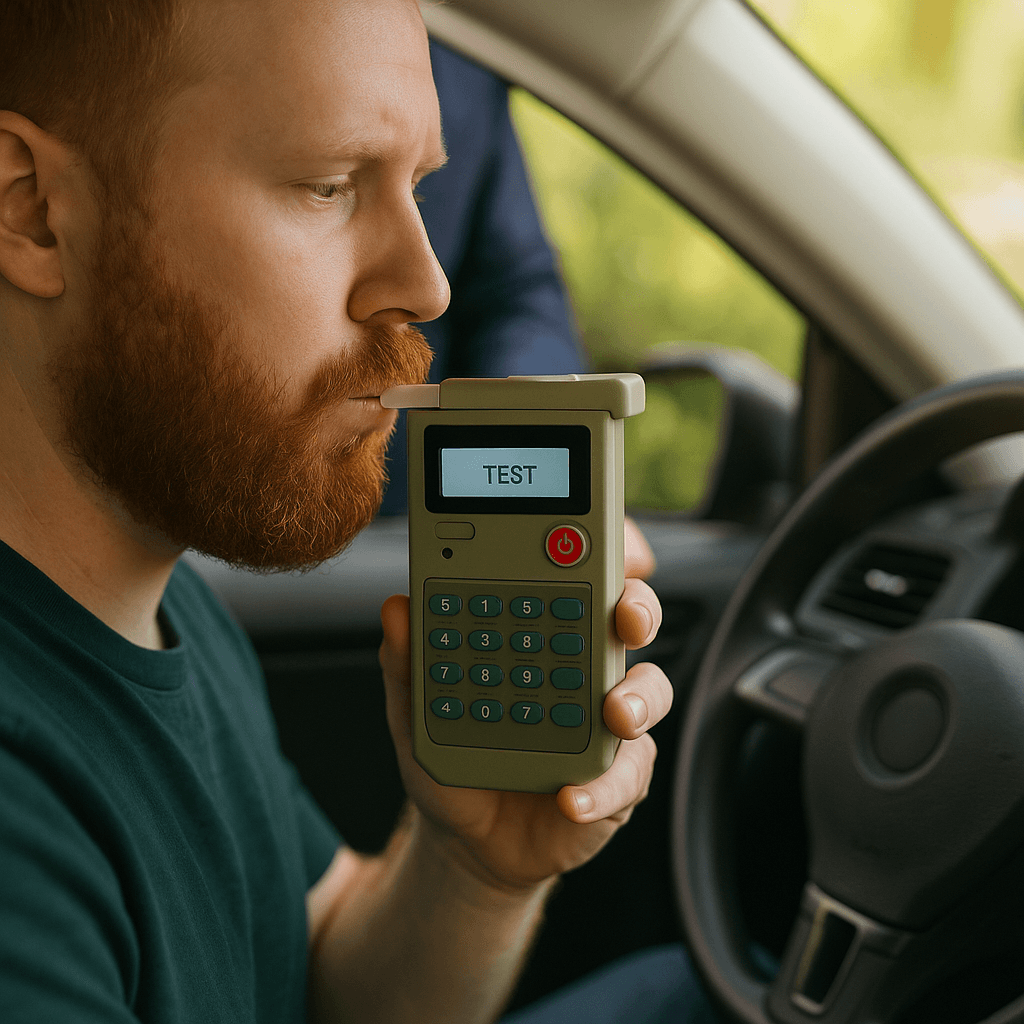
Oregon's hardship permit requires ignition interlock installation even for non-DUI suspensions if DMV classifies the violation as alcohol-related. Many drivers discover this requirement after approval, when their insurer asks for IID serial numbers before activating SR-22 filing.
Why Oregon Hardship Permits Require Ignition Interlock Even for Non-DUI Suspensions
Oregon requires ignition interlock device (IID) installation for nearly all hardship permits, not just DUII cases. If your suspension involved any alcohol-related component—failed breath test, refusal under implied consent, or a DUII charge that was later reduced—DMV classifies it as alcohol-involved under ORS 813.602. Your hardship permit approval letter will state whether IID is required. Most applicants discover the requirement at approval, not at application.
The distinction matters for insurance setup. Carriers writing SR-22 policies in Oregon require the IID serial number and installation receipt before they activate your filing. If you apply for a hardship permit without knowing you'll need IID, you've added 7–14 days to your timeline while the device is ordered, installed, and reported to DMV. Oregon uses a central IID vendor approval system administered through the DMV's IID program office, so only state-approved vendors count.
Non-alcohol suspensions—pure points accumulation, failure to appear for traffic citations, unpaid judgment suspensions—may not trigger IID requirements. Review your suspension notice carefully. If it cites ORS Chapter 813 (DUII and implied consent) anywhere, assume IID will be required. If it cites ORS 809.600 (habitual offender) or ORS Chapter 806 (financial responsibility/insurance), IID may not apply unless alcohol was involved in the underlying violations.
What SR-22 Filing Covers for Hardship Permit Holders in Oregon
SR-22 is proof-of-insurance filing that your carrier submits to Oregon DMV electronically. It's not a separate insurance policy. It's a rider attached to your liability policy that reports your coverage status in real time. If your policy lapses for any reason—missed payment, cancellation, non-renewal—DMV receives automatic notification within 24 hours and your hardship permit is suspended immediately.
Oregon requires SR-22 for DUII-related suspensions, implied consent administrative suspensions under ORS 813.410, uninsured driving violations under ORS 806.010, and certain habitual offender cases. The filing must remain active for 3 years from the date DMV receives it, not from your conviction date or suspension date. If you cancel your policy and let SR-22 lapse before the 3-year period ends, the clock resets and you start the 3-year count over from the new filing date.
Coverage limits for SR-22 policies must meet Oregon state minimums: $25,000 bodily injury per person, $50,000 bodily injury per accident, $20,000 property damage, plus personal injury protection (PIP) and uninsured motorist coverage as required under ORS 806.070. Most carriers in the non-standard market write policies at or slightly above these limits to keep premiums manageable for suspended-license drivers.
Compare car insurance rates in your state
Get quotes from licensed carriers — no obligation, no spam, results in minutes.
Get Your Free Quote✓ No Obligation Required✓ Licensed Carriers Only✓ Available Nationwide✓ Free to Compare
How to Sequence IID Installation and SR-22 Filing for Oregon Hardship Permits
Install the IID before you contact carriers for SR-22 quotes. Oregon-approved IID vendors must register your device with DMV's IID program office within 3 business days of installation. Carriers need the installation receipt, device serial number, and DMV registration confirmation before they'll issue an SR-22 policy. Trying to quote SR-22 coverage before IID is installed adds pointless back-and-forth with underwriters who can't finalize your policy without device details.
Once IID is installed and registered, request SR-22 quotes from carriers writing high-risk auto in Oregon: GEICO, Progressive, Bristol West, Dairyland, GAINSCO, The General, National General, Infinity, Kemper, and State Farm all write SR-22 policies in Oregon and have experience with IID-equipped hardship permit holders. USAA writes SR-22 for eligible military members. Non-owner SR-22 policies are available from most of these carriers if you don't own a vehicle but need filing to satisfy DMV for hardship permit eligibility.
Your carrier submits SR-22 filing electronically to Oregon DMV within 24–48 hours of policy activation. DMV updates your record and sends a confirmation letter. Bring that confirmation letter, your IID installation receipt, and your hardship permit approval paperwork to DMV to pick up your restricted license. The sequence is: IID installation → SR-22 policy activation → SR-22 filing confirmation from DMV → hardship permit issuance. Skipping steps or reversing order delays your driving privileges by weeks.
What Oregon Hardship Permits Allow and Restrict for IID Holders
Oregon hardship permits restrict driving to essential purposes only: employment, medical appointments, school, and essential household needs as defined in your permit approval. DMV specifies permitted routes and hours on a case-by-case basis. Your approval letter states exactly where and when you're allowed to drive. Violating those restrictions—driving outside approved hours, using the vehicle for non-approved purposes, or driving on unapproved routes—triggers immediate hardship permit revocation and extends your full suspension period.
IID devices installed under Oregon's program require a breath sample before the engine starts and rolling retests every 15–30 minutes while driving. Failed tests or missed rolling retests are logged and reported to DMV monthly by your IID vendor. Three failed breath tests in a 12-month period, or one failed test combined with tampering evidence, results in hardship permit revocation under ORS 813.602. DMV does not issue warnings before revoking for IID violations.
Hardship permits issued under Oregon's DUII Diversion Program (ORS 813.200) have additional restrictions. Diversion participants can apply for hardship permits after a 30-day hard suspension, but permit issuance is contingent on diversion enrollment, IID installation, and SR-22 filing. If you're dismissed from diversion for missed classes or failed drug/alcohol screens, your hardship permit is revoked the same day DMV receives notice from the diversion program administrator.
How Much Oregon Hardship Permit IID and SR-22 Coverage Costs
IID installation in Oregon costs $75–$150 depending on vendor and vehicle type. Monthly monitoring and calibration fees run $60–$90. Over a 12-month hardship permit period, total IID costs are approximately $800–$1,200. Some vendors require upfront payment for the first 3 months; others allow monthly billing. Oregon does not subsidize IID costs for most drivers, though low-income diversion participants may qualify for reduced-rate programs through specific vendors—ask your diversion coordinator.
SR-22 insurance premiums for hardship permit holders in Oregon typically range from $140–$280/month for standard liability coverage at state minimums. DUII-related suspensions produce higher premiums than points-based or uninsured-driving suspensions. Non-owner SR-22 policies cost $50–$120/month, significantly less than owner policies because the carrier isn't insuring a vehicle. Estimates based on available industry data; individual rates vary by driving history, age, county, and carrier underwriting rules.
Oregon hardship permit application fees are handled through DMV and vary by suspension type. DUII-related hardship permits carry higher administrative fees than non-alcohol suspensions. Budget for $75–$200 in DMV fees, $800–$1,200 in IID costs over 12 months, and $140–$280/month in SR-22 insurance premiums. First-month total setup costs (application, installation, first premium, first IID payment) typically run $500–$800 before any attorney or diversion program fees.
What Happens If You Let SR-22 or IID Compliance Lapse During Your Oregon Hardship Permit Period
SR-22 lapses trigger automatic hardship permit suspension within 24 hours. Oregon carriers report cancellations to DMV electronically the same day. DMV sends a suspension notice to your last known address, but the suspension is effective immediately whether or not you receive the notice. Your hardship permit is invalid from the moment DMV receives the lapse notification. Driving on a lapsed hardship permit is treated as driving while suspended under ORS 811.175, a Class A misdemeanor carrying up to 1 year in jail and fines up to $6,250.
IID compliance violations—failed breath tests, missed calibrations, tampering evidence—are reported monthly by your vendor to DMV's IID program office. DMV reviews compliance reports and issues revocation notices for violations meeting the threshold under ORS 813.602. Revocation is not automatic for a single failed test, but three violations in 12 months or one violation combined with tampering evidence results in immediate revocation. You lose your hardship permit and must wait until the original full suspension period expires before reapplying for reinstatement.
Reinstating a hardship permit after SR-22 lapse or IID violation requires filing a new hardship application, paying new application fees, and restarting the approval process from the beginning. The original suspension period does not pause while your hardship permit is revoked—you're serving your full suspension plus additional time without any driving privileges. If your hardship permit is revoked with 6 months remaining on the original suspension, you lose 6 months of restricted driving and must wait until full reinstatement eligibility before applying again.
How to Compare SR-22 Carriers for Oregon Hardship Permit Coverage
Request quotes from at least three carriers writing SR-22 policies in Oregon. GEICO, Progressive, and Bristol West consistently write competitive rates for suspended-license drivers in Oregon. Dairyland specializes in high-risk auto and often quotes lower premiums for DUII cases than standard-market carriers. The General and GAINSCO focus on non-standard auto and accept drivers with multiple violations. State Farm writes SR-22 but typically quotes higher premiums for DUII-related suspensions than non-standard specialists.
Ask each carrier how they handle IID-equipped vehicles. Some carriers require IID serial numbers at quote; others allow you to add device details after binding. Clarify whether the quoted premium includes SR-22 filing fees—most carriers charge $15–$50 to file SR-22 on top of the base premium. Confirm the carrier reports to Oregon DMV electronically; paper SR-22 filings delay your hardship permit by 7–10 business days.
Non-owner SR-22 policies make sense if you don't own a vehicle but need filing to satisfy hardship permit requirements. GEICO, Progressive, Dairyland, and The General all write non-owner SR-22 in Oregon. Non-owner policies provide liability coverage when you drive borrowed or rented vehicles. They don't cover a vehicle you own, lease, or regularly use—if you live with a vehicle owner and drive that vehicle regularly, you need an owner policy listing you as a driver, not a non-owner policy.