Oregon requires DMV processing for hardship permits, not court hearings. The application path is different than most DUI-suspension states, and the documentation burden shifts depending on whether you're in the administrative suspension window or post-conviction.
Which Oregon suspension track determines your hardship permit path
Oregon operates two parallel suspension systems after a DUII arrest: an administrative suspension imposed by the DMV under implied consent law, and a judicial suspension imposed by the court after conviction. Both suspensions can run concurrently, and the hardship permit application requirements differ based on which track triggered your need.
The administrative suspension begins the moment the DMV receives notice of your BAC failure or refusal. Under ORS 813.410, a BAC failure over 0.08 triggers a 90-day administrative suspension; a refusal triggers a one-year suspension. Neither requires a court conviction. The judicial suspension begins only after a DUII conviction under ORS 813.010 and is reported separately to the DMV for enforcement.
Your hardship permit application must address whichever suspension is currently active. If you're still within the administrative suspension window and have not yet been convicted, you apply under the administrative track. If your criminal case has concluded and you've been convicted, you apply under the judicial track. If both are active simultaneously, the DMV consolidates them into a single hardship permit tied to the longer suspension period, but your documentation must satisfy both tracks' requirements.
Oregon's 30-day hard suspension window before hardship permit eligibility
Oregon hardship permits are not available immediately after suspension. The state imposes a 30-day hard suspension period during which no driving of any kind is permitted, even for essential purposes. This applies to both administrative and judicial DUII suspensions.
The 30-day clock starts on the effective date of the suspension, not the arrest date or conviction date. For administrative suspensions, the effective date is typically 30 days after the DMV mails the suspension notice, giving you a brief window to prepare. For judicial suspensions, the effective date is set by the court order and may begin immediately upon sentencing.
Most Oregon drivers miss this timing detail: you cannot file your hardship permit application during the hard suspension window. The DMV will not process applications submitted before day 31. If you mail your application on day 25, it sits unprocessed until the hard period expires, delaying your approval by weeks. File on day 31 or later to avoid processing delays.
Compare car insurance rates in your state
Get quotes from licensed carriers — no obligation, no spam, results in minutes.
Get Your Free Quote✓ No Obligation Required✓ Licensed Carriers Only✓ Available Nationwide✓ Free to Compare
Required documentation for Oregon hardship permit applications
Oregon requires proof of essential need before approving any hardship permit. The DMV defines essential purposes as employment, medical appointments, school enrollment, or essential household needs such as child care or dependent care responsibilities. Generic "I need to drive" statements are insufficient.
Your application must include: a completed Oregon DMV hardship permit application form, a signed employer affidavit on company letterhead stating your work location and required hours, an SR-22 certificate of financial responsibility filed by your insurer directly with the DMV, and proof of ignition interlock device installation if your suspension is DUII-related. Medical appointments require a signed letter from your healthcare provider on office letterhead confirming the appointment schedule and necessity. School enrollment requires a registrar's letter confirming your enrollment status and class schedule.
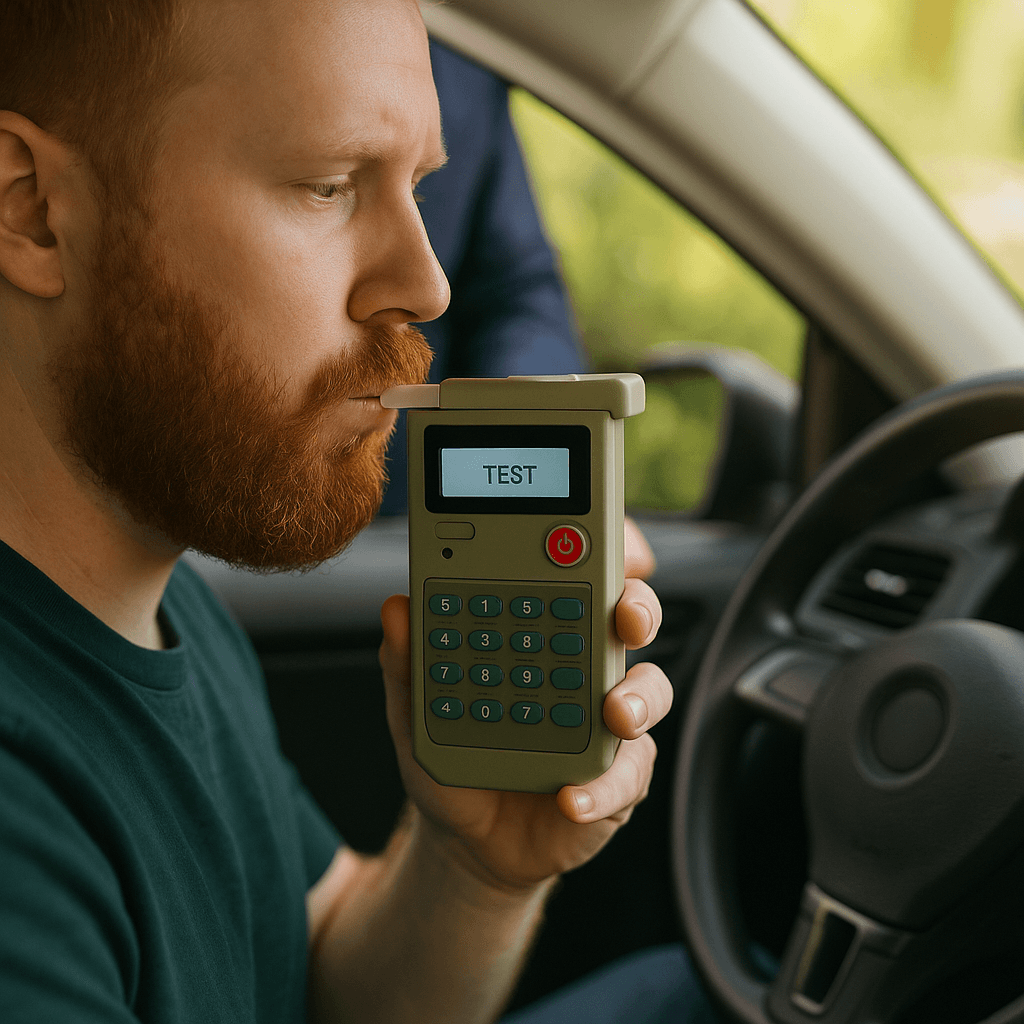
The ignition interlock requirement applies to all DUII-related hardship permits under ORS 813.602. You must contract with an approved IID vendor, have the device installed in your vehicle, and submit the vendor's installation certificate as part of your application. The DMV maintains a list of approved vendors; devices installed by non-approved vendors are not accepted. Expect installation costs of $75–$150 and monthly monitoring fees of $60–$90.
How Oregon DUII Diversion affects hardship permit timing
Oregon offers a formal DUII Diversion Program under ORS 813.200 for first-time offenders. Enrollment in diversion changes your hardship permit pathway significantly. Diversion participants remain under administrative suspension but avoid criminal conviction, and the DMV treats diversion enrollment as sufficient proof of rehabilitation progress to approve hardship permits after the 30-day hard suspension.
To qualify for diversion, you must apply within 30 days of your arraignment, plead no contest to the DUII charge, waive your right to trial, and agree to complete a substance abuse evaluation, treatment program, victim impact panel, and one year of probation. The diversion program costs $490 in court fees plus treatment costs that vary by provider. Successful completion results in dismissal of the criminal charge, but the administrative suspension remains on your DMV record.
If you enter diversion, your hardship permit application must include proof of diversion enrollment: a signed court order approving your diversion petition and proof of treatment program enrollment. The DMV will not approve hardship permits for diversion participants who have not yet begun treatment or who are behind on diversion fee payments. Monitor your diversion compliance carefully; missing two treatment sessions or falling 60 days behind on fees can result in diversion termination and automatic hardship permit revocation.
Oregon hardship permit restrictions and enforcement
Oregon hardship permits restrict both the purposes and hours of your driving. The DMV issues permits with specific route and time limitations printed on the permit itself. A typical employment-only hardship permit authorizes driving to and from work during your documented work hours plus a 30-minute buffer before and after your shift. Stops for essential errands en route are not automatically permitted.
Time restrictions are not suggestions. Oregon State Police and local law enforcement have access to the DMV's hardship permit database and can verify your authorized driving hours during any traffic stop. Driving outside your permitted hours, even by 10 minutes, constitutes driving while suspended under ORS 811.175 and triggers automatic hardship permit revocation plus criminal charges carrying up to $6,250 in fines and six months in jail for a first offense.
Route restrictions are enforced with similar severity. If your hardship permit authorizes driving from your home address to your work address via a specific route, deviations for convenience or traffic avoidance are not permitted unless you file an amendment with the DMV. Amendments require the same documentation burden as the initial application and take 7–10 business days to process. Plan your routes conservatively and document any necessary route changes before making them.
SR-22 filing requirements for Oregon hardship permits
Oregon requires SR-22 proof of financial responsibility for all DUII-related hardship permits and most other serious suspension types. The SR-22 is not a separate insurance policy; it is a certificate your insurer files with the Oregon DMV confirming you carry at least the state minimum liability coverage: $25,000 per person, $50,000 per accident for bodily injury, and $20,000 for property damage.
Your insurer files the SR-22 electronically with the DMV. You do not submit paper certificates as part of your hardship permit application. The DMV's system flags your driver record once the SR-22 is received, typically within 24–48 hours of your insurer filing it. Processing delays occur when drivers submit their hardship permit application before the SR-22 appears in the DMV system. Wait until you receive confirmation from your insurer that the SR-22 has been filed, then submit your hardship application.
Oregon requires continuous SR-22 coverage for three years from the date of your DUII conviction or administrative suspension effective date, whichever is later. If your policy lapses or cancels for any reason during the three-year period, your insurer notifies the DMV within 15 days and your hardship permit is automatically revoked. You must refile SR-22, pay a $75 reinstatement fee, and reapply for the hardship permit from scratch. SR-22 insurance premiums in Oregon typically run $140–$210 per month for drivers with DUII suspensions, compared to $85–$130 per month for clean-record drivers.
What happens if your hardship permit application is denied
The Oregon DMV denies hardship permit applications that lack sufficient proof of essential need, fail to include required documentation, or are submitted by drivers with habitual offender status. Denial notices are mailed to your address on record and include the specific reason for denial and instructions for reapplication.
The most common denial reason is insufficient employer documentation. Generic letters stating "this person works here" are not enough. The employer affidavit must include your job title, work location street address, scheduled work days and hours, and whether alternative transportation is available. Letters that omit any of these details result in automatic denial. Remote workers and self-employed applicants face higher denial rates because the DMV requires additional documentation proving the necessity of in-person work: client contracts, lease agreements for office space, or signed statements from customers confirming appointment schedules.
If your application is denied, you may reapply immediately after addressing the documented deficiencies. There is no waiting period between applications, but each application requires a new $75 fee. The DMV does not refund fees for denied applications. Denied applicants should request a specific deficiency list from the DMV before reapplying to avoid repeat denials and additional fees.