Oregon calls it a Hardship Permit, not a hardship license. The application path splits by suspension type—DUII cases require a 30-day wait before DMV filing, while most other suspensions let you apply immediately through DMV administrative channels.
What Oregon Calls Its Hardship License and Who Issues It
Oregon uses the term Hardship Permit, not hardship license, for restricted driving privileges during suspension. The permit is issued by Oregon DMV's Driver and Motor Vehicle Services Division, not by courts. This administrative pathway differs from states like Texas or Illinois where judges control hardship approvals.
You apply directly to DMV for most suspension types. DUII (Oregon's term for DUI) cases follow a modified path: you must wait 30 days from the administrative suspension start date, then file with DMV while enrolled in DUII Diversion under ORS 813.200. Court documents prove diversion enrollment, but the DMV issues the actual permit.
If your suspension stems from unpaid tickets, uninsured driving, or points accumulation, the standard DMV application opens immediately after suspension begins. DUII-related suspensions carry the 30-day hard period before any hardship permit eligibility starts.
DUII Diversion Program and the 30-Day Hard Suspension Exception
Oregon's DUII Diversion Program allows first-time DUII offenders to skip criminal conviction by completing treatment, education, and a victim impact panel. Enrollment in diversion is the prerequisite for hardship permit eligibility after a DUII administrative suspension. Without diversion enrollment, the full suspension runs without hardship relief.
The 30-day hard suspension applies to BAC failure cases under Oregon's implied consent law (ORS 813.410). If you refused the breath test, the administrative suspension lasts one year with no hardship permit available during the first 90 days. After that initial period, diversion enrollees can apply.
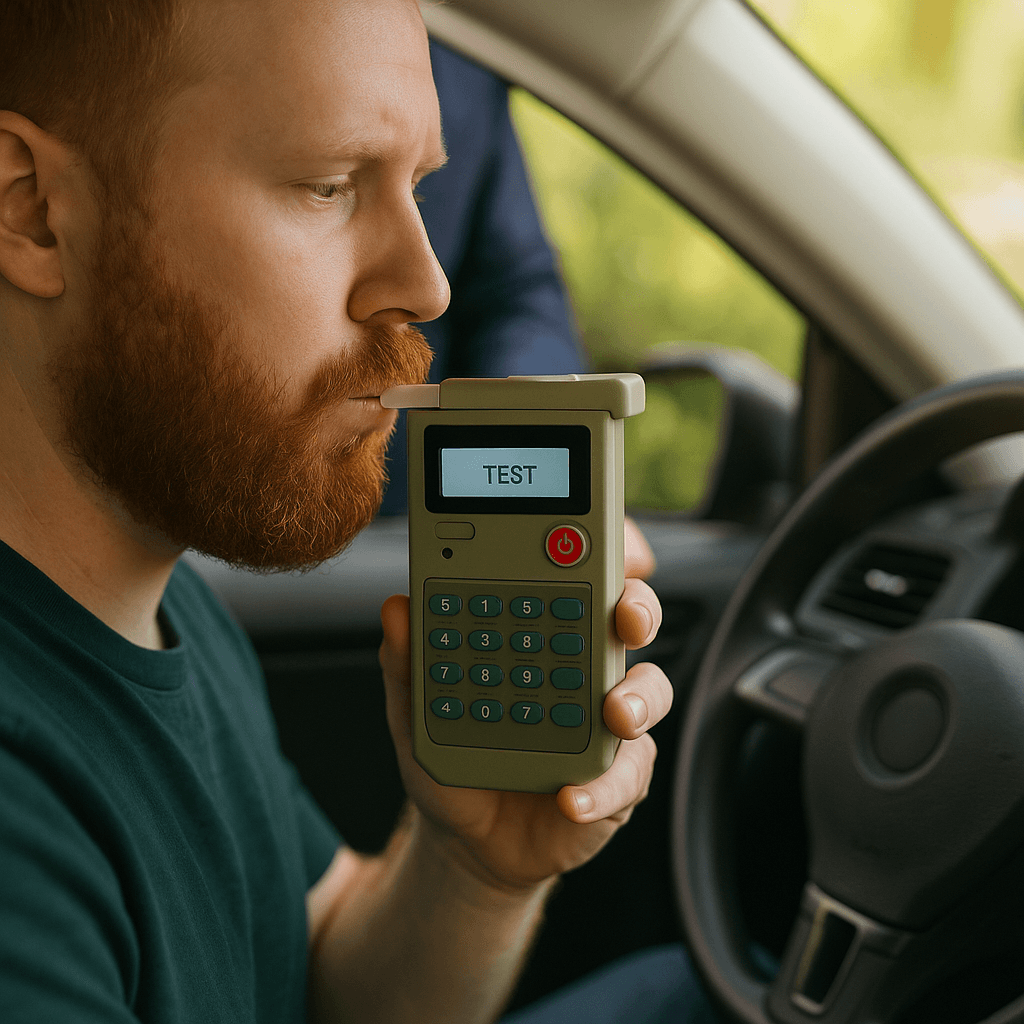
Once the hard period ends and you've enrolled in diversion, DMV requires proof of ignition interlock device installation before issuing the hardship permit. The IID must be installed by an approved Oregon vendor and functional at the time of application. Diversion participants pay the $75 base reinstatement fee upfront, plus application fees and IID monthly service charges throughout the permit period.
Compare car insurance rates in your state
Get quotes from licensed carriers — no obligation, no spam, results in minutes.
Get Your Free Quote✓ No Obligation Required✓ Licensed Carriers Only✓ Available Nationwide✓ Free to Compare
Ignition Interlock Requirement: Installation Before or After Approval
Oregon requires IID installation before DMV issues the hardship permit for DUII-related suspensions. You schedule installation with an approved vendor, pay the installation fee (typically $75–$150), then submit the vendor's certificate of installation with your hardship permit application. Without that certificate, DMV cannot process the application.
Non-DUII suspensions (points, unpaid tickets, uninsured driving) do not require IID unless your underlying record includes a prior DUII conviction within five years. DMV reviews your full driving history during application review and notifies you of IID requirements at that stage.
IID monthly service fees run $60–$90 depending on the vendor. Oregon's approved vendor list is published on the DMV website. The device stays installed for the duration of your hardship permit, then through full reinstatement if the suspension was DUII-related. Total IID costs over a three-year filing period can exceed $2,500, separate from insurance filing fees.
Approved Purposes and Route Restrictions on Oregon Hardship Permits
Oregon restricts hardship permits to essential purposes only: employment, medical appointments, education, and essential household errands like grocery shopping or pharmacy visits. You list these purposes on your application with supporting documentation—employer letter, medical appointment schedules, school enrollment verification.
DMV defines specific route restrictions based on your stated needs. If you work in Beaverton and live in Hillsboro, your permit allows the direct route between home and work during your shift hours plus reasonable commute buffer. Detours for non-approved purposes violate permit terms and trigger automatic revocation.
Time restrictions match your documented schedule. If you work 8 a.m. to 5 p.m., your permit covers those hours plus travel time. Evening or weekend driving requires separate justification—medical appointments, education classes, or religious services qualify if documented. Recreational driving, social visits, and errands beyond the essential threshold are prohibited.
What Documentation Oregon DMV Requires for Hardship Permit Applications
Oregon's hardship permit application requires proof of essential need, proof of financial responsibility (SR-22 certificate if your suspension type requires it), and the completed application form. The essential-need documentation varies by the purpose you're claiming.
For employment, submit a letter from your employer on company letterhead stating your position, work address, shift hours, and a statement that you need a vehicle to perform the job or reach the worksite. For medical needs, submit appointment schedules or a physician's letter confirming ongoing treatment requirements. For education, submit enrollment verification and class schedules.
DUIII applicants also submit proof of diversion enrollment and the IID installation certificate. If your suspension stems from uninsured driving or SR-22 lapse, DMV requires the SR-22 certificate filed with the state before processing your hardship application. Processing time after complete application submission typically runs 10–15 business days, but this varies by DMV workload.
SR-22 Filing Duration and Cost Impact for Hardship Permit Holders
DUII suspensions in Oregon require SR-22 filing for three years starting from the conviction date or diversion completion date. If you're applying for a hardship permit during the suspension, the SR-22 must remain active throughout the hardship period and continue after full reinstatement until the three-year requirement is satisfied.
SR-22 filing fees run $15–$50 as a one-time charge from your insurer. The real cost is the premium increase: drivers with DUII convictions and SR-22 requirements in Oregon typically pay $140–$220 per month for liability-only coverage, compared to $85–$140 for clean-record drivers. Over three years, that premium difference totals $2,000–$3,000.
Uninsured driving suspensions carry shorter SR-22 periods—typically one year in Oregon. Points-accumulation suspensions may or may not require SR-22 depending on whether your violation history includes other high-risk factors. DMV specifies SR-22 requirements in your suspension notice.
What Happens If You Violate Hardship Permit Terms
Driving outside your approved routes, driving during non-approved hours, or driving for non-approved purposes terminates your hardship permit immediately. Oregon State Police and local law enforcement have access to DMV records showing your route and time restrictions. A traffic stop outside those parameters results in permit revocation and extension of your underlying suspension.
IID violations—tampering, failed breath tests, or missed rolling retests—also revoke the permit. The IID vendor reports violations to DMV electronically. Three failed breath tests within 30 days or one tampering event triggers automatic revocation. You lose hardship driving privileges and must serve the remainder of the suspension without relief.
Once revoked, Oregon does not allow hardship permit reapplication during the same suspension period. If your original suspension was 90 days and your permit is revoked 30 days in, you serve the remaining 60 days without driving. DUII diversion participants who violate permit terms may also face diversion termination, converting the case back to criminal prosecution.