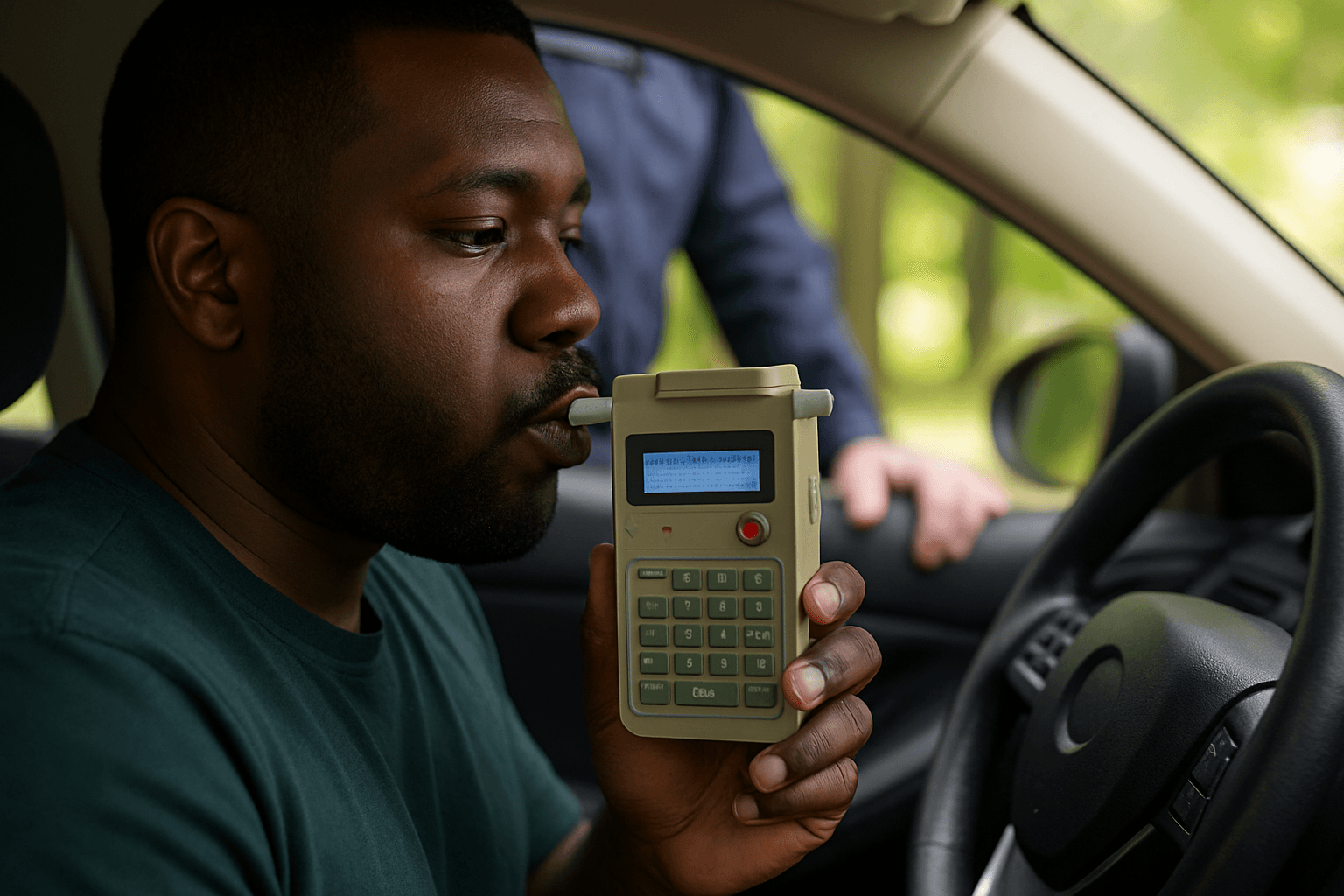
Ohio judges grant limited driving privileges case by case. DUI offenders face a mandatory ignition interlock requirement and a minimum 15-day hard suspension before eligibility. Uninsured and points-accumulation triggers follow separate petition paths through different courts.
Which Ohio Court Hears Your Limited Driving Privileges Petition
The court with jurisdiction over your Limited Driving Privileges petition depends entirely on what triggered your suspension. OVI convictions require filing with the sentencing court that handled your criminal case. Administrative suspensions from the BMV—insurance lapses, points accumulation, or refusal of a chemical test—require filing with the court of common pleas in your county of residence. Filing in the wrong venue results in immediate dismissal and forfeits your filing fee.
The confusion stems from Ohio's dual-suspension system for OVI cases. The Administrative License Suspension occurs at arrest when an officer confiscates your license. That ALS petition goes to common pleas court. The separate court-ordered suspension following conviction requires a second petition to the sentencing court. Most drivers face both suspensions simultaneously and must petition each court separately. Each petition carries its own filing fee, processing timeline, and eligibility window.
The Ohio BMV does not grant Limited Driving Privileges. Its role is purely administrative: recording the suspension, noting the court-granted privileges on your driving record, and tracking compliance with ignition interlock or SR-22 requirements. Petitions submitted to the BMV are rejected as procedurally improper.
OVI Offenders Face a 15-Day Hard Suspension Before Limited Driving Privileges Eligibility
Ohio Revised Code 4510.022 establishes a mandatory 15-day hard suspension period for first-offense OVI cases with a failed BAC test. During this window, no driving is permitted for any reason. The clock starts the day the officer serves the ALS notice, not the conviction date. After the 15-day period expires, you may petition the appropriate court for occupational driving privileges.
Refusal of a chemical test doubles the hard suspension period to 30 days. Second and subsequent OVI offenses within 10 years carry substantially longer hard periods—180 days for a second test refusal. Drivers with four or more OVI convictions within 10 years face a 3-year hard suspension before any LDP eligibility, and some felony OVI cases eliminate LDP eligibility entirely.
The ignition interlock device is non-negotiable for OVI-related Limited Driving Privileges. ORC 4510.022 requires installation by an Ohio Department of Public Safety-approved vendor before the court will grant privileges. The device must remain functional and installed for the full duration specified by the court—typically matching the underlying suspension length. Monthly calibration fees run approximately $75–$100, paid directly to the vendor. Tampering with the device, missing a calibration appointment, or failing a breath test triggers automatic revocation of your privileges and extends your suspension.
Compare car insurance rates in your state
Get quotes from licensed carriers — no obligation, no spam, results in minutes.
Get Your Free Quote✓ No Obligation Required✓ Licensed Carriers Only✓ Available Nationwide✓ Free to Compare
Uninsured Driving Suspensions Qualify for Limited Driving Privileges Through Court of Common Pleas
Insurance lapse suspensions in Ohio are processed by the BMV under ORC 4509.101. The BMV cross-references carrier-reported cancellations through the Ohio Insurance Verification System and suspends registration and driving privileges when a lapse is detected. These suspensions qualify for Limited Driving Privileges through the court of common pleas in your county of residence.
Your petition must include proof of current SR-22 insurance. Ohio requires SR-22 filing for insurance-related suspensions, typically for a period of three to five years depending on the violation history. The SR-22 is a certificate of financial responsibility your insurer files directly with the BMV—it is not a separate policy. Expect monthly premium increases of $40–$80 while the SR-22 remains on file.
Court filing fees vary by county. Individual courts set their own LDP petition fees, ranging from $50 to $150. The BMV reinstatement fee of $40 applies separately when your full suspension period ends and you seek unrestricted driving privileges. Total cost to secure LDP after an uninsured suspension: court filing fee plus SR-22 setup fee (typically $25–$50) plus elevated monthly premiums.
Points-Accumulation Suspensions and Limited Driving Privileges Eligibility
Ohio suspends driving privileges after accumulation of 12 points within a two-year period. The suspension length varies: 6-month suspension for 12–17 points, 1-year suspension for 18–23 points, and longer periods for higher totals. Points-related suspensions are administrative BMV actions, so LDP petitions go to court of common pleas in your county of residence.
Limited Driving Privileges are available immediately—there is no hard suspension period for points accumulation. The court reviews your driving record, employment needs, and prior compliance history before deciding. Most petitions for points-related privileges are granted if you demonstrate employment necessity and have no recent OVI convictions. The court defines specific permitted purposes, routes, and time windows in its order.
SR-22 insurance is not universally required for points suspensions. The BMV triggers SR-22 filing requirements based on the underlying violations that generated the points. Speeding tickets and minor violations typically do not require SR-22. Reckless operation, street racing, or a combination of serious violations may trigger mandatory SR-22. Verify your specific requirement with the BMV or check your suspension notice—it will state explicitly whether financial responsibility filing is required.
What the Court Includes in Your Limited Driving Privileges Order
Ohio courts have broad discretion to define the scope of your Limited Driving Privileges. The typical order specifies: permitted purposes (employment, school, medical appointments, court-ordered treatment), permitted days and time windows, and sometimes specific routes. The order is not a suggestion—it is a legally enforceable restriction. Driving outside the approved purposes, times, or routes is treated as driving under suspension and triggers new criminal charges.
Employment-related driving is the most commonly granted purpose. You must provide an employer affidavit or letter on company letterhead stating your work location, schedule, and necessity of driving. Self-employed drivers submit business documentation and client schedules. The court may request additional documentation if the stated need is vague or appears overbroad.
Medical appointments, school attendance, and court-ordered treatment (such as DUI education or substance abuse counseling) are typically approved purposes. Grocery shopping, errands, and social activities are almost never included. Ohio judges interpret LDP narrowly—the privileges exist to prevent total economic collapse, not to restore normal driving convenience.
How Long Limited Driving Privileges Processing Takes and What Happens at the Hearing
Most Ohio courts schedule LDP hearings within 10 to 30 days of petition filing. You receive a hearing notice by mail. Attend the hearing with all required documentation: proof of insurance (SR-22 certificate if required), employer affidavit, proof of vehicle ownership or access, and proof of ignition interlock installation if applicable. Missing documents result in continuance or denial.
The hearing is brief. The judge reviews your petition, asks clarifying questions about your driving needs, and may ask about prior violations or compliance history. The prosecutor or assistant prosecutor may attend and raise objections. Most hearings last 5 to 15 minutes. If granted, the court issues a written order that same day or within a few days by mail. You must carry the court order in your vehicle at all times while driving under LDP.
If the court denies your petition, you may refile after addressing the stated deficiencies. Common denial reasons: insufficient documentation of necessity, unresolved outstanding tickets or fines, failure to complete required DUI education, or a recent pattern of non-compliance with prior court orders. Some judges deny first petitions as a matter of discretion and require a waiting period before refiling.
SR-22 Filing Requirements and Insurance Costs During Limited Driving Privileges
SR-22 filing is required for OVI-related and insurance-related suspensions. Points-related suspensions may or may not require SR-22 depending on the underlying violations. The SR-22 is a state-mandated certificate your insurer files with the Ohio BMV confirming you carry at least Ohio's minimum liability coverage: $25,000 per person, $50,000 per accident for bodily injury, and $25,000 for property damage.
Monthly premiums during SR-22 filing typically range from $140 to $280 depending on your violation history, age, and county. OVI offenders see the highest increases. Uninsured suspensions with clean prior records see more moderate increases. The SR-22 filing itself costs $25 to $50 as a one-time setup fee, then your insurer maintains the filing for the required period at no additional administrative cost.
If you do not own a vehicle, non-owner SR-22 policies provide the required liability coverage and filing. Monthly premiums for non-owner SR-22 in Ohio run approximately $40 to $85. Non-owner policies cover you when driving a borrowed or rented vehicle but do not cover a vehicle you own or regularly use. Carriers writing non-owner SR-22 in Ohio include Dairyland, GAINSCO, The General, Progressive, and Geico.