Ohio courts grant Limited Driving Privileges, not the BMV. Petitioning the wrong court triggers automatic dismissal before your case is even heard.
Which Court Handles Your Limited Driving Privileges Petition in Ohio
Ohio courts have exclusive jurisdiction over Limited Driving Privileges (LDP) petitions. The BMV does not grant LDP and cannot accept applications. The correct court depends on your suspension type: for OVI convictions, you petition the court that sentenced you. For administrative or BMV-triggered suspensions such as points accumulation, uninsured driving, or unpaid fines, you petition the court of common pleas in your county of residence.
Many drivers petition the wrong court. OVI offenders file in their county court of common pleas when they should file in the sentencing court. Administrative suspension cases file in municipal court when they should file in common pleas. Either mistake triggers dismissal without a hearing. You lose the filing fee and start over.
Ohio operates a dual suspension structure for OVI offenses: the Administrative License Suspension (ALS) imposed at arrest by the arresting officer, and the court-ordered suspension imposed at conviction by the sentencing judge. These are separate legal events recorded separately by the BMV. If you face both, you must petition for LDP on each suspension independently. A single petition does not cover both. Most drivers discover this only after their first petition is approved and they remain unable to drive legally under the second suspension.
What You Must File to Petition for Limited Driving Privileges
Ohio courts require a formal petition document, proof of SR-22 insurance if your suspension is OVI-related or stems from uninsured driving, proof of employment or necessity such as a letter from your employer or school on letterhead, and payment of the court filing fee. The BMV record showing your current suspension status may be required by some courts but is not universally mandated. Call the clerk's office before filing to confirm the court's specific documentation checklist.
SR-22 filing must be active before you submit the petition. Carriers typically file SR-22 certificates with the Ohio BMV within 24 to 48 hours of policy purchase, but some courts require the SR-22 to be on file for a minimum waiting period before they will accept the LDP petition. If your SR-22 is not yet reflected in the BMV system when you file, the court may deny your petition or continue the hearing until proof is verified. Purchase SR-22 coverage early.
Court filing fees vary by county and court type. Individual courts set their own fees. Expect $50 to $150 in most jurisdictions, but this is not a statewide standardized amount. The fee is non-refundable whether your petition is approved or denied.
Compare car insurance rates in your state
Get quotes from licensed carriers — no obligation, no spam, results in minutes.
Get Your Free Quote✓ No Obligation Required✓ Licensed Carriers Only✓ Available Nationwide✓ Free to Compare
How Long After Filing You Wait for a Hearing
Processing time varies by court calendar and caseload. Most Ohio courts schedule LDP hearings within 2 to 6 weeks of filing. High-traffic courts in urban counties such as Cuyahoga, Franklin, and Hamilton may run longer. Rural courts may schedule hearings within 10 days. You will receive a hearing notice by mail with the date, time, and courtroom assignment.
If your suspension includes a hard suspension period during which no LDP may be granted, the court cannot approve your petition until that period expires. For a first-offense OVI with BAC at or above 0.08 percent, Ohio imposes a 15-day hard suspension before LDP eligibility begins. For test refusal on a first offense, the hard period is 30 days. Second and subsequent offenses carry longer hard periods, and some aggravated OVI cases impose mandatory suspensions with no LDP eligibility at all. Verify your hard period expiration date before filing.
Drivers with four or more OVI offenses within 10 years face a 3-year hard suspension before LDP eligibility. Some felony OVI convictions result in mandatory suspensions that bar LDP entirely. If your case falls into these categories, the court will deny your petition regardless of proof of necessity.
What the Court Evaluates at Your LDP Hearing
The judge evaluates whether granting driving privileges serves the interests of justice and public safety. You must demonstrate a legitimate necessity: employment that requires driving, school attendance, medical appointments, or court-ordered treatment such as DUI education programs or substance abuse counseling. Proof of necessity means documentation. An employer letter must state your job title, work address, work hours, and the requirement that you drive as part of your duties or to commute when public transit is not available.
The judge has broad discretion to define permitted purposes and routes. Court-granted LDP typically limits driving to work, school, medical appointments, court-ordered treatment, and other purposes the judge enumerates in the order. The court may approve employment driving but deny approval for grocery shopping or personal errands. The judge may restrict driving to specific hours and specific days of the week. These restrictions appear in the written court order, which you must carry while driving under LDP.
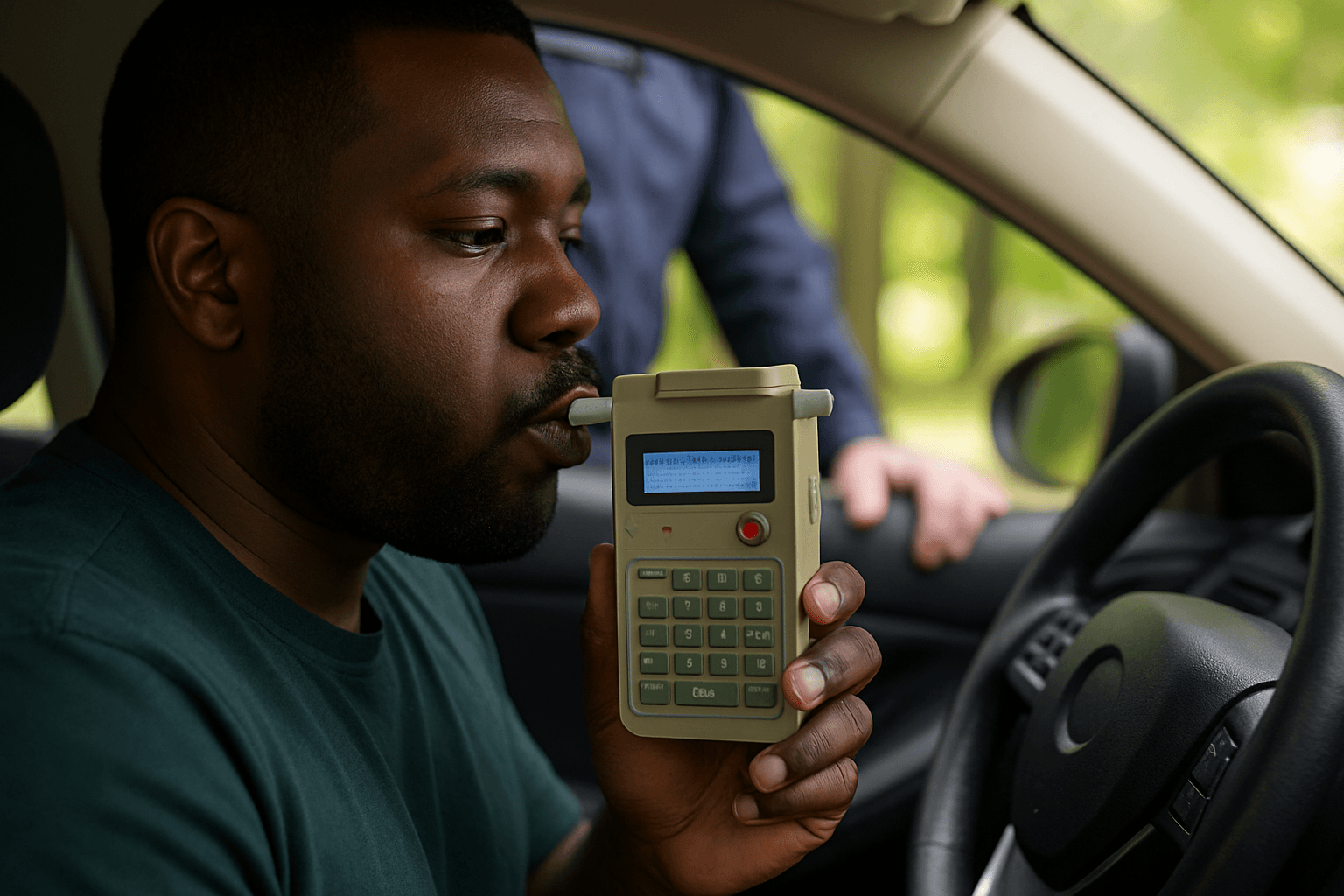
If your suspension is OVI-related, the court will require proof of ignition interlock device (IID) installation before granting LDP. Ohio Revised Code 4510.022 mandates IID for OVI-related LDP. The device must be installed by an Ohio Department of Public Safety-approved vendor before the hearing or within a timeframe the court specifies. Failure to install the IID before the deadline voids the LDP grant. IID costs run $70 to $150 for installation and $60 to $100 per month for monitoring and calibration.
How Limited Driving Privileges Appear on Your Record and License
Once the court grants LDP, the court clerk files the order with the Ohio BMV. The BMV updates your driving record to reflect the privileges. This process typically takes 3 to 7 business days. You do not receive a new physical driver's license. Your existing license remains suspended. The LDP exists as a court order and a notation in the BMV system, not as a reissued credential.
You must carry the court order while driving under LDP. Law enforcement officers verify LDP status by checking the BMV record during traffic stops. If the BMV has not yet processed the court order and the officer's system shows an active suspension with no LDP notation, you may be cited for driving under suspension even though you possess a valid court order. Carry a copy of the signed court order in your vehicle until the BMV record updates.
Violating the terms of your LDP triggers immediate revocation. If the court order permits driving Monday through Friday from 6 a.m. to 6 p.m. for work only, and you are stopped Saturday afternoon driving to a family event, the officer will cite you for driving under suspension. The court will revoke your LDP, and you will serve the remainder of your suspension with no driving privileges. Most courts do not grant second LDP petitions after revocation for violation of the first.
What Insurance You Need Before and During Limited Driving Privileges
SR-22 insurance is required for OVI-related suspensions and suspensions triggered by uninsured driving. Ohio requires SR-22 filing for 3 years after an OVI conviction, measured from the conviction date. If your suspension stems from points accumulation without an OVI or insurance lapse, SR-22 may not be required, but liability coverage meeting Ohio's minimum limits is mandatory: $25,000 per person for bodily injury, $50,000 per accident for bodily injury, and $25,000 for property damage.
Non-owner SR-22 policies cover drivers who do not own a vehicle but need to meet the SR-22 filing requirement to petition for LDP. Monthly premiums for non-owner SR-22 policies in Ohio typically range from $40 to $80, depending on your driving history and the violation that triggered the suspension. Non-owner policies provide liability coverage when you drive a borrowed or rented vehicle but do not cover a vehicle you own or regularly use.
If you own a vehicle, you need a standard auto insurance policy with SR-22 endorsement. Monthly premiums after an OVI conviction in Ohio typically range from $140 to $250, approximately double the rate for drivers with clean records. Rates vary by county, age, vehicle type, and coverage selections. Carriers writing SR-22 policies in Ohio include Geico, Progressive, State Farm, Dairyland, Bristol West, and The General. Not all carriers write SR-22 endorsements for high-risk drivers, and some carriers charge significantly higher premiums than others for the same coverage.
What Happens After Your LDP Period Ends
Limited Driving Privileges expire when the underlying suspension period ends. If your suspension was 1 year and you received LDP after a 15-day hard period, your LDP remains in effect for the remaining 350 days unless revoked. When the suspension period expires, you must reinstate your full driving privileges through the Ohio BMV before driving without restrictions.
Reinstatement requires payment of a $40 base reinstatement fee, proof of current insurance, and completion of any court-ordered requirements such as DUI education or substance abuse treatment programs. OVI offenders must complete a state-approved Driver Intervention Program (DIP), typically a 3-day residential program, as a condition of reinstatement. If you completed DIP as part of your court sentence, the BMV should have the completion certificate on file. If not, you must submit proof before reinstatement is approved.
SR-22 filing must remain active for the full 3-year period after an OVI conviction, even after your license is reinstated. If your SR-22 lapses at any point during the 3-year filing period, the BMV will suspend your license again. The suspension remains in effect until you refile SR-22 and pay a new reinstatement fee.