Ohio courts define your permitted driving hours and routes individually — the BMV does not issue uniform time windows. Most petitioners underestimate how narrow the court's schedule grant will be.
Ohio Does Not Issue Statewide Time Restrictions for Limited Driving Privileges
Ohio courts define permitted driving hours individually when granting Limited Driving Privileges. The state does not impose a uniform daily hour cap or uniform permitted time window. The granting court specifies permitted hours and days in the court order itself, and those restrictions vary by court, by judge, and by the facts presented in the petition.
This means your LDP schedule is not predetermined. The court will review your employment hours, school schedule, medical appointment needs, and court-ordered treatment calendar, then write a specific schedule into the order. That schedule is binding. Driving outside the permitted hours — even by five minutes — violates the order and triggers revocation and new criminal charges under Ohio Revised Code 4510.021.
Most petitioners assume LDP grants a daily window like 6:00 AM to 8:00 PM. Courts do not write it that way. The typical grant specifies narrow windows tied to documented need: Monday through Friday 7:00 AM to 8:30 AM and 4:30 PM to 6:00 PM for commute, Tuesdays 5:00 PM to 7:00 PM for DUI education class, Thursdays 2:00 PM to 4:00 PM for probation reporting. The grant is a schedule, not a blanket privilege.
How Courts Define Your Permitted Hours in the LDP Order
The court bases your permitted hours on the documentation you submit with your petition. Employment verification must state your exact work hours, including start time, end time, and days worked per week. School schedules must show class times and campus address. Medical appointments require provider letters stating frequency, appointment duration, and clinic location. Court-ordered treatment programs require enrollment verification with class schedule.
Judges write the narrowest schedule that covers documented need. If your employer letter states you work 8:00 AM to 5:00 PM, the court will not grant 6:00 AM to 8:00 PM. The typical grant adds 30 minutes before and after work for travel, resulting in a permitted window of 7:30 AM to 5:30 PM for that example. Some courts grant tighter margins. Franklin County courts frequently grant only 15-minute pre-work and post-work buffers.
Weekend hours require separate justification. Courts do not grant Saturday or Sunday driving unless you submit documentation proving weekend work shifts, weekend school classes, or weekend treatment requirements. A letter stating "occasional weekend shifts" will not produce a weekend grant — the employer must specify exact Saturday or Sunday hours.
Multiple destinations create multiple time windows. If you work 8:00 AM to 5:00 PM and attend DUI education Tuesday evenings 6:00 PM to 8:30 PM, the court writes two separate windows into the order: the Monday-Friday commute window and a Tuesday-only evening window. Each window is tied to a specific approved purpose and specific approved route.
Compare car insurance rates in your state
Get quotes from licensed carriers — no obligation, no spam, results in minutes.
Get Your Free Quote✓ No Obligation Required✓ Licensed Carriers Only✓ Available Nationwide✓ Free to Compare
Route Restrictions Are Written Into the Court Order Alongside Time Limits
Ohio courts define permitted routes in addition to permitted hours. The petition must include a written route description for each approved purpose. Most courts require street names and intersections, not just origin and destination addresses. The safest practice is to submit a printed map with the route highlighted for each approved purpose.
The court order incorporates those routes by reference or by description. Deviation from the approved route — even to avoid traffic or road closure — violates the order. Police officers reviewing your LDP during a traffic stop will compare your current location to the route described in the court order. If you are not on an approved route during an approved time window, the stop becomes an unlicensed-driving charge.
Some courts grant "direct route" language without naming specific streets. This does not mean the shortest possible route — it means the most direct reasonable route given normal traffic patterns. Taking surface streets when the highway is the normal route will not survive scrutiny. Stopping for groceries, gas, or errands during a work commute violates the direct-route restriction unless the court order explicitly permits stops.
Cuyahoga County and Hamilton County courts frequently deny LDP petitions that do not include detailed route maps. Summit County courts have begun requiring Google Maps printouts with estimated travel time for each route. This is not uniform statewide, but the trend is toward requiring more route documentation upfront rather than less.
What Happens When You Drive Outside Your Permitted Hours or Routes
Driving outside your court-defined time windows or routes is not a technical violation — it is a new criminal charge. Ohio Revised Code 4510.021 treats violation of LDP restrictions as driving under OVI suspension, a first-degree misdemeanor carrying up to 180 days in jail, a fine up to $1,000, and vehicle immobilization or forfeiture.
The court that granted your LDP will also revoke the privileges immediately upon learning of the violation. Revocation is automatic in most counties once the prosecutor files the 4510.021 charge. You do not get a hearing before revocation — the original LDP order includes language authorizing summary revocation upon violation.
Police officers are trained to check LDP time and route restrictions during traffic stops. The officer will request your LDP court order, verify the current time against your permitted hours, and verify your current location against your permitted routes. If either check fails, the officer will arrest you for unlicensed driving and impound the vehicle. The LDP card itself does not show your restrictions — the officer must review the full court order, which is why you are required to carry a certified copy of the order in the vehicle at all times.
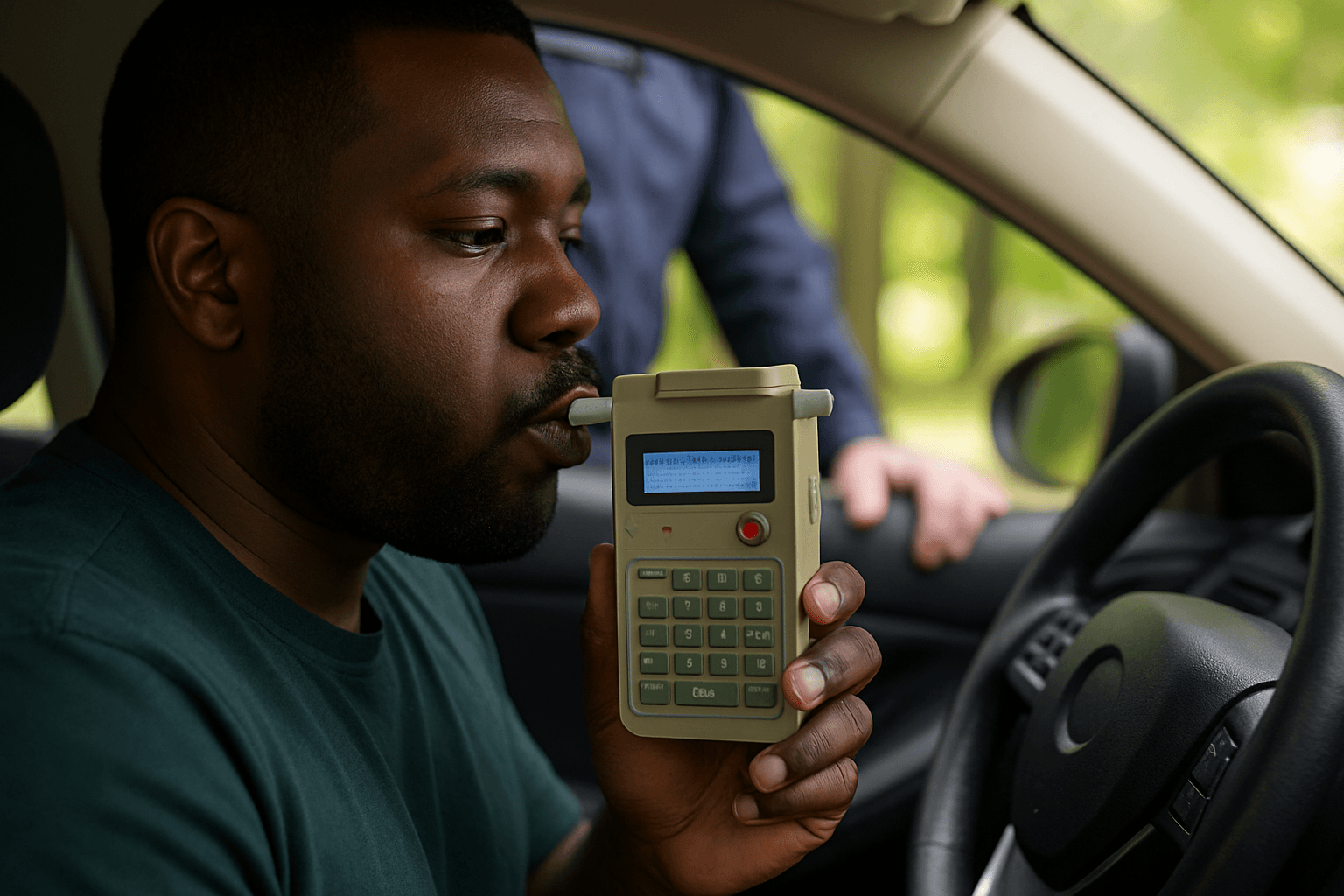
Some drivers believe the ignition interlock device required for OVI-related LDP grants will prevent violations. The interlock prevents the vehicle from starting if alcohol is detected — it does not enforce time or route restrictions. The device logs start times and locations, and those logs are reviewed monthly by the court or probation officer. A pattern of starts outside permitted hours will trigger revocation even if no traffic stop occurred.
The Difference Between Court-Granted LDP and BMV Administrative Actions
The Ohio Bureau of Motor Vehicles does not grant Limited Driving Privileges. The BMV's role is administrative: recording the suspension on your driving record, recording the court-granted LDP once the court issues it, and processing reinstatement after the suspension period ends and all fees are paid.
All LDP petitions go to a court, not the BMV. The specific court with jurisdiction depends on suspension type. For OVI convictions, the sentencing court retains jurisdiction over LDP petitions. For administrative suspensions imposed by the BMV (insurance lapse, points accumulation, unpaid tickets), the court of common pleas in your county of residence has jurisdiction.
Many petitioners file at the wrong court and lose weeks waiting for the case to be transferred or dismissed. Franklin County Common Pleas will not hear an LDP petition for an OVI conviction entered in Franklin County Municipal Court — the municipal court retains jurisdiction. Conversely, Franklin County Municipal Court will not hear an LDP petition for a BMV administrative suspension — that petition must go to Franklin County Common Pleas.
The BMV processes reinstatement fees, SR-22 filings, and driving record updates, but the BMV does not define your LDP time or route restrictions. Those restrictions are written by the judge who grants the petition, and they appear in the court order, not on any BMV document.
SR-22 Filing and Ignition Interlock Requirements for LDP Grants
Ohio requires SR-22 proof-of-financial-responsibility filing for most LDP grants. OVI-related LDP petitions require SR-22 before the court will grant the petition. Insurance-lapse suspensions and uninsured-driving suspensions also require SR-22. Points-accumulation suspensions typically do not require SR-22 unless the suspension resulted from an at-fault accident while uninsured.
The SR-22 filing must remain active for the entire LDP period and typically for a period after full license reinstatement. OVI offenders face a minimum 3-year SR-22 requirement under Ohio Revised Code 4509.45, measured from the date of reinstatement, not from the date of conviction. If your LDP period lasts 1 year and your full suspension lasts 3 years, you will carry SR-22 for 6 years total.
SR-22 insurance is not a separate policy — it is a certificate your carrier files with the BMV electronically. Not all carriers file SR-22 in Ohio. Progressive, GEICO, and Bristol West file SR-22 and write policies for suspended drivers. Non-owner SR-22 policies are available for drivers who do not own a vehicle but need to meet the SR-22 filing requirement to petition for LDP.
Ignition interlock is required for all OVI-related LDP grants under Ohio Revised Code 4510.022. The interlock device must be installed by an Ohio Department of Public Safety-approved vendor before the court grants LDP. The court order will specify the interlock requirement and the required duration, typically matching the LDP period. Monthly interlock monitoring fees run $70 to $100, and installation fees run $100 to $150. The court will require monthly interlock compliance reports as a condition of maintaining LDP.
Cost of Obtaining Limited Driving Privileges in Ohio
Court filing fees for LDP petitions vary by county and by court. Franklin County Common Pleas charges approximately $115 for LDP petition filing. Hamilton County Municipal Court charges approximately $75. Cuyahoga County Common Pleas charges approximately $150. These are court fees, not BMV fees, and they are non-refundable whether the petition is granted or denied.
SR-22 filing itself costs $15 to $50 depending on carrier. The SR-22 filing fee is separate from the insurance premium. Insurance premiums for drivers petitioning for LDP after OVI suspension typically run $140 to $260 per month for minimum liability coverage, approximately double the rate for a clean-record driver in the same county. Non-owner SR-22 policies cost less, typically $50 to $90 per month, because the policy covers only the driver and not a specific vehicle.
Ignition interlock installation costs $100 to $150, and monthly monitoring and calibration fees run $70 to $100. A 1-year LDP period with ignition interlock will cost $940 to $1,350 in device fees alone. Some counties offer indigency waivers for interlock costs, but approval is not automatic — the petitioner must submit financial documentation proving inability to pay.
BMV reinstatement fees are separate from LDP costs and are paid at the end of the suspension period, not when LDP is granted. Ohio's base reinstatement fee is $40, but OVI suspensions and Financial Responsibility Act suspensions carry higher fees. The reinstatement fee structure is detailed on the Ohio BMV website at bmv.ohio.gov/dl-suspension-reinstatement.aspx.