Ohio courts define your permitted routes and purposes at the hearing — but many drivers don't realize the order follows you everywhere, not just the routes you listed.
Ohio Courts Define Routes at the Granting Hearing, Not the BMV
The Ohio Bureau of Motor Vehicles does not issue Limited Driving Privileges. Courts grant LDP through a petition process, and the granting judge defines every permitted route, purpose, day, and hour in the court order itself. The BMV's role is purely administrative: once a court grants LDP, the BMV records the privilege on your driving record and reflects the restriction status to law enforcement.
Most Ohio drivers petition the wrong venue first. For OVI-related suspensions, the sentencing court that handled your OVI case has jurisdiction over your LDP petition. For administrative or BMV-imposed suspensions — insurance lapses, points accumulation, medical suspensions — the court of common pleas in your county of residence hears the petition. Filing in the wrong court results in dismissal without review, and most counties charge a nonrefundable filing fee between $50 and $150.
The petition itself must include proof of SR-22 insurance if your suspension is OVI-related or insurance-related, proof of employment or necessity (school enrollment, medical appointments, court-ordered treatment schedules), and payment of the court filing fee. Ohio Revised Code 4510.021 governs occupational driving privileges, but the statute grants judges broad discretion to define what constitutes legitimate hardship and which routes meet necessity standards.
Route Restrictions Apply Statewide, Not Just to Listed Addresses
Ohio LDP orders specify permitted purposes — work, school, medical appointments, court-ordered treatment, sometimes grocery shopping or childcare pickup — but the geographic scope of the order is statewide, not address-bound. If your order permits travel for work purposes, that permission follows you to any job site in Ohio, not only the employer address you listed in your petition.
The confusion arises because most LDP orders list specific addresses: your home, your employer's location, your DUI education program site, your probation office. Drivers read these addresses as the only permitted destinations. Courts list them for specificity and verification, not as geographic boundaries. If your employer reassigns you to a different location mid-LDP, the work-purpose permission applies to the new site. If you lose that job and start a new one, the work-purpose permission applies to the new employer.
The restriction that does bind you is purpose and time. If your order permits travel for work Monday through Friday 6 a.m. to 6 p.m., you cannot use those hours for non-work purposes even if the destination is on a listed route. A stop at a convenience store on the way home from work violates the order if the order does not enumerate personal errands as a permitted purpose. Officers enforce purpose restrictions more strictly than route deviations.
Compare car insurance rates in your state
Get quotes from licensed carriers — no obligation, no spam, results in minutes.
Get Your Free Quote✓ No Obligation Required✓ Licensed Carriers Only✓ Available Nationwide✓ Free to Compare
Most Orders Limit Purposes, Not Specific Streets or Highways
Ohio judges rarely define exact street-by-street routes in LDP orders. The order specifies origin points (typically your home address), destination categories (work, school, treatment), and the time windows during which travel is permitted. You choose the route. Taking a longer route to avoid traffic or construction does not violate the order. Stopping for gas on a permitted route does not violate the order if fuel is necessary to complete the permitted trip.
Some counties issue orders that include explicit route language — "direct route only" or "most direct route" — but these clauses are enforced based on reasonableness, not GPS precision. A five-mile detour to avoid a closed bridge is reasonable. A fifteen-mile detour to visit a friend is not. The burden is on you to articulate why a deviation was necessary if stopped.
Ohio law enforcement can verify your LDP status and restrictions during any traffic stop by querying the BMV system. The system shows that you hold limited privileges and identifies the granting court, but it does not display the full text of the court order. Officers rely on your explanation of where you are going and why. Carry a copy of your court order in the vehicle at all times. If your explanation does not match the order's permitted purposes, the officer can charge you with driving under suspension, which in Ohio carries penalties including jail time, additional suspension, and vehicle impoundment.
Work, School, Medical, and Treatment Are Standard — Personal Errands Usually Are Not
Ohio courts grant LDP for purposes the law considers essential: employment, education, medical care, and court-ordered obligations. Work includes travel to and from your job site during scheduled shifts. School includes travel to and from enrolled classes, not recreational campus visits. Medical includes appointments with licensed providers, pharmacy trips for prescriptions, and sometimes regular dialysis or physical therapy sessions. Court-ordered treatment includes DUI education programs, probation check-ins, and substance abuse counseling mandated as a condition of your sentence.
Personal errands — grocery shopping, childcare pickup, banking, attending religious services — are not automatically included. Some judges add these purposes if you demonstrate specific hardship in your petition. A single parent with no alternative childcare can often get school pickup added. A driver in a rural area with no public transit and no nearby grocery delivery can sometimes get weekly shopping trips added. But these additions are discretionary, not guaranteed.
The court's job is to balance public safety against your need to maintain employment and meet legal obligations. Judges in counties with high OVI recidivism rates grant narrower LDP orders. Judges in rural counties with limited public transit infrastructure grant broader ones. If your petition is granted but the permitted purposes are too narrow to sustain your daily life, you can file a motion to modify the order. Most courts require a showing of changed circumstances — a new job with different hours, a new medical condition requiring regular appointments — before granting modification.
Ignition Interlock Is Required for All OVI-Related LDP in Ohio
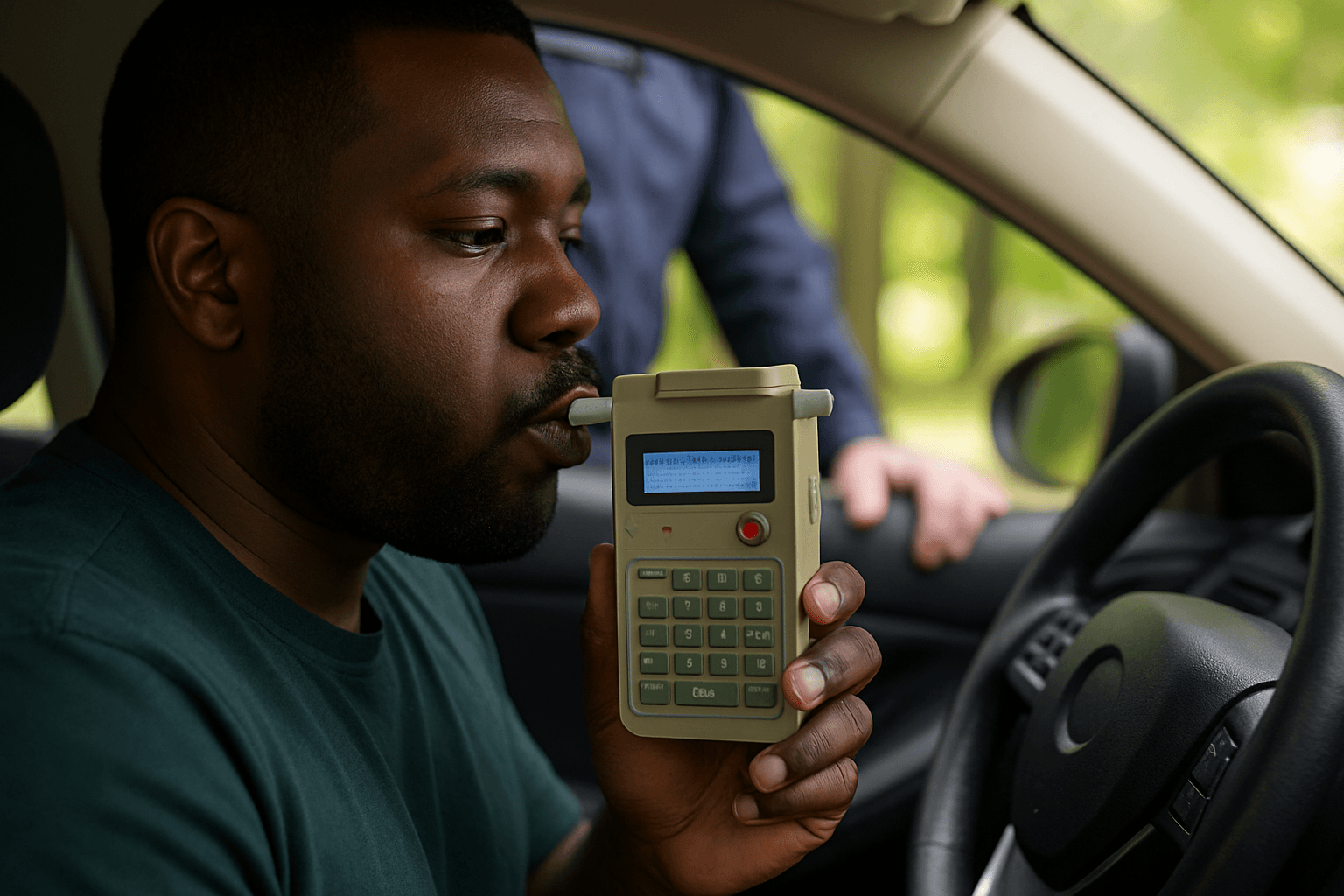
Ohio Revised Code 4510.022 mandates ignition interlock installation on any vehicle you operate under OVI-related Limited Driving Privileges. The device must be installed by an Ohio Department of Public Safety-approved vendor before the court grants the petition. Some judges require proof of installation at the hearing. Others grant conditional LDP subject to installation within a specified window, typically 10 to 30 days.
The interlock requirement applies for the full duration of your LDP, which in most first-offense OVI cases is six months to one year. The device logs every start attempt, every failed breath test, and every rolling retest. Monthly monitoring reports go to the court and to your probation officer if you are on probation. A single failed test does not automatically revoke your LDP, but a pattern of failures or attempts to circumvent the device can trigger a revocation hearing.
Ignition interlock costs in Ohio typically run $70 to $100 for installation, $60 to $80 per month for monitoring and calibration, and $50 to $75 for removal once your LDP term ends. These costs are your responsibility, not the state's. Some vendors offer payment plans. No vendor offers free installation or monitoring, regardless of income. If you cannot afford the device, you cannot operate under OVI-related LDP. The only alternative is to wait out the full suspension period without driving.
Violations Trigger Immediate Revocation and Extended Suspension
Driving outside your permitted purposes, times, or without the required ignition interlock results in a new charge: driving under OVI suspension, Ohio Revised Code 4510.14. This is a first-degree misdemeanor carrying up to six months in jail, a fine up to $1,000, vehicle impoundment, and an additional suspension period that runs consecutively to your original suspension.
The court that granted your LDP can revoke the privilege without a separate criminal conviction. If your probation officer reports that you missed two DUI education classes, the court can revoke LDP at a compliance hearing. If an officer stops you at 10 p.m. on a route your order permits only during daytime work hours, the court can revoke LDP based on the officer's report alone. Revocation is immediate. You lose driving privileges for the remainder of your suspension period, and most judges will not grant a second LDP petition after revocation.
Ohio does not offer warnings or grace periods for LDP violations. The standard is strict compliance. If your work schedule changes and you need different hours, file a motion to modify before driving the new schedule. If you lose your job and no longer have a work-related necessity, notify the court. Continuing to drive under an LDP that no longer matches your actual circumstances is treated the same as driving with no privileges at all.
SR-22 Filing Runs Three Years from Your OVI Conviction Date
Ohio requires SR-22 proof-of-financial-responsibility filing for all OVI-related suspensions and most insurance-related suspensions. The filing must remain active for three years, measured from your conviction date, not from the date you file or the date your LDP is granted. If your OVI conviction was finalized in January 2024, your SR-22 obligation runs through January 2027 regardless of when your license is reinstated or when your LDP term ends.
SR-22 is not insurance — it is a certificate your insurer files with the Ohio BMV confirming you carry at least state minimum liability coverage: $25,000 per person for bodily injury, $50,000 per accident for bodily injury, and $25,000 for property damage. If your policy lapses or is canceled, your insurer notifies the BMV within 24 hours, and the BMV suspends your license or LDP immediately. There is no grace period.
SR-22 filing itself costs $15 to $50 depending on the carrier. The premium impact is larger. Ohio drivers with OVI convictions and SR-22 filing requirements typically pay $140 to $220 per month for minimum liability coverage through non-standard carriers. Standard carriers like State Farm and Nationwide may decline to write new policies for drivers with active OVI suspensions. Non-standard carriers like Progressive, Geico, and The General write SR-22 policies in Ohio and offer online quoting for suspended-license drivers.