Ohio requires drivers to petition the correct court for Limited Driving Privileges — not the BMV. The court that hears your petition depends on whether your suspension is administrative or conviction-based, and choosing wrong means dismissal before you even start.
Which Court Has Jurisdiction Over Your Ohio LDP Petition
The court with jurisdiction over your Limited Driving Privileges petition depends on how your license was suspended. If your suspension originated from an OVI conviction, the sentencing court hears your LDP petition — the same court that imposed the criminal sentence. If your suspension is administrative (triggered by the BMV for uninsured driving, insurance lapse, test refusal at arrest, or points accumulation), the court of common pleas in your county of residence has jurisdiction. Filing in the wrong court results in immediate dismissal without consideration of your petition.
The Ohio Bureau of Motor Vehicles does not grant Limited Driving Privileges. The BMV records the suspension and, once a court grants LDP, reflects the privileges on your driving record. All petitions go to the appropriate court, never to the BMV. Ohio suspension notices often do not specify which court has jurisdiction, leaving drivers to determine this themselves or consult an attorney.
For OVI Administrative License Suspension (ALS) — the separate suspension triggered by the arresting officer at the time of arrest — you petition the court of common pleas even if your criminal OVI case is still pending. ALS and the court-imposed conviction suspension are separate actions with separate LDP petition processes. A driver with both an ALS and a conviction suspension may need to petition for LDP on each suspension separately.
Hard Suspension Period Before You Can Petition
Ohio law imposes a hard suspension period during which Limited Driving Privileges are not available. For a first OVI offense with a BAC failure, the hard suspension is 15 days from the date of arrest (for ALS) or the date of conviction (for the court-imposed suspension). For test refusal on a first offense, the hard suspension is 30 days. Second and subsequent OVI offenses carry longer hard periods: 180 days for a second test refusal within 10 years.
Points-based suspensions, uninsured driving suspensions, and insurance lapse suspensions typically do not carry a statutory hard period, meaning you may petition for LDP immediately after the suspension becomes effective. However, courts retain discretion to deny petitions if they determine the driver poses a risk or has not demonstrated sufficient necessity.
You cannot petition for LDP during the hard suspension period. Courts will dismiss petitions filed prematurely. The clock starts from the arrest date for ALS, the conviction date for court-imposed OVI suspensions, and the effective date shown on the BMV suspension notice for administrative suspensions.
Compare car insurance rates in your state
Get quotes from licensed carriers — no obligation, no spam, results in minutes.
Get Your Free Quote✓ No Obligation Required✓ Licensed Carriers Only✓ Available Nationwide✓ Free to Compare
Required Documentation for Your Petition
Ohio courts require a completed petition form, proof of SR-22 insurance (if your suspension is OVI-related or arose from uninsured driving), proof of employment or necessity (school enrollment, medical appointment schedule, court-ordered treatment program documentation), and payment of the court filing fee. Some courts provide standardized petition forms; others require you to draft the petition yourself or hire an attorney to draft it. The BMV driving record may be required as an attachment to demonstrate your suspension status and history.
SR-22 insurance must be filed with the Ohio BMV before the court hearing. Courts will not grant LDP without proof that SR-22 is already on file. If your suspension is OVI-related, you must also provide proof of enrollment in or completion of a state-approved Driver Intervention Program (DIP) — typically a 3-day residential program. DIP completion is a statutory prerequisite for OVI reinstatement and most courts will not grant LDP without it.
Court filing fees vary by county. Individual courts set their own fees, typically ranging from $50 to $150. There is no uniform statewide fee for LDP petitions. You pay the fee to the court clerk when filing the petition.
Ignition Interlock Device Installation and Monitoring
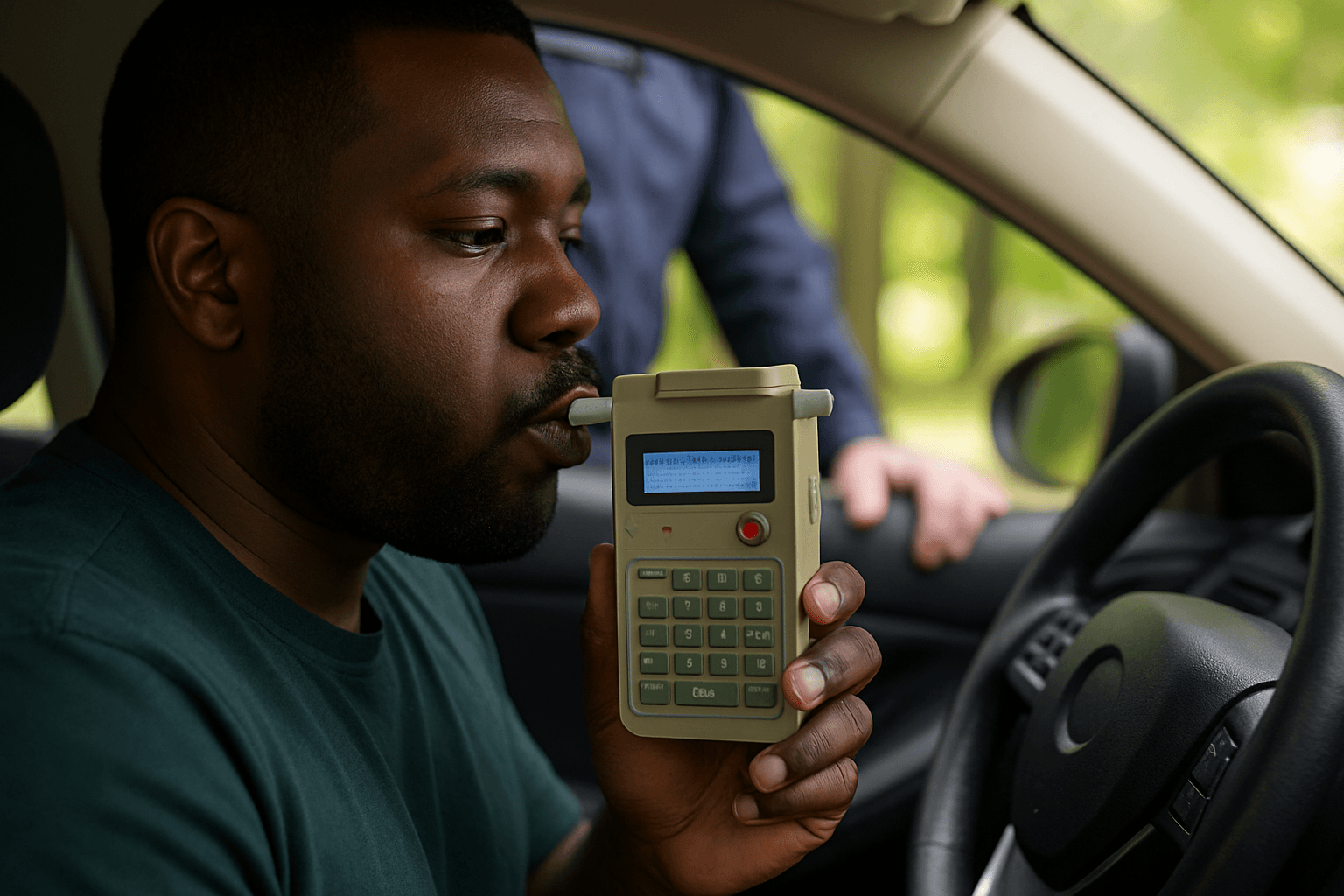
Ohio requires ignition interlock devices for all OVI-related Limited Driving Privileges. Ohio Revised Code 4510.022 codifies the IID requirement. The interlock vendor must be approved by the Ohio Department of Public Safety. You must install the IID before the court grants LDP, and the installation receipt must be provided to the court as proof of compliance.
IID installation costs approximately $75 to $150, with monthly monitoring fees of $60 to $90. The monitoring fee covers calibration appointments (typically every 30 days), data downloads, and reporting to the court and BMV. If you violate the IID terms — tampering with the device, failing a rolling retest, or missing a calibration appointment — the court may revoke your LDP immediately and the BMV may extend your suspension.
Drivers with four or more OVI offenses within 10 years face a 3-year hard suspension before LDP eligibility. Some aggravated or felony OVI convictions carry mandatory suspensions with no LDP eligibility at all. The court has no discretion to waive these statutory bars.
What the Court Considers When Deciding Your Petition
Ohio courts evaluate whether you have demonstrated a genuine necessity for Limited Driving Privileges and whether granting the petition serves the public interest. Necessity is typically proven through employment verification (a letter from your employer on company letterhead stating your job requires driving, your work schedule, and the consequences of not being able to drive), school enrollment (proof of enrollment and class schedule), medical necessity (a letter from your doctor describing treatment schedule and transportation needs), or court-ordered treatment (documentation from the treatment provider).
Courts have broad discretion to define the permitted purposes and routes for LDP. The most common approved purposes are work, school, medical appointments, and court-ordered treatment. Some courts also approve LDP for childcare transportation or grocery shopping, but this is not guaranteed. The court order will specify the exact purposes, routes, and time windows you are permitted to drive. Driving outside the approved purposes, routes, or hours is a criminal offense that triggers immediate LDP revocation and additional criminal charges.
If you have a pattern of prior violations, multiple OVI offenses, or a recent history of driving under suspension, the court is more likely to deny the petition. Courts also consider whether you have paid all fines and court costs associated with the underlying offense. Unpaid fines do not automatically disqualify you from LDP, but they weaken your petition.
SR-22 Filing Duration and Reinstatement After LDP Ends
Ohio requires SR-22 filing for 3 years after an OVI conviction, measured from the conviction date, not the filing date. For uninsured driving suspensions and insurance lapse suspensions, SR-22 is typically required for 1 to 2 years. The SR-22 filing requirement continues after your LDP ends and after you reinstate your full driving privileges. If your SR-22 lapses at any point during the required filing period, the BMV suspends your license again immediately.
When your suspension period ends, you must apply to the BMV for full reinstatement. Ohio charges a $40 base reinstatement fee per suspension. If you have multiple concurrent suspensions (for example, an ALS and a conviction suspension), each suspension carries its own reinstatement fee and you must pay both before the BMV restores your license. Financial Responsibility Act (FRA) suspensions for uninsured driving carry an additional reinstatement fee of $75 to $100 beyond the base fee.
You cannot reinstate online if your suspension is OVI-related or court-ordered. You must visit a BMV office in person, present proof of DIP completion, proof of current SR-22 insurance, and payment of all reinstatement fees. The BMV will not reinstate your license if your SR-22 filing is not current on the date you apply.
Where to Find SR-22 Insurance That Meets Ohio Filing Requirements
Ohio SR-22 insurance is available from non-standard carriers that specialize in high-risk drivers. Monthly premiums for SR-22 insurance in Ohio typically range from $140 to $250 depending on your driving history, age, vehicle, and county. Estimates are based on available industry data; individual rates vary by driving history, vehicle, coverage selections, and location.
Carriers writing SR-22 in Ohio include Geico, Progressive, State Farm, Dairyland, Bristol West, The General, GAINSCO, Direct Auto, National General, and Acceptance Insurance. If you do not own a vehicle, non-owner SR-22 insurance provides the liability coverage Ohio requires without insuring a specific car. Non-owner policies are typically less expensive than standard SR-22 policies and satisfy the BMV filing requirement.
The carrier files the SR-22 certificate electronically with the Ohio BMV. You receive a copy for your records and must carry proof of insurance whenever you drive under LDP. If you switch carriers during the SR-22 filing period, the new carrier must file a new SR-22 before you cancel the old policy. Any gap in SR-22 coverage triggers immediate suspension.