Ohio requires court petitions for Limited Driving Privileges, not BMV applications. The court that suspended your license controls your LDP eligibility, documentation requirements, and ignition interlock mandate.
Which Court Controls Your Limited Driving Privileges Application in Ohio
The court that has jurisdiction over your suspension controls your Limited Driving Privileges petition in Ohio. For OVI convictions, you petition the sentencing court. For administrative suspensions triggered by the BMV (insurance lapses, point accumulations, unpaid tickets), you petition the court of common pleas in your county of residence.
The Ohio Bureau of Motor Vehicles does not grant Limited Driving Privileges. The BMV records your suspension and, once a court grants LDP, updates your driving record to reflect the privileges. Petitioning the BMV directly wastes weeks. Petitioning the wrong court triggers dismissal and requires refiling with the correct jurisdiction.
OVI cases involve two separate suspensions: the Administrative License Suspension (ALS) imposed at arrest under ORC 4511.191, and the court-imposed suspension following conviction. Each suspension has its own hard period and its own LDP petition process. Some drivers need to petition for LDP on both suspensions separately if the ALS period and the conviction suspension overlap or stack.
Hard Suspension Period Before You Can Petition for Limited Driving Privileges
Ohio requires a 15-day hard suspension before you can petition for Limited Driving Privileges on a first-offense OVI Administrative License Suspension when you failed the BAC test. If you refused the chemical test, the hard period extends to 30 days. Second-offense test refusals carry a 180-day hard suspension before LDP eligibility.
Court-imposed suspensions following OVI conviction have their own hard periods defined by statute and the sentencing judge. These periods do not run concurrently with the ALS hard period unless specifically ordered by the court. Most drivers face back-to-back hard suspensions: the ALS period first, then the conviction suspension period.
Point-accumulation suspensions and insurance-lapse suspensions typically have no hard period before LDP eligibility, but the granting court has discretion. Some courts impose waiting periods for unpaid-ticket suspensions even though the statute does not mandate one. Verify the hard period with the clerk of the court that has jurisdiction over your case before filing your petition.
Compare car insurance rates in your state
Get quotes from licensed carriers — no obligation, no spam, results in minutes.
Get Your Free Quote✓ No Obligation Required✓ Licensed Carriers Only✓ Available Nationwide✓ Free to Compare
Required Documentation for Your Limited Driving Privileges Petition
Ohio courts require a completed petition form, proof of SR-22 insurance filing (if the suspension is OVI-related or insurance-related), proof of employment or necessity, and court fee payment. Some courts also require a current BMV driving record abstract.
Proof of necessity means employer affidavits on company letterhead stating your work schedule, shift hours, and job address. If you need LDP for medical appointments, bring documentation of recurring treatment schedules from your provider. For court-ordered alcohol or drug treatment, bring the program enrollment letter with the class schedule. Generic statements like "I need to drive to work" are insufficient. Courts want specific addresses, specific hours, and specific frequencies.
SR-22 insurance must be filed before you submit your LDP petition in OVI cases and most insurance-related suspensions. Courts will not grant LDP without proof that you meet Ohio's financial responsibility requirement. The SR-22 filing must remain active for the entire duration of your suspension and for 3 years following reinstatement in most OVI cases.
Court-Defined Route and Time Restrictions on Limited Driving Privileges
Ohio courts define the permitted purposes, routes, and hours for your Limited Driving Privileges in the court order. The statute does not impose uniform statewide restrictions. Common purposes include work, school, medical appointments, and court-ordered treatment. Some courts grant LDP for grocery shopping and childcare; others do not.
Route restrictions are typically defined by addresses. The court order will list your home address, work address, treatment facility address, and any other approved destinations. You are permitted to drive the most direct route between these addresses during the hours specified in the order. Deviating from the approved route or driving outside the approved hours violates the terms of your LDP and can result in immediate revocation and additional criminal charges.
Time restrictions vary by court and by the driver's work schedule. Courts commonly limit LDP to specific daily windows: 6:00 AM to 8:00 PM Monday through Friday for daytime workers, or overnight hours for shift workers who provide employer documentation of their schedule. Some courts grant 24/7 LDP for drivers with variable schedules, but this requires strong documentation and is not the default.
Ignition Interlock Requirement for OVI-Related Limited Driving Privileges
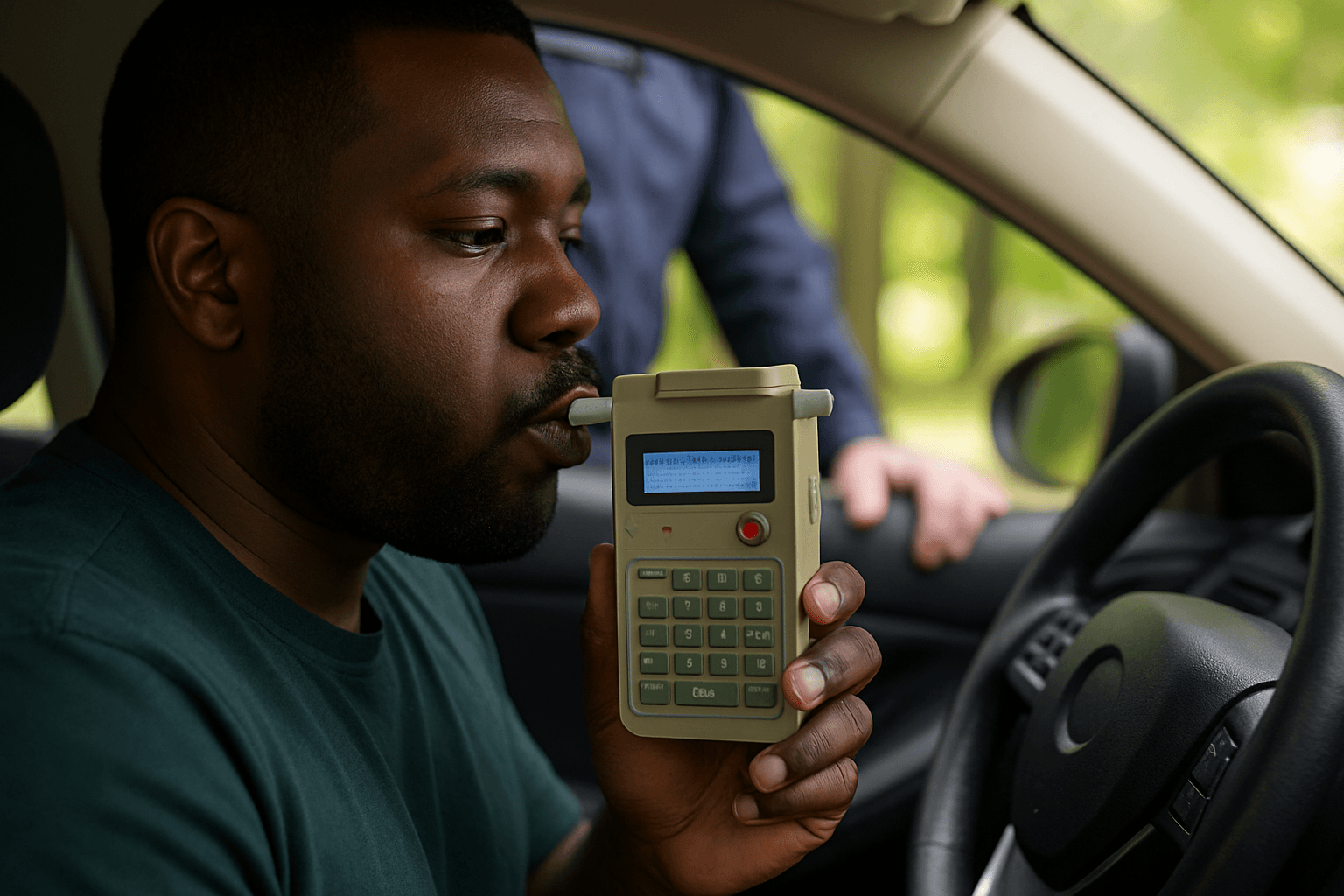
Ohio law requires ignition interlock devices for all Limited Driving Privileges granted on OVI suspensions under ORC 4510.022. The interlock vendor must be approved by the Ohio Department of Public Safety. You pay for installation, monthly monitoring fees, and removal. Typical costs run $75–$125 for installation and $70–$100 per month for monitoring.
The interlock requirement applies even to first-offense OVI cases when you petition for LDP. The court cannot waive the interlock requirement unless your vehicle is physically incapable of accommodating the device. Hardship alone does not qualify as grounds for waiver.
Violating the interlock rules (failing a rolling retest, tampering with the device, driving a non-equipped vehicle) triggers LDP revocation and extends your underlying suspension. The Ohio Department of Public Safety tracks interlock compliance electronically and reports violations to the court and the BMV.
SR-22 Insurance Filing Duration and Cost Impact in Ohio
Ohio requires SR-22 filing for 3 years after OVI convictions, measured from the date of reinstatement, not the date of conviction. Insurance-lapse suspensions and uninsured-driving suspensions also trigger SR-22 requirements, typically for 1 to 3 years depending on whether the suspension was a first or repeat offense.
SR-22 is not a separate insurance policy. It is a certificate your insurance carrier files with the Ohio BMV certifying that you carry at least the state minimum liability coverage: $25,000 per person for bodily injury, $50,000 per accident for bodily injury, and $25,000 for property damage. Most carriers charge $15–$25 to file the SR-22 form itself.
The premium increase comes from being classified as high-risk. Ohio drivers with OVI convictions typically pay $140–$280 per month for SR-22 insurance, compared to $85–$140 per month for standard coverage. Non-standard carriers like Dairyland, Bristol West, GAINSCO, The General, and Direct Auto specialize in SR-22 filings and often quote lower rates than standard carriers for high-risk drivers. Estimates based on available industry data; individual rates vary by driving history, vehicle, coverage selections, and location.
What Happens If Your Limited Driving Privileges Petition Is Denied
Ohio courts deny LDP petitions when documentation is incomplete, when the hard suspension period has not been satisfied, when routes or purposes are vague or overly broad, or when the driver has a prior LDP revocation on record. Unpaid fines, unpaid child support, and outstanding bench warrants also trigger denial in most counties.
A denied petition does not prevent you from filing again. You can refile once you correct the deficiencies the court identified. Some courts allow refiling immediately after denial; others impose a waiting period (typically 30 days). Check with the clerk of the court that denied your petition for the refiling rules in your jurisdiction.
Drivers with four or more OVI offenses within 10 years face a 3-year hard suspension before LDP eligibility. Some aggravated or felony OVI convictions carry mandatory suspensions with no LDP eligibility at all. If your petition is denied due to ineligibility rather than procedural deficiencies, consult an attorney before assuming you can refile successfully.