Approved Limited Driving Privilege in hand, North Carolina drivers discover most preferred-tier carriers decline coverage mid-suspension. The court grants you restricted driving — your carrier drops you.
The Court Grants Your LDP — Then Your Carrier Drops You
Superior or district court judges in North Carolina issue Limited Driving Privileges under N.C.G.S. § 20-179.3, not the NCDMV. The court hearing focuses on proof of employment, substance abuse treatment enrollment, and ignition interlock installation for DWI cases. The judge approves your petition, signs the order, and you walk out with restricted driving authorization.
Your carrier receives notification of the underlying revocation from the NCDMV's electronic insurance verification system (eDMV) within 48 hours. The LDP itself doesn't erase the revocation record. State Farm, Allstate, Nationwide, and most preferred-tier carriers underwrite to clean-record risk profiles. A court-granted LDP for a DWI revocation, habitual offender status, or uninsured driving falls outside their underwriting appetite. They issue a non-renewal notice or cancel the policy outright.
The court order allows you to drive. It does not compel your carrier to continue covering you. That gap is where most NC drivers find themselves stuck.
Which North Carolina Carriers Accept LDP-Stage Risk
Dairyland, The General, National General, and Progressive write policies for NC drivers holding Limited Driving Privileges. These carriers underwrite to non-standard and high-risk segments where license restriction is an expected profile element, not a disqualifier.
Dairyland and The General specialize in SR-22 filings and post-conviction insurance. Both maintain online quote systems and write liability-only policies for LDP holders without vehicle ownership. National General operates under the Allstate corporate structure but maintains separate underwriting criteria for non-standard risk. Progressive writes across standard and non-standard tiers — LDP acceptance varies by underwriting review.
Geico writes SR-22 policies in North Carolina and accepts some LDP cases depending on the underlying violation. A first-offense DWI with no prior lapses may receive standard-tier pricing. A habitual offender revocation typically routes to declination. Direct Auto operates 15-state footprint including NC and writes post-suspension coverage, though availability varies by county.
Preferred-tier carriers writing in NC — State Farm, Erie, Auto-Owners, Amica, Farmers, Liberty Mutual, Travelers, Hartford, USAA — either decline LDP-stage applicants outright or impose underwriting restrictions that effectively exclude them. USAA and State Farm file SR-22 forms in North Carolina but reserve that service for members whose violations occurred while already insured with the carrier.
Compare car insurance rates in your state
Get quotes from licensed carriers — no obligation, no spam, results in minutes.
Get Your Free Quote✓ No Obligation Required✓ Licensed Carriers Only✓ Available Nationwide✓ Free to Compare
SR-22 Filing Requirements for North Carolina LDPs
The court petition for a Limited Driving Privilege requires proof of valid liability insurance or SR-22 filing at the hearing. For DWI revocations, uninsured driving (FS-1) revocations, and some habitual offender cases, the court mandates SR-22 as a condition of the LDP grant.
SR-22 is not a separate insurance policy. It is a liability certification form filed electronically by your carrier to the NCDMV. The form certifies you carry at least North Carolina's minimum liability limits: $50,000 bodily injury per person, $100,000 bodily injury per accident, and $50,000 property damage. The carrier charges a filing fee — typically $25 to $50 — and monitors the policy for lapses.
If the policy cancels or lapses for non-payment, the carrier files an SR-26 cancellation notice with the NCDMV within 10 days. The NCDMV revokes the Limited Driving Privilege immediately. The court does not re-hear your case. The LDP disappears the moment the SR-22 lapses, and you return to full revocation status with no restricted driving authorization.
Non-owner SR-22 policies exist for LDP holders without vehicles. These policies provide liability coverage when driving a borrowed or rented vehicle and satisfy the SR-22 filing requirement. Dairyland, The General, and Progressive all write non-owner SR-22 in North Carolina. Monthly premiums run $40 to $80 depending on violation history and the length of the required filing period.
Ignition Interlock Requirement and Insurance Impact
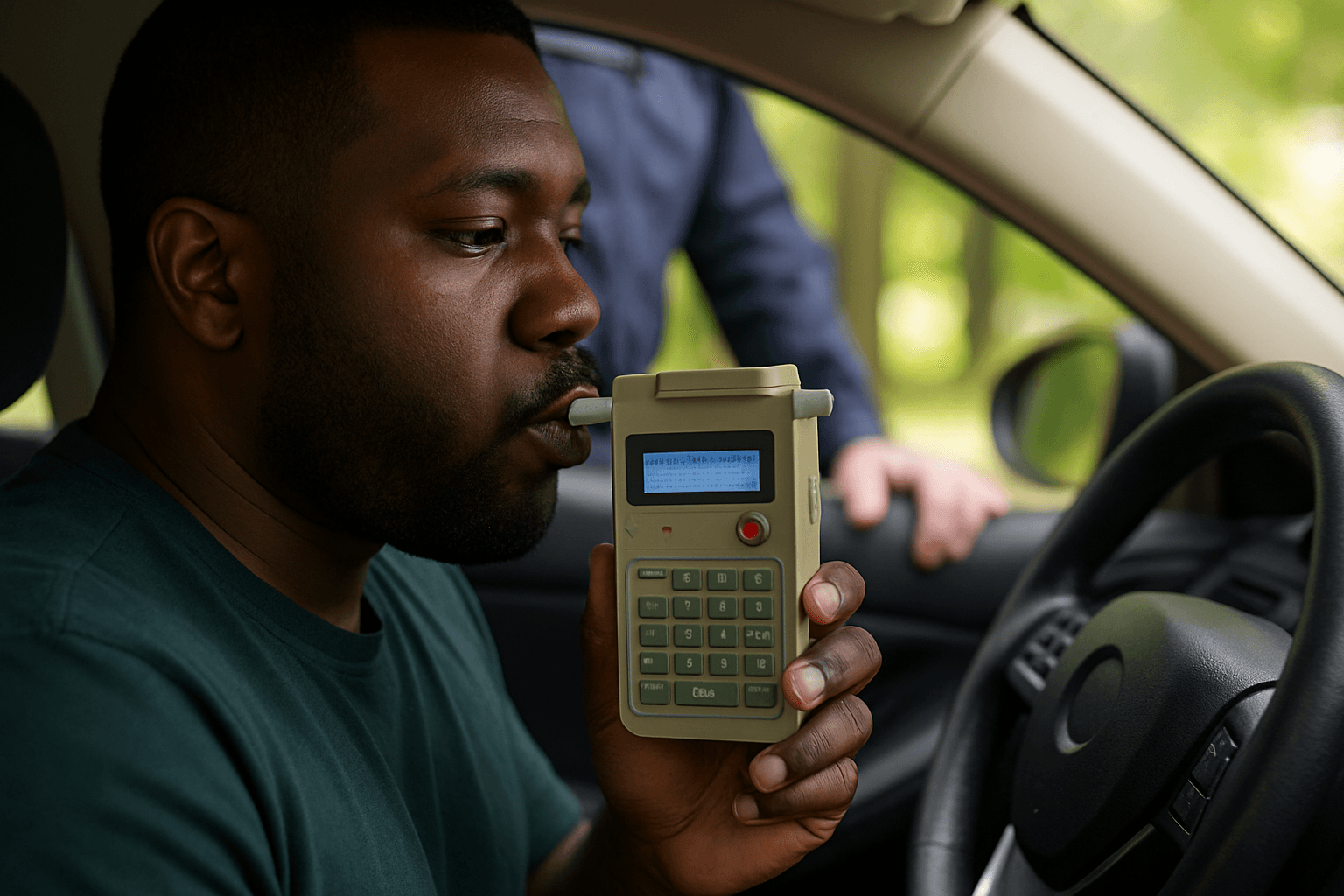
North Carolina mandates ignition interlock for LDP holders whose BAC measured 0.15 or higher at arrest or who have a prior DWI conviction. The device requirement applies for the duration of the LDP and often extends beyond the LDP period as a condition of full reinstatement.
Carriers do not insure the interlock device itself. The device installer — typically Smart Start or Intoxalock in North Carolina — leases the equipment under a separate service agreement. Monthly lease costs run $70 to $100 plus installation fees of $100 to $150. The installer files a compliance report with the court and NCDMV every 30 days.
The interlock requirement does not directly increase your insurance premium. The underlying DWI conviction increases the premium. A first-offense DWI in North Carolina raises liability premiums by 150% to 300% depending on the carrier's rate tier. A second DWI or a refusal revocation typically moves the driver out of standard-tier eligibility entirely.
Carriers writing LDP-stage policies assume interlock compliance as part of the underwriting profile. If the installer reports tampering, failed starts above the threshold, or missed calibration appointments, the court revokes the LDP. The insurance policy continues until you cancel it or the carrier non-renews at the next term. The two systems — interlock compliance and insurance coverage — operate independently but both must remain active for the LDP to stay valid.
Monthly Premium Ranges for LDP Holders in North Carolina
A North Carolina driver with a first-offense DWI holding a Limited Driving Privilege pays $140 to $240 per month for minimum liability coverage through a non-standard carrier. A driver with a second DWI or habitual offender revocation pays $190 to $320 per month. These estimates reflect liability-only policies with no comprehensive or collision coverage.
Non-owner SR-22 policies for LDP holders without vehicles cost $40 to $90 per month. The lower cost reflects the absence of vehicle-specific risk. The carrier prices only liability exposure when the driver operates a borrowed or rented vehicle, not the collision or theft risk of an owned vehicle.
Full-coverage policies for LDP holders — liability plus collision and comprehensive — run $220 to $450 per month depending on the vehicle's value and the driver's violation history. Most non-standard carriers require full-coverage policies only when a lien holder mandates it. Otherwise, the carrier underwrites to liability-only to reduce claims exposure.
Estimates based on available industry data; individual rates vary by driving history, vehicle, coverage selections, and location. Premiums decrease after the SR-22 filing period ends and the revocation fully clears from the NCDMV record. A first-offense DWI SR-22 typically lasts 3 years in North Carolina. Premiums decline 20% to 40% once the filing requirement ends and the driver transitions back to standard-tier eligibility.
Application Path: Court Petition, Then Insurance, Then Filing
The sequence matters. Apply for the Limited Driving Privilege through the superior or district court in the county where you reside or where the offense occurred. The court requires proof of enrollment in substance abuse treatment for DWI cases, proof of ignition interlock installation if your BAC was 0.15 or higher, and proof of valid liability insurance or an SR-22 filing.
Most drivers attempt to secure insurance after the court grants the LDP. That approach fails. Carriers require the court order before issuing the policy, but the court requires proof of insurance before granting the LDP. The correct sequence: obtain a quote from a non-standard carrier willing to write LDP-stage coverage, bring the quote to the court hearing as proof of intent to insure, obtain the signed court order, then activate the policy and file the SR-22.
Dairyland, The General, and Progressive all issue binding quotes before the LDP hearing. The quote remains valid for 30 days. You present the quote and the carrier's willingness letter at the hearing, the judge signs the order, and you return to the carrier to activate the policy. The carrier files the SR-22 electronically with the NCDMV within 24 hours.
The court does not grant LDPs without proof of financial responsibility. Arriving at the hearing without a carrier's willingness letter results in denial. Judges in Mecklenburg, Wake, and Guilford counties routinely deny petitions from drivers who assume they can secure insurance after the hearing. The insurance comes first, documented and ready to activate, or the petition fails.
What Happens When Your Carrier Refuses LDP Coverage
Preferred-tier carriers issue non-renewal notices 30 to 60 days before the policy term ends. The notice states the carrier will not renew the policy due to a change in underwriting criteria or a material change in risk profile. The Limited Driving Privilege and underlying revocation constitute material risk changes.
The non-renewal is not a cancellation. Your current policy remains active until the term ends. Use that window to secure a replacement policy with a non-standard carrier. If you wait until the term ends without replacement coverage, your SR-22 lapses the day the old policy expires. The NCDMV receives the SR-26 cancellation notice and revokes your LDP immediately.
Some carriers cancel mid-term rather than waiting for renewal. Mid-term cancellation triggers a 10-day notice period under North Carolina insurance law. You have 10 days to replace the policy and file a new SR-22 before the NCDMV receives the cancellation notice. If the replacement policy activates and the new SR-22 files before the 10-day window closes, the LDP continues without interruption.
If no non-standard carrier accepts your application, the LDP becomes unenforceable. North Carolina law requires continuous liability insurance for any driver operating a vehicle on public roads, restricted or not. Driving without insurance under an LDP violates both the LDP terms and the state's financial responsibility law. The court revokes the LDP, and you face criminal charges for driving while license revoked (DWLR), a Class 1 misdemeanor carrying up to 120 days in jail.