North Carolina requires district court hearings for Limited Driving Privilege petitions after most suspensions. The DMV does not issue hardship licenses — judges do, and the application pathway differs by violation type.
Why North Carolina Limited Driving Privilege Applications Go Through District Court
North Carolina does not issue hardship licenses through the DMV. Limited Driving Privileges (LDPs) are granted by district court judges after formal petition hearings, not by administrative NCDMV staff at license offices. This procedural distinction matters because drivers who file LDP paperwork at DMV counters are redirected to the court system, losing weeks in the process.
The court-based pathway applies to all suspension triggers eligible for LDP relief: DWI convictions, civil DWI revocations under G.S. 20-16.5, uninsured motorist violations, and most points-based revocations. The judge evaluates your petition, reviews your required documentation (proof of insurance or SR-22, employer verification, substance abuse treatment enrollment for DWI cases, ignition interlock installation receipts where required), and decides whether to grant the privilege and what restrictions to impose.
District court jurisdiction over LDP petitions is statutory. North Carolina General Statutes § 20-179.3 designates superior and district courts as the granting authority for limited driving privileges after impaired driving revocations. Parallel statutes govern LDP petitions for non-DWI suspensions. The DMV plays no adjudicative role in hardship license decisions — the agency processes reinstatements after full suspension periods end, but does not grant or deny LDP petitions during active revocations.
What the District Court Petition Process Requires
Filing an LDP petition in North Carolina district court requires four mandatory components: the petition document itself, proof of valid liability insurance or SR-22 filing (where required by your violation trigger), court fees, and violation-specific compliance documentation. DWI petitions require proof of enrollment in an NCDMV-approved substance abuse assessment and treatment program. High-BAC DWI offenses (0.15 or higher) and repeat DWI convictions require proof of ignition interlock installation before the judge will consider the petition.
The petition hearing is not automatic. You file the petition with the clerk of court in the county where the underlying charge was heard, pay the filing fee, and request a hearing date. The clerk schedules your hearing before a district court judge, typically 2-4 weeks after filing. At the hearing, the judge reviews your documentation, asks about your need for limited driving (employment, medical appointments, education, court-ordered treatment attendance), and decides whether to grant the LDP and under what restrictions.
Filing fees vary by county but typically range $150-$200 for the petition hearing. This is separate from any DMV reinstatement fees you will owe later when the full suspension period ends. If the judge denies your petition, you may refile after addressing the deficiency (missing documentation, unpaid court costs, incomplete substance abuse treatment enrollment), but each refiling carries another court fee.
Compare car insurance rates in your state
Get quotes from licensed carriers — no obligation, no spam, results in minutes.
Get Your Free Quote✓ No Obligation Required✓ Licensed Carriers Only✓ Available Nationwide✓ Free to Compare
When You Can File After a DWI Suspension
DWI-based LDP petitions in North Carolina face a mandatory 45-day hard suspension period. No Limited Driving Privilege can be granted during the first 45 days after a DWI conviction under N.C.G.S. § 20-179.3. The 45-day clock starts on the conviction date, not the filing date of the petition. Drivers who file petitions during the hard suspension period will have their petitions dismissed without prejudice — you must wait until day 46 to file.
The 45-day rule applies to Level III, IV, and V DWI convictions (the least severe sentencing levels). Level I and II DWI convictions carry longer hard suspension periods before LDP eligibility: Level II requires a 1-year hard suspension before LDP eligibility, and Aggravated Level 1 DWI carries a 3-year hard suspension before any LDP can be granted. Drivers convicted at these higher levels face substantially longer periods without any driving privilege.
Civil revocations under G.S. 20-16.5 (the 30-day pre-conviction administrative revocation imposed at arrest for DWI or refusal to submit to chemical testing) do not allow LDP relief during the 30-day civil revocation period. The civil revocation runs concurrently with the criminal case, and no hardship driving is available during those first 30 days. After the civil revocation ends, if the criminal DWI conviction follows, the 45-day hard suspension clock starts again from the conviction date.
What Routes and Hours the Judge Can Restrict
Limited Driving Privileges in North Carolina are not general driving licenses. The judge defines your allowed routes and hours in the LDP order, and deviation from those restrictions is a Class 1 misdemeanor, punishable by immediate revocation of the LDP and new criminal charges. Most LDP orders restrict driving to travel between home, work, school, religious activities, medical appointments, and court-ordered substance abuse treatment or community service.
Time restrictions are common. Judges frequently limit LDP driving to specific hours (for example, 6am-8pm Monday through Friday for work-related travel, with weekend driving prohibited except for religious services or medical emergencies). The judge may also impose day-of-week restrictions, excluding weekend driving entirely or requiring you to submit a weekly travel log documenting each trip. These restrictions are individualized — two drivers with identical DWI convictions may receive different LDP terms based on their documented need and the judge's discretion.
Route documentation is mandatory in the petition. You must submit an employer affidavit on company letterhead stating your work address, shift hours, and job duties requiring a vehicle (if applicable). If your job involves driving as a primary duty, the judge may impose additional restrictions or deny the LDP entirely. CDL holders cannot obtain LDP privileges for commercial vehicle operation — the LDP covers personal vehicle use only, and your CDL remains suspended for commercial driving.
How Ignition Interlock Changes the LDP Pathway
North Carolina requires ignition interlock installation as a condition of LDP eligibility for DWI offenses with a BAC of 0.15 or higher, for all repeat DWI convictions, and for certain Level I and II DWI sentences. The ignition interlock must be installed and functional before the court hearing — you cannot petition for an LDP without proof of interlock installation when the statute requires it. The interlock vendor provides a certification receipt showing installation date, device serial number, and monthly monitoring schedule.
Interlock-required LDPs impose additional costs. Installation fees range $75-$150, monthly monitoring and calibration fees run $60-$90 per month, and removal fees after the LDP period ends add another $50-$75. Over a 12-month LDP period, total interlock costs typically reach $900-$1,200. These costs are mandatory and cannot be waived by the judge — if your offense triggers the interlock requirement, you pay the full cost or you do not receive an LDP.
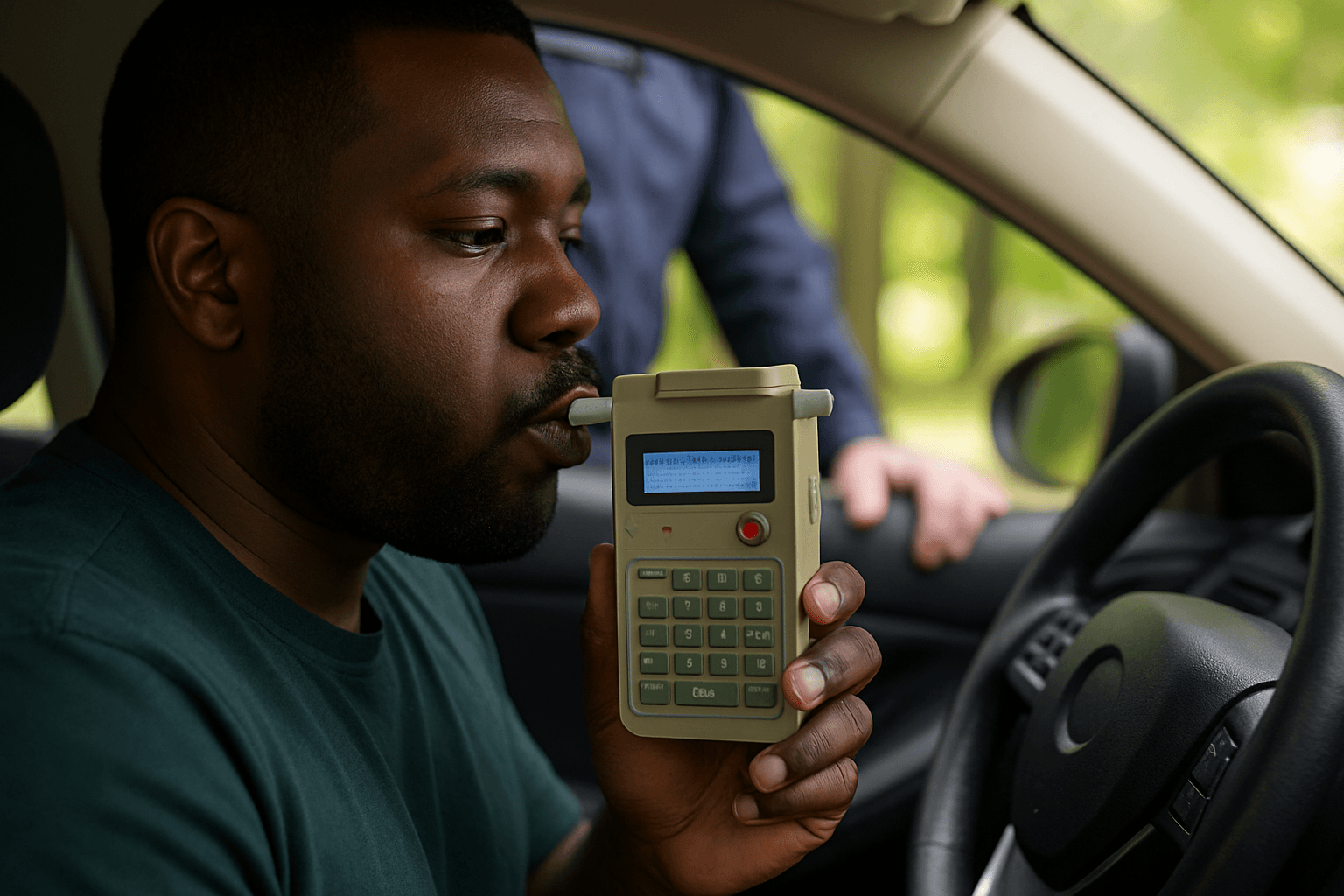
Interlock violations trigger automatic LDP revocation. If the device records a failed start attempt (BAC above the programmed threshold, typically 0.02 or 0.04), or if you miss a scheduled calibration appointment, the monitoring vendor reports the violation to the DMV and the court. The judge may revoke your LDP immediately without a hearing. Any subsequent LDP petition after an interlock violation faces heightened scrutiny and may require completion of additional substance abuse treatment before the judge will consider reinstatement.
What Happens If the Judge Denies Your Petition
District court judges in North Carolina have broad discretion to deny LDP petitions. Common denial reasons include incomplete documentation (missing employer affidavit, no proof of insurance or SR-22 filing, unpaid court costs or fines from the underlying conviction), failure to enroll in required substance abuse treatment, or lack of demonstrated need for limited driving. A denied petition is not a permanent bar — you may refile after addressing the deficiency, but each refiling requires a new court filing fee and a new hearing date.
Judges frequently deny LDP petitions for habitual offenders. North Carolina law designates drivers as habitual offenders after three major convictions (DWI, reckless driving, driving while license revoked) within a 10-year period. Habitual offender revocations under N.C.G.S. § 20-138.5 carry no LDP eligibility during the revocation period — the statute explicitly closes the LDP pathway for habitual offenders. Drivers in this category must wait for the full revocation period to end before petitioning for full license reinstatement through the DMV.
If your petition is denied for missing documentation, the judge typically issues a written order stating the deficiency. You correct the deficiency (obtain the missing employer letter, complete the first substance abuse treatment session, pay outstanding fines), then refile the petition with proof of compliance. The second hearing is not automatic — you pay another filing fee and wait for another hearing date. Drivers who anticipate filing LDP petitions should assemble all required documentation before the initial filing to avoid denial delays and duplicate court fees.
How SR-22 Filing Fits the Limited Driving Privilege Process
Most suspension triggers requiring LDP petitions also require SR-22 certificate of financial responsibility filing with the NCDMV. DWI suspensions, uninsured motorist suspensions, and certain points-based revocations all trigger SR-22 filing requirements that run for the duration of the suspension plus an additional monitoring period after reinstatement. The SR-22 must be active before the court will grant an LDP — judges routinely deny petitions when proof of SR-22 filing is missing from the documentation packet.
SR-22 filing in North Carolina typically requires 3 years of continuous coverage for DWI-related suspensions, measured from the date the SR-22 is filed, not from the conviction date. If your SR-22 policy lapses at any point during the 3-year period, the insurer notifies the DMV within 10 days, and your LDP (if granted) and your underlying license (once reinstated) are both suspended again immediately. The 3-year clock resets from the date you file a new SR-22 after the lapse.
Non-owner SR-22 policies cover drivers who do not own vehicles but need to maintain SR-22 filing to satisfy court and DMV requirements. These policies provide liability coverage when you drive borrowed or rented vehicles, and cost significantly less than standard SR-22 policies because they carry no collision or comprehensive coverage. Monthly premiums for non-owner SR-22 in North Carolina typically range $40-$70 per month for drivers with single DWI convictions and clean records otherwise. Non-owner SR-22 coverage is specifically designed for LDP holders who do not have regular access to a vehicle but need proof of insurance to satisfy the court's LDP documentation requirements.