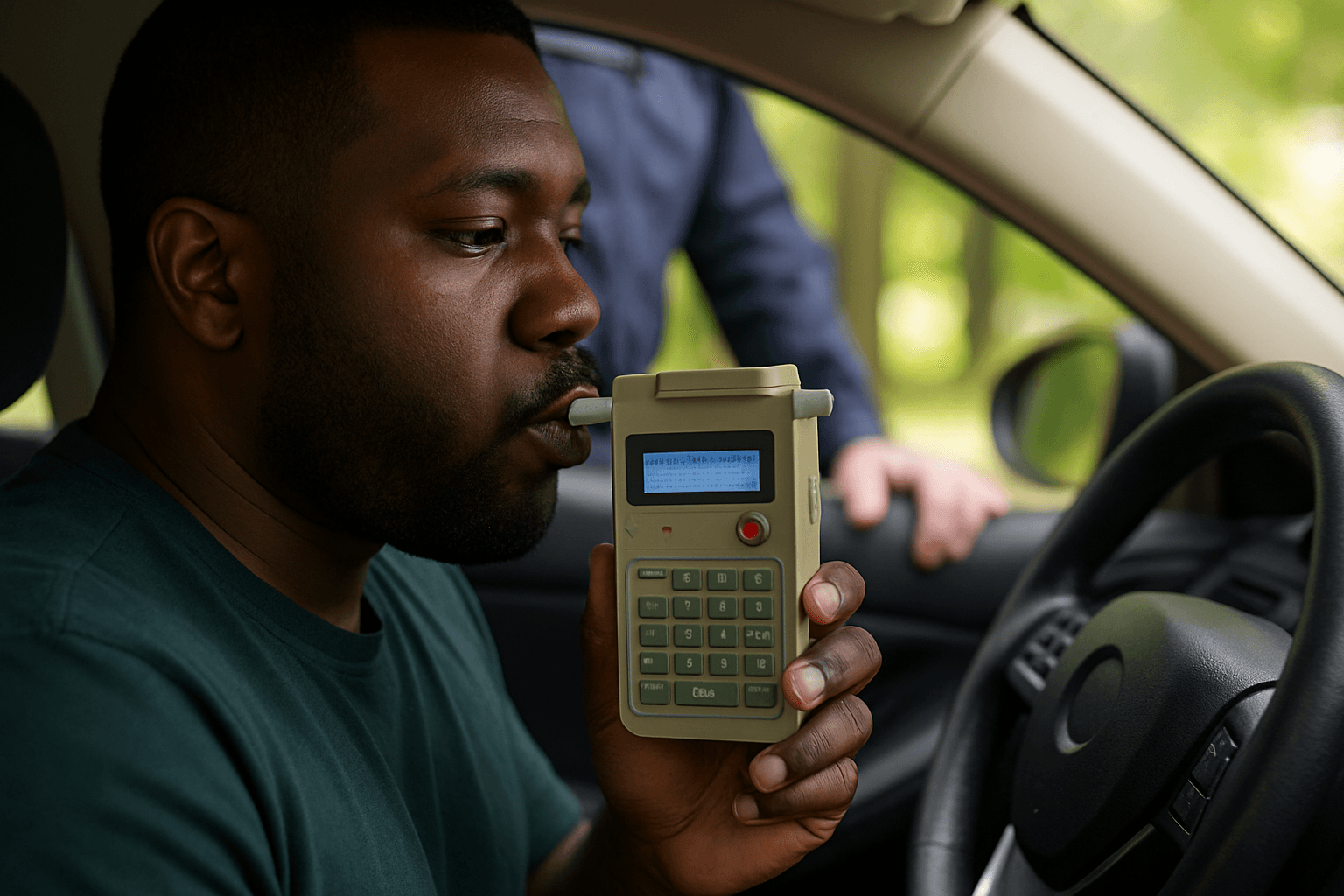
North Carolina judges define your approved routes at the hearing—not DMV, not statute. Most petitioners underestimate how narrow "essential errands" really are under court interpretation.
What Routes Does North Carolina's Limited Driving Privilege Actually Cover?
North Carolina Limited Driving Privilege routes are defined by the issuing judge at your court hearing, not by DMV regulation or a statewide checklist. The statute permits travel between home, work, school, religious activities, medical appointments, and court-ordered treatment. The judge determines what "essential" means for your specific petition.
Most petitioners assume grocery shopping, pharmacy runs, and child transportation fall under "essential errands" automatically. They do not. Unless the judge explicitly approves these purposes in the court order, driving to these destinations violates your LDP terms. Violation triggers immediate revocation and extends your full suspension period.
The court order you receive after your LDP hearing lists your approved routes by street address. You may drive between those addresses during the approved hours only. Any deviation—even to avoid traffic or weather—constitutes unauthorized operation.
Why North Carolina's Court-Defined Route System Narrows Practical Mobility More Than Other States
North Carolina is one of seven states where courts issue hardship licenses instead of DMV. This matters because judges apply discretion based on the severity of your offense, not a uniform administrative checklist. A first DWI with BAC below 0.15 typically receives broader route approval than a second offense or high BAC case.
Most states with DMV-issued restricted licenses define routes by category: "employment purposes," "medical care," "educational enrollment." The driver interprets those categories day-to-day. North Carolina's system requires you to petition for each specific address ahead of time. If your employer moves locations mid-privilege period, you must return to court to amend the order. Driving to the new address without amendment is a violation.
The 45-day mandatory hard suspension before LDP eligibility gives judges time to review your substance abuse assessment, ignition interlock installation proof, and employment verification. Judges deny petitions when the documentation shows inconsistent work schedules or when the employer letter lacks a specific street address.
Compare car insurance rates in your state
Get quotes from licensed carriers — no obligation, no spam, results in minutes.
Get Your Free Quote✓ No Obligation Required✓ Licensed Carriers Only✓ Available Nationwide✓ Free to Compare
What "Essential Errands" Actually Covers Under Court Interpretation
The statute's phrase "essential needs" appears in N.C.G.S. § 20-179.3 but does not define specific activities. Court interpretation varies by district and judge. Most judges approve medical appointments if scheduled in advance and documented with appointment confirmation letters. Emergency medical travel is not pre-approved because emergencies are unpredictable—calling 911 is the lawful response, not self-transport under LDP.
Grocery shopping is approved in some districts if you petition for a specific grocery store address and limit trips to one day per week during approved hours. Judges require an affidavit explaining why household members cannot shop instead. Pharmacy trips follow the same logic: you must petition for the specific pharmacy address, and the judge may require proof of a prescription that cannot be mail-ordered.
Child transportation to school or daycare qualifies if the child's address is listed in your petition and no other licensed driver in the household can perform the trip. Judges deny these requests when court records show another adult at the same address with a valid license. Extracurricular activities, sports practice, and non-mandatory school events do not qualify as essential under most interpretations.
How Time Restrictions Layer on Top of Route Limits
North Carolina LDP orders specify both approved routes and approved hours. The statute allows judges to restrict driving to specific days and times—commonly 6am to 8pm Monday through Friday for work purposes. Weekend driving requires separate justification and approval.
If your work shift falls outside typical business hours, the judge may approve overnight driving but will require a letter from your employer on company letterhead confirming your exact shift schedule. If your schedule rotates or varies week-to-week, judges either deny the petition or approve the broadest possible hour range, which increases scrutiny from law enforcement during traffic stops.
Time restrictions apply per route. A judge may approve 7am to 6pm for work travel but limit medical appointment travel to 9am to 5pm. You cannot combine purposes—driving from work directly to a medical appointment without returning home first violates the order unless the judge explicitly approved "direct travel between approved locations" in the written order.
What Happens When You Drive Outside Approved Routes or Hours
Operating a vehicle outside your LDP terms is driving while license revoked under North Carolina law, a Class 1 misdemeanor. Conviction adds a minimum one-year revocation on top of your existing suspension period. You lose LDP eligibility for any future petitions during that revocation.
Law enforcement can verify your LDP status and restrictions during any traffic stop. If the stop occurs outside your approved hours or more than a reasonable distance from your approved route, the officer may arrest you on the spot. Reasonable distance is not defined by statute—most courts apply a strict interpretation, allowing only direct-path travel with no detours.
Some drivers assume ignition interlock device logs protect them because the device records every trip. The logs actually work against you: prosecutors use IID data to prove you drove outside approved windows. The device prevents starting the car while intoxicated but does not prevent unauthorized operation.
How to Document Route Changes and Petition Amendments
If you need to add a route or modify your approved hours, you must file an amended petition with the court that issued your original LDP. The process mirrors your initial petition: complete the amended petition form, pay the filing fee (typically the same as the original application fee), and schedule a hearing date.
Judges require the same documentation standards for amendments as original petitions. If you are adding a new employer address, submit a new employer affidavit on letterhead. If you are adding a medical provider address, submit appointment confirmation. Most courts take two to four weeks to schedule amendment hearings. You cannot drive to the new address until the judge signs the amended order.
Some drivers attempt to use their LDP while waiting for an amendment hearing. This is unauthorized operation. If you cannot complete a necessary trip within your current approved routes and hours, you must arrange alternative transportation until the amendment is granted.
What Insurance Coverage Applies During the LDP Period
North Carolina requires proof of liability insurance or SR-22 filing before the judge will grant your LDP petition. For DWI-based petitions, SR-22 is mandatory. For non-DWI revocations (points accumulation, failure to appear), standard liability proof may suffice unless the revocation order specifically requires SR-22.
SR-22 is not a separate insurance policy. It is a form your insurer files with NCDMV certifying you carry at least North Carolina's minimum liability limits: $50,000 bodily injury per person, $100,000 per accident, and $50,000 property damage. The SR-22 filing fee ranges from $25 to $50 depending on carrier. Most carriers add a premium surcharge of $300 to $800 annually for SR-22 drivers.
If you do not own a vehicle, non-owner SR-22 insurance covers you when driving borrowed or rented vehicles during your LDP period. Non-owner policies cost $25 to $60 per month and meet the court's insurance requirement. The policy must remain active for the entire LDP period. If your insurer cancels coverage or you let the policy lapse, NCDMV notifies the court and your LDP is revoked immediately.