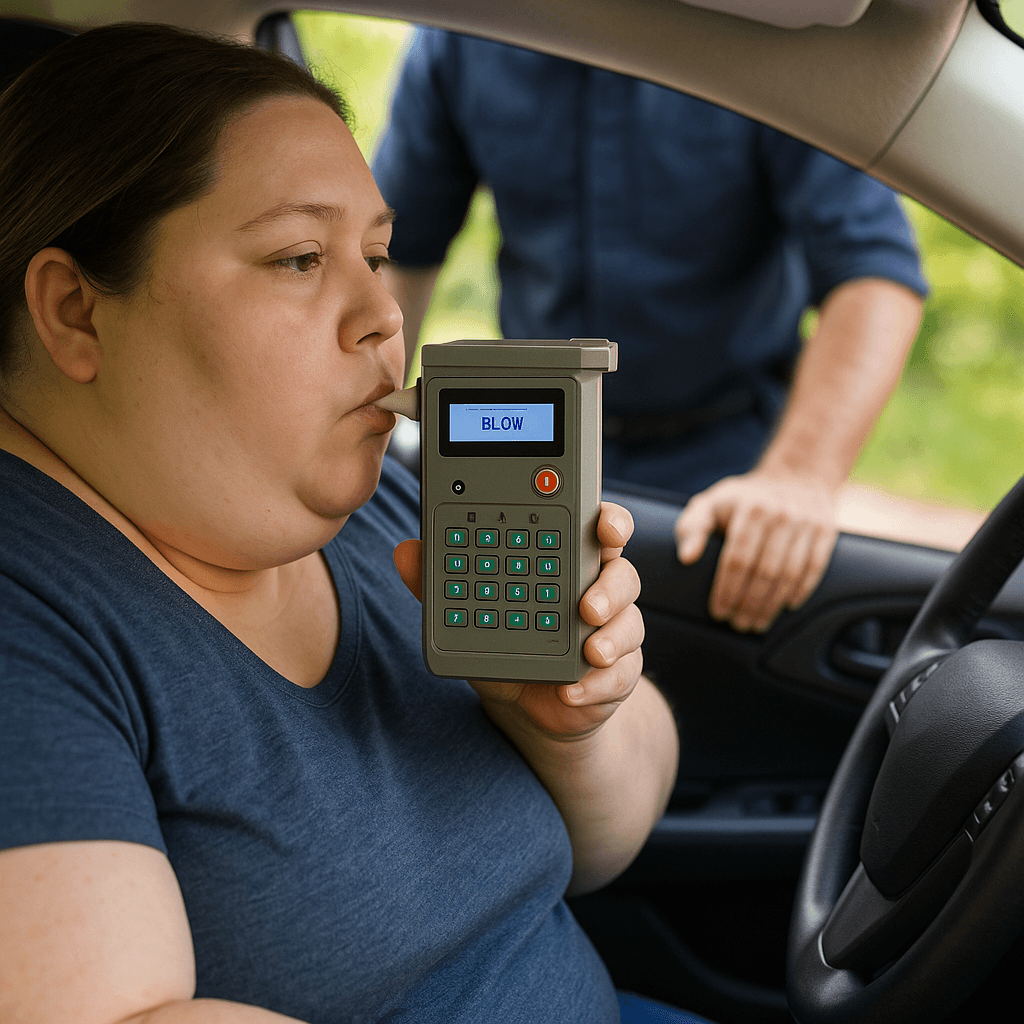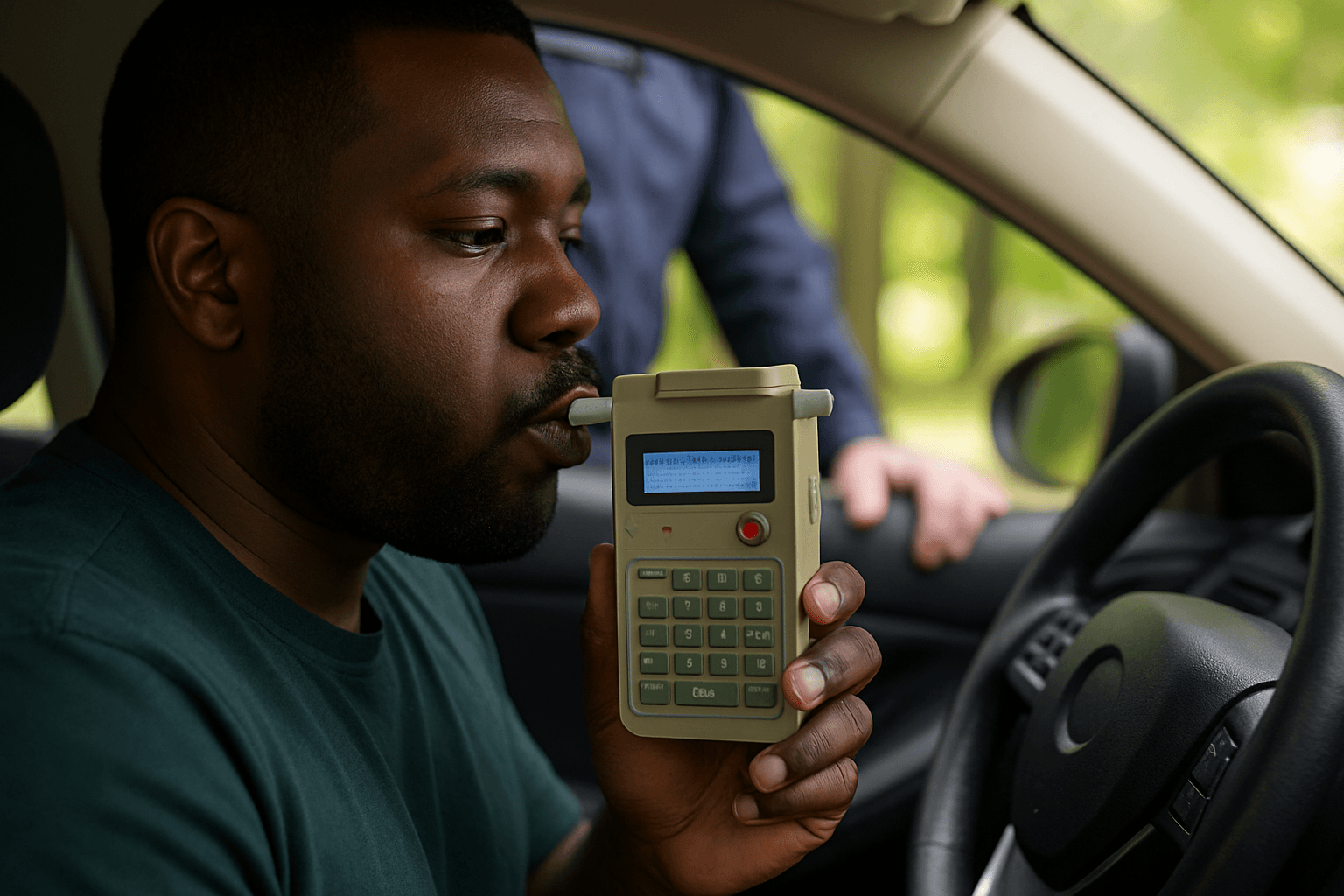
North Carolina requires ignition interlock installation before you can petition the court for a Limited Driving Privilege—and the sequence matters. Most drivers lose weeks because they file the petition before installing the device, forcing the judge to deny or delay the hearing.
Why North Carolina Requires IID Installation Before the Petition Hearing
North Carolina judges cannot grant a Limited Driving Privilege until you prove the ignition interlock device is already installed in your vehicle. Unlike states where the DMV issues restricted licenses and allows you to install the device after approval, North Carolina's court-based system requires installation as a prerequisite to filing your petition under N.C.G.S. § 20-179.3.
The 45-day mandatory hard suspension period after a DWI conviction (or 30 days for the civil revocation at arrest) creates a window to schedule installation, but most drivers assume they should wait for court approval first. That assumption costs weeks. Judges reviewing LDP petitions expect to see the IID vendor's installation certificate attached to your filing—without it, the petition is incomplete.
This requirement applies to any DWI-based LDP petition where your blood alcohol concentration was 0.15 or higher, or where you have a prior DWI conviction on record. For first-offense DWI cases with BAC below 0.15, the judge has discretion but may still require the device depending on case specifics. The statutory mandate is clear for repeat offenses and high-BAC cases.
The IID Installation and Monitoring Cost Stack in North Carolina
Ignition interlock costs in North Carolina break into three components: installation ($75–$150), monthly monitoring and calibration ($60–$90 per month), and removal ($50–$75). Total cost for a standard 12-month monitoring period runs $870–$1,230. If your LDP requires a 24-month IID period (common for aggravated Level 1 DWI), double the monitoring cost.
Monitoring fees cover monthly data downloads and device recalibration, typically required every 30–60 days. The vendor uploads violation data (failed start attempts, tampering alerts, missed calibrations) to the NC Division of Motor Vehicles electronically. Missing two consecutive calibration appointments triggers an automatic violation report to the court, which can result in LDP revocation without prior notice.
Installation must be completed by a state-certified vendor listed on the NCDMV ignition interlock service provider roster. Out-of-state vendors or uncertified installers do not satisfy the court's documentation requirement. The vendor provides a notarized installation certificate showing the device serial number, installation date, vehicle VIN, and your driver license number—this certificate is what the judge reviews when considering your LDP petition.
Compare car insurance rates in your state
Get quotes from licensed carriers — no obligation, no spam, results in minutes.
Get Your Free Quote✓ No Obligation Required✓ Licensed Carriers Only✓ Available Nationwide✓ Free to Compare
The Sequence: Install IID, Obtain SR-22, Then File the LDP Petition
The correct procedural sequence in North Carolina is: (1) complete the mandatory 45-day hard suspension period, (2) schedule and complete IID installation, (3) obtain SR-22 proof of financial responsibility from your insurer, (4) file the LDP petition with the district or superior court that handled your DWI case, attaching the IID installation certificate and SR-22 form.
Filing the petition before IID installation creates a documentation gap the judge cannot overlook. Court clerks in most NC counties will accept the filing, but the judge reviewing the petition will deny it or continue the hearing until you provide the installation certificate. That delay adds 2–4 weeks to the timeline—and during that period, you remain under full revocation with no driving privileges.
The SR-22 filing must remain active for the entire duration of your LDP period plus any additional suspension time. For a first-offense DWI with a 1-year revocation, expect a 3-year SR-22 requirement measured from the conviction date. Your insurer files the SR-22 electronically with NCDMV; you receive a paper copy to attach to your LDP petition. If the SR-22 lapses at any point during the monitoring period, NCDMV notifies the court and your LDP is revoked automatically under N.C.G.S. § 20-309.
How Long the IID Monitoring Period Runs After LDP Approval
The IID monitoring period does not end when your LDP expires—it runs for the duration specified in your court order, which is typically tied to your total revocation length. For a standard 1-year DWI revocation, the LDP itself may be granted for 6–12 months, but the IID requirement often extends through the full revocation period plus additional monitoring time if ordered by the judge.
Aggravated Level 1 DWI convictions carry a 4-year revocation with no LDP eligibility for the first 3 years. Once eligible, the LDP petition must include proof of IID installation, and the device stays installed for the remainder of the revocation period. Level 1 and Level 2 DWI cases follow similar patterns, with monitoring periods ranging from 12 to 36 months depending on BAC level, prior convictions, and aggravating factors.
Violations during the monitoring period—failed start attempts above the 0.04 threshold, tampering alerts, missed calibrations—are reported to the court by the IID vendor. Three violations within a 12-month period typically result in LDP revocation and restart of the hard suspension period. The court does not hold a hearing before revoking; the vendor's electronic data report is sufficient evidence under state regulations.
What North Carolina's Court-Based LDP System Means for Documentation
Because North Carolina LDPs are issued by judges rather than NCDMV, every document submitted with your petition must meet court evidentiary standards. The IID installation certificate must be notarized. The SR-22 must be the original filing, not a photocopy. Proof of enrollment in a DWI Assessment or substance abuse treatment program (required for all DWI-based LDP petitions) must include the provider's contact information and your scheduled completion date.
Employers often provide affidavits confirming your work schedule and stating that public transportation is unavailable for your shift hours. The judge reviews these affidavits to determine whether your LDP route restrictions are reasonable. Court-defined routes typically cover travel between home, work, school, religious activities, medical appointments, and court-ordered treatment—but the judge has full discretion to narrow or expand those routes based on the specifics of your petition.
Time restrictions vary by judge and case severity. Standard LDP orders limit driving to 6am–8pm Monday–Friday for work purposes, with weekend driving allowed only for court-ordered treatment or medical emergencies. Violating route or time restrictions is a Class 1 misdemeanor in North Carolina, punishable by immediate LDP revocation, additional suspension time, and potential jail time for repeat violations.
How SR-22 Insurance Costs Change After IID Installation
SR-22 filings themselves carry no premium—they are administrative forms filed by your insurer with NCDMV. The premium increase comes from the underlying DWI conviction, which moves you into North Carolina's high-risk insurance tier. Typical post-DUI liability premiums in North Carolina run $140–$240 per month for state minimum coverage ($50,000 bodily injury per person, $100,000 per accident, $50,000 property damage), compared to $85–$120 per month for clean-record drivers.
IID installation does not directly increase your premium, but insurers view IID-required drivers as higher-risk for the duration of the monitoring period. Some carriers decline to write policies for IID-required drivers entirely; others impose surcharges of 10–20% above standard high-risk rates. Non-owner SR-22 policies (for drivers without vehicles) avoid collision and comprehensive premiums but still reflect the DWI conviction in liability pricing.
The SR-22 filing fee charged by the insurer is typically $25–$50 as a one-time administrative cost. If your policy lapses and you need to refile the SR-22 with a new carrier, expect to pay the filing fee again. The 3-year SR-22 requirement in North Carolina means premiums remain elevated for the entire filing period, though some carriers reduce rates after 12–18 months of continuous coverage without additional violations.
What Happens If You Miss IID Calibration or Violate Monitoring Terms
Missing two consecutive IID calibration appointments triggers an automatic violation report from the vendor to NCDMV and the court. The court does not mail a warning letter—the LDP revocation notice arrives in the same envelope as the violation report. At that point, your driving privileges revert to full revocation, and you must serve the remainder of the original suspension period before petitioning for reinstatement.
Failed start attempts (recorded breath samples above 0.04 BAC) are not automatic violations, but three failed attempts within a 12-month period meet the threshold for LDP revocation in most NC counties. The IID device logs every breath sample with a timestamp, GPS coordinates, and the measured BAC. That data is uploaded during calibration appointments and reviewed by NCDMV compliance officers.
Tampering with the device, attempting to bypass it with an air compressor or third-party breath source, or disconnecting the camera (if your IID includes camera monitoring) are Class 1 misdemeanors under N.C.G.S. § 20-17.8. Conviction carries immediate LDP revocation, additional suspension time, and potential jail time. IID vendors in North Carolina report tampering alerts to law enforcement within 24 hours of detection.