North Carolina requires a court petition—not a DMV application—for Limited Driving Privilege after suspension. Most drivers miss the 45-day hard window for DWI cases and the state-specific insurance filing rules that vary by trigger.
North Carolina Limited Driving Privilege operates through superior or district court, not NCDMV
North Carolina does not issue hardship licenses through the Division of Motor Vehicles. The state uses a court-petition system for Limited Driving Privilege (LDP), and the issuing judge—not a DMV clerk—defines your route restrictions, time windows, and ignition interlock requirements.
This matters because most drivers Google "hardship license application" and land on their state DMV website expecting a form to fill out. In North Carolina, that form does not exist at the DMV level. You file a petition with the court that has jurisdiction over your case, and a judge decides whether to grant restricted driving.
The procedural pathway splits by suspension trigger. DWI-based LDP petitions require a mandatory 45-day hard suspension before any Limited Driving Privilege can be granted under N.C.G.S. § 20-179.3. That 45 days is counted from the conviction date, not the filing date. Petitions filed earlier are dismissed. Non-DWI suspensions—points accumulation, uninsured driving, unpaid fines—follow different timelines and may bypass the hard window entirely, but the court-petition structure remains constant across all triggers.
What North Carolina requires in your LDP petition packet
The court expects a complete packet when you file. Incomplete petitions delay hearing dates and waste filing fees. North Carolina requires proof of valid liability insurance or SR-22 filing (where required by trigger), proof of enrollment in DWI Assessment or substance abuse treatment for DWI cases, proof of ignition interlock installation where required, and payment of all court fees tied to the underlying conviction.
The SR-22 filing requirement varies by suspension trigger. DWI cases always require SR-22 as a condition of LDP approval. Uninsured driving suspensions require SR-22 to lift the FS-1 revocation before you can petition for an LDP. Points-based suspensions typically do not require SR-22 unless the underlying violation itself triggered an SR-22 mandate (reckless driving, at-fault uninsured accidents). Unpaid-fine suspensions do not require SR-22 but do require proof that fines are cleared before the court will hear your petition.
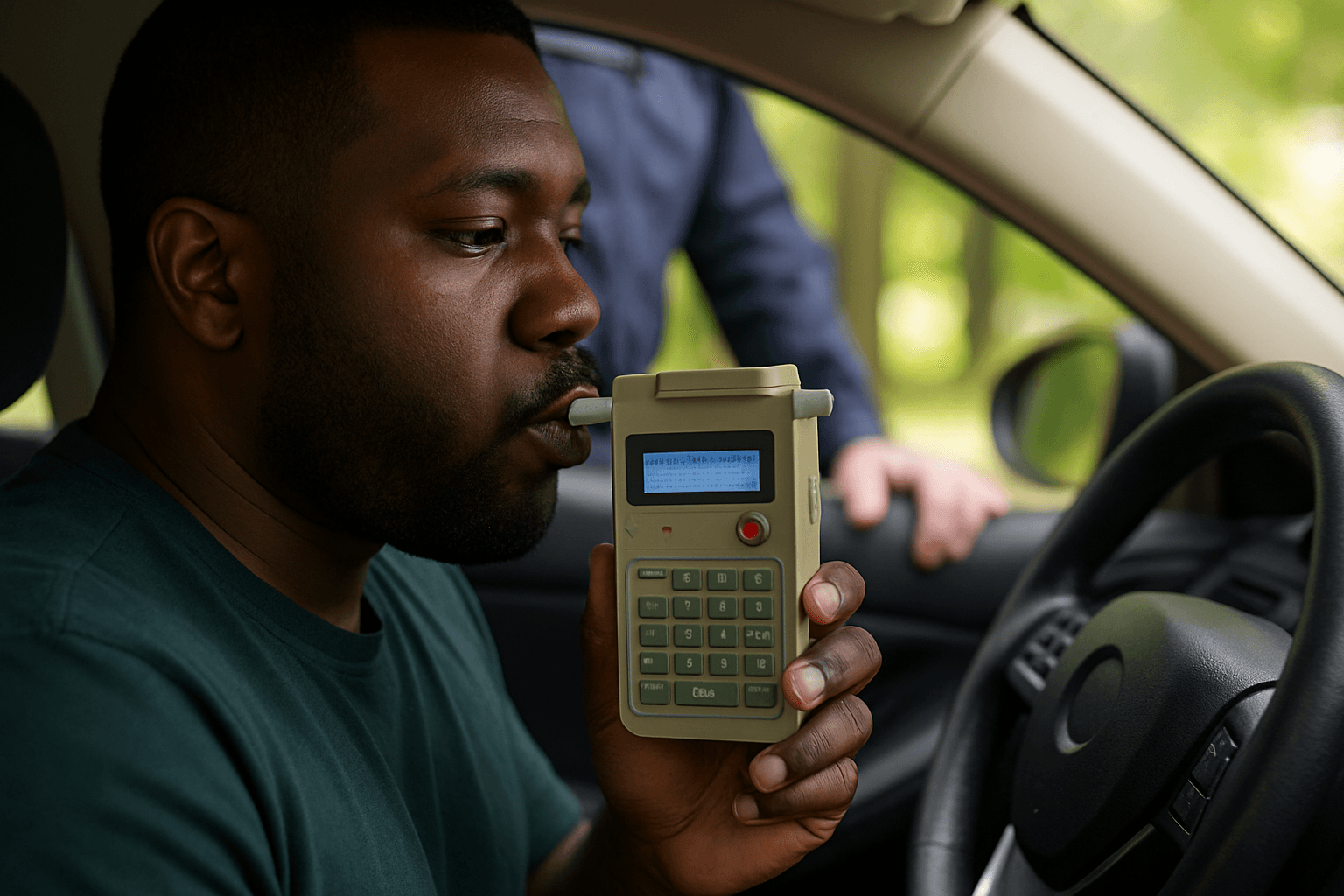
Ignition interlock installation is mandatory for LDP holders whose BAC was 0.15 or higher at the time of the DWI offense, as well as those with a prior DWI conviction. The court will not grant an LDP for these cases unless you present an ignition interlock installation receipt from a state-certified vendor. The interlock requirement appears in your LDP order and stays in effect for the duration specified by the judge—often one year minimum, sometimes longer.
DWI cases require completion of an NC ADET (Alcohol and Drug Education Traffic School) substance abuse assessment before reinstatement or LDP approval. This is not optional. The assessment determines whether you need additional treatment, and the court expects proof of enrollment or completion at the time of your LDP hearing.
Compare car insurance rates in your state
Get quotes from licensed carriers — no obligation, no spam, results in minutes.
Get Your Free Quote✓ No Obligation Required✓ Licensed Carriers Only✓ Available Nationwide✓ Free to Compare
How North Carolina judges define LDP route and time restrictions
North Carolina statute gives judges broad discretion to set LDP route and time restrictions. The standard framework limits driving to travel between home, work, school, religious activities, medical appointments, and court-ordered treatment. This is not a general driving privilege—judges deny petitions when they suspect the request is too broad or when documentation does not support the claimed need.
Time restrictions are commonly limited to specific hours and days, such as 6am to 8pm Monday through Friday for work purposes. Weekend driving is granted only when employment, school, or treatment schedules require it. You must document your employer's address, work hours, and days worked. Most judges require a notarized employer affidavit confirming your schedule and stating that you need to drive to keep your job.
The route approval process is literal. If you petition for work driving and the judge approves only a direct route from home to work and back, any stop along the way—gas station, grocery store, daycare—is a violation unless the LDP order explicitly includes it. Drivers who add stops without prior court approval risk LDP revocation and additional criminal charges for driving while license revoked.
CDL holders cannot obtain an LDP for operation of commercial motor vehicles. The LDP would only cover non-commercial vehicle operation. If your job requires a CDL, the LDP does not solve your problem.
What happens when you miss the 45-day DWI hard window or violate LDP terms
North Carolina enforces a mandatory 45-day hard suspension before any DWI-based Limited Driving Privilege can be granted. This period starts from the conviction date. Filing your LDP petition earlier does not shorten the window—the court will schedule your hearing after the 45 days have passed, or dismiss the petition if you attempt to bypass the requirement.
Drivers revoked as habitual offenders under N.C.G.S. § 20-138.5 are not eligible for an LDP during the revocation period. This includes drivers with three or more DWI convictions within 10 years, or drivers with specific combinations of serious violations. If you hold a habitual offender revocation, the LDP path is closed until you complete the full revocation term and reinstate through the DMV.
Violating your LDP terms triggers automatic revocation and a criminal charge for driving while license revoked (DWLR). North Carolina treats DWLR as a separate offense, and conviction adds jail time, additional fines, and an extended suspension period on top of the original suspension. Most violations occur when drivers misunderstand their approved routes or assume they can make minor detours without consequence. The judge's order is literal—if a stop is not listed, it is not allowed.
Missing two consecutive DWI education or treatment classes can trigger LDP revocation without prior warning in some jurisdictions. The court order specifies treatment compliance as a condition of the LDP, and the treatment provider reports attendance directly to the court. Drivers who lose their LDP this way must petition again and demonstrate compliance before the court will consider reinstatement of restricted driving.
How North Carolina insurance filing requirements interact with LDP approval
North Carolina requires proof of liability insurance meeting state minimums—$50,000 bodily injury per person, $100,000 bodily injury per accident, and $50,000 property damage—before the court will grant an LDP. For DWI and uninsured driving cases, that proof must take the form of an SR-22 certificate filed electronically by your insurer with the NC DMV.
The SR-22 filing obligation lasts three years from the date of conviction for DWI cases. The filing clock is separate from the LDP duration—your LDP might expire after one year, but your SR-22 requirement continues for the full three-year term. If your insurer cancels your policy or you let coverage lapse during the SR-22 period, the DMV revokes your license again and you lose the LDP.
Non-owner SR-22 policies cover drivers who do not own a vehicle but need to meet the SR-22 filing requirement to obtain an LDP. North Carolina accepts non-owner policies for LDP purposes as long as the SR-22 certificate is filed with the DMV and remains active. Monthly premiums for non-owner SR-22 in North Carolina typically range from $40 to $80, significantly lower than standard owner policies because the coverage excludes vehicle damage.
FR-44 filings are not used in North Carolina. The state uses SR-22 for all financial responsibility certifications, regardless of trigger. Drivers moving to North Carolina from Florida or Virginia with an active FR-44 requirement must convert to an SR-22 filing to meet North Carolina's system.
What your LDP petition costs and how long court processing takes
Filing your Limited Driving Privilege petition in North Carolina requires payment of court fees at the time of filing. Fee amounts vary by county and case type, but most jurisdictions charge between $100 and $200 for the petition filing itself. This fee is separate from the underlying conviction fines, which must be paid in full before the court will hear your LDP petition.
Processing timelines depend on court calendar availability and the completeness of your petition packet. In counties with dedicated traffic court days, you may receive a hearing date within two to three weeks of filing. In rural counties with less frequent court sessions, expect four to six weeks. Incomplete petitions extend timelines further—missing documentation, unsigned affidavits, or incorrect forms push your hearing date back and require re-filing.
Ignition interlock installation adds $75 to $150 for the device installation plus monthly monitoring fees of $60 to $90. North Carolina requires certification from a state-approved vendor, and the interlock must be installed before your LDP hearing. The vendor provides a receipt confirming installation, which you submit as part of your petition packet.
Insurance premium increases after DWI conviction and SR-22 filing in North Carolina typically range from $140 to $320 per month for minimum liability coverage, depending on age, prior violations, and county. Non-owner SR-22 policies cost less—$40 to $80 per month—but only cover liability when driving vehicles you do not own. Total first-year cost for a DWI-based LDP in North Carolina including court fees, interlock, and SR-22 insurance generally falls between $2,500 and $4,500. Estimates based on available industry data; individual results vary.
How to find coverage that meets North Carolina LDP insurance requirements
Not every carrier writes SR-22 policies in North Carolina, and those that do charge widely different rates for suspended-license drivers. Standard carriers like State Farm and Allstate write SR-22 but typically reserve capacity for lower-risk drivers. Non-standard carriers like Dairyland, Direct Auto, The General, and National General specialize in high-risk policies and often provide faster quotes for drivers with recent DWI or suspension history.
North Carolina uses an electronic insurance verification system (eDMV) through which insurers report policy cancellations and new policies in near real-time to the NC DMV. When you purchase a policy with an SR-22 endorsement, your insurer files the certificate electronically within 24 to 48 hours. The court expects proof of filing before your LDP hearing, so purchase coverage at least one week before your scheduled court date to allow time for DMV confirmation.
Carriers licensed to write SR-22 in North Carolina include Geico, Progressive, State Farm, Dairyland, Direct Auto, The General, and National General. Not all accept non-owner policies or drivers with multiple violations. Compare quotes from at least three carriers to identify which will issue coverage and at what monthly rate. Monthly premiums vary by $100 or more between carriers for identical coverage limits.
Get back on the road with coverage that meets your court and DMV filing requirements. Compare North Carolina SR-22 quotes now to find the lowest monthly rate for your situation.