New York allows restricted driving for work, school, medical care, and court-approved essential errands—but proving necessity means documenting every stop on your route, not just your employer's address.
What Does 'Restricted Use' Actually Mean on a New York License?
A New York Restricted Use License (RUL) permits driving only for specific DMV-approved purposes during your suspension or revocation period. You cannot use it for general errands, social trips, or convenience driving. The restriction is enforced through route documentation you submit with your application and law enforcement can verify during traffic stops.
New York does not use SR-22 filings. Financial responsibility verification runs through the DMV's electronic Insurance Information and Enforcement System (IIES), where your carrier reports coverage directly to the state. You still need continuous liability coverage meeting New York's $25,000/$50,000/$10,000 minimum plus PIP and uninsured motorist protection, but no paper filing changes hands.
If you violate your RUL restrictions by driving outside approved purposes, New York DMV revokes the restricted license immediately and extends your underlying suspension period. There is no grace period. The hardship privilege disappears the moment you drive for an unapproved reason.
The Four Core Approved Purposes New York Recognizes
New York DMV approves restricted driving for employment, education, medical care, and essential caregiver duties. Each category requires separate documentation proving necessity, not convenience.
Employment: You may drive to and from your workplace, including multiple job sites if you work more than one position. Your employer must provide a signed affidavit on company letterhead stating your work address, shift hours, and confirmation that no public transit or carpool option exists. If your job requires driving during work hours (delivery, sales calls, home healthcare), the affidavit must detail those routes with addresses and typical schedules. Self-employed applicants submit business registration, tax documents, and a sworn statement of work necessity.
Education: Driving to school, college, vocational training, or court-ordered classes qualifies. You need an enrollment verification letter from the registrar or program coordinator listing your class schedule, campus address, and confirmation that classes occur at times when public transit is unavailable or impractical. High school students under 18 need a parent or guardian co-signature on the application.
Medical care: Routine appointments, ongoing treatment, dialysis, physical therapy, and medication pickup all qualify. Your healthcare provider submits a letter on practice letterhead stating your diagnosis (general terms acceptable for privacy), treatment frequency, appointment location, and medical necessity of personal transportation. For mental health or substance abuse treatment required as part of your suspension terms, the treatment facility provides similar documentation. Pharmacy-only trips require a prescription with refill schedule.
Caregiver duties: Transporting a dependent child to school or daycare, driving an elderly parent to medical appointments, or providing necessary care to a disabled family member all qualify. You submit proof of relationship (birth certificate, guardianship papers, custody order), proof of the dependent's need (school enrollment, medical documentation, disability determination), and a statement explaining why no alternative transportation exists. Court-appointed caregivers include the court order.
Compare car insurance rates in your state
Get quotes from licensed carriers — no obligation, no spam, results in minutes.
Get Your Free Quote✓ No Obligation Required✓ Licensed Carriers Only✓ Available Nationwide✓ Free to Compare
How New York DMV Evaluates 'Necessity' in Your Application
DMV does not grant RULs simply because driving is easier than the alternative. You must prove that the approved purpose cannot reasonably be accomplished without personal driving. This is where most applications fail.
New York's evaluation considers public transit availability in your county, household vehicle access, work shift timing, and whether carpooling or rideshare could meet the need. Urban applicants in New York City, Buffalo, or Rochester face stricter scrutiny than rural applicants in the Southern Tier or North Country because transit density differs. If MTA subway or bus routes run near your workplace during your shift hours, DMV may deny the work commute portion unless your employer affidavit explains why transit won't work (overnight shift ending after last train, job site rotation across boroughs, medical condition preventing transit use).
The application form (MV-500 series, specific version depends on suspension type) includes a section where you list every stop on your anticipated route. This is not optional. If you drive your child to daycare before work, that daycare address must appear as a separate stop with arrival and departure times. If you pick up prescriptions on the way home from a medical appointment, the pharmacy address must appear. If you stop at a grocery store because you work evening shifts and stores close before you get home, that address must appear with a necessity explanation.
DMV cross-references your documented stops against your suspension type. DWI applicants cannot include stops at bars, liquor stores, or entertainment districts. Uninsured-driving applicants cannot include stops suggesting frequent unnecessary trips. Points-accumulation applicants cannot include routes through known speed-trap corridors or school zones during restricted hours.
Ignition Interlock Requirement for DWI-Related Restricted Use Licenses
New York's Leandra's Law (Vehicle and Traffic Law § 1198) mandates ignition interlock device (IID) installation for all DWI and DWAI convictions, including as a condition of any Restricted Use License issued during the revocation period. This applies to first-time offenders. The IID requirement runs concurrent with your RUL period and typically extends 6 to 12 months depending on offense severity and BAC level at arrest.
You cannot obtain an RUL for a DWI suspension until the IID is installed, calibrated, and reported to DMV through the installer's electronic filing system. Installation costs $100 to $150, monthly monitoring and calibration fees run $75 to $100, and removal costs another $50 to $75. Over a 12-month IID period, total out-of-pocket cost typically reaches $1,100 to $1,400 in addition to the $25 RUL application fee and increased insurance premiums.
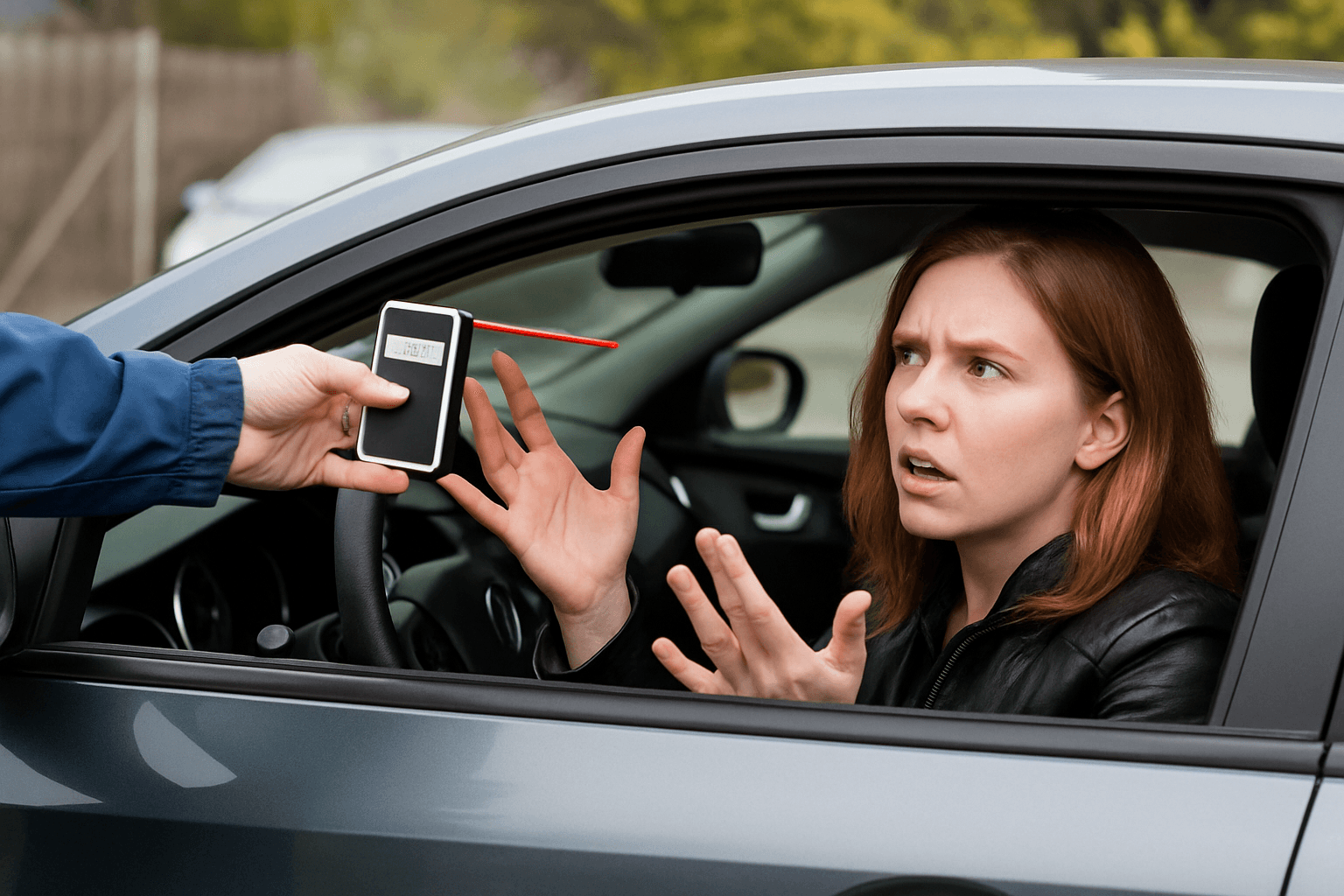
The interlock device logs every start attempt, every failed breath test, and every missed rolling retest while driving. These logs upload to DMV automatically. If you attempt to start the vehicle after drinking, if you miss a rolling retest prompt, or if someone else starts the vehicle for you (circumvention), DMV receives a violation notice within 48 hours and revokes your RUL immediately. There is no warning. The underlying revocation period extends by the circumvention period, and you start over with a new IID installation and RUL application after serving the extension.
If you do not own a vehicle, you cannot install an IID, and New York does not issue RULs to non-vehicle-owners in DWI cases. The law's intent is interlock monitoring, not restricted driving access. You must complete the full hard revocation period without driving, then apply for full license reinstatement with IID as a reinstatement condition.
Route Restrictions and Time Windows DMV Will Approve
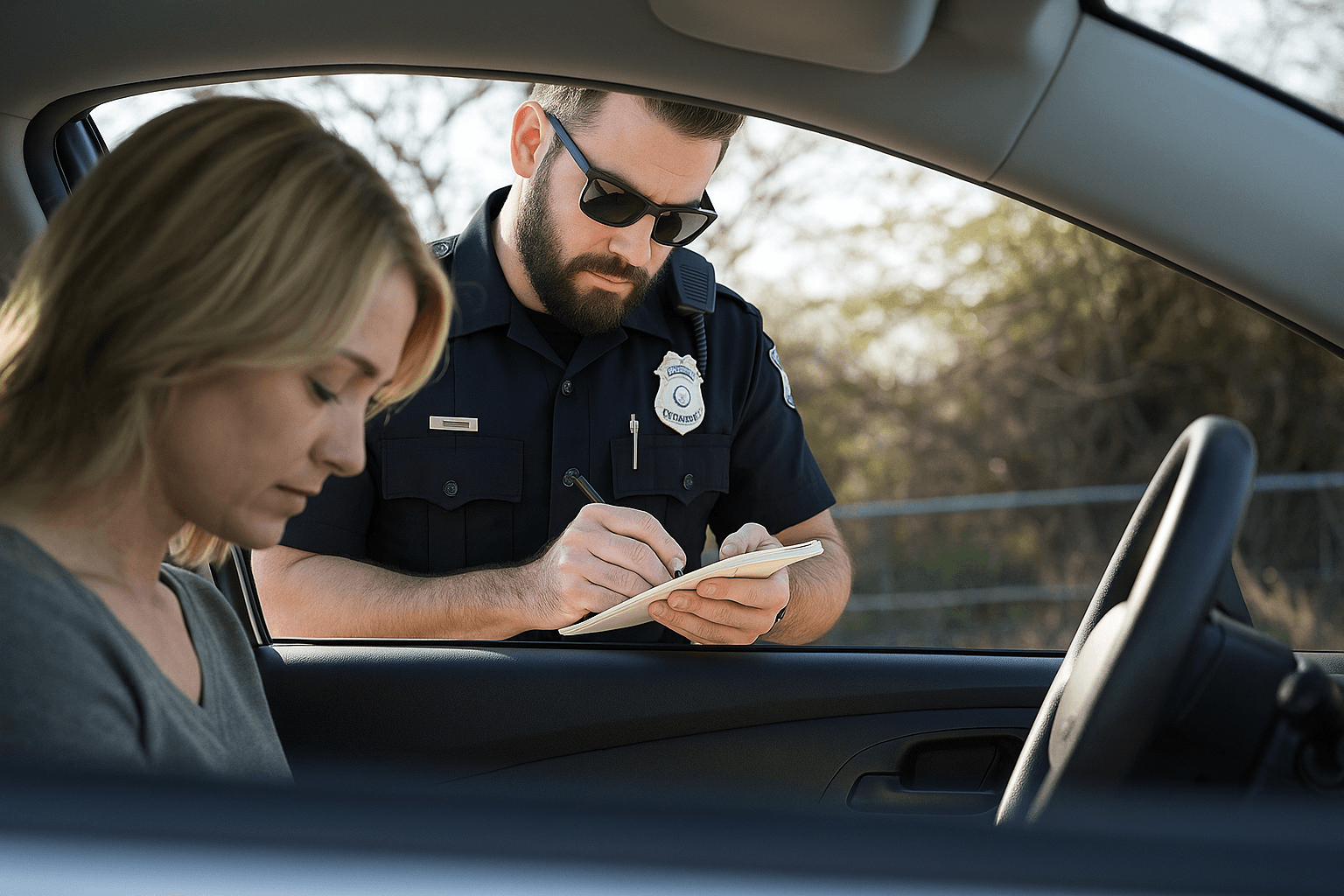
Your RUL approval specifies exact route boundaries and time windows for each approved purpose. These restrictions appear on the license itself and in DMV's system, visible to law enforcement during traffic stops. Driving outside your approved route or time window is treated as driving while suspended, a misdemeanor carrying up to 30 days in jail, $500 fine, and immediate vehicle impoundment.
Work commute routes typically allow a 15-minute deviation window before and after your shift start and end times to account for traffic variability. If your shift is 8:00 AM to 4:30 PM, your approved driving window might read 7:30 AM to 5:00 PM. Driving at 7:15 AM because you left early is a violation. Stopping for coffee at 7:45 AM at a location not listed in your application is a violation.
Medical appointment windows typically allow 30 minutes before the scheduled appointment time and 2 hours after to account for waiting room delays and pharmacy stops. If your appointment is at 2:00 PM, your window might read 1:30 PM to 4:30 PM for that day only. You cannot use that window to run other errands.
School routes follow the academic calendar. If you are approved to drive your child to school, that authorization applies only on school days during the listed school year. Driving the same route during summer break is a violation unless you also have a summer program approval.
Multiple approved purposes on the same day require separate time-stamped route entries in your application. If you drive to work in the morning, leave work for a medical appointment at midday, and return to work, all three segments must appear as separate approved routes with time windows. If DMV does not approve the midday medical segment, you cannot leave work to attend the appointment.
Application Process: Court Hearing vs. DMV Administrative Path
New York's RUL application process depends on whether your suspension is administrative (DMV-imposed for insurance lapse, points accumulation, failure to answer a summons) or judicial (court-imposed for DWI, reckless driving, vehicular assault). The path you follow determines processing time, approval authority, and documentation requirements.
Administrative suspensions use the DMV direct application path. You complete the MV-500 series form specific to your suspension type, attach all required documentation (employer affidavit, school enrollment, medical necessity letters, proof of insurance via IIES verification, IID installation certificate if DWI-related), and submit to your county DMV office in person with the $25 application fee. DMV reviews the application internally and issues a determination within 2 to 6 weeks depending on regional office workload. There is no published standard processing time. You cannot drive during the review period.
Judicial suspensions for DWI require a court hearing before the judge who imposed the sentence or a designated hearing officer. You file a petition for conditional/restricted driving privileges with the court clerk, serve notice on the district attorney, and appear at a scheduled hearing. The judge evaluates whether you completed the required Impaired Driver Program (IDP), whether IID is installed, whether your driving record shows prior RUL violations, and whether the proposed routes present public safety risk. The judge may approve, deny, or modify the routes you requested. If approved, the court sends the order to DMV electronically, and DMV issues the physical RUL credential within 10 business days. Total timeline from petition filing to credential receipt typically runs 6 to 10 weeks.
Multiple DWI offenders face extended hard revocation periods (1 year minimum for second offense within 10 years, 5 years for third offense) during which no RUL is available. After the hard period expires, you may petition for restricted driving, but judges have broad discretion to deny based on prior conduct. New York DMV may also deny administratively if your record shows multiple prior suspensions, RUL violations, or failure to maintain insurance during previous restricted periods.
Insurance Requirements and Premium Impact During Restricted Use Period
Your liability coverage must remain active continuously throughout your RUL period. New York requires $25,000 per person/$50,000 per accident bodily injury liability, $10,000 property damage, Personal Injury Protection (PIP), and uninsured/underinsured motorist coverage. A lapse of even one day triggers automatic registration and license suspension via the IIES system, and your RUL disappears immediately.
Carriers writing non-standard and post-suspension policies in New York include Geico, Progressive, Bristol West, National General, and State Farm. Not all carriers will write policies for drivers with active suspensions holding RULs. Expect premium increases of 40% to 90% compared to pre-suspension rates depending on the underlying violation. DWI suspensions produce the steepest increases because they shift you into high-risk underwriting tiers.
Monthly premiums for minimum liability coverage during an RUL period typically run $140 to $280 for points-related suspensions, $200 to $400 for uninsured-driving suspensions, and $250 to $500 for DWI suspensions. These estimates include PIP and uninsured motorist coverage mandated by New York law. Actual quotes vary by county, age, vehicle type, and prior insurance history.
If you do not own a vehicle but need to drive occasionally for approved purposes using a borrowed car, non-owner liability insurance meets New York's financial responsibility requirement for RUL eligibility. Non-owner policies provide the state-minimum liability and PIP coverage without insuring a specific vehicle. Monthly premiums run $50 to $120 depending on your suspension type and driving record. The policy must remain active for the full RUL period, and your carrier reports coverage to DMV through IIES just like a standard auto policy.