New York's Restricted Use License grants narrow travel authority—work, school, medical, and DMV/court-approved essentials only. Grocery runs, social errands, and recreational trips remain prohibited, and a single violation triggers immediate revocation.
What New York's Restricted Use License Actually Permits
New York's Restricted Use License allows driving exclusively for employment, education, medical treatment, and other court- or DMV-approved essential activities. The state does not issue general-purpose driving privileges during suspension or revocation.
DMV-approved purposes typically include commuting to and from work, attending school or vocational training, traveling to medical appointments, fulfilling court-ordered obligations (such as attending DWI classes or probation meetings), and completing DMV-required tasks like taking a road test. Religious services may qualify if approved by the issuing court or DMV hearing officer, but approval is discretionary.
The geographic boundaries of your permitted travel are defined by the addresses listed on your RUL application and supporting documentation. If your employer moves locations mid-suspension, you must file an amendment with the DMV to add the new address before driving there. Unapproved detours—even to pick up a child from daycare on the way home from work—constitute unlicensed operation under New York Vehicle and Traffic Law.
What New York Explicitly Prohibits Even With a Restricted Use License
Grocery shopping, attending social events, visiting friends or family, recreational trips, and any errand not pre-approved by the DMV or court remain prohibited. New York's statute does not include a 'reasonable errands' category; if the destination was not listed on your application and approved, driving there is unlawful.
This prohibition extends to emergencies that do not involve immediate medical treatment. Driving to assist a stranded family member, picking up a prescription for someone else, or responding to a home repair emergency are all violations unless you can document imminent physical harm requiring medical care. Law enforcement officers do not have discretion to waive RUL restrictions on the roadside.
Violating route restrictions constitutes aggravated unlicensed operation (AUO), a criminal misdemeanor in New York. A first AUO conviction carries up to 15 days in jail, a mandatory fine of $200 to $500, and immediate revocation of your Restricted Use License. Subsequent violations within 18 months escalate to second-degree AUO, with up to 180 days in jail and fines up to $1,000.
Compare car insurance rates in your state
Get quotes from licensed carriers — no obligation, no spam, results in minutes.
Get Your Free Quote✓ No Obligation Required✓ Licensed Carriers Only✓ Available Nationwide✓ Free to Compare
How New York's Ignition Interlock Requirement Changes Your Route Compliance
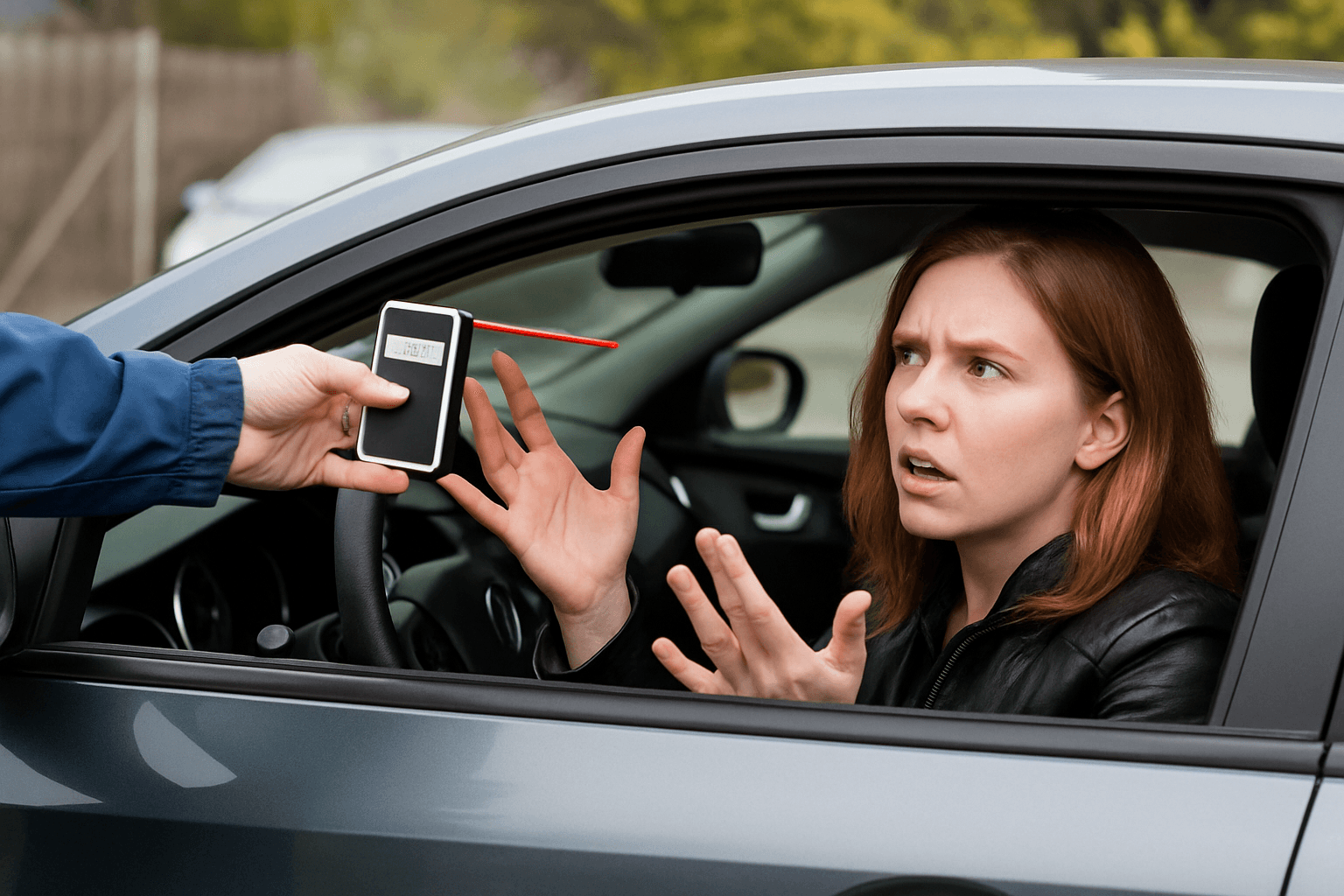
New York mandates ignition interlock device (IID) installation for all DWI-related Restricted Use Licenses under Leandra's Law. The IID does not track your route or destination, but it does create a tamper-proof record of every vehicle start, every failed breath test, and every time you attempt to bypass the device.
If your RUL permits work travel only and your IID log shows consistent evening starts at a location 30 miles from your approved work and home addresses, prosecutors can use that data to prove unauthorized travel. IID vendors report violations directly to the DMV; patterns suggesting non-compliance trigger administrative hearings even without a traffic stop.
The IID requirement typically extends the full duration of your suspension or revocation period plus six months. For a first DWI offense resulting in a six-month license revocation, you will drive with an IID for at least 12 months total. A second DWI within 10 years mandates at least five years of IID use, during which any route violation documented in the IID log serves as evidence for revocation.
Application Process and Documentation Requirements for Route Approval
The Restricted Use License application (form MV-500 series) requires detailed schedules documenting your need to drive. For employment, submit a letter from your employer on company letterhead stating your job title, work address, shift hours, and confirmation that no public transportation or carpool option exists. Self-employed applicants must provide business registration documents and a sworn affidavit describing work activities.
For medical appointments, provide a letter from your treating physician on practice letterhead explaining the condition requiring treatment, the treatment schedule, and why remote options (telemedicine, home health) are inadequate. For DWI-related suspensions, include proof of enrollment in the New York Impaired Driver Program (IDP) and a schedule of required class sessions.
The DMV charges a $25 application fee (subject to verification against current fee schedules) and does not publish standard processing times; actual turnaround varies by regional office and case complexity. The DMV has broad discretion to deny applications if your driving record shows multiple prior suspensions, you owe outstanding DMV fines or parking tickets, or the hearing officer determines your stated need does not justify the public safety risk.
How Law Enforcement Verifies Restricted Use License Compliance During Traffic Stops
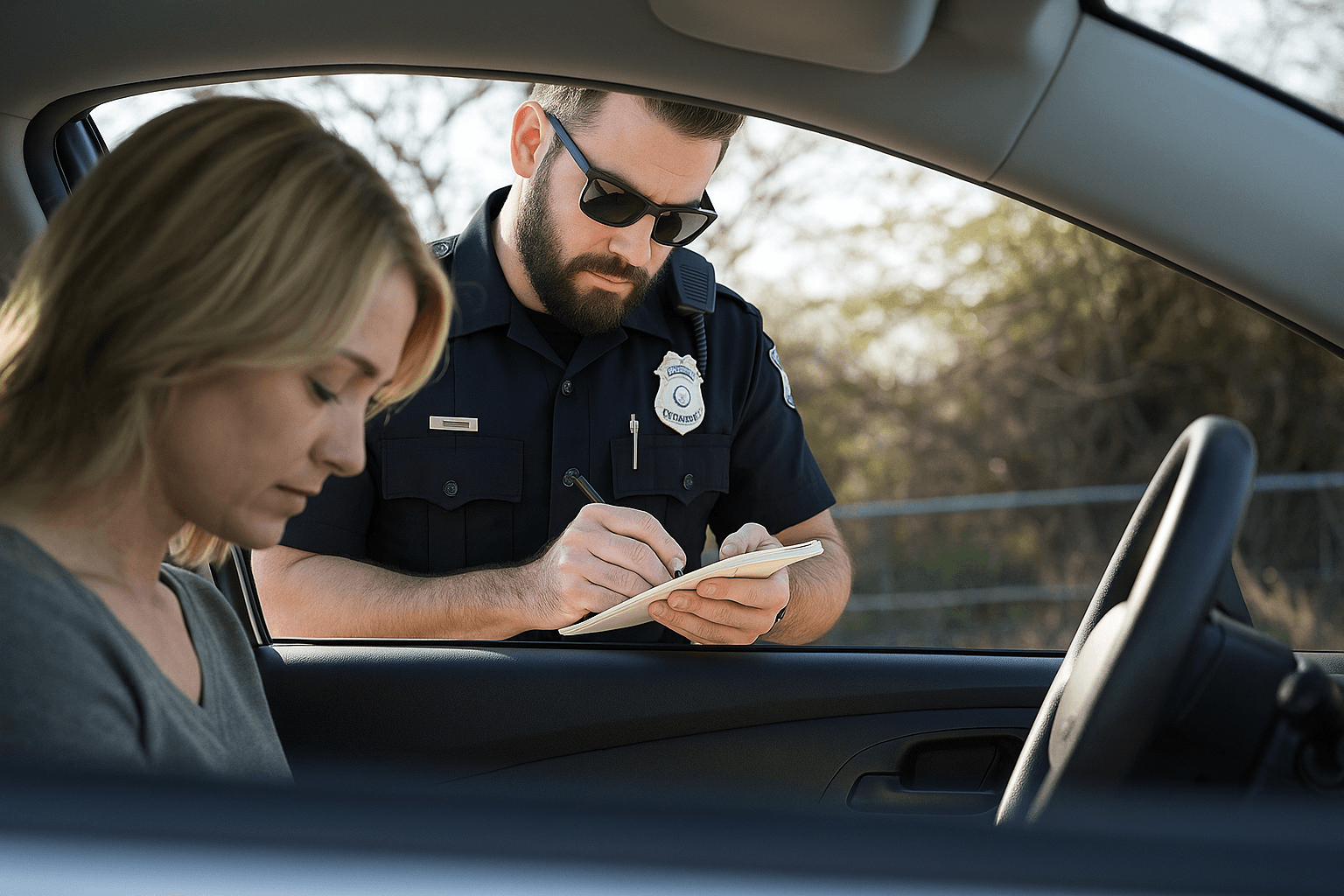
When an officer stops you while driving on a Restricted Use License, you must present the physical RUL card, proof of current insurance with DMV electronic verification, and documentation proving your current trip matches an approved purpose. For work trips, carry a recent pay stub or employer ID. For medical appointments, carry the appointment confirmation.
Officers routinely check the RUL's listed restrictions against your stated destination and the time of day. If your RUL permits work travel Monday through Friday 7 AM to 6 PM and you are stopped at 8 PM heading away from your approved work address, the officer will issue a criminal summons for aggravated unlicensed operation regardless of your explanation.
New York does not recognize 'substantial compliance' for route restrictions. Stopping for gas on the way to work is generally permissible as incidental to approved travel, but adding a detour to a convenience store or coffee shop transforms the trip into an unapproved purpose. If the stop location is not on the direct route between your approved addresses, you bear the burden of proving the deviation was necessary.
Insurance Requirements and Coverage for Restricted Use License Holders
New York does not use SR-22 certificates. Financial responsibility verification is handled through the DMV's Insurance Information and Enforcement System (IIES), where carriers report policy issuance and cancellations electronically. Your insurer must file coverage confirmation directly with the DMV before the DMV will issue your Restricted Use License.
For DWI-related RULs, expect monthly premiums of $150 to $300 depending on your age, county, prior coverage history, and carrier. Estimates based on available industry data; individual rates vary. Carriers writing high-risk policies in New York include Geico, Progressive, National General, and Bristol West. If you do not own a vehicle, non-owner liability policies start around $50 to $90 per month and satisfy the DMV's insurance verification requirement.
Letting your insurance lapse while holding a Restricted Use License triggers automatic DMV suspension of both your RUL and your vehicle registration under Vehicle and Traffic Law §319. The civil penalty for a first lapse is $750 plus an $8 daily fine (capped at 90 days), plus a $50 suspension termination fee. Reinstatement requires new insurance filing and payment of all penalties before the DMV will restore any driving privileges.
What Happens When Your Employment or Medical Situation Changes Mid-Suspension
If you lose your job, your work address changes, your medical treatment ends, or any approved purpose listed on your RUL application no longer applies, you must notify the DMV within 10 days and file an amendment. Continuing to drive to a former workplace or using an outdated RUL after your employment ends constitutes aggravated unlicensed operation.
To amend your RUL, submit a new MV-500 form with updated documentation and pay the amendment processing fee (typically equivalent to the original application fee). The DMV may schedule a new hearing if the change materially alters your driving need. During the amendment review period, your existing RUL remains valid only for the purposes and addresses that have not changed.
If you no longer have an approved purpose—for example, you were laid off and are not yet employed elsewhere—the DMV will revoke your Restricted Use License. You cannot hold an RUL without a documented, ongoing need to drive. Once your situation stabilizes and you have new employment or another qualifying purpose, you may reapply, but the DMV treats it as a new application requiring full documentation and another hearing.