New York requires ignition interlock installation before your Restricted Use License hearing. Installing after the DMV grants conditional approval forfeits the license. Here's the exact sequence, cost stack, and monitoring period nobody explains upfront.
Why New York Requires IID Installation Before the Restricted Use License Hearing
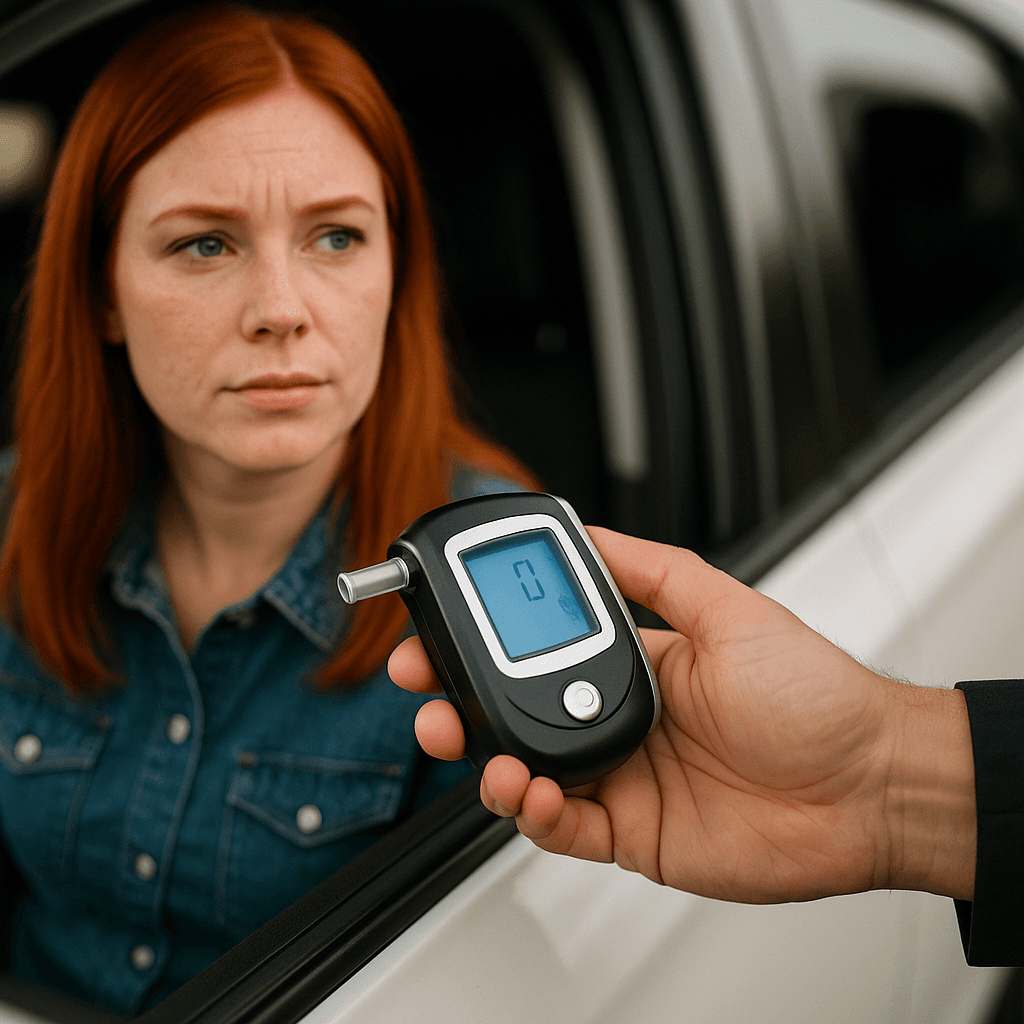
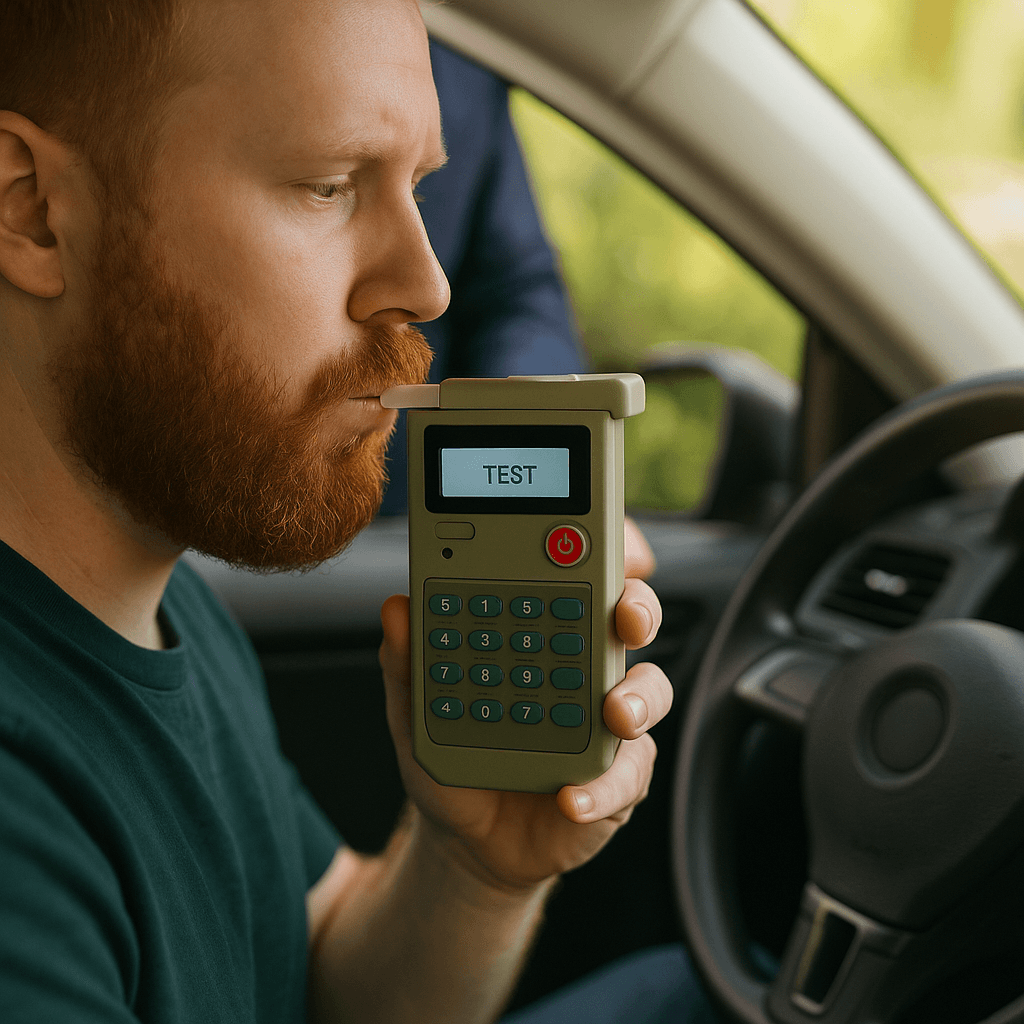
Leandra's Law (NY VTL §1198) mandates ignition interlock installation for all DWI/DUI convictions, including as a condition of any Restricted Use License during the interlock period. The procedural catch: DMV expects proof of installation at your RUL hearing, not after approval. Most drivers assume they apply, get approved, then install the device. New York reverses that sequence.
If you arrive at the DMV hearing without installation confirmation from a certified provider, the hearing officer typically denies the application outright or continues the hearing pending installation. The continuation adds 2-4 weeks to your timeline, and some regional DMV offices interpret continuation as forfeiture of the application fee. You reapply from scratch.
The financial exposure is real: installation runs $70-$150, monthly monitoring fees are $60-$100, and the device lease is $2.50-$3.50 per day. You commit to $300-$500 upfront before DMV makes a decision. If your RUL application is denied for unpaid tickets, multiple prior DWI offenses, or incomplete Impaired Driver Program requirements, you've paid for a device you cannot legally use.
The Five-Step Install Sequence New York DMV Does Not Publish
Step one: confirm your interlock requirement period with DMV. For a first DWI conviction, the minimum is 6 months from the date of sentencing. Second or subsequent DWI offenses trigger a 1-year minimum, sometimes permanent for three or more convictions within 25 years. Call the DMV Problem Driver Bureau at your regional office—don't rely on court paperwork alone, as the interlock period and the revocation period are calculated differently.
Step two: select a New York State-certified ignition interlock provider. The DMV publishes the approved vendor list at dmv.ny.gov under the IID program section. Do not use an out-of-state provider or a non-certified installer. The device must report directly to DMV through the state's electronic monitoring system—uncertified devices void your RUL eligibility even if physically functional.
Step three: schedule installation before filing your MV-500 series RUL application. The provider issues a Certificate of Installation immediately after the device is installed and calibrated. That certificate is your hearing documentation. Without it, the hearing officer has no proof of compliance.
Step four: file your RUL application with the DMV regional office that covers your county of residence. Include the IID installation certificate, proof of employment or necessity for driving, proof of insurance verified directly through DMV's electronic system, suspension clearance or eligibility confirmation from the Problem Driver Bureau, and completion certificate from the New York Impaired Driver Program (IDP). The $25 application fee is due at filing.
Step five: attend your DMV hearing with all documents in hand. If approved, the Restricted Use License is issued at the hearing or mailed within 5-10 business days. The device remains installed and monitored for the full interlock period, regardless of how long your RUL remains active.
Compare car insurance rates in your state
Get quotes from licensed carriers — no obligation, no spam, results in minutes.
Get Your Free Quote✓ No Obligation Required✓ Licensed Carriers Only✓ Available Nationwide✓ Free to Compare
What the IID Monitoring Period Actually Measures and Why Violations Revoke Your RUL Immediately
New York's interlock monitoring period measures compliance violations, not just failed breath tests. A failed start attempt (BAC above the device's lockout threshold, typically 0.025%) generates a violation report to DMV within 48 hours. Three failed start attempts in a rolling 30-day window trigger automatic RUL revocation in most cases, with no advance warning letter.
Missing a required calibration appointment is treated as a tampering event. Providers require monthly calibration and data download—skip one appointment and the device logs a service violation. DMV receives that violation electronically and can revoke your RUL before you realize the appointment was missed. The grace period for rescheduling is typically 5 days from the missed date, but that window is provider-specific, not codified by statute.
Circumventing the device, removing it without authorization, or allowing another person to provide the breath sample are Class A misdemeanors under VTL §1198. Criminal charges aside, DMV revokes the RUL immediately upon receiving a tampering report from the provider. The interlock period resets to zero—you serve the full 6 months or 1 year from the date of the new violation, not the original sentencing date.
Voluntary removal before the interlock period ends forfeits your RUL and may extend your revocation period. If you lose your job, move out of state, or can no longer afford the monthly monitoring fee, you must petition DMV for removal authorization before uninstalling. Unauthorized removal is treated identically to tampering.
The Cost Stack DMV Hearing Officers Do Not Discuss
Installation: $70-$150 one-time charge, due at the appointment. Providers require payment before beginning the installation—no financing, no deferrals. This fee covers the physical installation, initial calibration, and the first data upload to DMV's monitoring system.
Monthly monitoring and calibration: $60-$100 per month, billed in advance. This covers the required monthly appointment where the provider downloads breath test data, recalibrates the device, and uploads compliance data to DMV. Miss a payment and the provider reports a service violation to DMV, triggering revocation risk.
Daily lease fee: $2.50-$3.50 per day, charged separately from the monthly monitoring fee. Over a 6-month minimum interlock period, the lease alone costs $450-$630. Providers bundle this into the monthly invoice, but it's a separate line item.
RUL application fee: $25, paid to DMV at filing. This is non-refundable whether your application is approved or denied. Some regional offices accept credit cards; others require money order or certified check.
Impaired Driver Program (IDP) tuition: $225-$275 depending on the county where you enroll. Completion is mandatory before DMV will schedule an RUL hearing for DWI-related suspensions. The program runs 7 weeks, one evening per week. Miss more than one session and you restart from week one at full tuition cost.
Total first-month cost before approval: $400-$600. Total 6-month minimum cost assuming approval: $900-$1,400. That figure excludes the SR-22-equivalent insurance premium increase New York drivers face once their carrier reports the DWI conviction to DMV's electronic verification system. New York does not use SR-22 forms, but the Insurance Information and Enforcement System (IIES) ensures all admitted carriers report policy changes and driver violations in real time.
How New York Verifies Insurance Without SR-22 and Why That Matters for RUL Approval
New York does not recognize SR-22 certificates. Instead, the DMV uses the Insurance Information and Enforcement System (IIES), a real-time database that connects DMV directly to every admitted auto insurance carrier in the state. When you purchase a policy, the carrier reports the policy number, effective date, and coverage limits to DMV electronically within 24 hours. When the policy lapses or is canceled, the carrier reports that event the same day.
For RUL purposes, this means you cannot submit a paper insurance card or binder letter at your hearing. The hearing officer verifies your active coverage by querying the IIES database on the spot. If the database shows no active policy under your name and driver license number, the hearing is continued pending proof of coverage. That continuation typically adds 2-3 weeks to your approval timeline.
The coverage required is New York's statutory minimum: $25,000 bodily injury per person, $50,000 bodily injury per accident, $10,000 property damage, plus mandatory Personal Injury Protection (PIP) and Uninsured Motorist coverage. Most carriers classify DWI-convicted drivers as high-risk and either non-renew the existing policy or increase the premium 40-80% at the next renewal. Some carriers exit the relationship entirely, forcing drivers into the non-standard market.
Non-owner policies satisfy the RUL insurance requirement if you do not own a vehicle. The policy must be issued by a New York-admitted carrier and reported to the IIES system. Non-owner liability policies typically cost $40-$80 per month for DWI-convicted drivers, compared to $25-$50 for clean-record drivers. The policy covers you when driving a vehicle you do not own—most commonly, an employer's vehicle or a rental car within the scope of your RUL route restrictions.
What Happens If Your RUL Application Is Denied After You Install the IID
The device remains installed and monitored, but you cannot legally drive. DMV approval is the trigger that activates the Restricted Use License—installation alone does not grant driving privileges. If your application is denied for incomplete IDP requirements, unpaid tickets, or multiple prior DWI offenses, you've paid for installation and at least one month of monitoring fees with no legal driving authority.
Some providers allow voluntary removal within 30 days of installation if you provide written proof of RUL denial from DMV. This waives the remaining lease obligations but does not refund the installation fee or the first month's monitoring charge. Other providers enforce the full contract term regardless of denial, arguing that the interlock period begins at installation, not at RUL approval. Contract terms vary by provider—read the service agreement before signing at the installation appointment.
If you are denied and choose to leave the device installed while correcting the denial reason, you continue paying monthly monitoring fees during the correction period. For example, if denied for unpaid tickets, you pay the tickets, request a clearance letter from the court, refile the RUL application with the clearance documentation, and wait for a new hearing date. That process typically adds 4-6 weeks. The device stays installed and the monthly fees continue.
Re-application after denial requires a new $25 filing fee. Some regional DMV offices treat the second application as a continuation of the first; others treat it as a fresh filing. The distinction matters for processing time—continuations are typically scheduled within 2-3 weeks, while new applications can take 4-6 weeks depending on regional office backlog.
Finding Coverage That Meets New York's Electronic Verification Requirement
New York-admitted carriers writing high-risk auto insurance include Geico, Progressive, National General, and Bristol West. All four maintain active IIES reporting connections and can bind coverage that DMV verifies at your RUL hearing. Standard-market carriers like State Farm, Allstate, and USAA write New York policies but typically non-renew after a DWI conviction or decline to bind new policies for drivers with active revocations.
Non-owner policies are available through Geico, Progressive, and USAA for drivers without registered vehicles. The policy must include New York's minimum liability limits plus PIP and Uninsured Motorist coverage. The carrier reports the policy to IIES the same day it's bound, so you can purchase coverage the morning of your RUL hearing if necessary—though that creates risk if the IIES upload experiences a processing delay.
Monthly premiums for DWI-convicted drivers with an active IID requirement range from $140-$240 for standard vehicle coverage and $40-$80 for non-owner liability. Rates vary by county, age, vehicle type, and prior insurance history. Drivers with a lapse in coverage before the suspension face higher premiums than those who maintained continuous coverage through the revocation period.
Compare quotes from multiple New York-admitted carriers before your hearing. Each carrier weighs the DWI conviction differently—some assign flat surcharges, others calculate premium increases as a percentage of the base rate. A driver paying $180/month with one carrier may find $140/month with another for identical coverage. The savings over a 6-month interlock period can offset a month of IID monitoring fees.