New Mexico calls it a restricted license and routes every petition through the court system, not the MVD. IID installation is mandatory even for first-offense DWI, and the approval gate varies by cause.
Court Approval Required Before MVD Will Issue Restricted License
New Mexico requires every restricted license petition to go through district court before the Motor Vehicle Division will issue driving credentials. The MVD administers the ignition interlock program and maintains license records, but they cannot grant a restricted license on their own authority. You file a petition with the court that handled your case, the judge evaluates your need and compliance record, and only after court approval does the MVD process the actual license.
This dual-agency process means you need court-approved documentation in hand before visiting the MVD. Arriving at an MVD office without a signed court order produces nothing. The court order specifies your approved routes, time windows, and interlock requirement; the MVD cross-checks those terms against their interlock vendor database before issuing the credential.
Most first-time applicants assume the MVD handles everything because that's where driver licenses live. The Ignition Interlock Licensing Act (NMSA 1978 §§ 66-5-503 to 66-5-523) and restricted license authority under NMSA 1978 § 66-5-33 split responsibility deliberately: courts decide who qualifies, MVD enforces compliance. Budget time for both steps.
DWI Cases Trigger Mandatory Ignition Interlock Even for First Offense
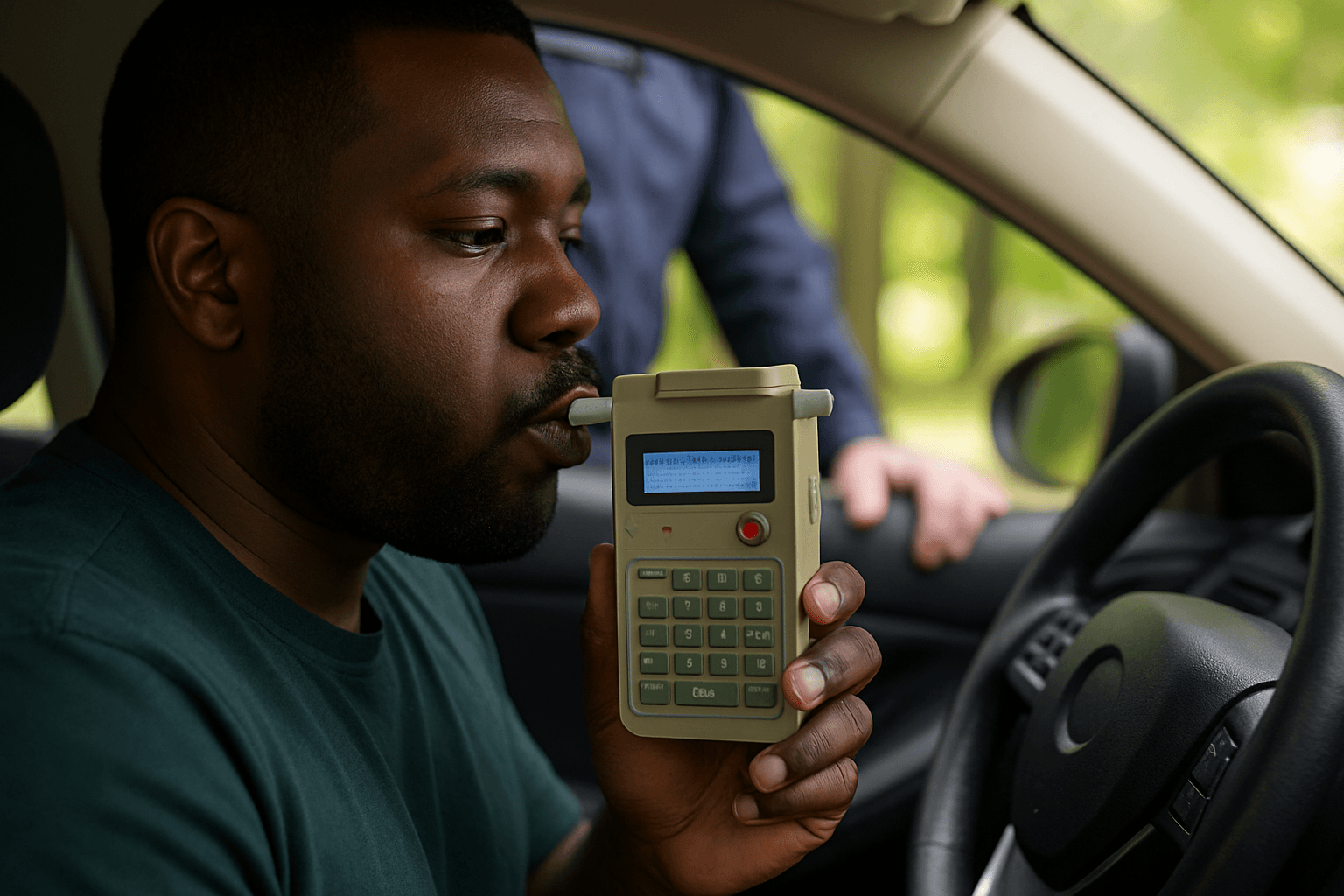
New Mexico has one of the country's most aggressive ignition interlock mandates. First-offense DWI convictions trigger mandatory interlock installation as a condition of any restricted license, not just repeat offenses. The court will not approve a restricted license petition for a DWI case without proof of interlock installation by an MVD-approved vendor.
The interlock requirement applies during the revocation period and continues post-reinstatement for a period specified by the court. Most first-offense DWI cases carry a 6-month revocation under NMSA § 66-8-111.1, but the Ignition Interlock License (IIL) program allows limited driving during that period if you install the device first. The hard suspension window before IIL eligibility is not clearly codified as a fixed number of days across all DWI offense levels, so your attorney or court paperwork will specify when you become eligible.
Interlock installation costs approximately $70–$150 upfront, plus $60–$90 per month for monitoring and calibration. The court-ordered duration can range from one year to three years or longer depending on offense severity and prior record. Budget the full duration when calculating whether restricted driving is affordable.
Compare car insurance rates in your state
Get quotes from licensed carriers — no obligation, no spam, results in minutes.
Get Your Free Quote✓ No Obligation Required✓ Licensed Carriers Only✓ Available Nationwide✓ Free to Compare
Points-Accumulation and Uninsured-Cause Suspensions: Eligibility Varies
New Mexico does allow restricted licenses for points-accumulation suspensions and uninsured-cause suspensions, unlike Pennsylvania and Washington which close hardship entirely for those triggers. If you lost your license for excessive points or driving without mandatory liability insurance, you can petition the court for restricted driving privileges.
The court evaluates your need case-by-case. Employment verification, proof of dependent care responsibilities, and medical appointment documentation strengthen your petition. The court is not required to approve every petition; they weigh your need against your compliance history and public safety risk. Unpaid traffic fines or failure-to-appear warrants typically produce denial until those are resolved.
For uninsured-cause suspensions, you must show proof of current insurance coverage before the court will consider your petition. New Mexico operates a Mandatory Insurance Continuous Coverage (MICC) program under NMSA 1978 §§ 66-5-205 through 66-5-239; carriers electronically report policy issuance and cancellation to the MVD in near-real-time. Letting coverage lapse after restricted license approval triggers automatic re-suspension without additional notice in most cases.
Route and Time Restrictions Are Court-Defined, Not Standardized
New Mexico courts define your approved routes and time windows individually. There is no statewide template. One judge may approve work, school, medical appointments, and grocery shopping; another may limit you strictly to employment and court-ordered alcohol education. The court order you receive specifies every approved purpose.
Most judges require you to submit a written schedule with employer verification, school enrollment proof, or medical appointment letters. Vague petitions produce narrow approvals. If your job requires unpredictable shift changes or multi-site travel, document that pattern explicitly in your petition. Courts can approve broader windows for irregular schedules, but you need evidence that the irregularity is job-related, not personal preference.
Violating the route or time restrictions documented in your court order is a separate criminal offense in New Mexico. If your restricted license says work only and you drive to a restaurant, that trip can trigger a new misdemeanor charge, immediate revocation of your restricted license, and extension of your full suspension period. The ignition interlock device logs every trip, so GPS tracking may be added as a condition for higher-risk cases.
Application Costs Include Court Filing, Interlock, and SR-22 Filing
The $25 MVD reinstatement fee cited in many New Mexico materials applies to full license reinstatement post-suspension, not restricted license issuance. Court filing fees for a restricted license petition vary by district but typically range from $50 to $150. Your attorney may charge $500–$1,500 to prepare and file the petition, though self-represented petitions are permitted if you understand the local court's procedural rules.
Ignition interlock installation adds $70–$150 upfront plus $60–$90 per month for the duration of the court order. SR-22 insurance certificate filing is required for DWI convictions and certain other serious offenses; your insurer files the SR-22 form electronically with the MVD. Most carriers charge a one-time filing fee of $15–$50, and your premium will increase significantly.
Total restricted license cost for a first-offense DWI case in New Mexico typically runs $1,200–$2,500 in the first year: court filing, attorney if used, interlock installation and monitoring, SR-22 filing, and the premium increase for high-risk classification. If your court order requires 2 or 3 years of interlock post-reinstatement, multiply the monthly monitoring cost accordingly.
SR-22 Insurance Requirement and High-Risk Premium Impact
DWI convictions in New Mexico trigger mandatory SR-22 filing for a minimum of 3 years from the conviction date. The SR-22 is not insurance; it is a certificate your insurer files with the MVD proving you carry at least the state's minimum liability coverage: $25,000 bodily injury per person, $50,000 per accident, $10,000 property damage.
Most standard carriers (State Farm, Geico, Progressive) will file SR-22 but will re-rate you into high-risk tiers, increasing your premium 50%–150% depending on your prior record and claims history. Some carriers non-renew DWI policyholders entirely; if that happens, you move to non-standard carriers like Bristol West, Dairyland, The General, or National General that specialize in high-risk drivers. Non-standard premiums typically run $140–$250 per month for minimum coverage.
If you don't own a vehicle, you can purchase non-owner SR-22 insurance. Non-owner policies provide liability coverage when you drive a borrowed or rented vehicle and satisfy the SR-22 filing requirement for restricted license holders who rely on employer vehicles or family cars. Non-owner SR-22 premiums typically cost $30–$60 per month, substantially less than standard auto policies.
MVD Processing Time After Court Approval
Once the court approves your restricted license petition and you have proof of ignition interlock installation (if required) and SR-22 filing (if required), the MVD processes your restricted license application. Processing time is not officially published by the New Mexico MVD, but applicants typically report same-day or next-day issuance if all documentation is complete.
You need the signed court order, proof of interlock installation from an MVD-approved vendor, proof of SR-22 filing from your insurer, and payment for any outstanding MVD reinstatement or administrative fees. Missing any one document produces denial and requires rescheduling. The MVD will not accept partial applications or issue temporary credentials while you gather missing paperwork.
If your court order specifies an effective date in the future, the MVD will not issue the restricted license until that date arrives. Some judges impose a waiting period to ensure compliance with alcohol education or ignition interlock calibration before allowing restricted driving. Read your court order carefully for timing conditions.