Nevada calls it a restricted license, not hardship. The DMV and courts define route lists and hour windows differently — most first-time applicants submit documentation that satisfies one authority but not the other.
Why Nevada's Two-Track Process Creates Documentation Failures
Nevada runs parallel suspension tracks: DMV administrative revocation (triggered by BAC 0.08+ or insurance lapse under NRS 485.187) and court-ordered suspension (following DUI conviction under NRS 484C). A restricted license application goes through the DMV track, but DUI cases require court approval before DMV processing begins. Most applicants assume one set of documentation satisfies both authorities.
The court wants proof of need anchored to a case-specific hardship argument. The DMV wants standardized proof of insurance (SR-22), employer verification on letterhead, and a completed application form. Neither authority cross-checks the other's file. Submitting court-approved route documentation to DMV without the SR-22 certificate gets rejected. Submitting DMV-compliant paperwork to a judge without a hardship narrative gets denied.
First-time DUI offenders face a 45-day hard suspension under NRS 483.490 before restricted license eligibility begins. That 45-day window starts from conviction date, not filing date. Drivers who wait until day 44 to gather documentation miss the eligibility window and restart the clock.
What Route Restrictions Actually Mean in Nevada
Nevada restricts driving to specific approved purposes: work, school, medical appointments, court-ordered programs (DUI education, ignition interlock calibration). The DMV does not publish a statewide list of approved addresses. You submit your specific route list with the application.
Route documentation requires employer verification on company letterhead, including your work address, shift hours, and supervisor contact. School enrollment requires a registrar letter with class schedule and campus address. Medical appointments require a provider letter stating appointment frequency and facility address. DUI education programs require proof of enrollment with session schedule and location.
The restriction is route-based, not purpose-based. Driving to a grocery store between your home and approved work location violates the restriction even if the detour adds 30 seconds. Stopping for gas on an approved route is acceptable if the gas station is directly on the route and the stop is brief. Nevada's enforcement standard: were you traveling directly between approved locations during approved hours? Deviations trigger revocation.
Compare car insurance rates in your state
Get quotes from licensed carriers — no obligation, no spam, results in minutes.
Get Your Free Quote✓ No Obligation Required✓ Licensed Carriers Only✓ Available Nationwide✓ Free to Compare
Time Restrictions Vary by Case, Not by Statewide Rule
Nevada does not mandate universal time windows for restricted licenses. The DMV and court define hours case-by-case based on your submitted documentation. If your employer letter states you work 7 AM to 4 PM Monday through Friday, your restricted license covers those hours plus reasonable commute buffer (typically 30 minutes before and after shift).
DUI education classes typically run evenings or weekends. Your restricted license must cover class hours explicitly. If your DUI program meets Tuesdays 6 PM to 8 PM, that window must appear in your route and time documentation. Missing a class or arriving late does not excuse driving outside approved hours to make up the session.
Ignition interlock calibration appointments (required for most DUI-related restricted licenses under NRS 484C.460) must be pre-scheduled and documented. The IID provider gives you a calibration appointment card. Submit a copy with your restricted license application. Driving to calibration outside approved hours without prior DMV approval violates the restriction.
Required Documentation: What the DMV Actually Processes
Nevada DMV requires proof of insurance filed electronically by your carrier. For DUI-related suspensions, that means SR-22 certificate of financial responsibility. The carrier files SR-22 directly with Nevada DMV through the Nevada Insurance Verification System (NIVS). You cannot file SR-22 yourself. The DMV will not process your restricted license application until SR-22 appears in NIVS, even if you bring a paper copy of the certificate.
Employer verification must be on company letterhead, signed by a supervisor or HR representative, and include: your full name, work address, shift schedule (days and hours), supervisor name and direct phone number. Self-employment requires business license documentation and client contract or invoicing evidence showing regular work schedule. Gig economy and variable-schedule work does not satisfy Nevada's restricted license employment documentation standard in most cases.
Court-ordered program documentation (DUI school, victim impact panel, substance abuse treatment) must show proof of enrollment, session schedule, and facility address. A receipt for program payment is not enrollment proof. The program administrator must provide a letter stating you are enrolled, your next session date, and the full program schedule.
Completed restricted license application form (Nevada DMV form DLD-20) must be notarized. Walk-in notary is available at most DMV offices, but appointment-only locations may not offer same-day notary service. Confirm notary availability before your DMV appointment to avoid a second trip.
Ignition Interlock Requirement for DUI Restricted Licenses
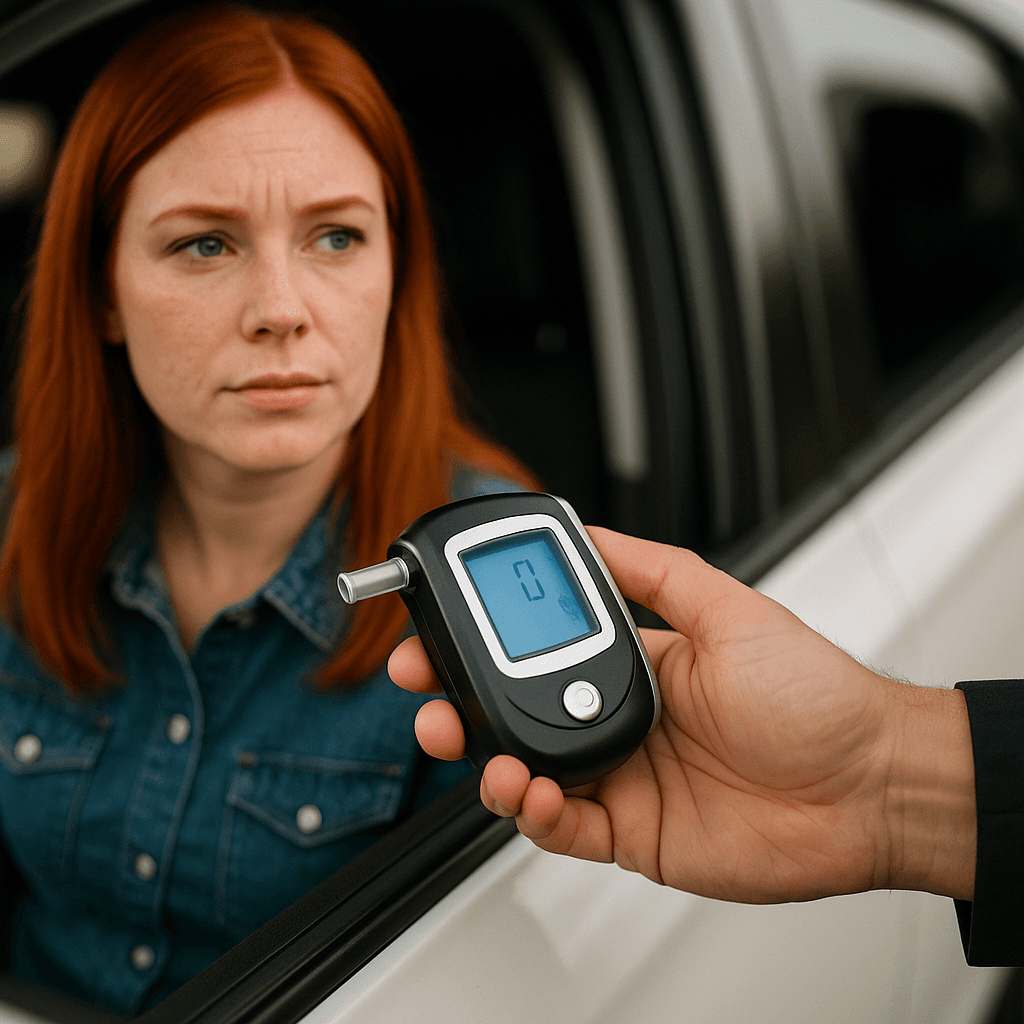
Nevada mandates ignition interlock devices for all DUI-related restricted licenses. The IID requirement begins when the restricted license is issued and continues through the end of the suspension period. First-offense DUI suspensions typically run 185 days total: 45 days hard suspension, then up to 140 days restricted with IID.
You install the IID before applying for the restricted license. The installation provider (state-certified vendors only) issues a certificate of installation. Submit the certificate with your restricted license application. Nevada DMV will not approve restricted driving without verified IID installation.
Calibration appointments occur every 30 to 60 days depending on the device and your violation history. The IID logs every start attempt, every failed breath test, every calibration date. Nevada DMV pulls IID data electronically. A single failed test or missed calibration triggers restricted license review and potential revocation. The IID provider does not notify DMV of violations in real time, but the data appears in your file at the next DMV audit cycle (typically monthly).
Application Path: Court Approval for DUI Cases, DMV Only for Others
DUI-related suspensions require court approval before DMV processing. After your criminal case concludes and you complete the 45-day hard suspension, you file a restricted license petition with the court that handled your DUI case. The petition hearing is separate from your criminal sentencing. Some courts schedule restricted license hearings as part of sentencing; others require a separate motion.
The court evaluates hardship based on employment need, medical necessity, and family responsibility. Judges deny petitions when employment documentation is vague, when no medical or family need is demonstrated, or when the DUI involved aggravating factors (injury, child passenger, prior DUI). A denial does not prevent you from reapplying after addressing the judge's stated concerns, but each petition requires a new court filing fee (typically $50 to $100 depending on county).
Non-DUI administrative suspensions (insurance lapse, points accumulation in some cases) go directly to Nevada DMV without court involvement. You submit the completed application, proof of insurance, and supporting documentation at a DMV office or by mail. Processing takes 7 to 14 business days if all documentation is complete. Incomplete applications are returned without processing, restarting the timeline.
What Happens If You Violate Restricted License Terms
Driving outside approved routes or hours triggers automatic revocation. Law enforcement pulls Nevada DMV records during traffic stops. If you are stopped outside an approved location or time window, the officer verifies your restricted license status in real time. The restricted license is confiscated on the spot, and you receive a notice of revocation.
Revocation for violation is separate from the underlying suspension. The original suspension period continues. The restricted license privilege ends immediately. You cannot reapply for a new restricted license until the full suspension period expires and you complete reinstatement requirements (which include paying the $35 reinstatement fee plus any outstanding violation penalties).
IID violations (failed breath test, missed calibration, tamper alert) are treated as restricted license violations even if you were driving within approved routes and hours. The IID provider's data log is prima facie evidence of violation. Nevada DMV does not hold administrative hearings for IID violations; the data log is dispositive.