Montana judges issue Probationary License terms by county, and broad rural route allowances don't guarantee unlimited travel. Know what documentation survives court scrutiny and which hour restrictions courts actually enforce.
What Montana Calls a Hardship License and Why the Name Matters
Montana statute calls it a Probationary License under MCA § 61-5-208, not a hardship license. The Motor Vehicle Division (MVD) administers the underlying suspension, but the license itself is granted by a district court judge in the county where you file. This dual-agency structure means you navigate both MVD paperwork and court petition requirements before approval.
The court-based system produces county-level variation in approval timelines, filing fees, and restriction language. A Probationary License petition filed in Yellowstone County may resolve within 14 days while the same petition in Park County takes 45 days. Montana's 56 counties operate independently on court calendars, and district judges exercise broad discretion over route and hour restrictions.
Search results for "hardship license" land here because that's what most states call restricted driving privileges during suspension. Once you're filing in Montana, use the statutory term Probationary License on all petitions, SR-22 filings, and correspondence with the MVD. Mismatched terminology delays processing.
Route Restrictions Courts Actually Enforce in Montana
Montana courts define routes as court-specific conditions tailored to your documented need, typically restricted to work, school, medical appointments, and essential household errands. Unlike urban states that enforce narrow point-to-point commutes, Montana judges recognize the state's geography: driving 50 miles one-way for work or 80 miles to the nearest dialysis center is common, and courts factor these distances into route approvals.
Your petition must include exact addresses for approved destinations: employer street address, school campus location, medical provider office address, and any recurring essential stops like daycare. Generic language like "work-related travel" or "medical appointments as needed" gets petitions denied. Judges want verifiable endpoints.
Route flexibility does not mean unrestricted travel. A Probationary License approved for home-to-work-to-medical does not cover recreational trips, errands outside the documented list, or travel for family obligations not listed in the petition. Violating route restrictions triggers immediate revocation without hearing in most counties. The MVD receives violation reports from law enforcement electronically, and your Probationary License is suspended administratively before you receive written notice.
Compare car insurance rates in your state
Get quotes from licensed carriers — no obligation, no spam, results in minutes.
Get Your Free Quote✓ No Obligation Required✓ Licensed Carriers Only✓ Available Nationwide✓ Free to Compare
Hour Restrictions and the 24-Hour Work Exception
Montana has no single statewide hour restriction standard. District judges issue time-of-day limits based on the documented need in your petition. A driver working 9-to-5 in Missoula receives a Probationary License restricted to 7 a.m. to 7 p.m. A commercial driver working overnight shifts in Billings receives 24-hour approval if the employer affidavit documents third-shift hours.
Shift workers must submit an employer affidavit specifying exact shift start and end times, including variability for on-call or rotating schedules. Courts rarely grant 24-hour unrestricted driving; they grant 24-hour coverage for documented work schedules. If your petition states "occasional evening shifts," the court issues daytime-only restrictions and you're non-compliant the first time you drive at night.
Medical appointments scheduled outside approved hours require amended petitions filed with the court before the appointment. Emergency medical travel is the only exception Montana courts recognize without advance approval, and you must document the emergency afterward with hospital admission records or physician statements. Non-emergency travel outside approved hours is a violation even if the destination is on your approved route list.
Required Documentation That Survives Court Scrutiny
Montana courts require proof of need anchored to verifiable third-party documentation: an employer affidavit on company letterhead with contact information, school enrollment verification from the registrar's office, and appointment letters from medical providers. The petition form lists these as required, but many filers submit generic need statements and get denied.
Employer affidavits must state your job title, work address, shift hours (including start/end times and days per week), and a supervisor contact name and phone number. Courts call employers to verify. Self-employment requires business registration documentation, a tax return showing active income, and client or contract documentation proving ongoing work obligations.
Medical need documentation requires appointment schedules or treatment plans on provider letterhead. "I need to drive to doctor appointments" without specifics fails. Courts want frequency (weekly dialysis, monthly oncology, etc.), provider name and address, and confirmation that public transit or rideshare is unavailable or impractical given distance and appointment timing.
You must also submit an SR-22 insurance certificate before the court issues the Probationary License. Montana requires SR-22 filing for three years post-DUI revocation reinstatement. The certificate must show the court as the certificate holder, not the MVD. Filers who send SR-22 certificates to MVD only have petitions held until they refile correctly.
How the 45-Day Hard Suspension Period Works for DUI Cases
MCA § 61-8-402 imposes a minimum hard suspension period before DUI Probationary License eligibility: approximately 45 days for first-offense DUI, longer for subsequent offenses. This is a floor, not a waiting period you can petition around. Filing before the hard suspension expires results in automatic denial.
The 45-day count starts from your conviction date, not your arrest date or suspension notice date. If your DUI conviction was entered on March 1, you become eligible to file a Probationary License petition on April 15. Filing on April 10 wastes the $100+ petition filing fee and delays your case by the time it takes to re-petition.
Second and third DUI offenses carry longer hard suspension minimums, and breath-test refusal cases may trigger extended ineligibility windows under separate statutory provisions. Verify your specific hard suspension period with the MVD or a Montana-licensed attorney before filing. Courts do not issue advisory opinions on eligibility; they deny petitions and you lose the filing fee.
Ignition Interlock Device Requirement and Verification Timeline
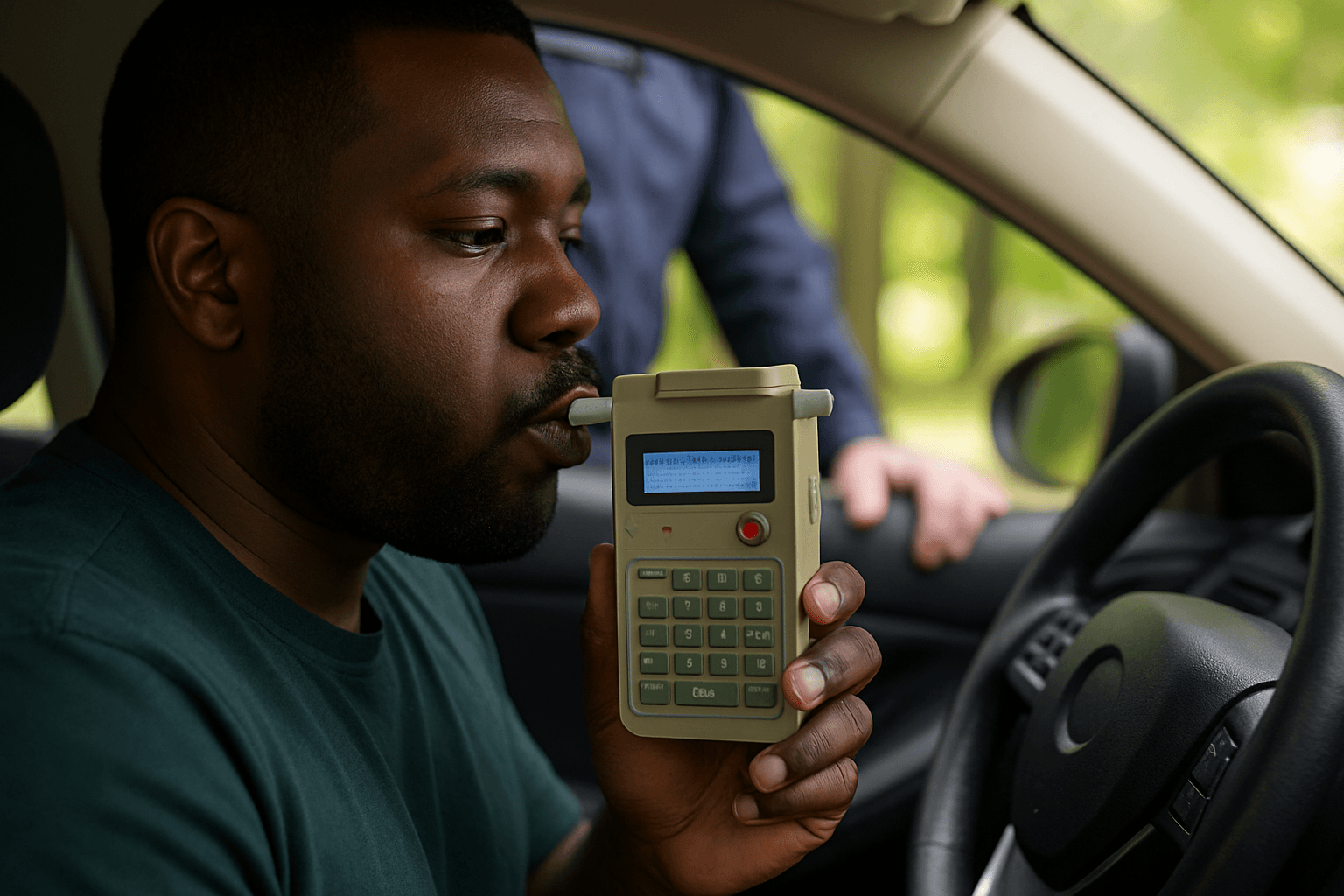
Montana requires an ignition interlock device (IID) installed and verified before the court issues a DUI-related Probationary License, administered under MCA § 61-8-442. The device must be installed by a state-certified provider, and you must submit the installation certificate to the court with your petition.
IID installation costs $75 to $150 upfront, plus $60 to $90 per month for monitoring and calibration. The device remains installed for the duration of your Probationary License period and typically for the full suspension term. Removing the device early triggers automatic Probationary License revocation and extends your underlying suspension.
Monitoring reports go to both the court and the MVD. Failed breath tests, tamper alerts, or missed calibration appointments appear on these reports and result in Probationary License suspension. Courts treat IID violations as evidence you're non-compliant with restricted driving terms, and most counties revoke without a hearing. Reinstatement after IID-violation revocation requires a new petition, a new filing fee, and proof the violation has been cured.
What Insurance Looks Like During the Probationary License Period
Montana requires SR-22 insurance for three years after DUI-related license reinstatement. The SR-22 is a certificate filed by your insurer with the MVD proving you carry at least Montana's minimum liability limits: $25,000 per person, $50,000 per accident for bodily injury, and $20,000 for property damage.
SR-22 filing adds $15 to $50 to your policy, but the bigger cost is the premium increase from high-risk classification. DUI drivers in Montana see premiums rise from a statewide average of $110/month to $180–$280/month depending on county, age, and prior violations. Non-standard carriers like The General, Bristol West, and National General write Montana SR-22 policies; standard carriers like State Farm and Geico also file SR-22 but at higher premiums.
If you don't own a vehicle, non-owner SR-22 insurance meets the court and MVD filing requirement. Non-owner policies cost $30 to $60/month and provide liability coverage when you drive borrowed or rental vehicles. The SR-22 certificate filing process is identical whether you own a vehicle or not.
Letting your SR-22 policy lapse triggers automatic suspension of your Probationary License and your underlying driving privilege. Insurers notify the MVD electronically within 24 hours of cancellation. Reinstatement after SR-22 lapse requires a new SR-22 filing, payment of the $100 reinstatement fee, and potentially a new Probationary License petition depending on how long the lapse lasted.