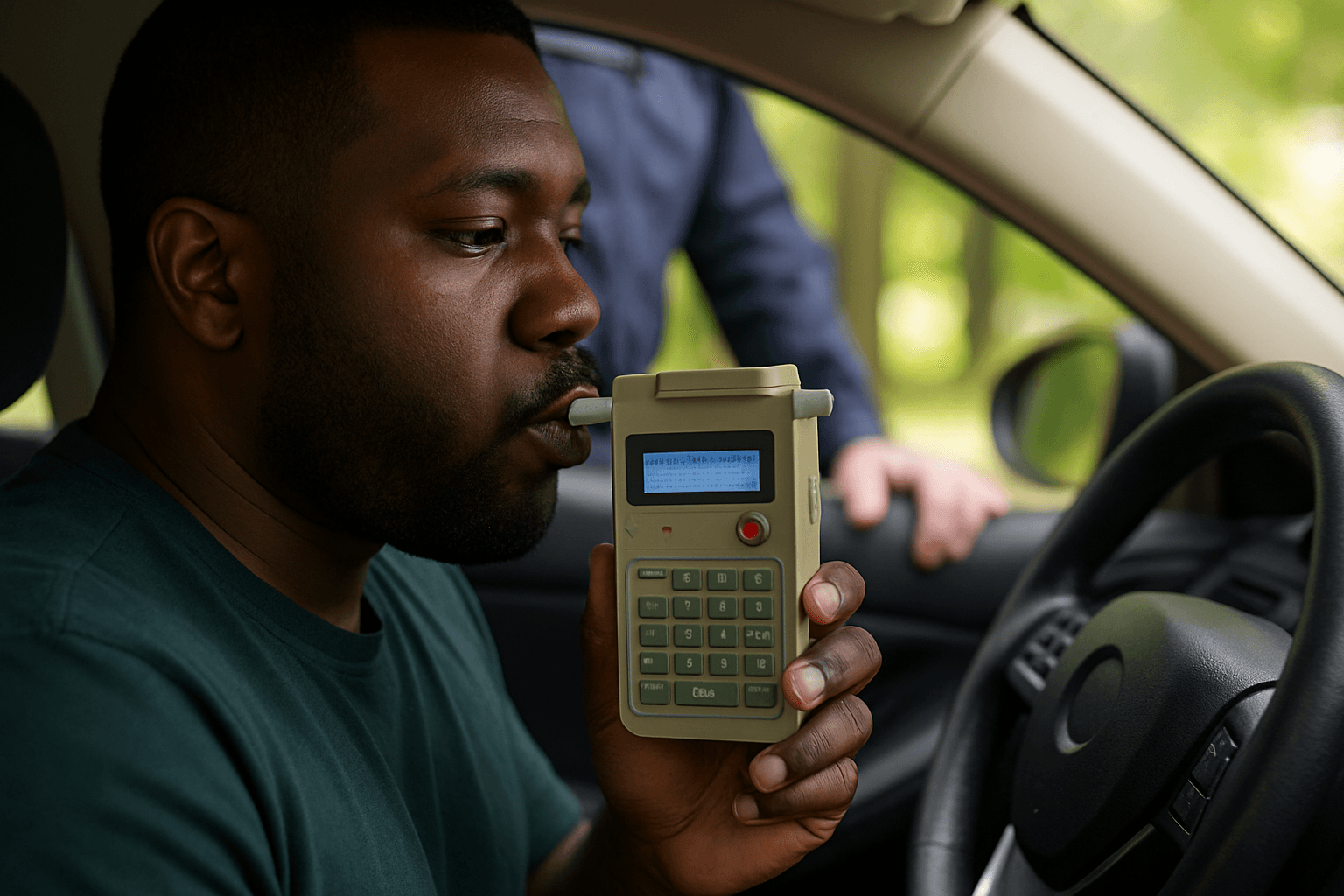
Montana requires a district court petition for probationary driving privileges after suspension, and ignition interlock installation before any restricted license is issued. The county where you file determines timeline and terms.
Why Montana Probationary Licenses Require a Court Hearing, Not Just MVD Paperwork
Montana Code Annotated § 61-5-208 places probationary license authority with district courts, not the Motor Vehicle Division. The MVD administers your suspension and processes reinstatement fees, but the probationary license itself — what most states call a hardship or restricted license — requires a formal petition filed in district court and a judge's order.
This dual-agency structure means you navigate two separate processes. The MVD suspends your license and tracks your compliance. The court evaluates your petition, sets your driving restrictions, and issues the probationary order. Filing fees, timelines, and even the scope of approved driving vary by county because Montana's 56 district courts operate with judicial discretion rather than uniform statewide standards.
Drivers who expect a one-stop administrative process at the DMV often discover the court requirement only after their suspension takes effect. The MVD will not tell you how to petition for probationary privileges — that information comes from the clerk of court in the county where you reside or where the violation occurred.
Which Suspension Causes Qualify for Montana Probationary Driving Privileges
Montana allows probationary licenses for DUI suspensions and points-based suspensions. DUI eligibility comes with a mandatory hard suspension period before you can petition: approximately 45 days for a first offense under MCA § 61-8-402, longer for subsequent offenses. You cannot apply for probationary privileges during the hard suspension window.
Points-based suspensions qualify without a hard suspension period in most counties, but the court evaluates whether your driving record demonstrates sufficient risk management to justify restricted privileges. Suspensions triggered by unpaid fines, failure to appear, or uninsured driving typically do not qualify for probationary licenses — those require reinstatement through the MVD once you resolve the underlying issue.
The data field hardship_unpaid_fines_eligible shows no statewide authorization for probationary licenses during unpaid-ticket suspensions, though isolated counties may exercise judicial discretion differently. If your suspension stems from uninsured driving, the probationary pathway is closed: Montana requires proof of continuous SR-22 insurance before lifting the suspension, not restricted driving during it.
Compare car insurance rates in your state
Get quotes from licensed carriers — no obligation, no spam, results in minutes.
Get Your Free Quote✓ No Obligation Required✓ Licensed Carriers Only✓ Available Nationwide✓ Free to Compare
The District Court Petition Process: Filing, Fees, and What Judges Evaluate
You file a petition for probationary license in the district court of the county where you reside or where the violation occurred. Montana's court system does not centralize this process — each county clerk maintains its own forms and filing procedures. The petition must include proof of need (employment verification, medical appointment documentation, school enrollment), an SR-22 certificate of insurance, and a proposed driving plan detailing routes, times, and destinations.
Court filing fees vary by county but typically range from $100 to $200. This fee is separate from the MVD reinstatement fee of $100, which you pay later when your full license is restored. Judges evaluate three factors: necessity (whether you have viable alternatives to driving), compliance (whether you have resolved court-ordered obligations like fines or DUI treatment), and risk (whether your driving history suggests you will follow probationary terms).
Most counties schedule a hearing within 14 to 30 days of filing, but processing timelines depend on court calendars and whether the prosecutor's office files an objection. Some counties allow uncontested petitions to proceed without a formal hearing if the MVD suspension record shows no compliance violations. Others require all petitioners to appear before the judge regardless of record.
Montana's Ignition Interlock Requirement for Probationary Licenses After DUI
Montana mandates ignition interlock device installation before issuing any probationary license for DUI-related suspensions under MCA § 61-8-442. The IID must be installed and verified by an MVD-approved provider before the court signs the probationary order. You cannot drive under probationary privileges until the device is functional and registered with the MVD.
IID installation costs approximately $75 to $150, with monthly monitoring fees of $60 to $90. Most DUI-related probationary licenses in Montana require IID for the entire probationary period, which typically lasts until your full license reinstatement eligibility date. If your underlying suspension is 6 months, the IID requirement runs 6 months. If your suspension is 1 year, the IID requirement runs the full year.
The court order specifies IID duration explicitly. Removing the device before the court-authorized date triggers automatic probationary license revocation and extends your suspension. Montana tracks IID compliance through monthly provider reports submitted directly to the MVD — missed calibration appointments, tamper alerts, or failed breath tests all count as violations that can terminate your probationary privileges without warning.
What Driving Montana Courts Approve Under Probationary Licenses
Montana district courts define probationary driving restrictions in each individual order, but typical grants include employment commutes, medical appointments, court-ordered obligations (DUI treatment, probation check-ins), school attendance, and essential household errands. Route restrictions in Montana are interpreted more broadly than in urban states because of the state's geography: driving 50+ miles one-way for work or to reach a medical facility is common, and judges factor this into approved routes.
Time restrictions vary by county and case. Some judges impose specific hours (e.g., 6:00 AM to 7:00 PM Monday through Saturday). Others define restrictions by purpose rather than clock time, allowing any driving necessary for approved activities. Recreational driving, social visits, and out-of-state travel are typically excluded unless you petition the court for a modification.
Your probationary order is the controlling document — law enforcement checks this order during traffic stops, not a generic state policy. If your order specifies routes and you are stopped outside those routes without a documented emergency, the violation can result in immediate arrest for driving under suspension, probationary license revocation, and extension of your underlying suspension period.
How Montana SR-22 Filing Interacts with Probationary License Applications
Montana requires an SR-22 certificate of financial responsibility before you can petition for probationary driving privileges. The SR-22 filing proves you carry at least Montana's minimum liability coverage: $25,000 per person for bodily injury, $50,000 per accident for bodily injury, and $20,000 for property damage. Your insurer files the SR-22 electronically with the MVD, not the court, but you must attach proof of the active filing to your court petition.
SR-22 filing fees range from $15 to $50 depending on the carrier, and premiums for drivers under suspension typically run $140 to $240 per month for minimum liability coverage. If you do not own a vehicle, non-owner SR-22 policies cover you when driving someone else's car and satisfy Montana's filing requirement for probationary license eligibility.
The SR-22 filing must remain active for 3 years after DUI reinstatement under Montana law. If your policy lapses or cancels, your insurer notifies the MVD within 10 days, and both your probationary license and your eventual full reinstatement are suspended until you file a new SR-22 and pay reinstatement fees again. Maintaining continuous coverage is not optional — a single missed payment that triggers policy cancellation restarts the entire SR-22 clock.
What Happens If You Violate Montana Probationary License Terms
Driving outside the approved scope of your Montana probationary license — wrong route, wrong time, wrong purpose — is prosecuted as driving while suspended. The charge carries up to 6 months in jail and fines up to $500 for a first offense, and your probationary license is revoked immediately. The underlying suspension period extends by the length of time you drove under the probationary order, effectively resetting your reinstatement timeline.
Missed IID calibration appointments or failed breath tests are reported to the MVD by the device provider within 48 hours. Two violations within the probationary period typically trigger automatic revocation in most Montana counties. The court does not schedule a hearing to reconsider — the revocation is administrative once the MVD receives the violation report.
If your probationary license is revoked, you must serve the remainder of your suspension without any driving privileges, then complete the full reinstatement process before applying for a new license. Most Montana counties will not grant a second probationary petition to drivers whose first probationary license was revoked for cause.