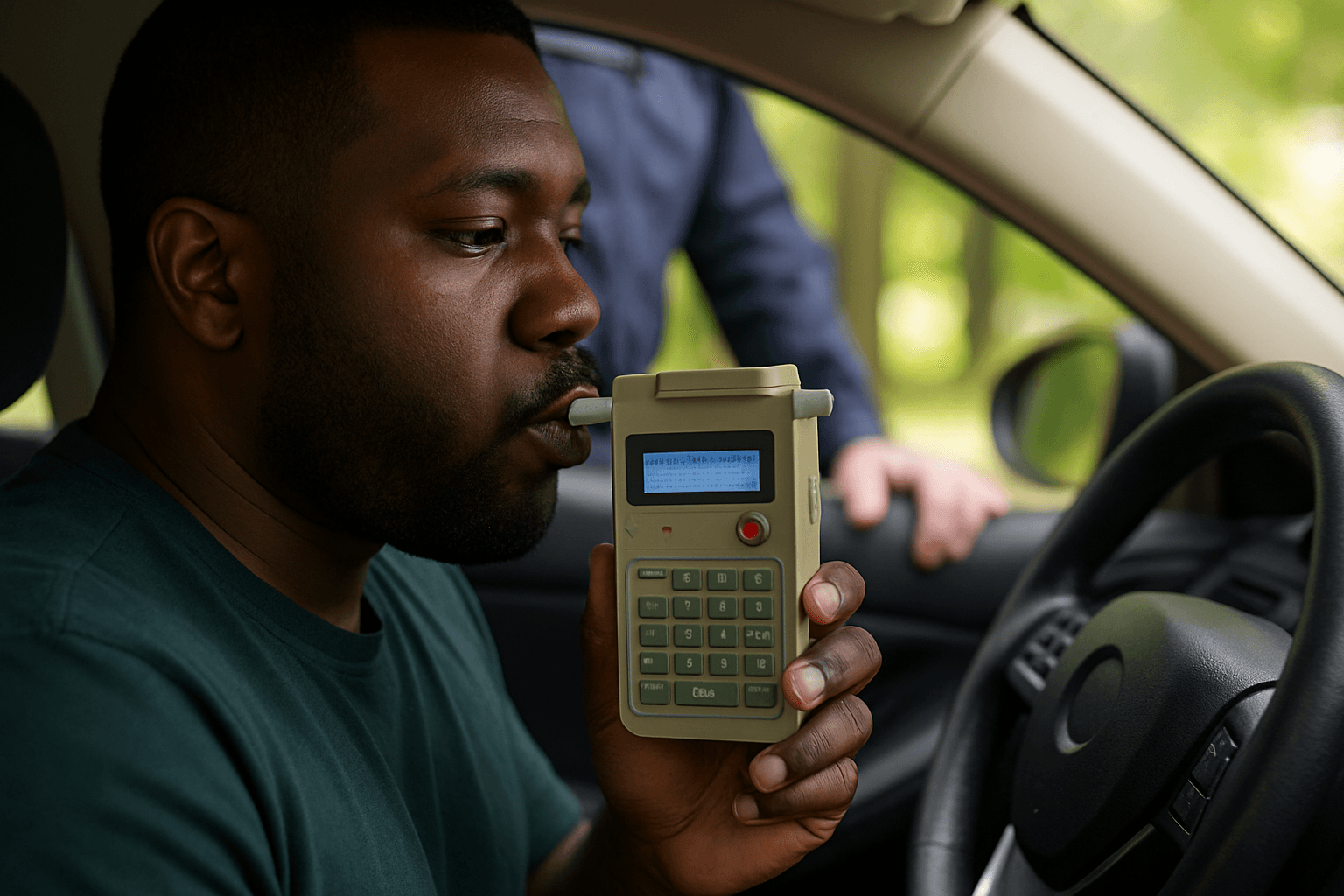
Missouri's hardship license requires a court hearing in your home county, not a DMV application. Most petitioners don't realize the ignition interlock device must be installed and verified before the judge will sign the order—waiting until after approval adds weeks to your timeline.
Why Missouri Routes Limited Driving Privilege Through Circuit Court Instead of the DMV
Missouri assigns Limited Driving Privilege (LDP) authority to circuit courts, not the Department of Revenue's Driver License Bureau. You petition the circuit court in your home county—filing in a different county fails even if your offense happened elsewhere. The DOR handles administrative suspensions (chemical test refusals under RSMo 577.041, point accumulations under RSMo 302.304, SR-22 insurance lapses), but only courts can grant LDPs for most driving-related suspensions.
This split creates confusion when drivers receive both an administrative suspension from the DOR and a judicial suspension from criminal court after a DWI conviction. These suspensions run concurrently but require separate processes: the DOR suspends your license administratively the day you refuse a breathalyzer or your carrier cancels your SR-22 filing, while the court imposes a separate suspension months later when your criminal case resolves. Your LDP petition addresses both suspensions simultaneously if timed correctly.
HB 2110 (2019) introduced an immediate LDP pathway for first-offense DWI drivers who install an ignition interlock device under RSMo 302.309, bypassing some of the mandatory hard suspension wait period. This pathway still requires a court petition, but the 30-day hard period before LDP eligibility shrinks when you install the device before petitioning. Most drivers learn about this option too late—after they've already waited out the hard period without an IID.
What the Ignition Interlock Installation Verification Requirement Actually Means for Your Petition Timeline
Missouri courts require proof of installed ignition interlock device at the time of your LDP hearing for DUI-related suspensions. The statute language suggests verification happens after the judge grants the privilege, but circuit court practice in most Missouri counties demands installation before the hearing. Judges won't sign an LDP order without an IID installation receipt and calibration certificate from an approved vendor.
This timing gap traps drivers who assume they petition first, receive approval, then install the device. By the time you realize the judge expects installation proof at the hearing, you've already scheduled your court date and the IID vendor's next available installation appointment is two weeks out. Rescheduling the hearing adds another 30–45 days to your timeline in most counties. Install the device the week you file your petition, not the week before your hearing.
The DOR maintains a separate Ignition Interlock Program under RSMo 302.304 that allows driving during administrative suspension periods—somewhat parallel to the court LDP process. If your suspension is purely administrative (chemical test refusal with no criminal charges filed yet), you may qualify for the DOR's interlock program without a court petition. These two pathways can intersect: some drivers hold both a DOR interlock permit and a court-granted LDP simultaneously, each with its own compliance requirements and each requiring SR-22 insurance filed with the Missouri DOR.
Compare car insurance rates in your state
Get quotes from licensed carriers — no obligation, no spam, results in minutes.
Get Your Free Quote✓ No Obligation Required✓ Licensed Carriers Only✓ Available Nationwide✓ Free to Compare
Which Suspension Causes Qualify for Limited Driving Privilege in Missouri and Which Close the Door
Missouri law allows LDPs for DUI-related suspensions (first and repeat offenses, chemical test refusals under implied consent) and point accumulation suspensions (8 points in 18 months under RSMo 302.304). Courts have discretion to grant LDPs for most driving-related suspensions except lifetime revocations for repeat DWI offenders and certain vehicular homicide or assault convictions where state law explicitly prohibits LDPs.
Unpaid traffic fines and child support arrears typically result in administrative suspensions that don't qualify for LDPs—judges lack authority to override these suspensions until the underlying debt is resolved. Insurance lapse suspensions fall into a gray area: the suspension itself doesn't prohibit an LDP, but you cannot petition until you've restored SR-22 coverage and paid the reinstatement fee. Most drivers discover this sequence requirement only after filing a petition that the court clerk rejects for lack of current insurance proof.
Point accumulation suspensions don't carry a universal mandatory hard period before LDP eligibility—you can petition relatively promptly after the DOR issues the suspension notice, subject to court discretion. DUI-related suspensions carry a 30-day hard period for first offenses with BAC over the legal limit, or a 90-day hard period for chemical test refusals. The HB 2110 immediate LDP pathway for first-offense DWI with installed IID shortens this wait, but only if you install the device before petitioning.
What Documentation the Circuit Court Requires and What Most Petitioners Forget to Bring
Your LDP petition packet must include: the completed petition form (varies by county—download from your circuit court's website or pick up at the clerk's office), proof of SR-22 insurance filed with the Missouri DOR (the DOR filing confirmation, not just your policy declarations page), proof of employment or other qualifying need (employer affidavit on company letterhead stating your work hours and location, school enrollment verification, or medical appointment documentation), and ignition interlock device installation verification if your suspension is DUI-related.
Most petitioners forget the SR-22 filing confirmation. Your insurance agent emails you a policy ID card and you assume that satisfies the proof-of-insurance requirement—it does not. The court wants evidence that your carrier filed the SR-22 certificate with the Missouri DOR, which happens separately from policy issuance. Call your agent and request the DOR filing confirmation document before your hearing. Arriving without it means continuance and another 30-day wait in most counties.
The employer affidavit must state your specific work schedule and work address, not just confirm that you're employed. Judges use this information to define your LDP's route and time restrictions—vague affidavits produce vague restrictions that deputies interpret strictly during traffic stops. If your employer won't provide an affidavit (common for gig economy workers or contractors), bring three months of pay stubs, a signed contract showing work location, or tax documents proving self-employment income tied to a specific business address.
How Missouri Judges Define Route and Time Restrictions and What Happens When You Violate Them
Missouri LDP restrictions are court-defined, not statute-defined. The judge sets specific hours, days, and approved routes at the time of granting based on your petition documentation. Typical restrictions allow driving for employment, school, medical appointments, alcohol or drug treatment programs, and other court-approved purposes—but only during the hours and on the routes the judge specifies in the order.
Most LDP orders restrict driving to the most direct route between your home address and your approved destinations. Taking a detour to stop for groceries or pick up your child from daycare on the way home from work violates your LDP terms unless the judge explicitly approved those stops in the order. Deputies who pull you over for any reason will verify that your current location and time match your LDP restrictions—mismatches trigger arrest for driving while suspended, even if you weren't speeding or committing any other violation.
Violating your LDP terms results in immediate revocation and a new suspension period, typically longer than your original suspension. Missouri courts treat LDP violations seriously because the privilege itself is discretionary—you had a path to legal driving and you broke the terms. Reinstatement after LDP revocation requires completing the full original suspension period plus any additional penalties the court imposes, paying a new reinstatement fee, and in many cases, filing a new LDP petition with no guarantee of approval.
What the SR-22 Insurance Requirement Adds to Your Cost Stack and How Long You'll Carry It
Missouri requires SR-22 certificate of financial responsibility for 2 years following DUI convictions, uninsured driving violations, and certain other high-risk suspensions. The SR-22 itself is a filing—not a separate insurance policy—but it typically doubles or triples your liability premium because carriers classify SR-22 drivers as high-risk. Expect monthly premiums between $140 and $240 for state minimum liability coverage ($25,000 bodily injury per person, $50,000 per accident, $25,000 property damage) if you're filing after a first DUI with no prior violations. Estimates based on available industry data; individual rates vary by driving history, vehicle, coverage selections, and county.
Carriers writing SR-22 in Missouri include Geico, Progressive, State Farm, Dairyland, Bristol West, The General, GAINSCO, and National General. Not all carriers offer online quotes for SR-22 policies—Dairyland, Bristol West, GAINSCO, and The General specialize in non-standard auto and typically provide faster SR-22 processing than preferred-tier carriers. If you don't own a vehicle, non-owner SR-22 policies satisfy Missouri's filing requirement at lower cost ($40–$70/month) and cover you when driving borrowed or rental vehicles.
The 2-year SR-22 filing period starts the day your carrier files the certificate with the Missouri DOR, not the day your suspension ends or your LDP is granted. Letting your policy lapse during the filing period triggers automatic license suspension—your carrier notifies the DOR electronically within 24 hours of cancellation, and the DOR suspends your license that same day. Reinstatement after SR-22 lapse requires paying a $20 reinstatement fee, refiling SR-22, and restarting the full 2-year filing clock in most cases.
How to Find Coverage That Meets Missouri's SR-22 Requirement Without Overpaying
Missouri's electronic insurance verification system (MAIVS) cross-references your license record with active SR-22 filings in real time. Your carrier must file electronically—paper SR-22 certificates are not accepted. Most carriers charge a one-time SR-22 filing fee between $15 and $50, then maintain the filing automatically as long as your policy remains active.
Rate shopping matters more for SR-22 policies than for standard policies because high-risk classification creates wider premium variation between carriers. The difference between Geico's SR-22 rate and Dairyland's SR-22 rate for the same driver can exceed $100/month. Request quotes from at least three carriers writing SR-22 in Missouri before committing. Non-standard carriers (Dairyland, Bristol West, GAINSCO, The General) often beat preferred-tier carriers (State Farm, Geico, Progressive) on price for drivers with recent DUI convictions, but preferred-tier carriers sometimes offer better rates for drivers with older violations or cleaner overall records.
Avoid monthly payment plans with high installment fees. Some carriers add $10–$15 per month in installment fees on top of your base premium when you pay monthly instead of in full. Paying the 6-month premium upfront saves $60–$90 over the policy term. If upfront payment isn't possible, ask your agent whether autopay enrollment waives or reduces the installment fee—many carriers discount monthly payment fees for drivers enrolled in automatic bank draft.