Maryland's restricted license program allows continued driving during suspension for essential purposes, but route and time restrictions are case-specific and violation consequences are severe. Here's what MVA and OAH actually require.
Maryland's Restricted License Process Runs Through OAH, Not the Counter
Point-based suspensions and most other administrative suspension types require a contested case hearing before Maryland's Office of Administrative Hearings (OAH), not a simple application at an MVA counter. The hearing officer has broad discretion in granting the restricted license and defining what restrictions apply to your case.
This matters because you cannot walk into MVA, fill out a form, and leave with a restricted license the same day. You request a hearing within 10 days of receiving your Order of Suspension, attend the scheduled OAH hearing, present your case with documentation, and wait for the hearing officer's decision. The officer evaluates your stated need, verifies your documentation, and issues an order that specifies your exact driving privileges.
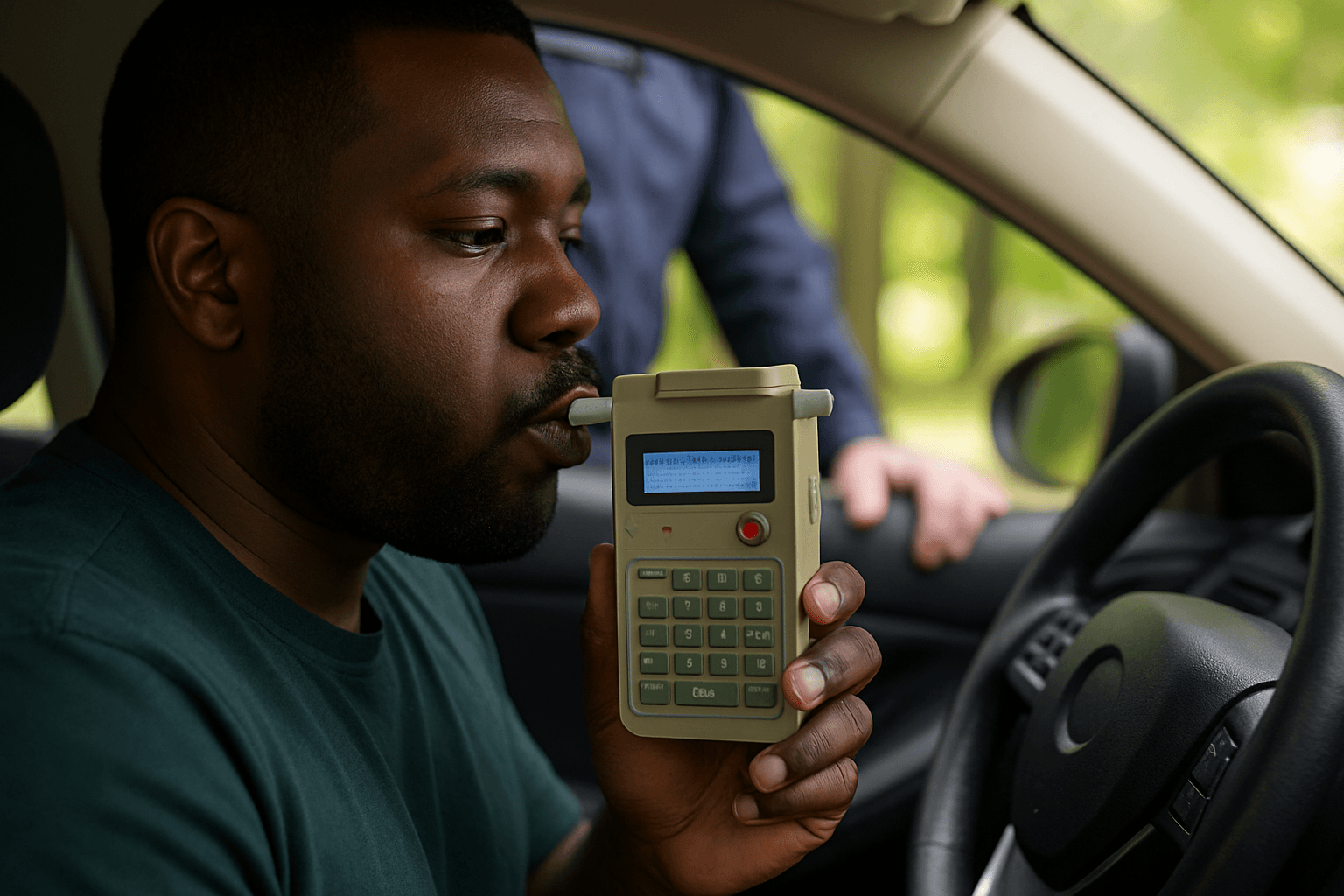
For DUI-related suspensions, Maryland's Ignition Interlock System Program (IISP) under Transportation Article §16-404.1 functions as the hardship license alternative. Eligible drivers enroll in the interlock program before the suspension takes effect, avoiding the full administrative suspension period entirely. This is not a separately issued restricted license; it's an alternative to suspension that allows continued driving with an ignition interlock device installed.
Route Restrictions Are Written Into Your OAH Order and Vary by Case
Maryland does not issue a generic restricted license with pre-set route permissions. The hearing officer defines your permitted routes based on the documentation you provide at your OAH hearing. Typical approved purposes include work, school, medical appointments, court-ordered programs, and essential family obligations like childcare transport.
You must provide specific addresses: your employer's physical location, your school campus, your medical provider's office, the treatment program facility. The hearing officer writes these addresses or general route parameters into the restriction order. Driving outside those approved routes violates your restricted license terms, even if the trip feels essential.
Maryland MVA does not accept vague documentation. "I need to drive for work" without an employer affidavit, work schedule, and job site address will not persuade the hearing officer. "I need to drive for medical appointments" without a physician's letter specifying appointment frequency and location will not be sufficient. The documentation burden is on you, and the hearing officer's decision is based on what you present at the hearing.
Compare car insurance rates in your state
Get quotes from licensed carriers — no obligation, no spam, results in minutes.
Get Your Free Quote✓ No Obligation Required✓ Licensed Carriers Only✓ Available Nationwide✓ Free to Compare
Time Restrictions Are Also Case-Specific and Defined by the OAH Hearing Officer
Time restrictions follow the same case-by-case structure. If your employer affidavit states you work Monday through Friday, 7:00 AM to 4:00 PM, the hearing officer may restrict your driving to those days and a reasonable commute window around those hours. If your medical appointments occur on specific weekday mornings, the officer may limit medical-purpose driving to those timeframes.
Maryland does not issue 24/7 restricted licenses for general errands. The restricted license is purpose-driven and time-limited to the documented need. Driving at 11:00 PM for groceries when your restriction order permits driving only for weekday work commutes is a violation, regardless of whether the errand feels necessary.
If your circumstances change after the OAH hearing, you must petition for a modification hearing. Starting a second job, enrolling in evening classes, or beginning a new medical treatment schedule does not automatically expand your restricted license privileges. You return to OAH, present updated documentation, and request amended restrictions.
Required Documentation Must Be Submission-Ready Before Your OAH Hearing
Maryland MVA and OAH require specific documentation to support your restricted license petition. For employment-related driving, you need a signed employer affidavit on company letterhead that includes your job title, work address, schedule, and a statement that your job requires driving or that public transportation is not a viable alternative. A paystub alone is not sufficient.
For DUI-related suspensions, you must provide proof of enrollment in Maryland's Ignition Interlock System Program if applicable, plus documentation from an approved alcohol education or treatment program if required by your conviction. For medical-purpose driving, a physician's letter detailing your condition, treatment schedule, appointment frequency, and the specific medical facility address is required.
If your suspension involved uninsured driving or a lapse, you must provide proof of current Maryland liability insurance coverage that meets the state's minimum requirements: $30,000 bodily injury per person, $60,000 per accident, and $15,000 property damage. SR-22 or FR-44 filing may be required depending on your violation type; the MVA will notify you if financial responsibility certification is mandatory for your case.
Courtesy copies of court orders, MVA hearing documentation, or payment receipts for reinstatement fees are also required at the OAH hearing. Missing documentation typically results in a denial or a continuance, delaying your restricted license approval by weeks.
SR-22 or FR-44 Filing Requirements Depend on Your Underlying Violation
Not all Maryland restricted licenses require SR-22 filing. DUI, DWI, uninsured driving, and reckless driving suspensions typically trigger a financial responsibility filing requirement. Point-based suspensions, unpaid ticket suspensions, and failure-to-appear cases usually do not require SR-22 unless specifically stated in your suspension notice.
Maryland requires SR-22 filing for 3 years in most DUI and uninsured motorist cases. Your insurance carrier files the SR-22 certificate electronically with Maryland MVA. If your policy lapses or cancels during the 3-year period, the carrier notifies MVA immediately, and your restricted license or full reinstatement is suspended again.
For alcohol-related suspensions with BAC ≥ 0.15, Maryland imposes a longer mandatory ignition interlock period than for BAC between 0.08 and 0.14, per Transportation Article §16-404.1. The interlock requirement runs concurrently with your SR-22 filing obligation, but the durations are not identical. Verify both timelines with MVA before assuming your restricted license obligations end at the same time.
If you do not own a vehicle, non-owner SR-22 insurance covers you when driving a borrowed or rented vehicle. Maryland MVA accepts non-owner SR-22 filings for restricted license approval as long as the certificate meets the state's liability minimum requirements.
Violating Restricted License Terms Triggers Immediate Revocation in Most Cases
Maryland MVA and the courts do not issue warnings for restricted license violations. If you are stopped driving outside your approved routes or time windows, the officer checks your restriction order, confirms the violation, and reports it to MVA. Your restricted license is revoked, and you return to full suspension status.
Common violation scenarios include driving on weekends when your restriction order permits weekday work commutes only, driving at night when your approved hours are daytime medical appointments, or driving to social events when your restriction is limited to employment and treatment programs. Each of these is a separate violation that can result in immediate revocation.
Maryland does not offer a second restricted license after a violation. You serve the remainder of your suspension period without driving privileges, then petition for full reinstatement once the suspension term ends. The reinstatement process requires payment of a $45 base reinstatement fee, proof of insurance, completion of any required alcohol education or treatment programs, and verification that your SR-22 or FR-44 filing is current if applicable.
If you have multiple simultaneous suspension reasons (such as uninsured driving plus failure to appear), each may carry its own reinstatement fee, resulting in total fees significantly higher than $45. Maryland MVA's online portal allows you to check your specific reinstatement requirements, but eligibility for online processing depends on your suspension type.
Finding Coverage That Meets Maryland's Filing and Restricted License Requirements
Carriers writing in Maryland with confirmed SR-22 filing capability include Geico, Progressive, State Farm, The General, Dairyland, Bristol West, and National General. Not all carriers write non-owner policies, and non-standard carriers may impose higher premiums for restricted license or post-suspension drivers.
Maryland's restricted license insurance market segments by driver risk profile. Standard carriers like Geico, State Farm, and Progressive typically write SR-22 policies for first-offense DUI drivers and point-based suspensions. Non-standard carriers like Bristol West, Dairyland, and The General focus on higher-risk profiles, including multiple DUI offenses, uninsured suspensions, and post-revocation reinstatements.
Premium estimates for Maryland SR-22 filers typically range from $140 to $220 per month for liability-only coverage, depending on your violation type, age, and county. Estimates based on available industry data; individual rates vary by driving history, vehicle, coverage selections, and location. Non-owner SR-22 policies typically cost less than standard policies because they exclude physical damage coverage.
Request quotes from multiple carriers before committing. Carrier appetite for restricted license drivers varies, and rate spreads between standard and non-standard carriers can exceed $100 per month for identical coverage. Maryland law prohibits insurers from canceling a policy mid-term solely because of a DUI conviction or restricted license, but they can non-renew at the policy's expiration.