Maryland grants restricted driving privileges through MVA hearing officers and court orders, but not every suspension type qualifies. The Office of Administrative Hearings decides point-based and administrative cases, while district courts handle DUI-related restricted licenses—and the state uses different application paths for different causes.
Which Maryland Suspension Types Are Eligible for Restricted Licenses
Maryland grants restricted driving privileges for DUI/DWI cases, point-based suspensions, and some administrative suspensions. The state does not use a single hardship license program—instead, you apply through either the Office of Administrative Hearings or district court depending on what triggered your suspension.
DUI and DWI cases require enrollment in the Ignition Interlock System Program before restricted privileges take effect. Point-based suspensions (8-11 points trigger probation, 12+ points trigger revocation) require a contested case hearing before an OAH hearing officer, who has broad discretion to grant work-school-medical restrictions. Administrative suspensions for breath test failures or refusals allow interlock enrollment in lieu of serving the full suspension period.
Maryland does not grant restricted licenses for unpaid child support, unpaid tickets that resulted in failure-to-appear suspensions, or out-of-state convictions that triggered reciprocal suspensions. Insurance lapse suspensions require full registration reinstatement before driving privileges return—there is no restricted license for uninsured operation.
Maryland's Two Application Paths: MVA Hearings vs District Court Orders
Point-based suspensions and administrative per se suspensions are handled by the Office of Administrative Hearings, not at an MVA counter. You must request a hearing within 10 days of receiving the Order of Suspension. The hearing officer reviews your need documentation—employer affidavit, school enrollment proof, medical appointment records—and decides whether to grant restrictions and what those restrictions will cover.
DUI and DWI restricted licenses come from district or circuit court judges during the criminal case proceedings. The court issues a restriction order after you enroll in the Ignition Interlock System Program and provide proof of SR-22 or FR-44 insurance. The court order defines your allowed routes and time windows; the MVA then processes the restriction based on that order.
Applying through the wrong channel wastes processing time. If your suspension is administrative—breath test failure, point accumulation, insurance lapse—your path is the OAH hearing. If your suspension stems from a criminal DUI conviction or pending DUI charge, your path is the sentencing or pretrial hearing in district court. The MVA does not issue restricted licenses at the counter for either track.
Compare car insurance rates in your state
Get quotes from licensed carriers — no obligation, no spam, results in minutes.
Get Your Free Quote✓ No Obligation Required✓ Licensed Carriers Only✓ Available Nationwide✓ Free to Compare
DUI and DWI Restricted License Requirements in Maryland
Maryland's Ignition Interlock System Program allows DUI and DWI offenders to avoid full suspension by enrolling in interlock before the suspension start date. Once enrolled, you receive restricted driving privileges limited to routes and times defined in your court order. Drivers with BAC ≥ 0.15 at arrest face a longer mandatory interlock period than those with BAC between 0.08-0.14 under Maryland Transportation Article §16-404.1.
You must provide proof of SR-22 or FR-44 insurance when enrolling in the interlock program. Maryland requires FR-44 for DUI cases with aggravating factors; your attorney or the MVA will specify which filing applies to your case. SR-22 filings typically remain active for 3 years after reinstatement, while FR-44 filings follow the same timeline but with higher liability minimums.
Restrictions vary by case. Most judges approve work, school, medical appointments, and ignition interlock service visits. Some orders include grocery shopping, childcare drop-off, and court-ordered programs. The restriction order will list your approved purposes and may impose time windows—7 a.m. to 7 p.m. for work commutes, for example. Violating the restriction terms triggers automatic revocation and restarts your suspension period from day one.
Point-Based Suspension Restricted License Process
Accumulating 8 to 11 points triggers probationary suspension; 12 or more points triggers full revocation. Both are handled through the Office of Administrative Hearings. You must request a hearing within 10 days of the Order of Suspension to preserve your right to challenge the suspension or request restricted privileges. Missing the 10-day window means you waive your hearing right and serve the full suspension.
The OAH hearing officer evaluates your need documentation: employer letter on company letterhead stating your work schedule and location, school enrollment verification, medical provider letters confirming recurring appointments, and any other evidence of essential travel. The officer has discretion to grant restrictions covering work, school, medical care, and in some cases grocery shopping or childcare duties.
Point-based restricted licenses do not automatically require ignition interlock unless the underlying violations included alcohol-related offenses. If your points came from speeding tickets, aggressive driving, or other non-alcohol violations, the hearing officer may grant restrictions without interlock. SR-22 insurance may still be required depending on the violations that accumulated the points—reckless driving and uninsured operation typically trigger SR-22 mandates.
Administrative Per Se Suspension and Interlock Participation
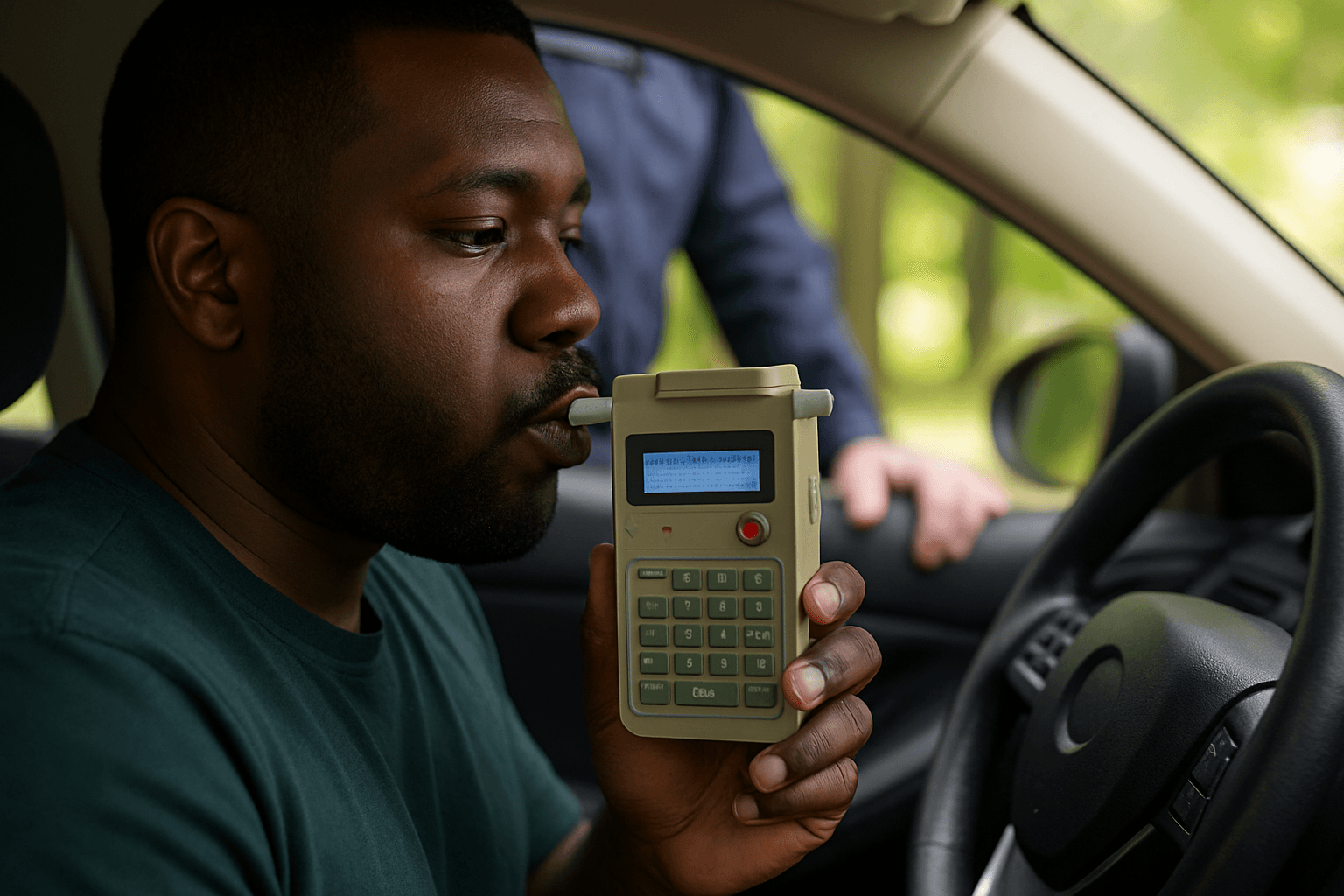
Maryland's administrative per se law under Transportation Article §16-205.1 imposes immediate suspension if you fail or refuse a breath test. A BAC ≥ 0.08 triggers a 45-day administrative suspension; refusing the test triggers a 270-day suspension. These suspensions run independently of any criminal DUI case and are processed through the MVA and OAH, not through district court.
You can avoid serving the full administrative suspension by enrolling in the Ignition Interlock System Program before the suspension takes effect. Enrollment requires proof of SR-22 or FR-44 insurance, an approved interlock vendor installation appointment, and payment of the MVA's enrollment fee. Once enrolled, you receive restricted driving privileges immediately rather than serving a hard suspension period.
The interlock alternative applies only to breath test failures and refusals. It does not apply to point-based revocations, insurance lapse suspensions, or failure-to-appear suspensions. Drivers who miss the enrollment window before their suspension start date must serve the administrative suspension period in full before reinstatement becomes possible.
Documentation Requirements for Maryland Restricted License Applications
Every restricted license application—whether filed through OAH or district court—requires proof of need. Employer affidavits must be on company letterhead, include your work schedule, job location address, and supervisor contact information. School enrollment letters must come from the registrar's office and confirm your class schedule and campus location.
Medical documentation includes provider letters confirming recurring appointment schedules, treatment locations, and why in-person visits are required rather than telemedicine. Court-ordered program participation—alcohol education classes, drug treatment, probation check-ins—requires program enrollment proof and a schedule of required attendance dates.
SR-22 or FR-44 insurance certificates must be filed electronically by your insurance carrier before the MVA will process your restricted license. The carrier submits the certificate directly to the MVA through Maryland's electronic verification system. You cannot file SR-22 forms yourself—the carrier is the filing party. Ignition interlock enrollment documentation includes the vendor's installation confirmation, device serial number, and service schedule.
What a Maryland Restricted License Allows and What It Prohibits
Maryland restricted licenses limit you to court or hearing officer-approved purposes: work, school, medical appointments, ignition interlock service visits, and in some cases grocery shopping, childcare duties, and court-ordered program attendance. The restriction order defines your allowed routes and may impose time windows—you may be restricted to driving only during your documented work hours, for example.
Recreational driving, social visits, restaurant trips, and errands beyond your approved purposes are prohibited. Driving outside your approved time windows—even for an approved purpose—violates the restriction. If your order allows work commutes from 7 a.m. to 7 p.m., driving at 8 p.m. for any reason is a violation, even if you're driving to work.
Violations trigger automatic revocation. The MVA does not issue warnings or allow appeals for restriction violations. Your restricted license is revoked, your ignition interlock enrollment is terminated, and your original suspension period restarts from the violation date. In DUI cases, the court may impose additional penalties including jail time for violating a court-ordered restriction.
Insurance Requirements: SR-22 vs FR-44 for Maryland Restricted Licenses
Maryland requires SR-22 insurance for most DUI, reckless driving, and uninsured operation suspensions. SR-22 is a certificate of financial responsibility your carrier files electronically with the MVA, confirming you carry at least Maryland's minimum liability limits: $30,000 bodily injury per person, $60,000 bodily injury per accident, $15,000 property damage, plus required PIP and uninsured motorist coverage.
FR-44 insurance applies to DUI cases with aggravating factors—high BAC, injury accidents, or repeat offenses. FR-44 requires higher liability limits than SR-22 but is less common in Maryland than in Florida or Virginia, where FR-44 is standard for all DUI filings. Your attorney or the MVA will specify which filing applies to your case when you enroll in the interlock program.
Non-owner SR-22 policies cover drivers who do not own a vehicle but need to maintain restricted driving privileges. These policies provide liability coverage when you drive a borrowed or rented vehicle and satisfy Maryland's SR-22 filing requirement. Monthly premiums for non-owner SR-22 typically range from $40 to $90 depending on your violation history and the carrier.