Maryland's restricted license process splits at the hearing stage: some suspension types require a full Office of Administrative Hearings contested case, others clear through MVA counter application. Most drivers miss the 10-day hearing request window.
Why Maryland's restricted license application splits into two separate procedural paths
Maryland offers a restricted license for most suspension types, but the application route depends on what triggered the suspension. DUI and alcohol-related suspensions route through the Ignition Interlock System Program (IISP), which functions as Maryland's hardship alternative—you enroll in the interlock program before the suspension takes effect, avoiding the hard suspension entirely. Point-based suspensions, unpaid ticket accumulations, and certain administrative violations require a contested case hearing before the Office of Administrative Hearings (OAH), not a simple MVA counter application. The hearing officer has broad discretion in granting restrictions and defining permitted routes.
The OAH hearing process surprises drivers who assume they can walk into an MVA office and file paperwork. If your suspension stems from point accumulation (8–11 points triggers probation, 12+ triggers revocation under Maryland's administrative point system), the MVA will not issue a restricted license without an OAH hearing order. You request the hearing within 10 days of receiving your Order of Suspension. Missing that window waives your right to challenge the suspension administratively. Most drivers learn this after the deadline has passed.
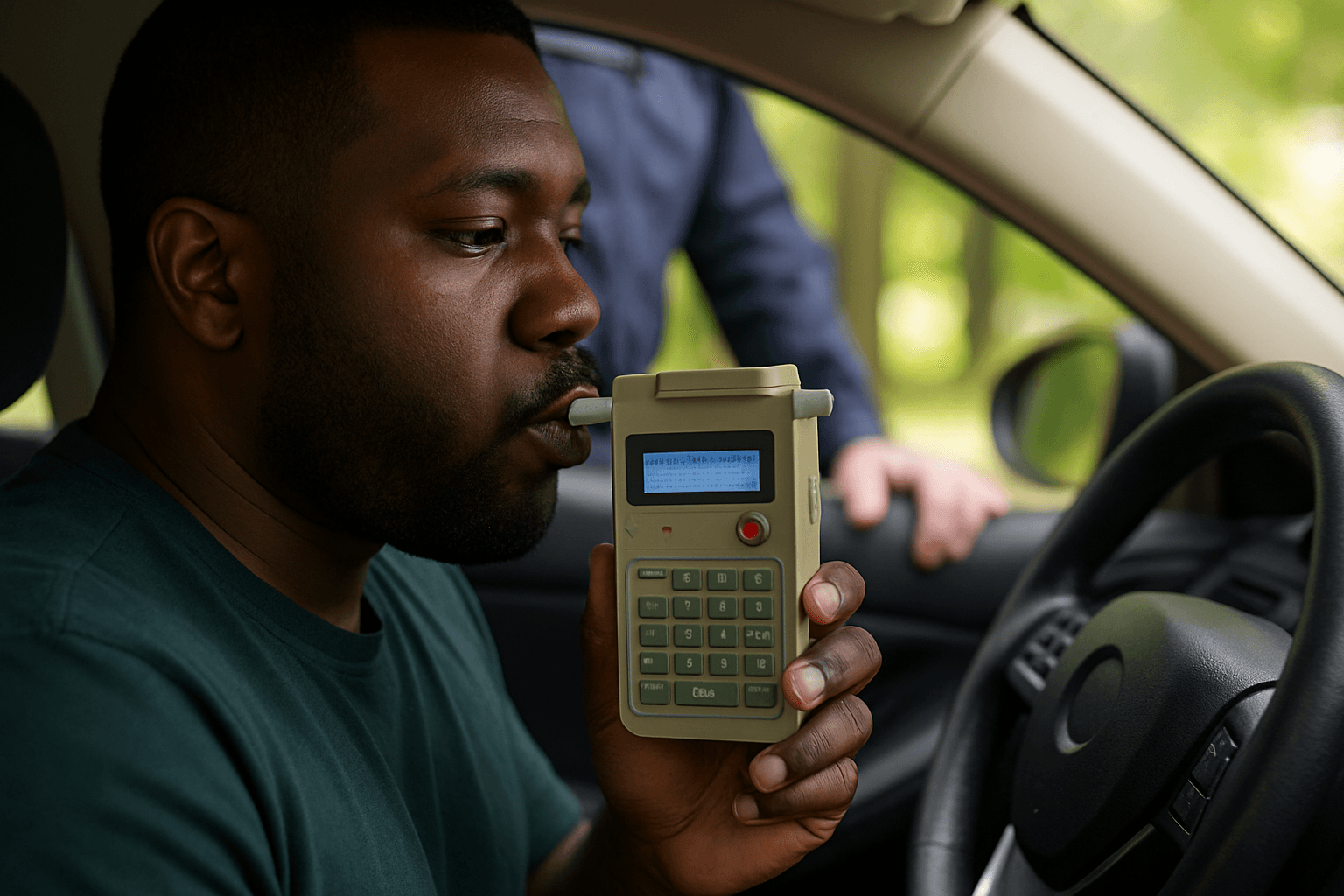
For DUI and alcohol-related suspensions, Maryland Transportation Article §16-404.1 establishes the IISP as the primary restricted-driving pathway. Drivers with BAC ≥ 0.08 face a 45-day administrative suspension under the Administrative Per Se law; refusal triggers 270 days. Enrolling in the interlock program before the suspension takes effect allows you to drive immediately with the device installed, bypassing the hard suspension period. This is not a separate restricted license—it's an enrollment alternative that replaces the suspension.
How the Office of Administrative Hearings contested case process actually works
If your suspension qualifies for OAH review, you file a hearing request with the MVA within 10 days of your suspension notice. The MVA forwards your case to OAH, which schedules a contested case hearing typically 30–45 days out. The hearing is adversarial: the MVA presents evidence supporting the suspension, you (or your attorney) argue for dismissal or restricted driving privileges. The hearing officer evaluates whether the suspension was lawful and whether restricted privileges serve a legitimate need without endangering public safety.
You must present proof of need at the hearing. Employment verification, medical appointment documentation, educational enrollment records, and detailed route maps between home, work, school, and medical facilities carry weight. The hearing officer can impose time restrictions (drive only during work hours), route restrictions (drive only on specified roads to specified destinations), or deny the request outright if documentation is weak. The restriction order itself becomes your legal authority to drive—carry it with your license at all times.
Hearing officers scrutinize consistency between stated need and requested routes. If you claim employment need but your employer letter lists remote work options two days per week, expect the officer to restrict driving to in-office days only. If medical appointments are monthly but you request unrestricted weekday driving, the restriction will likely mirror actual appointment frequency. Drivers who present vague or inflated need documentation leave the hearing with narrower restrictions than those who document precisely.
Compare car insurance rates in your state
Get quotes from licensed carriers — no obligation, no spam, results in minutes.
Get Your Free Quote✓ No Obligation Required✓ Licensed Carriers Only✓ Available Nationwide✓ Free to Compare
What ignition interlock enrollment requires and how the timeline collapses post-DUI
Maryland's IISP enrollment must occur before your administrative suspension takes effect. After a DUI arrest, you receive an Order of Suspension stating the effective date—typically 45 days from the order date for a first-offense BAC failure. You have that 45-day window to enroll in the interlock program through an MVA-approved provider, complete installation, and submit enrollment confirmation to the MVA. Once the MVA processes your enrollment, you can drive immediately with the device installed, and the 45-day hard suspension never begins.
Drivers with BAC ≥ 0.15 at the time of arrest face longer mandatory interlock periods than those with BAC between 0.08–0.14, per Maryland Transportation Article §16-404.1. The interlock device logs every start attempt, every failed breath test, every tampering event. The MVA reviews your compliance record periodically. Two consecutive missed rolling retests, one tampering event, or one attempt to drive without providing a passing sample triggers program violation proceedings, which can result in full suspension reinstatement with no restricted option.
Installation costs typically run $75–$150, monthly lease fees $60–$90, and calibration appointments (required every 30–60 days) $20–$40 per visit. Over a one-year interlock period, total out-of-pocket cost reaches $900–$1,400 before insurance premium increases. Ignition interlock insurance policies exist specifically for interlock-mandated drivers, often bundled with SR-22 filing when both are required. Budget the full cost stack before enrolling—most drivers underestimate the recurring monthly fees.
Which suspension causes qualify for restricted driving in Maryland and which close the door entirely
Maryland restricted licenses are available for DUI/DWI (through IISP), point accumulation (through OAH hearing), unpaid tickets (through OAH hearing if the ticket-related suspension allows it), and certain medical suspensions. Insurance lapse suspensions do not qualify for restricted privileges—you must reinstate full coverage, pay the reinstatement fee, and clear the lapse flag before driving legally. Child support arrears suspensions similarly offer no restricted option until the arrearage is resolved or a payment plan is approved by the court.
Failure-to-appear suspensions (for missing court dates on traffic citations) remain in effect until you appear in court and resolve the underlying case. The MVA will not process a restricted license application while an FTA suspension is active. Drivers who owe multiple suspension causes face stacked restrictions: if you have both a DUI interlock requirement and a point-based OAH restriction, you must satisfy both simultaneously. The interlock device goes on your vehicle, and your OAH-ordered route and time restrictions still apply.
Medical suspensions triggered by seizure disorders, vision loss, or other health conditions require clearance from a physician and submission of a Medical Advisory Board review before restricted privileges are considered. The MAB evaluates whether restricted driving (daytime only, local roads only, no highway driving) mitigates the medical risk sufficiently. These restrictions are more granular than employment-based restrictions and are reviewed periodically as your medical condition evolves.
What SR-22 and FR-44 filing requirements layer on top of restricted license approval
Maryland requires SR-22 filing for DUI/DWI suspensions, uninsured motorist violations, and certain repeat offenses. The SR-22 is a certificate of financial responsibility your insurer files directly with the MVA, confirming you carry at least Maryland's minimum liability coverage: $30,000 per person, $60,000 per accident bodily injury, and $15,000 property damage. The filing itself costs $15–$50 depending on the carrier, but the policy premium increase is the real cost—expect 30–80% higher premiums during the three-year SR-22 period.
For DUI cases involving serious injury or repeat offenses, Maryland may require FR-44 filing instead of SR-22. FR-44 mandates higher liability limits: $40,000 per person, $80,000 per accident bodily injury, and $20,000 property damage. This filing typically applies only in aggravated DUI cases and carries steeper premium surcharges. Not all carriers write FR-44 policies in Maryland—National General, Progressive, and Dairyland are among the few who do.
The SR-22 or FR-44 filing must remain active for the entire mandated period, typically three years. If your policy lapses or cancels, the carrier notifies the MVA electronically within 24 hours, and your restricted license (or full license, if reinstated) is suspended immediately. Drivers switching carriers mid-filing period must ensure the new carrier files an SR-22 or FR-44 before the old policy cancels. A single day of gap coverage triggers automatic suspension. SR-22 insurance is not a separate policy—it's a filing endorsement added to a standard liability policy.
How Maryland's restricted license application fee, processing time, and reinstatement fee stack up
Maryland does not charge a separate restricted license application fee for OAH hearings—the hearing itself is part of the administrative process. However, if your restricted driving order is granted, you pay a $45 reinstatement fee when you convert from restricted to full license privileges after completing your suspension term. This fee applies whether you served a hard suspension or drove under restricted conditions the entire time.
Processing time for OAH hearing decisions varies by case complexity and hearing officer availability. Expect 30–60 days from the date you file your hearing request to the date the hearing occurs, then another 10–15 days for the written decision. If the officer grants restricted privileges, the decision includes the specific terms and conditions—those terms take effect immediately upon MVA entry into the system. Carry a copy of the decision with you until your physical restricted license documentation arrives.
For IISP enrollment, processing occurs faster once you submit installation confirmation to the MVA. Most enrollments clear within 5–7 business days, allowing you to drive with the interlock device installed before the suspension effective date. The interlock program substitutes for the hard suspension—it does not add time on top of it. A driver with a 45-day administrative suspension who enrolls in IISP drives for the entire 45 days with the device, then continues under the interlock mandate for the remaining program duration (typically one year for a first offense).
What happens when you violate restricted license terms or fail an interlock rolling retest
Driving outside your OAH-ordered route or time restrictions is a criminal offense in Maryland, prosecuted as driving on a suspended license. If stopped, you face up to one year in jail and a $1,000 fine for a first offense, plus automatic revocation of your restricted privileges. The MVA does not issue warnings—one confirmed violation ends the restricted period and reinstates the full suspension. You serve the remainder of the original suspension term with no driving privileges.
Interlock program violations trigger similar consequences. A failed rolling retest (the device prompts you to blow while driving, and you fail or refuse) logs as a program violation. Two consecutive failures, one tampering event, or one attempt to start the vehicle without providing a sample results in MVA review and potential program termination. If the MVA terminates your IISP enrollment, the original administrative suspension reinstates in full, and you lose all driving privileges until the suspension term expires and you complete reinstatement.
Most drivers violate restricted terms unintentionally—stopping for groceries on the way home from work when the restriction allows only direct home-work travel, or driving on a weekend when the restriction permits Monday–Friday only. Police verify restricted license terms in real time via MDV dispatch during traffic stops. If your route, time, or purpose does not match the restriction order on file, the stop converts to a criminal charge. Carry your OAH decision or IISP enrollment confirmation with you at all times and follow the terms exactly as written.