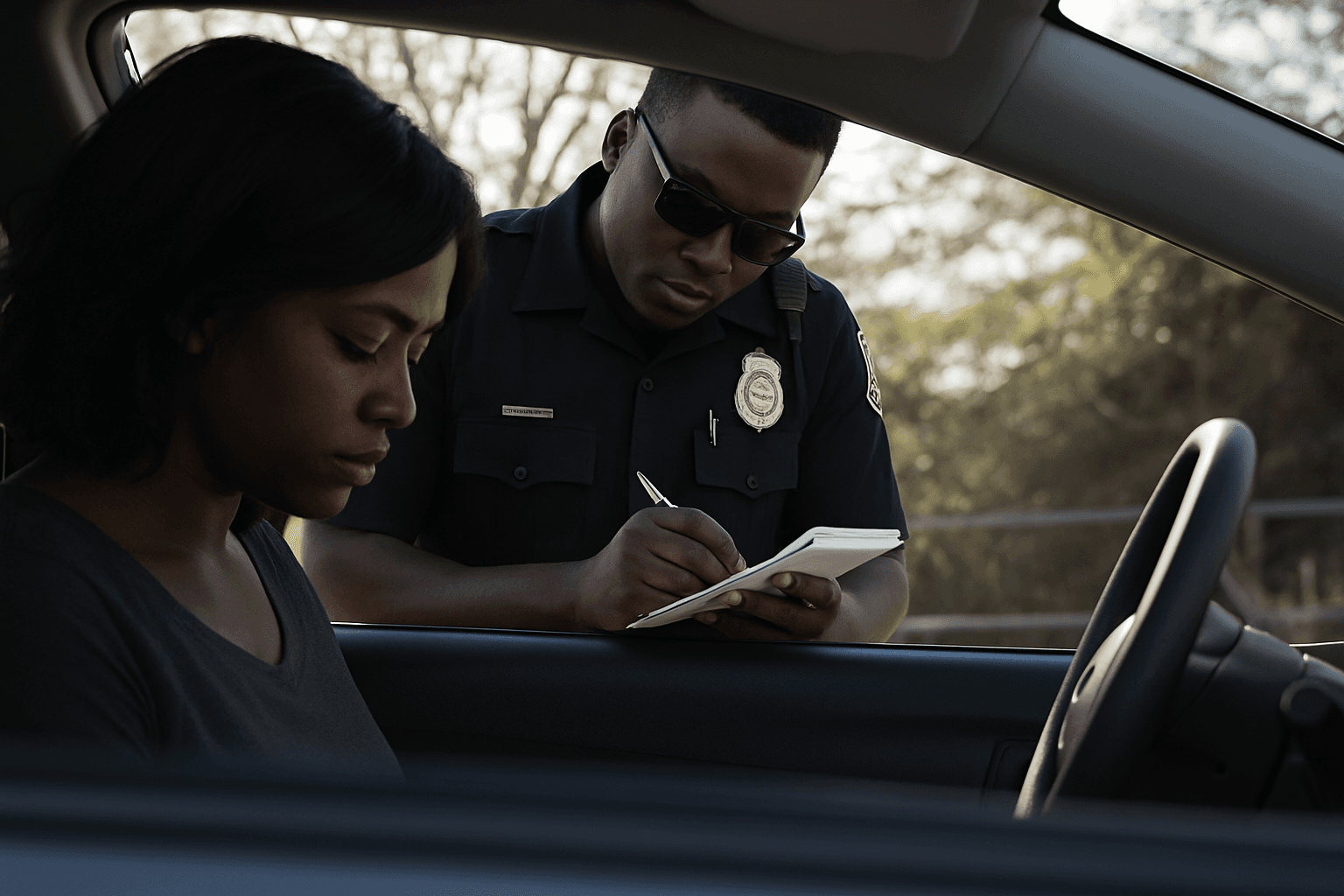
Maine requires court petition for restricted driving privileges, not a BMV administrative process. The hearing determines whether you qualify, what routes the court will approve, and whether ignition interlock installation is mandatory.
Why Maine Restricted License Applications Go Through Court, Not the BMV
Maine law routes restricted license petitions through the court system under 29-A M.R.S. § 2412, not through the Bureau of Motor Vehicles administrative process most states use. The BMV suspends your license after a qualifying violation, but only a judge can grant restricted driving privileges during that suspension period. This means you file a petition with the court that handled your case or has jurisdiction over your residence, not with the BMV.
The petition must demonstrate hardship—that losing all driving privileges imposes genuine economic or personal harm you cannot mitigate through alternatives like rideshare, public transit, or carpools. Employment is the most common hardship claim, but medical appointments, childcare responsibilities, and educational enrollment also qualify if you can document them. The court evaluates whether your need is legitimate and whether granting restricted privileges serves public safety.
Maine's court-driven pathway creates uncertainty that administrative systems avoid. A BMV clerk follows a checklist; a judge weighs competing interests. Your petition can be well-documented and still denied if the judge determines your violation history or the nature of your offense outweighs your hardship claim.
What Documents Maine Courts Require With Your Restricted License Petition
Your petition must include proof of the hardship you claim. For employment hardship, submit a letter from your employer on company letterhead stating your job title, work schedule, work address, and a statement that driving is essential to your continued employment. The letter must be recent—courts reject letters dated more than 30 days before filing. If you are self-employed, provide tax records or client contracts showing active income tied to driving.
For OUI cases, Maine requires proof of SR-22 insurance filed with the BMV before the court will consider your petition. The SR-22 certificate must show your name, the policy effective date, and the BMV as the certificate holder. Courts will not schedule a hearing without this proof on file. Non-OUI suspensions typically do not require SR-22, but the court may order it as a condition of approval if your violation involved uninsured driving or a prior insurance lapse.
You also need a copy of your BMV driving record showing the suspension and its basis. Request this directly from the Maine BMV; processing takes 5–7 business days. The petition itself must state your legal name, address, suspension effective date, the statute under which you were suspended, the specific hardship you claim, and the routes and hours you request. Most courts provide a petition form template, but availability varies by county. Call the clerk's office before filing to confirm what format they accept.
Compare car insurance rates in your state
Get quotes from licensed carriers — no obligation, no spam, results in minutes.
Get Your Free Quote✓ No Obligation Required✓ Licensed Carriers Only✓ Available Nationwide✓ Free to Compare
How Maine Judges Evaluate Restricted License Petitions at Hearing
The hearing is not a formality. The judge reviews your petition, considers objections from the district attorney or BMV, and questions you directly about your hardship claim, the routes you request, and your compliance with suspension terms to date. If your suspension arose from an OUI conviction, the judge will ask whether you have completed or enrolled in the Driver Education and Evaluation Program (DEEP), Maine's mandatory alcohol evaluation and education requirement. DEEP enrollment signals compliance; failure to enroll signals risk.
Maine judges pay close attention to whether your requested routes are truly necessary. A petition requesting unrestricted driving to and from work will be denied. You must specify exact addresses for your workplace, any required intermediate stops like childcare drop-off, and the most direct route between them. Courts approve only the routes you can justify with documentation. If your employer's letter says you work 8 a.m. to 5 p.m., your time restriction will match that schedule plus reasonable commute time—not open-ended daytime driving.
For OUI cases under 29-A M.R.S. § 2412-A, the judge will determine whether ignition interlock installation is required as a condition of approval. Maine law mandates interlock for most OUI restricted licenses. First-offense OUI suspensions carry a mandatory 30-day hard suspension period before any restricted license petition can be filed. Subsequent offenses extend that hard period. If you file before the hard period ends, the court will deny your petition outright.
What Routes and Hours Maine Courts Approve for Restricted Licenses
Maine courts define restricted driving privileges narrowly. Approved purposes typically include travel to and from work, medical appointments, court-ordered obligations like DEEP classes or probation meetings, and essential childcare or dependent care responsibilities. Grocery shopping, social visits, and personal errands are almost never approved. The court lists specific addresses you are permitted to drive to and from, and you are required to carry the court order with you whenever you drive.
Time restrictions match the documented need. If you work Monday through Friday, your restricted license will not allow Saturday driving unless you provide employer documentation of weekend shifts. If your medical appointments are scheduled for 10 a.m. every Tuesday, the court may approve a two-hour window on that day only. Courts do not issue open-ended daylight-hours permissions—every hour must be tied to a documented purpose.
Violating the route or time restrictions terminates your restricted license immediately and adds new charges. Maine law enforcement has access to court orders, and stopping a driver outside permitted hours or routes is treated as driving under suspension, which carries fines starting at $500 and potential jail time. The court will not reinstate restricted privileges after a violation.
When Maine Restricted License Petitions Are Denied and What Happens Next
Judges deny petitions when the hardship claim is insufficiently documented, when the violation history suggests high risk, or when the nature of the offense—particularly OUI with aggravating factors like high BAC, refusal to test, or injury to another person—outweighs the hardship. If your petition is denied, you may file a new petition after addressing the deficiencies the judge identified, but there is no guaranteed approval timeline.
Denial does not shorten your suspension period. If you were suspended for six months and your petition is denied at month two, you serve the remaining four months without restricted driving privileges unless a subsequent petition succeeds. Courts impose waiting periods between petitions to prevent repeated filings without substantive changes. Expect at least 30 days between attempts, longer if the first denial cited compliance concerns.
If your suspension arose from unpaid fines or failure to appear, restricted license petitions are rarely successful until you resolve the underlying issue. Maine courts view financial non-compliance as evidence you will not comply with restricted license conditions. Pay the fines, attend the hearing, or satisfy the judgment before filing a petition.
How SR-22 Insurance Filing Works With Maine Restricted Licenses
OUI-related restricted licenses in Maine require SR-22 insurance filed with the Bureau of Motor Vehicles before the court will grant the petition. The SR-22 is a certificate your insurer files directly with the BMV certifying you carry at least Maine's minimum liability coverage: $50,000 per person, $100,000 per accident for bodily injury, and $25,000 for property damage. The certificate costs $15–$50 depending on the carrier, and the policy itself typically costs $140–$250 per month for drivers with OUI suspensions.
SR-22 filing is continuous. If your policy lapses or is canceled, the insurer notifies the BMV within 10 days, and your restricted license is revoked automatically. You must maintain SR-22 coverage for the entire duration the court orders it—typically three years for first-offense OUI, longer for subsequent offenses. The filing period begins on the date the BMV receives the certificate, not the date your restricted license is granted.
If you do not own a vehicle, non-owner SR-22 insurance satisfies the Maine filing requirement. Non-owner policies provide liability coverage when you drive a vehicle you do not own, such as a borrowed car or rental. Premiums run $35–$70 per month for non-owner SR-22, significantly lower than standard owner policies for suspended drivers.
Cost Structure for Maine Restricted License Application and Compliance
The restricted license petition itself does not carry a state-mandated application fee, but many courts charge filing fees ranging from $25 to $100 depending on the county. Call the clerk's office before filing to confirm the exact amount and acceptable payment methods. If you hire an attorney to draft the petition or represent you at the hearing, fees typically range from $500 to $1,500 depending on case complexity.
If your restricted license requires ignition interlock installation, expect $75–$150 for device installation, $60–$90 per month for monitoring and calibration, and $50–$100 for removal once the restriction period ends. Interlock vendors must be approved by the Maine BMV; the BMV maintains a current list on its website. Unapproved devices will not satisfy the court order.
SR-22 insurance premiums, interlock costs, and court filing fees stack. A typical first-offense OUI restricted license in Maine costs approximately $250–$350 upfront (petition filing, SR-22 certificate, interlock installation) and $200–$340 per month during the restriction period (insurance premium plus interlock monitoring). Full reinstatement after the suspension ends requires a $50 BMV reinstatement fee, completion of DEEP, and proof of continuous SR-22 coverage for the court-ordered period.