Louisiana grants restricted licenses during suspension, but they carry ignition interlock requirements and route limits most drivers don't anticipate. Here's what you can and can't do under each license type.
What Louisiana Calls a Hardship License and When You Can Get One
Louisiana issues a Restricted License during suspension periods, not a hardship license. The application runs through the Office of Motor Vehicles (OMV), not through district courts. You cannot apply immediately after a DUI suspension—Louisiana law mandates a 90-day hard suspension period for first-offense DUI before restricted driving becomes available.
The restricted license is not available for all suspension triggers. DUI and points-based suspensions qualify. Uninsured motorist violations also qualify once you file SR-22 proof of financial responsibility with the OMV. Unpaid fines and child support suspensions do not qualify for restricted licenses—those require full reinstatement before you can drive legally again.
Every restricted license for DUI-related suspensions requires enrollment in Louisiana's Ignition Interlock Device (IID) program under La. R.S. 32:378.2. The device stays installed for the duration of your restricted license period and often beyond, into your full reinstatement. If you assume restricted driving means freedom from ignition interlock, Louisiana's system will correct that assumption when you apply.
Restrictions That Apply to Louisiana's Restricted License
Louisiana's restricted license limits you to driving for employment, school, medical appointments, and other OMV-defined necessary purposes. You cannot use it for social driving, errands unrelated to work or medical care, or weekend trips. The OMV does not issue unrestricted hardship licenses—every restricted license carries route and purpose limitations.
The ignition interlock device records every failed breath test and every attempt to start the vehicle outside your approved driving windows. Louisiana OMV monitors IID data through your service provider. If the device logs violations—failed tests, tampering attempts, or driving outside approved routes—the OMV can revoke your restricted license without a hearing under administrative authority granted by La. R.S. 32:415.1.
Time-of-day restrictions apply in some cases, especially for employment-only restricted licenses. If your job requires night shifts or irregular hours, document that fact in your OMV application with employer verification. Missing that documentation up front can result in a restricted license that doesn't align with your actual work schedule, forcing you to reapply or risk driving outside permitted hours.
Compare car insurance rates in your state
Get quotes from licensed carriers — no obligation, no spam, results in minutes.
Get Your Free Quote✓ No Obligation Required✓ Licensed Carriers Only✓ Available Nationwide✓ Free to Compare
How Much Louisiana's Restricted License Costs and How Long It Takes
The OMV application itself does not carry a published flat fee in Louisiana's statutes, but you will pay layered costs: the ignition interlock device installation ($75–$150 depending on provider), monthly IID service fees ($60–$90 per month), SR-22 filing fees ($25–$50 from your insurer), and premium increases that typically range from $90 to $200 per month for drivers with DUI suspensions.
Processing time varies by OMV office and suspension type. Most restricted license applications are reviewed within 10 to 20 business days after submission, but incomplete applications—missing proof of employment, missing SR-22 filing confirmation, or missing IID enrollment—add weeks to the timeline. If your suspension stems from a DUI, you cannot start the clock until the 90-day hard suspension expires.
The cost stack for a DUI-triggered restricted license in Louisiana typically totals $2,400 to $3,600 over the first year: IID installation and 12 months of service ($900–$1,200), SR-22 premium increases ($1,080–$2,400 annually), and OMV processing and documentation fees. Most drivers budget for the restricted license application but miss the recurring IID service fees that continue every month until the device is removed.
What Changes When You Move From Restricted to Full License
A full Louisiana driver's license removes route and purpose restrictions, but it does not automatically end your ignition interlock requirement. If your original suspension was DUI-related, the IID mandate often extends beyond the restricted license period into your full reinstatement under La. R.S. 32:661 et seq. You cannot remove the device until OMV issues a formal release—driving with a full license while ignoring an active IID order violates Louisiana implied consent law.
The $60 base reinstatement fee cited in La. R.S. 32:415.1 applies when you transition from restricted to full license, but additional fees layer depending on your suspension type. DUI reinstatements typically require completion of a state-approved substance abuse program, payment of all court fines and fees, and proof that your SR-22 filing remains active. Missing any of those conditions delays full reinstatement even if your restricted license period has expired.
Your insurance premium does not drop immediately when you move to a full license. SR-22 filing requirements persist for three years from the conviction date for DUI suspensions in Louisiana. Carriers price SR-22 policies based on the underlying violation, not the license type. A full license with an SR-22 filing still carries higher premiums than a clean-record full license—expect rates to remain elevated until the SR-22 filing period ends and the violation ages off your record.
Insurance Requirements That Apply to Both License Types
Louisiana requires SR-22 proof of financial responsibility for most DUI and uninsured motorist suspensions, filed directly by your insurer with the OMV. The SR-22 is not a separate insurance policy—it is a certificate your carrier submits confirming you carry at least Louisiana's minimum liability limits: $15,000 per person for bodily injury, $30,000 per accident for bodily injury, and $25,000 for property damage.
You must maintain continuous SR-22 coverage without lapses for the entire filing period, typically three years for DUI suspensions. If your policy cancels or lapses for nonpayment, your insurer notifies the OMV within 10 days, and the OMV suspends both your restricted license and your full license immediately. Reinstatement after an SR-22 lapse requires refiling the certificate, paying a new suspension fee, and waiting through another processing period.
Non-owner SR-22 policies cover drivers who do not own vehicles but need to meet Louisiana's filing requirement. If you lost your vehicle, sold it during suspension, or rely on borrowed cars, a non-owner policy satisfies the OMV's SR-22 mandate at lower premiums than standard policies—typically $40 to $80 per month. The non-owner policy does not cover the vehicle itself; it covers your liability when you drive someone else's car with permission.
What Happens If You Drive Outside Your Restricted License Limits
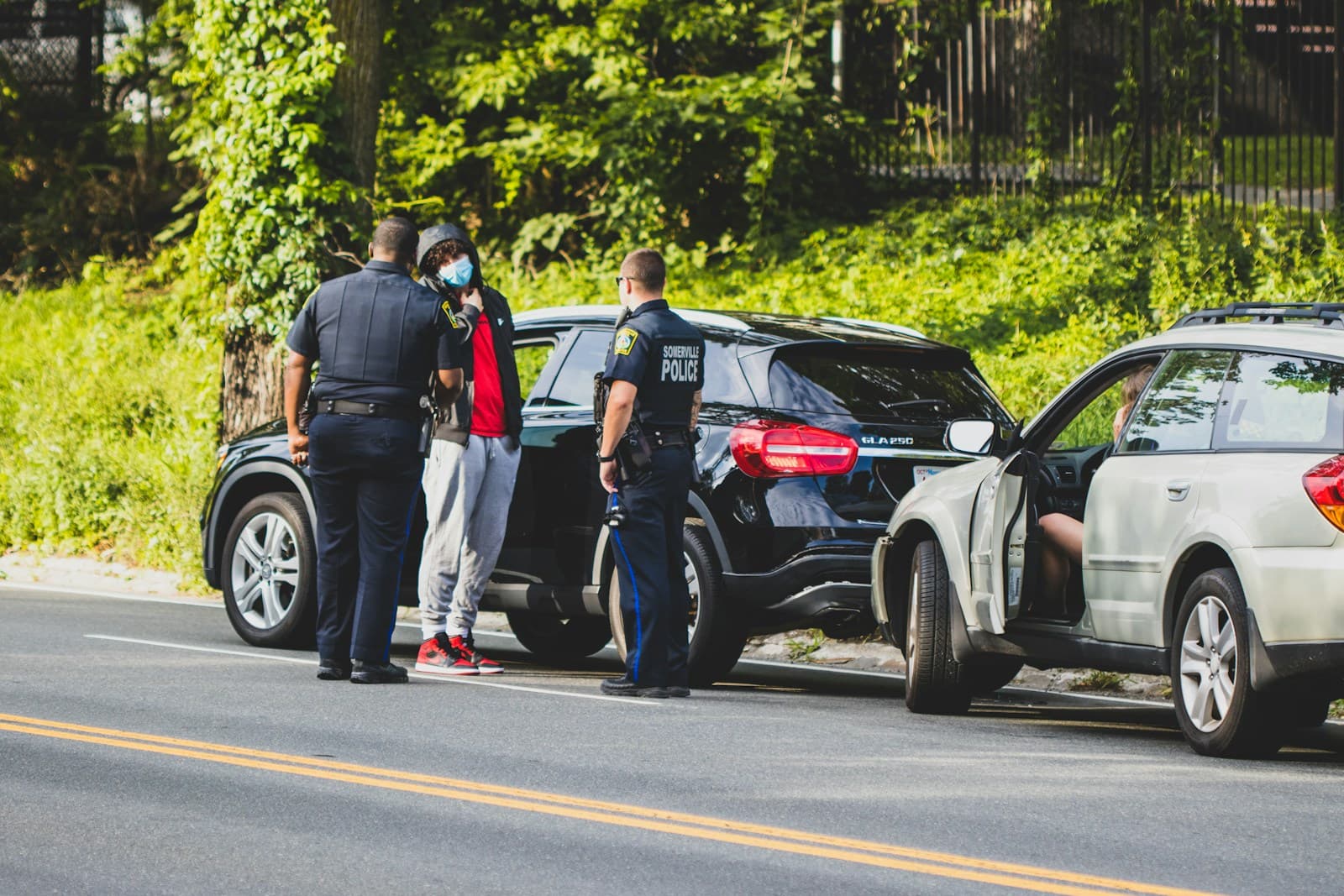
Louisiana treats restricted license violations as driving under suspension, a criminal offense under La. R.S. 32:415. If law enforcement stops you driving outside your approved routes, outside permitted hours, or for non-approved purposes, you face immediate arrest, vehicle impoundment, and revocation of your restricted license without appeal.
The ignition interlock device creates an evidence trail. Every failed breath test, every start attempt logged outside approved times, and every circumvention attempt is stored in the device and uploaded to your IID service provider, who reports violations to the OMV. Even if law enforcement does not catch you in the act, the device data can trigger administrative revocation when the OMV reviews your compliance record at your next checkpoint.
A restricted license revocation extends your total suspension period and often eliminates eligibility for another restricted license during the remaining suspension. If your original suspension was 180 days and you lose your restricted license at day 120 for a violation, you serve the remaining 60 days without driving privileges and may face additional penalties for the underlying driving-under-suspension charge.
How to Find SR-22 Coverage That Meets Louisiana OMV Requirements
Not all carriers write SR-22 policies in Louisiana, and not all carriers accept drivers with recent DUI convictions. Carriers confirmed writing SR-22 in Louisiana include State Farm, GEICO, Progressive, National General, Bristol West, Direct Auto, and The General. Standard-tier carriers like Allstate and Farmers may decline DUI-related SR-22 applications or price them outside competitive range.
Non-standard carriers specialize in high-risk SR-22 filings and often provide faster approval and lower down payments than standard carriers. Bristol West, Direct Auto, and The General operate Louisiana storefronts and online quote systems for suspended-license drivers. Monthly premiums for DUI-related SR-22 policies in Louisiana typically range from $140 to $250 per month depending on age, parish, and violation history.
Get quotes from at least three carriers before committing. SR-22 premium variation between carriers in Louisiana often exceeds $50 per month for identical coverage. The OMV does not care which carrier files your SR-22—it cares only that the filing remains active and meets minimum liability limits. Choose the carrier that offers continuous coverage at a price you can sustain for the full three-year filing period.