Louisiana's Restricted License program requires SR-22 filing, ignition interlock enrollment, and pre-approved route documentation before the OMV issues any driving privileges. Most denials stem from incomplete hardship-need documentation, not the underlying violation.
What Louisiana's Restricted License Actually Permits
Louisiana's Restricted License allows driving only for employment, school, medical appointments, and other court- or OMV-defined necessary purposes during an active suspension period. The license does not restore unrestricted driving privileges. You cannot use it for errands, social trips, or any purpose outside the OMV's approved hardship categories.
The Office of Motor Vehicles administers the program under La. R.S. 32:415.1. For DUI-related suspensions, a mandatory hard suspension period—typically 90 days for first-offense DUI—must be served before any restricted driving becomes available. During the hard suspension window, no driving is permitted under any circumstance.
Ignition interlock device enrollment is required as a condition of any restricted license issued following a DUI suspension. This requirement is statutory under Louisiana implied consent and DUI law (La. R.S. 32:661 et seq. and 14:98). The device must remain installed for the full restricted license period and any subsequent reinstatement period the OMV specifies.
What Documentation the OMV Requires Before Approval
The OMV requires proof of employment or hardship need, SR-22 proof of financial responsibility, a completed OMV application, and payment of applicable fees. Proof of employment means a letter on company letterhead stating your job title, work schedule, and work address. Vague letters that say "this person works here" without route-specific details trigger denials.
For DUI-related suspensions, SR-22 filing is mandatory. Your insurer must file the SR-22 certificate directly with the OMV before the restricted license can be issued. The SR-22 must remain active for the full suspension period—typically three years for first-offense DUI. If your insurer cancels the policy or the SR-22 lapses, the OMV suspends the restricted license immediately.
If your hardship need is medical appointments rather than employment, you need a letter from your healthcare provider stating the condition being treated, the appointment frequency, and the facility address. If your hardship need is education, you need a letter from the registrar stating your enrollment status, class schedule, and campus address. Generic statements do not satisfy the OMV's documentation standard.
Compare car insurance rates in your state
Get quotes from licensed carriers — no obligation, no spam, results in minutes.
Get Your Free Quote✓ No Obligation Required✓ Licensed Carriers Only✓ Available Nationwide✓ Free to Compare
How Route and Time Restrictions Work in Practice
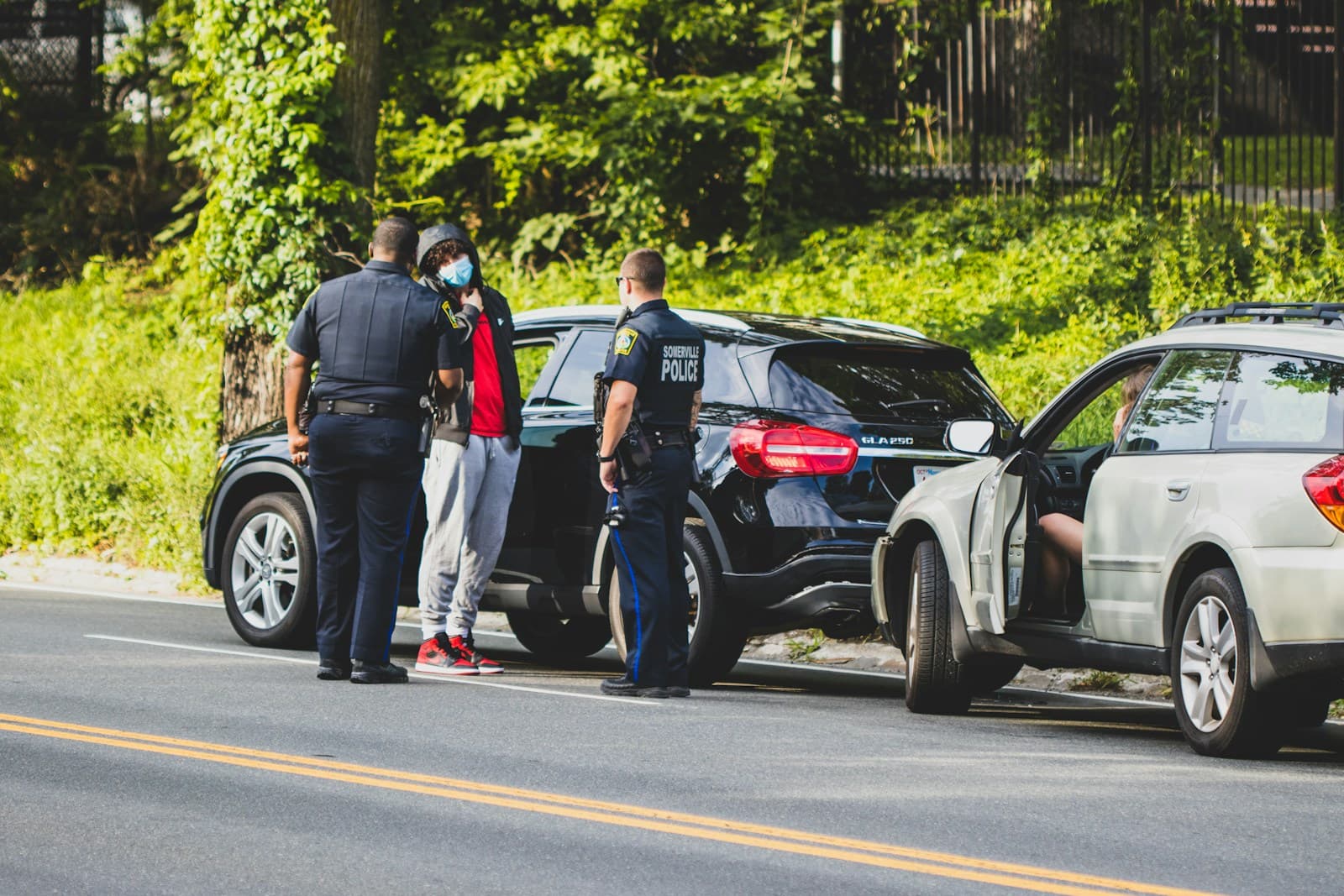
The OMV restricts you to travel for the specific purposes listed on your approved application. If your employer is located at 1234 Main Street in Baton Rouge and your approved route runs from your home address to that address, driving to a second job site or stopping for errands invalidates the restricted license for that trip. Law enforcement can verify your approved routes during any traffic stop.
Time restrictions typically align with your documented work schedule or appointment times. If your employer letter states you work Monday through Friday, 8:00 a.m. to 5:00 p.m., driving on Saturday morning for any reason other than a separately approved hardship purpose violates the restriction. The OMV does not issue blanket permission for "work-related driving"—the approval is route-specific and time-specific.
Violating route or time restrictions while operating under a restricted license triggers immediate revocation. Louisiana law treats violation of restricted license terms as driving under suspension, which carries criminal penalties including fines up to $500, additional jail time up to six months, and extension of the original suspension period. The OMV will not reissue a restricted license after a violation-driven revocation.
What Happens If Your Hardship Need Changes Mid-Suspension
If you change jobs, move to a new address, or your work schedule changes, you must file an amended application with the OMV within 10 days. Driving to a new job site using the old approved route counts as driving under suspension. The OMV requires the same documentation standard for amendments: a new employer letter on company letterhead stating the updated job title, schedule, and address.
The OMV does not automatically approve amendments. If your new job is farther from your home than the original approved route, the OMV may require an interlock device service report showing no violations before approving the expanded route. If your new work schedule includes overnight shifts or weekend hours that were not part of the original approval, expect processing delays of 10 to 15 business days while the OMV reviews the change.
If your hardship need ends entirely—for example, you lose your job or finish school—the restricted license remains valid for the other approved purposes listed on your application. If employment was your only approved hardship purpose and you lose that job, you cannot legally drive until you secure new employment and file an amended application with updated documentation.
How Ignition Interlock Device Requirements Layer Into Restrictions
Louisiana requires ignition interlock device installation as a precondition for restricted license issuance after DUI suspensions. The device must be installed by an OMV-approved vendor before you can apply for the restricted license. The installation receipt and vendor certification form are part of the required documentation package.
The device logs every start attempt, every failed breath test, and every missed rolling retest. The OMV receives monthly reports from the interlock vendor. Any failed test, any missed rolling retest, or any attempt to tamper with the device triggers a violation flag. Three violation flags in a six-month period result in restricted license revocation and extension of the original suspension period.
The interlock device requirement continues after the restricted license period ends. For first-offense DUI in Louisiana, the total interlock period is typically one year from the date of restricted license issuance, even if your full driving privileges are restored before the year ends. You cannot remove the device until the OMV issues a removal authorization letter.
What Finding Coverage With SR-22 Filing Costs During Restriction
SR-22 filing adds approximately $25 to $50 to your policy as a one-time or annual administrative fee, depending on the carrier. The larger cost driver is the premium increase triggered by the DUI conviction or suspension event itself. Louisiana drivers with DUI suspensions typically pay $140 to $280 per month for liability coverage with SR-22 filing, compared to $85 to $140 per month for drivers with clean records.
If you do not own a vehicle but need SR-22 filing to obtain a restricted license, non-owner SR-22 insurance provides the required proof of financial responsibility without covering a specific vehicle. Non-owner policies cost approximately $30 to $70 per month in Louisiana, depending on your violation history and the length of the SR-22 filing period.
Carriers writing SR-22 policies in Louisiana include Progressive, GEICO, State Farm, Bristol West, Direct Auto, National General, and The General. Not all carriers write non-owner policies, and not all carriers accept drivers with recent DUI convictions. If your current insurer will not file SR-22 or quotes a rate above $300 per month, compare quotes from non-standard carriers that specialize in high-risk driver coverage. Estimates based on available industry data; individual rates vary by driving history, vehicle, coverage selections, and location.