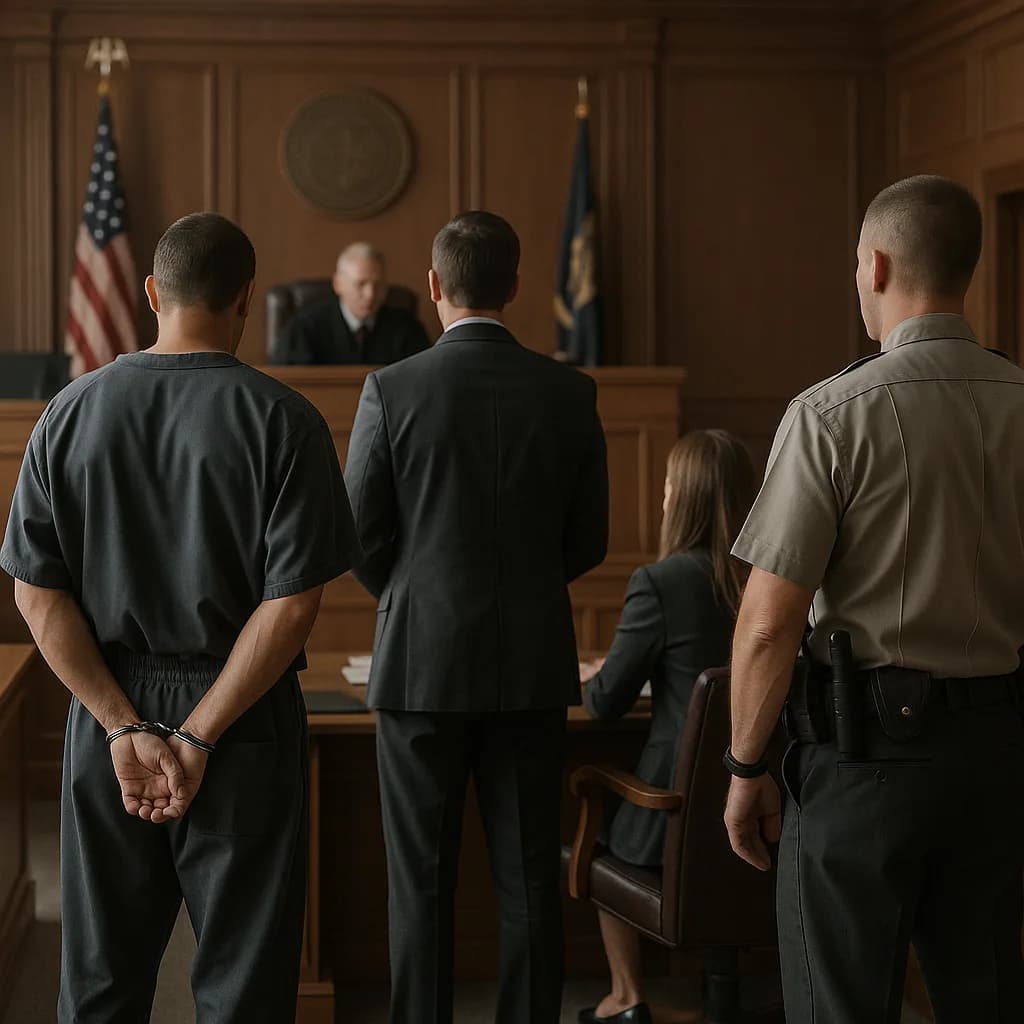
Kentucky's District Courts define your approved routes and hours when granting a Hardship License — and ignition interlock installation is mandatory. Here's how to document what you need and avoid petition denial.
What Defines a Hardship License in Kentucky?
Kentucky's Hardship License allows limited driving during a suspension period, but the court — not the DMV — decides what you can drive for and when. You petition the District Court in the county where your suspension was issued. The court reviews your hardship claim, sets the routes you may drive, and defines the hours you're allowed on the road. If approved, the Kentucky Transportation Cabinet issues the physical license after you file SR-22 proof of insurance.
This is not a DMV application. No administrative hearing. No standard form you submit online. You file a petition, attend a court hearing, and convince a judge that your need is genuine and your restrictions enforceable. The judge's order becomes your driving authority.
Every Hardship License in Kentucky requires ignition interlock installation for the full suspension period. No exceptions. Even if your suspension was not DUI-related, the interlock is mandatory. This is a legislative requirement under KRS 189A.340, not a discretionary condition.
Approved Purposes: What Kentucky Courts Will and Won't Allow
Kentucky judges approve driving for employment, school enrollment, medical appointments, and court-required activities. These are the traditional categories. Employment includes driving to and from your workplace, and in some cases driving as part of your job if the employer submits documentation that your license is required for the position.
Medical necessity includes your own appointments and, in many counties, driving a dependent to necessary medical care. School enrollment applies to both your own attendance and transporting minor children to school if no other household member can do so. Court-approved purposes include probation check-ins, DUI education classes, and interlock service appointments.
What judges rarely approve: grocery shopping, errands, recreational travel, or visiting family. Some counties allow "essential household errands" if you can prove no other household member holds a valid license, but this is not guaranteed. Jefferson County and Fayette County courts are more lenient with essential-errands claims than rural district courts. If your petition lists vague purposes, expect denial.
Compare car insurance rates in your state
Get quotes from licensed carriers — no obligation, no spam, results in minutes.
Get Your Free Quote✓ No Obligation Required✓ Licensed Carriers Only✓ Available Nationwide✓ Free to Compare
How Route Restrictions Work in Kentucky
The court order specifies exact routes or geographic boundaries. You do not get blanket permission to drive anywhere within the county. Most orders list the physical addresses you may travel between: home address to work address, home to school, home to medical provider. Some judges define a mileage radius from your residence. Others list specific street names and intersections.
You must document every location in your petition. Submit your employer's address on company letterhead. Submit your child's school address with enrollment verification. Submit your medical provider's address with appointment records. If you later need to add a location — a new job, a new doctor — you petition the court for an amended order. Driving to an unapproved location is a Class A misdemeanor in Kentucky, punishable by up to 12 months in jail and immediate license revocation.
Jefferson County and Fayette County courts sometimes issue broader geographic approvals — "within Jefferson County for employment and medical purposes" — but rural district courts typically demand specific routes. Assume the stricter standard when preparing your petition.
Time Restrictions: When You're Allowed to Drive
The court defines the hours you may drive, usually tied to your employment schedule or appointment times. A typical order reads: "Monday through Friday, 7:00 AM to 6:00 PM, for travel to and from employment and medical appointments." If you work night shifts, document that in your petition with your employer's shift schedule on company letterhead.
Time restrictions are not suggestions. Driving outside your approved hours — even to the same approved location — violates the order. If your work schedule changes after the court issues your Hardship License, you must petition for an amended order before the new schedule starts. Many drivers are arrested during their commute because they started driving an hour earlier than their original petition stated.
Some judges allow a 30-minute buffer before and after approved hours to account for traffic or early arrival. Others do not. Your order will state whether a buffer exists. If it doesn't, leave early and plan for delays. A flat tire does not excuse driving outside your time window.
Required Documentation: What the Court Needs to See
Kentucky requires four categories of documentation before the court will consider your petition: proof of hardship, proof of SR-22 insurance, payment of court costs, and ignition interlock installation confirmation. Proof of hardship means employment records, school enrollment verification, or medical necessity documentation. An employer affidavit on company letterhead stating your job requires a driver's license is the strongest evidence for employment hardship. Pay stubs alone are not sufficient.
Proof of SR-22 insurance must come from a licensed carrier writing in Kentucky. The SR-22 certificate lists your name, policy number, and coverage effective date. You must file SR-22 before your hearing — not after the court grants your petition. Most carriers issue SR-22 certificates within 24 hours of policy purchase. If you own a vehicle, you need owner SR-22. If you don't own a vehicle, you need non-owner SR-22.
Court costs vary by county. Jefferson County typically charges $150 to $250 in filing and hearing fees. Rural counties may charge less. Call the District Court clerk in your county before filing to confirm the exact amount. Ignition interlock installation must happen before your hearing in most counties, though some judges allow installation within 10 days of approval. Bring the installation receipt and the service provider's certification letter to your hearing.
How DUI Offenses Change Hardship Eligibility
Kentucky allows Hardship Licenses for DUI suspensions, but you must serve a mandatory hard suspension period first. A first DUI offense under KRS 189A.010 requires a 30-day hard suspension before you become eligible to petition for a Hardship License. During those 30 days, no driving is permitted for any reason. A second DUI offense within 10 years requires 12 months of hard suspension. Third and subsequent offenses are generally ineligible for hardship relief.
Kentucky's 2020 SB 133 created the Ignition Interlock License (IIL) as an alternative pathway for first-offense DUI cases. Drivers who install an approved ignition interlock device may apply for an IIL immediately after conviction, bypassing the 30-day hard suspension entirely. This is a distinct program from the traditional Hardship License. The IIL allows broader driving privileges but requires interlock for the full suspension period and compliance with all DUI education and treatment requirements.
If you were convicted of DUI and your suspension notice arrived more than 30 days ago, you've likely completed your hard period and are eligible to petition for a Hardship License. If your conviction was recent, confirm your eligibility date with the Kentucky Transportation Cabinet before filing.
What Happens If You Violate Your Hardship License
Driving outside your approved routes, outside your approved hours, or without ignition interlock operational is driving on a suspended license in Kentucky, classified as a Class A misdemeanor. Conviction carries up to 12 months in jail and a $500 fine. The court will revoke your Hardship License immediately, and you will serve the remainder of your original suspension with no hardship relief.
Ignition interlock violations are reported to the court and the Kentucky Transportation Cabinet. If you attempt to start the vehicle with alcohol on your breath, if you skip a required calibration appointment, or if you tamper with the device, the service provider notifies the state within 48 hours. Most counties revoke hardship privileges after a single interlock violation. There is no appeal.
Police enforce Hardship License restrictions during traffic stops. Carry your court order, your physical license, and your ignition interlock service log in your vehicle at all times. If you cannot produce the court order during a stop, the officer may arrest you for driving on a suspended license even if you were complying with your restrictions.
How to Get SR-22 Insurance for Your Hardship License
SR-22 is not a separate insurance policy. It is a certificate your carrier files with the Kentucky Transportation Cabinet confirming you carry at least the state's minimum liability coverage: $25,000 per person for bodily injury, $50,000 per accident, and $25,000 for property damage. Kentucky also requires personal injury protection (PIP) on all policies. Most carriers charge a one-time filing fee of $25 to $50 to submit the SR-22 certificate.
Not every carrier writes SR-22 policies in Kentucky. Progressive, Geico, State Farm, Dairyland, Bristol West, and National General all file SR-22 in Kentucky and specialize in high-risk driver coverage. If your current carrier does not offer SR-22 filing, you must switch carriers. Shopping multiple quotes is critical — SR-22 premiums for suspended-license drivers in Kentucky typically range from $140 to $250 per month depending on your violation, age, and county.
If you do not own a vehicle, you need non-owner SR-22 insurance. This covers you when driving a vehicle you do not own — a borrowed car, a rental, or a company vehicle. Non-owner policies are cheaper than standard policies because they do not cover a specific vehicle. Expect $50 to $90 per month. The Kentucky Transportation Cabinet accepts non-owner SR-22 for Hardship License purposes as long as the coverage meets state minimums.