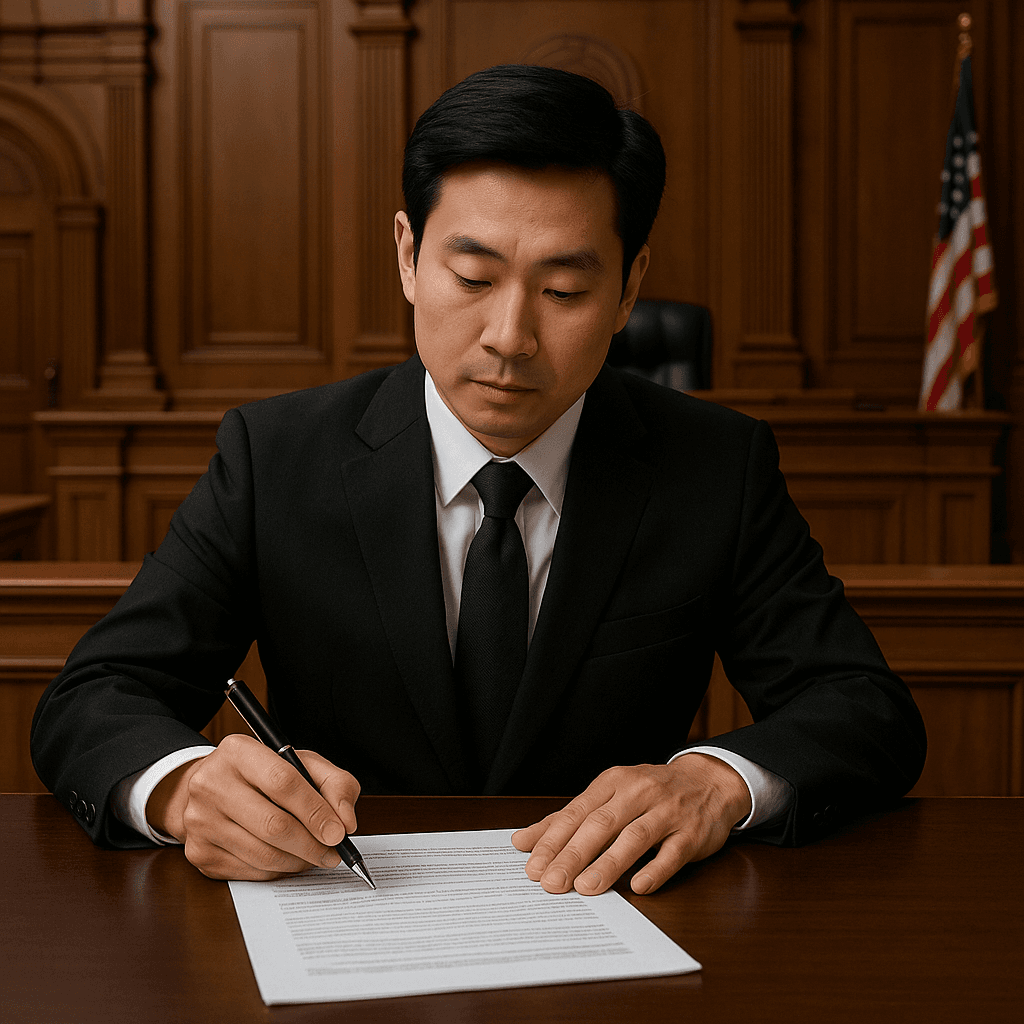
Kentucky routes hardship license applications through District Court, not the Transportation Cabinet. The court controls approval timelines, county filing fees vary, and ignition interlock installation is mandatory before approval—even for non-DUI points suspensions.
Why Kentucky District Court Controls Your Hardship License Application
Kentucky routes all hardship license petitions through District Court, not the Kentucky Transportation Cabinet (KYTC). You file a petition in the District Court where you live, the judge reviews your case, and the judge decides whether to grant restricted driving privileges. The Transportation Cabinet does not process hardship applications administratively—this is a judicial hearing, not a DMV form.
Because applications go through individual District Courts, processing times and filing fees vary by county. Jefferson County (Louisville) and Fayette County (Lexington) use different administrative procedures than rural district courts. Some counties schedule hearings within two weeks; others take 45 days. Call the clerk's office in your county before filing to confirm current docket timelines and exact filing costs—the $40 KYTC reinstatement fee is separate from court costs.
The judge controls approval conditions: routes, hours, and duration. KYTC enforces whatever the court orders, but the court writes the order. If your petition says "work only" and you drive to a grocery store, you violate a court order—not just a DMV restriction.
Ignition Interlock Requirement for All Hardship Licenses in Kentucky
Kentucky mandates ignition interlock device (IID) installation before the court grants a hardship license, regardless of suspension cause. DUI cases require IID under KRS 189A.340, but points suspensions, uninsured violations, and even unpaid-tickets suspensions trigger the same IID requirement once you petition for hardship driving privileges.
You must contract with a KYTC-approved IID vendor, install the device, and present proof of installation to the court before the judge signs the order. Installation costs range from $75 to $150 upfront, then $60 to $90 per month for calibration and monitoring. The court does not waive this requirement—if you cannot afford IID, you cannot obtain a hardship license in Kentucky.
The IID stays installed for the duration of your hardship license period. For first-offense DUI, Kentucky's 2020 SB 133 created the Ignition Interlock License (IIL) as a distinct alternative to the traditional hardship license. Drivers who install an approved IID may obtain an IIL, potentially bypassing the 30-day hard suspension period entirely—this is a significant bifurcation that practitioners must distinguish. If you already have a DUI conviction, ask whether the IIL path or the court hardship path serves your case better.
Compare car insurance rates in your state
Get quotes from licensed carriers — no obligation, no spam, results in minutes.
Get Your Free Quote✓ No Obligation Required✓ Licensed Carriers Only✓ Available Nationwide✓ Free to Compare
Cause Eligibility: DUI, Points, and Unpaid Tickets
Kentucky allows hardship petitions for DUI suspensions, points-based suspensions, and most administrative suspensions. First DUI offense requires a 30-day hard suspension before hardship eligibility; second offense requires 12 months; third or subsequent offense hardship is generally unavailable under KRS 189A.410. If you are serving a second-offense DUI suspension, the 12-month hard period must pass before the court will consider your petition.
Points suspensions (12 points in 24 months) are eligible immediately. The court reviews your driving record and decides whether restricted driving is justified. Unpaid tickets and failure-to-appear suspensions are eligible, but the court will not grant hardship privileges until you resolve the underlying fines or court obligations—pay the tickets first, then petition.
Uninsured-motorist suspensions are eligible, but you must present proof of current SR-22 financial responsibility filing when you petition. The court will not grant restricted driving to an uninsured driver. KYTC requires SR-22 for the duration of the suspension period, separate from whether the hardship license is granted.
Required Documentation for Your District Court Petition
Kentucky requires a written petition, proof of hardship, proof of SR-22 insurance, and payment of court costs. Employment records (letter from your employer on company letterhead stating your work address, hours, and job title), medical necessity documentation (if you need to drive for ongoing treatment or to care for a dependent), or school enrollment verification (if you are a student attending classes in person) establish hardship.
The petition must state your requested routes and hours. Be specific: "home at 123 Main Street to employer at 456 Industrial Drive, Monday through Friday, 7:00 AM to 6:00 PM." Vague petitions ("drive for work") delay approval. The judge uses your stated routes to write the court order—if you leave out a necessary stop, you will need to amend the order later.
SR-22 proof of financial responsibility must be filed with KYTC before the court hearing. Contact an insurer licensed in Kentucky who writes high-risk policies and request SR-22 filing. The carrier electronically files the SR-22 with KYTC, and KYTC updates your record. Bring the SR-22 confirmation to the hearing—the judge will ask for it.
Court-Defined Route and Time Restrictions
The District Court judge defines your permitted routes and hours. Typical approvals cover home to work, work to home, home to school, and necessary medical appointments. Grocery shopping, childcare pickup, and religious services are sometimes approved if you request them explicitly in your petition—never assume the court will grant a purpose you did not ask for.
Time restrictions limit when you can drive. If your work shift is 8:00 AM to 5:00 PM, the court may approve driving between 7:00 AM and 6:00 PM to allow commute time. Driving outside approved hours violates the court order, even on approved routes. Kentucky law enforcement can verify hardship license restrictions in real time—if you are pulled over at 9:00 PM on a route approved only for daytime, you face contempt-of-court charges in addition to driving-while-suspended penalties.
The court order is not flexible. If your work schedule changes or you move, you must petition the court to amend the order before driving the new route or hours. Driving first and filing paperwork later is a violation.
SR-22 Filing and Insurance Cost During Hardship Period
Kentucky SR-22 filing is required for the duration of your suspension, not just the hardship license period. If your suspension runs three years and you hold a hardship license for two of those years, SR-22 must stay in place for all three years. Dropping coverage before the suspension ends triggers automatic re-suspension by KYTC.
SR-22 does not change your coverage—it is a certification your insurer files electronically with KYTC proving you carry at least Kentucky's minimum liability limits: $25,000 per person bodily injury, $50,000 per accident bodily injury, $25,000 property damage, and $10,000 personal injury protection. Most insurers charge a one-time $25 to $50 SR-22 filing fee. The larger cost is the premium increase: drivers with DUI suspensions typically pay $140 to $220 per month for minimum liability coverage with SR-22, compared to $85 to $120 per month for clean-record drivers.
If you do not own a vehicle, non-owner SR-22 policies provide liability coverage when you drive someone else's car. Non-owner policies with SR-22 filing run $40 to $80 per month in Kentucky. This covers you during the hardship license period and keeps your SR-22 active if you later purchase a vehicle.
What Happens If You Violate Hardship License Restrictions
Violating a Kentucky hardship license restriction terminates the court order immediately. If law enforcement stops you outside approved hours or on an unapproved route, you lose hardship privileges and face driving-while-suspended charges—a Class B misdemeanor carrying up to 90 days in jail and fines up to $250 for first offense.
The court does not automatically reinstate hardship privileges after a violation. You must file a new petition, attend a new hearing, and convince the judge to grant restricted driving again. Many judges deny second petitions after violation, reasoning that you demonstrated you cannot follow court orders. The violation also extends your full suspension period—KYTC adds time for the driving-while-suspended conviction.
SR-22 lapses trigger the same outcome. If your insurer cancels your policy and files an SR-26 cancellation notice with KYTC, your hardship license becomes invalid the day KYTC processes the SR-26. You must secure new coverage, file a new SR-22, and notify the court before driving again.