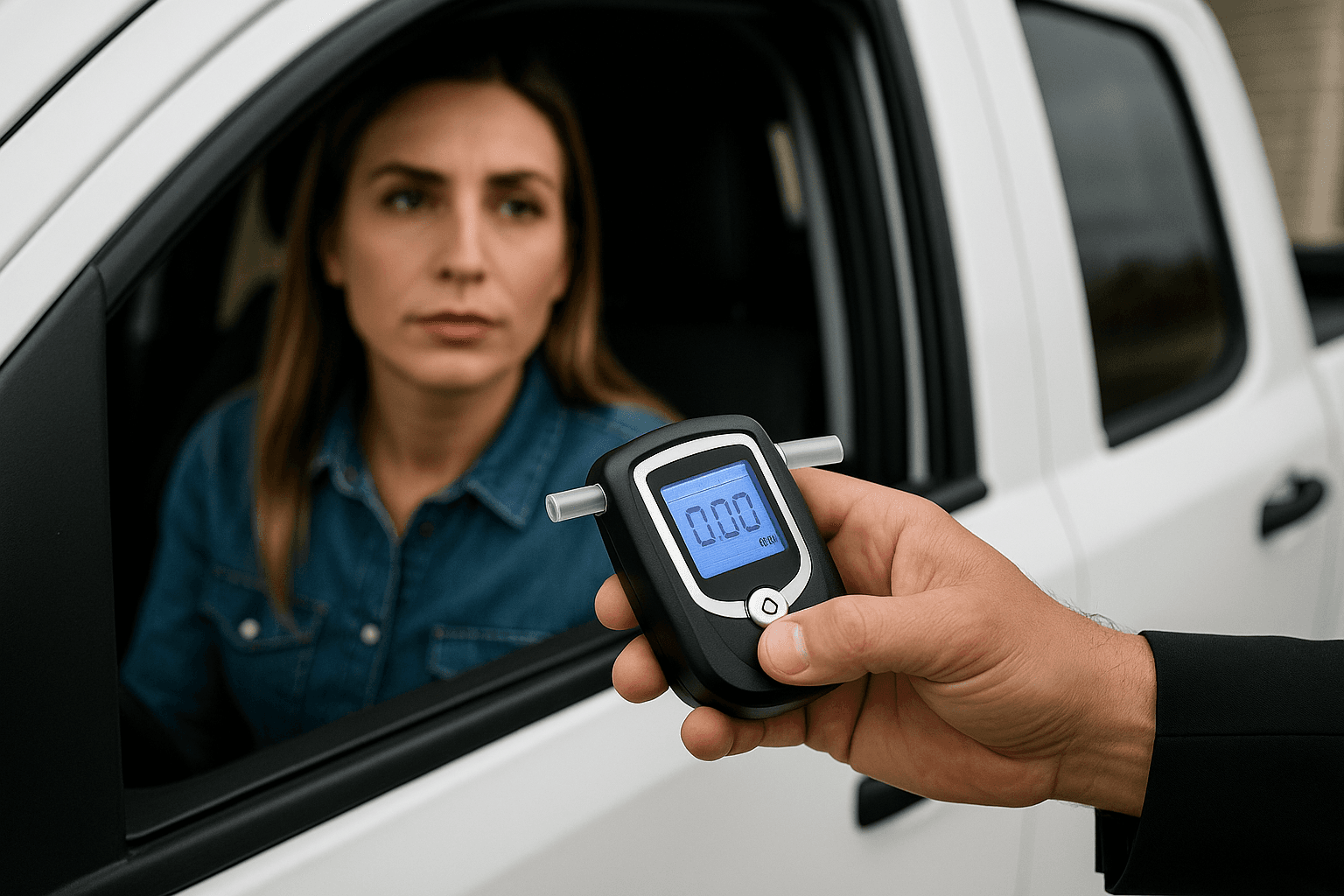
Wyoming requires SR-22 filing before probationary license approval, but standard carriers often refuse DUI risk during the mandatory 90-day hard suspension. Non-standard carriers write during that window—and understanding which ones matters before your hearing.
Why Wyoming's 90-Day Hard Suspension Forces Early Carrier Decisions
Wyoming statute W.S. 31-5-233 requires a mandatory 90-day hard suspension for first-offense DUI before you can apply for a Probationary License. That hard period bars all driving—no exceptions, no early eligibility. Most drivers assume they'll shop for SR-22 coverage after the probationary license is approved, but Wyoming's application process requires proof of SR-22 filing at the time you submit your petition to Driver Services.
Standard carriers evaluate DUI risk during active suspension differently than they evaluate it post-reinstatement. Many decline to quote during the hard suspension window, treating the suspension itself as disqualifying. Non-standard carriers expect DUI applicants mid-suspension and price accordingly. The gap matters because if you wait until day 89 to start carrier shopping, you may discover your first three quote attempts returned no-quote decisions, pushing your probationary application past day 90 and extending your total suspension period.
Wyoming does not offer provisional SR-22 filing or grace periods. Driver Services reviews your probationary petition only when all required documentation—including active SR-22 proof—is on file. Starting carrier outreach at day 60 of your hard suspension gives you a 30-day buffer to navigate declinations, compare non-standard quotes, and submit your application on time.
Non-Standard Carriers Writing SR-22 in Wyoming During Active Suspension
Five non-standard carriers actively write SR-22 policies in Wyoming for drivers with active DUI suspensions: Bristol West, Dairyland, Geico (non-standard division), National General, and The General. Each carrier evaluates risk differently, and monthly premiums during suspension can range from $140 to $290 depending on age, county, and how recently the DUI conviction was entered.
Bristol West requires broker involvement for Wyoming DUI cases—direct online quotes often return referrals to agent networks. Dairyland and The General both offer direct online quoting but may route complex suspension cases to underwriting review, adding 3 to 5 business days to policy issuance. National General typically quotes online without manual review for first-offense DUI cases. Geico's non-standard division evaluates DUI risk separately from its standard book; quotes route to a separate underwriting team and may take 48 hours to finalize.
Progressive writes SR-22 in Wyoming but declines most quotes during active suspension for DUI. State Farm writes SR-22 but restricts DUI quotes to post-reinstatement applicants in most Wyoming counties. USAA writes SR-22 for eligible members but applies stricter underwriting during suspension periods, often declining first-offense DUI cases until the suspension lifts. If you hold an active policy with a standard carrier at the time of your DUI arrest, that carrier may non-renew rather than file SR-22 mid-term—forcing you into the non-standard market even if you would have qualified for renewal post-suspension.
Compare car insurance rates in your state
Get quotes from licensed carriers — no obligation, no spam, results in minutes.
Get Your Free Quote✓ No Obligation Required✓ Licensed Carriers Only✓ Available Nationwide✓ Free to Compare
How Ignition Interlock Requirements Interact With SR-22 Filing
Wyoming requires ignition interlock device installation as a condition of probationary license eligibility for all DUI offenses. The IID requirement runs parallel to your SR-22 filing obligation—not sequentially. You must arrange IID installation, obtain SR-22 coverage, and submit both proof documents to Driver Services before your probationary petition can be reviewed.
IID vendors in Wyoming coordinate directly with Driver Services to confirm installation and compliance. Your SR-22 carrier does not need to know your vehicle has an IID installed—SR-22 filing is a separate administrative compliance signal. However, some non-standard carriers ask about IID installation during the application process because the device signals restricted driving status, which affects their underwriting models. Answer honestly—providing inaccurate information about IID installation can trigger policy rescission if discovered later.
Monthly IID costs in Wyoming typically range from $75 to $100 for lease, calibration, and monitoring. Combined with SR-22 premiums, total monthly cost during your probationary license period often runs $220 to $390. Budget for both expenses before you submit your probationary application—Driver Services does not issue provisional licenses while you arrange financing for compliance equipment.
What Happens If Your Non-Standard Carrier Non-Renews Mid-Probationary Period
Non-standard carriers can non-renew your policy at the six-month or 12-month mark even if you've maintained continuous coverage and SR-22 filing. Wyoming law does not require carriers to provide DUI policyholders with guaranteed renewal terms. If your carrier non-renews, you must secure replacement SR-22 coverage before your existing policy expires—allowing a lapse triggers automatic probationary license revocation and restarts your suspension period from day one.
Wyoming Driver Services receives electronic notification from your SR-22 carrier within 24 hours of policy cancellation or non-renewal. The notification is not a courtesy reminder—it is an immediate administrative action. Your probationary license is revoked the day the lapse is reported, even if you secure replacement coverage the following day. Reinstatement after revocation requires a new $50 reinstatement fee, a new probationary petition, and proof of continuous SR-22 filing for the full three-year period starting from the revocation date.
To avoid this outcome, request renewal status from your non-standard carrier 60 days before your policy expiration date. If your carrier indicates non-renewal, begin shopping for replacement SR-22 coverage immediately. Non-standard carriers often issue policies with effective dates 30 to 45 days in the future, allowing you to lock in replacement coverage before your existing policy lapses. Overlap is acceptable—Wyoming allows two simultaneous SR-22 filings as long as one remains active without interruption.
Route and Time Restrictions That Complicate Compliance
Wyoming probationary licenses restrict driving to specific purposes defined in your approval documentation: employment, education, medical care, and other essential needs approved by Driver Services or the court. The restriction language is vague by design—Driver Services expects you to document each approved route and time window in writing at the time you submit your petition.
Most Wyoming counties do not provide standardized route-approval templates. You must draft a written schedule listing your employer's address, work hours, and direct route from your residence. If your job requires travel to multiple sites, list each site address and the days you work there. If your schedule varies week to week, provide a representative week and note that variation exists. Driver Services reviews this documentation during your probationary petition review and may request clarification before approving your license.
Violating your approved route or time restriction—even once—triggers probationary license revocation. Wyoming law enforcement can stop you for any reason during your probationary period and verify that your current location and time match your approved schedule. If you are stopped outside your approved parameters, the officer reports the violation to Driver Services, and your probationary license is revoked within 48 hours. SR-22 filing does not protect you from route-violation revocation—insurance proves financial responsibility, not compliance with driving restrictions.
Cost Stack: Application, IID, SR-22, and Premium Impact Over Three Years
Wyoming's total cost for probationary license compliance combines four expense categories: application fees, ignition interlock device costs, SR-22 filing fees, and elevated premiums. The application fee is not published in a centralized Driver Services schedule—verification with Wyoming Driver Services before filing is necessary. Estimates based on available data suggest application fees typically range from $50 to $150, but this should be confirmed directly.
IID lease, calibration, and monitoring costs run $75 to $100 per month for the duration of your probationary license period. If your probationary license is approved for 18 months, total IID cost is approximately $1,350 to $1,800. SR-22 filing fees range from $25 to $50 depending on the carrier. Non-standard premiums during probationary periods typically run $140 to $290 per month, totaling $2,520 to $5,220 annually.
Wyoming requires SR-22 filing for three years following DUI conviction. After your probationary license converts to full reinstatement, your premiums may decrease as you transition back to standard-carrier eligibility—but SR-22 filing continues. Over the full three-year period, total cost for IID (if required for the full period), SR-22 filing, and elevated premiums can reach $8,000 to $12,000. This estimate assumes you avoid route violations, maintain continuous coverage, and do not trigger additional suspensions. Estimates based on available industry data; individual results vary.