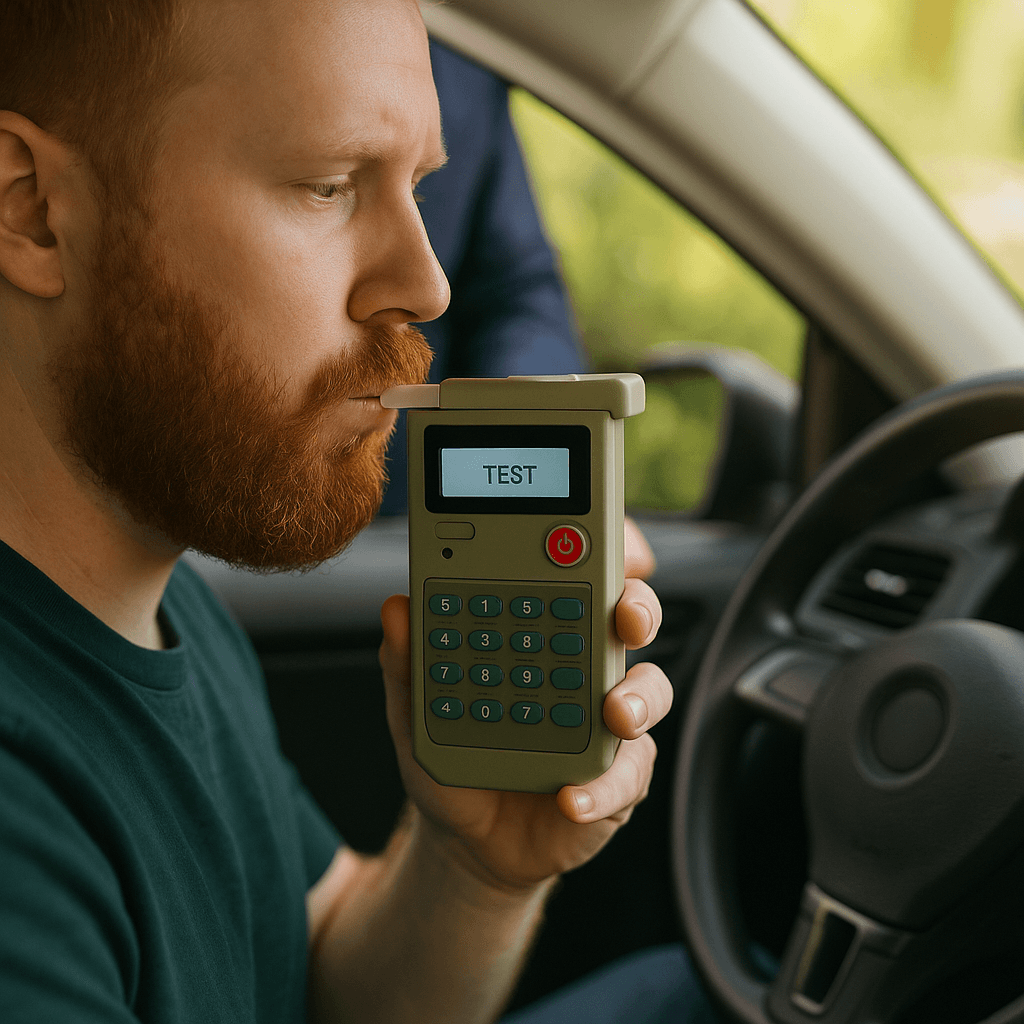
Oregon hardship permits require SR-22 filing and ignition interlock compliance. Most standard carriers won't touch you until the IID comes off. Here's which non-standard carriers actually write Oregon hardship permit coverage and what their underwriting looks like.
Why Standard Carriers Won't Write Oregon Hardship Permit Coverage
Standard carriers in Oregon — State Farm, Allstate, Farmers, GEICO — classify ignition interlock devices as high-risk modifications. Their underwriting guidelines flag IID-equipped vehicles as ineligible for standard policies. You won't be declined for the SR-22 filing itself; the IID triggers the underwriting rejection.
Oregon requires ignition interlock installation as a condition of every hardship permit issued after a DUII-related suspension under ORS 813.602. The DMV will not issue the hardship permit without proof of IID installation and SR-22 filing. You need both before the permit approval letter arrives.
This creates a narrow window. You must secure non-standard coverage that explicitly accepts IID-equipped vehicles, file the SR-22 with Oregon DMV, install the IID through an approved vendor, and wait for DMV processing. Most applicants underestimate the insurance step — standard carriers reject the application, delaying the entire sequence by two weeks or more.
Which Non-Standard Carriers Write Oregon Hardship Permit Policies
Five non-standard carriers confirmed to write Oregon hardship permit coverage with active IID requirements: Bristol West, Dairyland, GAINSCO, The General, and Progressive's non-standard division. All five accept SR-22 filings and explicitly underwrite IID-equipped vehicles. All five require full liability coverage at Oregon state minimums or higher.
Bristol West operates statewide and processes hardship permit applications within 48 hours if documentation is complete. Dairyland writes hardship permit coverage in all Oregon counties and does not require a broker for online quotes. GAINSCO entered Oregon in 2022 and underwrites hardship permits with active IID requirements. The General maintains an Oregon-specific SR-22 contact list and processes hardship permit filings same-day. Progressive's non-standard division writes hardship permit coverage but routes applicants through its standard quoting funnel — if declined by standard underwriting, the system redirects to the non-standard tier.
Kemper and Infinity list Oregon SR-22 capability but do not explicitly confirm IID acceptance in their underwriting guidelines. National General writes Oregon SR-22 policies but underwriting responses on IID acceptance vary by agent. If you're applying for a hardship permit, start with the five carriers listed above.
Compare car insurance rates in your state
Get quotes from licensed carriers — no obligation, no spam, results in minutes.
Get Your Free Quote✓ No Obligation Required✓ Licensed Carriers Only✓ Available Nationwide✓ Free to Compare
What Non-Standard Oregon Hardship Permit Premiums Actually Cost
Expect $140–$220 per month for Oregon hardship permit liability coverage through a non-standard carrier, assuming a single DUII violation and no additional at-fault accidents in the prior three years. That's $1,680–$2,640 annually. Your actual rate depends on ZIP code, age, driving history beyond the DUII, and whether you select minimum state limits or higher liability coverage.
Oregon state minimums are $25,000 bodily injury per person, $50,000 bodily injury per accident, $20,000 property damage. Non-standard carriers allow you to purchase these minimums, but underwriters at Bristol West and Dairyland confirmed that moving to $50,000/$100,000/$25,000 adds $15–$30 per month and reduces the likelihood of coverage gaps if you're involved in an accident during the hardship permit period.
The SR-22 filing fee is $25–$50 depending on carrier. IID installation costs $70–$150, monthly IID lease and monitoring fees run $60–$90, and IID removal after the hardship permit expires costs $50–$100. The DMV hardship permit application fee in Oregon is not publicly itemized on the DMV website as a standalone line item — budget $75–$150 for application processing based on typical Oregon DMV reinstatement and administrative fee structures. Total first-month cost including installation, application, filing fee, and first premium: approximately $400–$600.
How Oregon Hardship Permit Coverage Differs From Standard Policies
Non-standard hardship permit policies in Oregon exclude comprehensive and collision coverage in most cases. Bristol West, Dairyland, and GAINSCO offer liability-only policies by default and require additional underwriting approval for physical damage coverage on IID-equipped vehicles. If your vehicle is financed or leased, the lienholder will require comprehensive and collision — expect underwriting delays of 5–10 business days and premium increases of 40%–60% over liability-only rates.
Hardship permit policies require continuous SR-22 filing for the duration of the suspension. Oregon requires 3 years of SR-22 filing following a DUII conviction under ORS 813.520. If your carrier cancels the policy for non-payment or you switch carriers without maintaining continuous SR-22 filing, Oregon DMV receives an SR-26 cancellation notice within 10 days. Your hardship permit is automatically revoked and you must restart the application process.
Non-standard carriers also apply higher cancellation penalties. Standard policies allow 10-day grace periods for late payments. Non-standard hardship permit policies in Oregon typically allow 5 days or less before cancellation, and some carriers require automatic bank draft or electronic payment to prevent lapses. Miss a payment and your hardship permit disappears before you receive the cancellation notice.
What Happens If You Apply for Coverage Without IID Proof
Non-standard carriers in Oregon will not issue an SR-22 filing until you provide proof of ignition interlock installation. The sequence matters. You cannot file the SR-22 before the IID is installed and calibrated. Oregon DMV will not issue the hardship permit until it receives the SR-22 filing. Most applicants assume they can apply for coverage, receive the policy, then install the IID — this order fails.
Oregon-approved IID vendors include Intoxalock, LifeSafer, Smart Start, and Guardian Interlock. Installation appointments typically require 2–5 business days' notice. The vendor provides a certificate of installation that includes the device serial number, installation date, and your vehicle identification number. You submit this certificate to your non-standard carrier, the carrier files the SR-22 with Oregon DMV electronically, and DMV processes the hardship permit application.
If you apply for a hardship permit before securing IID installation and SR-22 filing, Oregon DMV holds the application in pending status and sends a deficiency notice. You have 30 days to cure the deficiency. If you miss the 30-day window, the application is administratively closed and you must reapply with a new application fee.
How to Compare Non-Standard Carrier Quotes for Oregon Hardship Permits
Request quotes from at least three non-standard carriers before selecting coverage. Bristol West, Dairyland, and The General all offer online quoting for Oregon hardship permit policies. GAINSCO requires a phone intake but provides same-day quotes. Progressive routes hardship permit applicants through its standard online funnel first, then transfers to non-standard underwriting if declined.
When comparing quotes, confirm the carrier explicitly accepts IID-equipped vehicles in writing or through the quote confirmation email. Some carriers list Oregon SR-22 capability but exclude IID acceptance in their underwriting guidelines. If the quote does not mention ignition interlock or IID, ask the agent directly before purchasing. A policy issued without IID acceptance will be rescinded when the carrier discovers the device during the SR-22 filing process.
Also confirm payment flexibility. Some non-standard carriers require six-month prepayment or automatic bank draft. If you're on a tight budget during the hardship permit period, monthly payment plans with no prepayment requirement are available through Dairyland and The General. Bristol West offers monthly payment but applies a $5–$10 installment fee per month.
What to Do If Your Non-Standard Carrier Cancels Mid-Hardship-Period
If your non-standard carrier cancels your policy during the Oregon hardship permit period, you have 10 days to secure replacement coverage and file a new SR-22 before Oregon DMV revokes your hardship permit. The carrier files an SR-26 cancellation notice electronically with DMV the day the policy is cancelled. DMV processes the revocation within 3–5 business days unless a new SR-22 filing appears in the system.
Secure replacement coverage immediately. Contact the remaining non-standard carriers on the list above and explain the cancellation reason. If the cancellation was for non-payment, expect higher premiums or prepayment requirements with the replacement carrier. If the cancellation was for a policy violation unrelated to payment, underwriting becomes more restrictive and some carriers may decline the application outright.
If you cannot secure replacement coverage within 10 days, your hardship permit is revoked and you are driving on a suspended license if you continue to operate the vehicle. Oregon treats driving on a revoked hardship permit as a Class A misdemeanor under ORS 807.010, carrying up to one year in jail and a $6,250 fine. Do not drive until replacement coverage and SR-22 filing are confirmed.