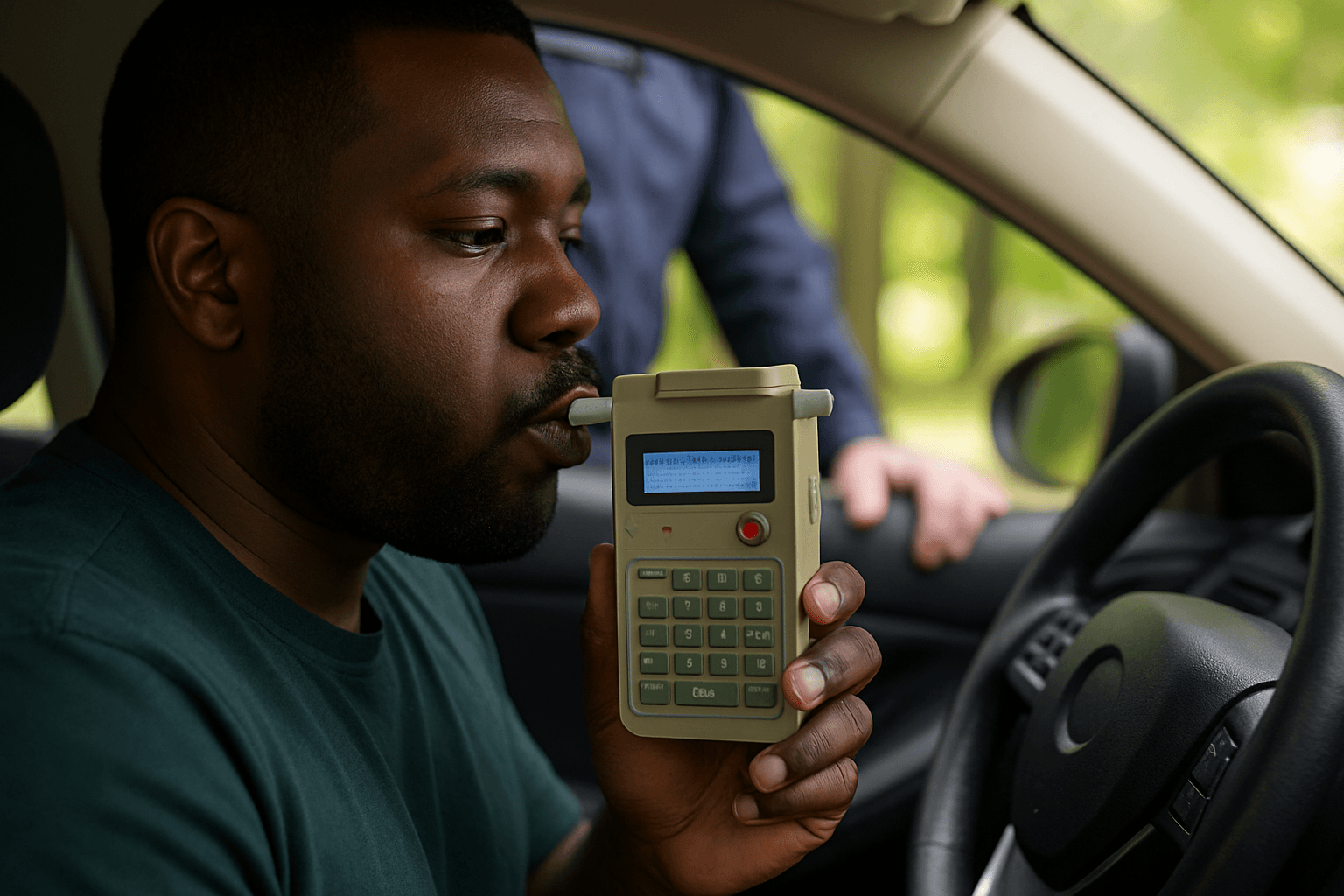
You've been approved for a Nevada restricted license but now realize your current carrier won't write the policy with an SR-22. The non-standard market is the actual path forward, not the exception.
Why Standard Carriers Drop Coverage at Restricted License Approval
Your approval letter from Nevada DMV triggers an automatic underwriting review at most standard carriers. State Farm, Allstate, and Farmers run background checks when policy changes require endorsement filing. The restricted license itself signals a suspension event the carrier may not have known about when you applied.
Carriers that write SR-22 in Nevada do not all write restricted-license policies. Geico files SR-22 but often non-renews after the first DUI conviction posts to your MVR. Progressive writes through the restricted period but prices the risk at near-non-standard rates. USAA covers members but requires military affiliation verification before filing.
The practical outcome: you receive restricted license approval and then discover your current carrier will not file the certificate. Nevada DMV requires proof of insurance within 15 days of restricted license issuance. Miss that window and the restricted license approval is void. You start the suspension period over.
Non-Standard Carriers That Write Restricted License Policies in Nevada
Bristol West operates in Nevada specifically for post-violation cases. The carrier writes SR-22 policies for restricted-license holders and does not require a clean MVR to quote. Most approvals process within 48 hours. The monthly premium typically runs $140-$190 for liability-only coverage at state minimum limits.
Dairyland writes non-owner SR-22 policies for restricted-license holders without vehicles. This matters when the suspension resulted from a DUI in a vehicle you no longer own or when your household vehicle is titled in someone else's name. Nevada DMV accepts non-owner SR-22 filing for restricted licenses issued after administrative per se suspensions. The monthly cost runs $85-$120.
The General writes full-coverage and liability policies for restricted-license holders. The carrier files SR-22 electronically to Nevada DMV within 24 hours of policy binding. Infinity and National General operate similarly. All three accept applicants with active ignition interlock requirements.
Nevada's transient population creates a secondary complication: out-of-state drivers who hold Nevada restricted licenses but maintain vehicle registration in another state. Nevada DMV requires SR-22 from a Nevada-authorized insurer regardless of home state. Bristol West and Dairyland both write these edge cases. Your home state's carrier cannot file the Nevada SR-22 certificate directly.
Compare car insurance rates in your state
Get quotes from licensed carriers — no obligation, no spam, results in minutes.
Get Your Free Quote✓ No Obligation Required✓ Licensed Carriers Only✓ Available Nationwide✓ Free to Compare
What Restricted License Approval Actually Requires from Your Insurer
Nevada DMV issues restricted licenses after a 45-day hard suspension for first DUI offenses under NRS 483.490. The approval letter states you must file proof of insurance within 15 days. That proof is an SR-22 certificate filed electronically by a Nevada-authorized carrier to the Nevada Insurance Verification System.
The filing is not a form you download and submit. Your insurer transmits the certificate directly to Nevada DMV. You receive a copy for your records. The certificate confirms you carry at least $25,000/$50,000/$20,000 liability coverage, Nevada's statutory minimum.
Ignition interlock device installation is required for all DUI-related restricted licenses in Nevada. Your insurer must know about the device before binding the policy. Some carriers require proof of installation before issuing the SR-22. Others allow you to add the device after policy binding but before the DMV filing deadline. Bristol West and Dairyland both accept post-binding IID installation.
The cost stack includes: restricted license application fee (processing through Nevada DMV, varies by case), IID installation and monthly monitoring ($70-$120/month), SR-22 filing fee ($15-$25 one-time), and the premium itself. Total first-month outlay typically runs $400-$600 depending on your county and vehicle.
How Out-of-State License Holders Navigate Nevada Restricted License Insurance
Nevada's tourist and convention economy creates a specific edge case: drivers arrested for DUI while visiting Nevada who hold out-of-state licenses. Nevada DMV suspends driving privileges in Nevada but cannot directly suspend your home state license. The Driver License Compact and Non-Resident Violator Compact notify your home state.
If you receive a Nevada restricted license after a Nevada DUI, you must file SR-22 with Nevada DMV through a Nevada-authorized carrier. Your California or Arizona carrier cannot file directly to Nevada even if you maintain your home state policy. Bristol West and Dairyland write these cases as non-resident restricted-license policies.
The practical sequence: apply for Nevada restricted license through Nevada DMV. Receive approval. Contact a non-standard carrier licensed in Nevada. Bind a liability policy. Carrier files SR-22 to Nevada DMV electronically. You receive confirmation. DMV issues the restricted license with route and time restrictions.
Your home state may impose separate penalties based on the DLC notification. Some states honor Nevada's restricted license as valid within Nevada only. Others suspend your home state license concurrently. Check with your home state DMV after receiving Nevada restricted license approval.
What Happens When Your Carrier Cancels Mid-Restriction Period
Nevada uses an electronic insurance verification system. Insurers report policy cancellations and lapses in near-real-time to Nevada DMV. When your SR-22 lapses, Nevada DMV receives automatic notification. The restricted license is suspended immediately. You do not receive advance warning in most cases.
The 3-year SR-22 filing requirement for DUI cases runs continuously. A single-day lapse restarts the 3-year clock from the date you refile. This is not a grace period situation. Nevada statute NRS 485 governs mandatory insurance and does not specify a numeric grace window between lapse and state action.
Non-standard carriers cancel policies for nonpayment more aggressively than standard carriers. Bristol West and Dairyland both allow a 10-day payment grace period after the due date. Miss that window and the policy cancels. The SR-22 lapses the same day. Nevada DMV receives the lapse notice within 24 hours.
If your restricted license is suspended for SR-22 lapse, you must refile SR-22 with a new carrier and petition Nevada DMV for reinstatement. The reinstatement process is separate from the original restricted license application. Most petitions require a DMV hearing. The 3-year SR-22 clock restarts from the new filing date, not the original conviction date.
Comparing Non-Standard Carrier Costs for Nevada Restricted License Policies
Monthly premiums vary by carrier, violation type, and county. Clark County (Las Vegas) and Washoe County (Reno) run higher than rural counties due to population density and theft rates. A first DUI with no prior violations typically prices at $140-$190/month for liability-only coverage through Bristol West or Dairyland.
Non-owner SR-22 policies cost less because the carrier assumes lower risk. Dairyland quotes $85-$120/month for non-owner restricted-license coverage. The General quotes similarly. Non-owner policies do not cover a specific vehicle. They cover you as a driver when operating any vehicle with the owner's permission.
Full-coverage policies (collision and comprehensive added to liability) run $220-$350/month depending on vehicle value and deductible. Non-standard carriers typically require $1,000 deductibles for comprehensive and collision. Some require $1,500. The higher deductible offsets the carrier's increased risk.
All non-standard carriers charge the SR-22 filing fee upfront. Bristol West charges $25. Dairyland charges $15. The fee is non-refundable and separate from the first month's premium. Budget $450-$600 for the first month when you factor in the filing fee, first month's premium, and any carrier-required deposits.
When to Switch from Non-Standard to Standard Coverage
Non-standard carriers price risk month-to-month. Your premium does not decrease automatically as time passes. After 12-18 months of continuous SR-22 filing with no lapses and no new violations, some standard carriers will quote your risk again. State Farm and Allstate both re-enter the market at that point for some drivers.
The 3-year SR-22 filing requirement does not prevent you from switching carriers. You can move from Bristol West to Progressive or Geico if a standard carrier offers better pricing. The new carrier files a replacement SR-22 to Nevada DMV. The 3-year clock continues uninterrupted as long as there is no gap between the old policy's cancellation and the new policy's effective date.
Shop your rate annually starting 12 months after your restricted license approval. Use the same coverage limits and deductibles when comparing quotes so the comparison is apples-to-apples. Some drivers save $40-$70/month by switching carriers in year two. Others find non-standard pricing remains the best option through the full 3-year filing period.
Nevada DMV does not require notification when you switch carriers mid-filing period. The new carrier's SR-22 filing replaces the old one automatically in the Nevada Insurance Verification System. Confirm the new carrier transmitted the SR-22 before canceling your old policy. A gap of even one day triggers restricted license suspension and restarts the 3-year clock.