Montana district courts grant probationary licenses—but no standard carrier will quote you until you understand which non-standard tier writes SR-22 in rural counties and which won't touch ignition interlock policies.
Why standard carriers won't quote Montana probationary license applicants before court approval
Standard-tier carriers price risk using state filing databases that show active suspensions. Montana's probationary license system creates a timing gap: the Motor Vehicle Division imposes the suspension administratively, but only a district court can grant the probationary license itself. Until that court order exists, your MVD record shows an unresolved suspension—and Allstate, Farmers, Hartford, Liberty Mutual, and Nationwide all decline to quote suspended drivers without court-issued restricted driving privileges in hand.
This matters because most applicants assume they can shop for SR-22 coverage while preparing their petition. They can't. Non-standard carriers—Bristol West, National General, The General—will quote pre-approval, but their monthly premiums run $190–$310 for liability-only coverage compared to $85–$140 post-reinstatement with a standard carrier. The court hearing date becomes your insurance shopping deadline.
Montana Code Annotated § 61-5-208 requires proof of financial responsibility at the time of petition filing. That's the SR-22 certificate. You can't file without it, and most standard carriers won't issue it until the court approves your probationary license—which they won't do until you file the petition with proof of insurance. The circular dependency breaks only one way: you pay non-standard rates during the application window, then re-shop after approval.
Which non-standard carriers write probationary license SR-22 policies in Montana's rural counties
Bristol West, National General, The General, Progressive, and Geico all write SR-22 policies for Montana probationary license holders. Geographic coverage matters here more than in urban states: Montana's 56 counties span 147,000 square miles, and not every non-standard carrier appoints agents in every county. Bristol West requires broker placement statewide—you cannot buy direct online if your address is in a rural county without an appointed agent. The General and National General both offer direct online quotes for all Montana ZIP codes.
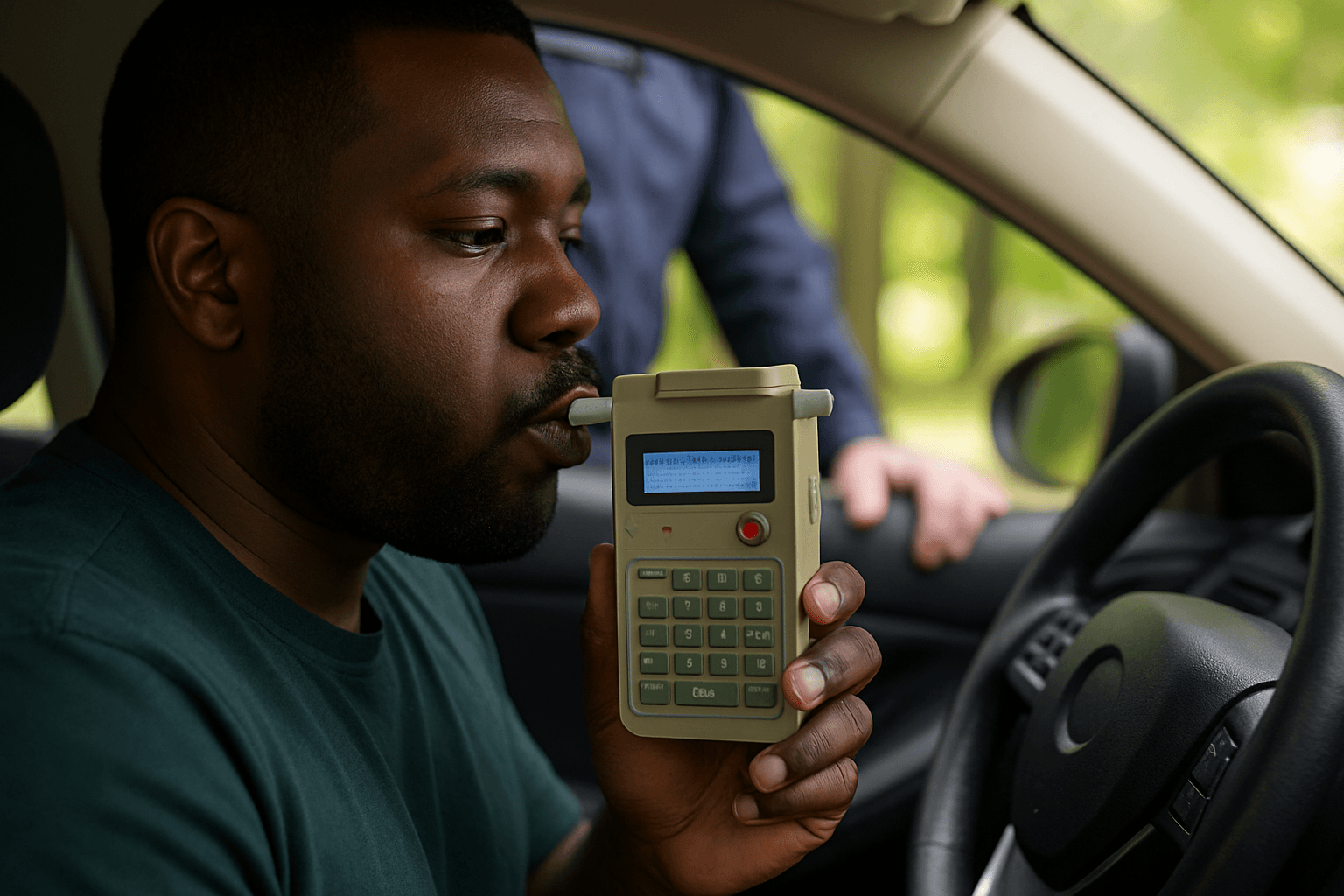
Progressive and Geico operate in the hybrid space: both write SR-22, both serve DUI and post-suspension drivers, both quote online—but their underwriting tightens considerably for ignition-interlock-required probationary licenses. Montana Code Annotated § 61-8-442 mandates ignition interlock devices for DUI-related probationary licenses. Progressive quotes these policies but adds a $45–$75 monthly surcharge beyond the base DUI premium increase. Geico declines most IID cases entirely in Montana, routing applicants to their non-standard affiliate or declining coverage outright.
If your probationary license petition involves ignition interlock—and MCA § 61-8-402 requires it for first-offense DUI after the 45-day hard suspension—you're shopping a smaller carrier pool. Bristol West, The General, and National General all explicitly write IID-required policies. State Farm writes SR-22 in Montana but publicly declines ignition interlock cases. USAA writes SR-22 and non-owner SR-22 but restricts IID policies to members with 10+ years of membership history.
Compare car insurance rates in your state
Get quotes from licensed carriers — no obligation, no spam, results in minutes.
Get Your Free Quote✓ No Obligation Required✓ Licensed Carriers Only✓ Available Nationwide✓ Free to Compare
How Montana's dual-agency structure changes your SR-22 filing sequence
The Motor Vehicle Division administers your underlying suspension. The district court in your county of residence grants or denies your probationary license petition. These are separate agencies with separate timelines, and your SR-22 certificate must satisfy both. When you purchase an SR-22 policy, the carrier files electronically with the Montana MVD within 24 hours. That filing clears the MVD's financial responsibility flag—but it does nothing for your court petition unless you attach the SR-22 certificate as an exhibit when you file.
Most applicants discover this gap at the hearing. They assume the MVD shares SR-22 filings with district courts automatically. Montana has no such data bridge. You must request a duplicate SR-22 certificate from your carrier—most provide a PDF download in your online account within minutes of policy binding—and attach it to your probationary license petition as Exhibit C or D depending on your county's local rules. Failing to attach it delays your hearing or results in a continuance while you obtain proof.
Timeline: purchase your SR-22 policy at least 5 business days before your scheduled court hearing. Carriers file with the MVD within 24 hours, but the certificate generation, your download, and your exhibit preparation need buffer time. If your hearing is Monday, buy coverage no later than the prior Tuesday. If you're working with a broker-placed carrier like Bristol West, add another 48 hours for broker processing time—purchase by the prior Friday.
What 'court-defined restrictions' means for your insurance coverage limits and exclusions
Montana district courts issue probationary licenses with individualized route and time restrictions. There is no statewide template. Your court order might restrict you to a 50-mile radius from your residence for work, medical, and essential household travel. Another county's order might allow statewide travel but only between 5 a.m. and 10 p.m. These restrictions appear in the court order itself—not on your physical probationary license—and insurance carriers do not receive copies of them.
Your SR-22 policy covers you during the restricted hours and routes the court specifies. It does not enforce them. If you drive outside your approved routes or times and cause an accident, your liability coverage still applies—the insurer pays the third party's claim—but you've violated your probationary license terms and the court will revoke it. The insurance policy and the driving restriction are separate legal instruments. One is a financial responsibility filing. The other is a court order governing your driving privilege.
This creates a coverage gap most drivers miss: your policy's collision and comprehensive coverages—if you carry them—exclude losses that occur while you're in violation of a court order in some carrier forms. National General and Bristol West both include "violation of restricted license terms" as a listed exclusion in their Montana non-standard forms. If you total your car while driving outside your approved window, your liability coverage pays the other driver, but your collision coverage may deny your own vehicle claim. Read the exclusions section of your policy declarations page before you sign.
Why ignition interlock adds $900–$1,800 annually beyond the SR-22 premium increase
Montana Code Annotated § 61-8-442 requires ignition interlock devices for all DUI-related probationary licenses. The device itself costs $75–$125 per month: $70–$95 for the monthly monitoring fee paid to the IID provider, plus $2.50–$5.00 per rolling retest. Installation runs $100–$150. Removal after your probationary period ends costs another $50–$75. Total IID cost over a typical 1-year probationary license: $1,050–$1,650.
Carriers add a separate underwriting surcharge for IID-required policies because the device signals a DUI conviction—the highest-risk category in actuarial tables. That surcharge runs $45–$75 per month on top of the base DUI premium increase. A clean-record Montana driver pays approximately $95/month for minimum liability. A DUI driver without IID pays $210–$280/month. A DUI driver with IID-required probationary license pays $255–$355/month. The IID itself is not insured—it's a court-ordered device—but its presence changes your insurance tier.
Some carriers won't write IID policies at any price. Geico declines most in Montana. State Farm declines all. Hartford, Liberty Mutual, and Nationwide all decline during the probationary license period but will quote you after full reinstatement once the IID is removed and your 3-year SR-22 filing period begins. This means you're locked into non-standard carriers—Bristol West, The General, National General—for the duration of your probationary license, then you re-shop for standard-tier coverage once the court closes your case and the MVD reinstates your full license.
How non-owner SR-22 works when you're approved for probationary driving but don't own a vehicle
Montana district courts grant probationary licenses to non-vehicle-owners. You can petition for work, medical, and essential travel privileges even if you'll be driving a family member's car, a company vehicle, or relying on borrowed vehicles. Montana Code Annotated § 61-5-208 requires proof of financial responsibility—the SR-22 filing—but does not require you to own or insure a specific vehicle.
Non-owner SR-22 policies provide liability coverage when you drive vehicles you don't own. The policy follows you, not a vehicle. Monthly cost in Montana: $35–$65 for minimum liability limits through non-standard carriers. Geico, Progressive, The General, and USAA all write non-owner SR-22 in Montana. Bristol West and National General write it but require broker placement—you can't buy it online direct.
Two restrictions apply: non-owner policies exclude vehicles registered in your household and vehicles you have regular access to. If your spouse owns a car and you live together, you must be listed on their policy as a rated driver—a non-owner policy won't cover you. If your employer provides a company truck you drive daily, the company's commercial policy must list you—your personal non-owner SR-22 is secondary. Non-owner SR-22 works for true occasional-use scenarios: borrowing a friend's car twice a week, renting a vehicle for a medical appointment, driving a family member's vehicle that's registered at a different address.
What happens to your SR-22 requirement if you move out of Montana during your probationary period
Your Montana probationary license does not transfer to another state. It's a court order issued by a Montana district court, enforceable only within Montana. If you move to another state before your probationary period ends, that state will treat your Montana suspension as an out-of-state suspension and apply its own reinstatement rules. Most states honor Montana's SR-22 filing through the Driver License Compact, but your probationary driving privileges end the day you establish residency elsewhere.
Your SR-22 filing requirement follows you. Montana requires 3 years of SR-22 for DUI-related suspensions, measured from the date of conviction. If you move to Idaho 8 months into your Montana probationary license, Idaho requires you to file Idaho SR-22 for the remaining 2 years and 4 months. Your Montana carrier can file in Idaho if they're licensed there—Geico, Progressive, State Farm, and The General all operate in both states—but you'll need to update your policy's garaging address and state of issuance. Some carriers will cancel and rewrite the policy. Others will endorse it mid-term.
If you move to a state that does not require SR-22 for DUI (Kentucky, for example, uses SR-22 only for uninsured violations, not DUI), you're still bound by Montana's original 3-year filing requirement because the suspension originated there. You must maintain continuous SR-22 filing in your new state of residence for the full Montana-mandated period, even if your new state wouldn't have required it for a local DUI. Any lapse triggers a new suspension in Montana, and most states report lapses back to the issuing state through the Problem Driver Pointer System.