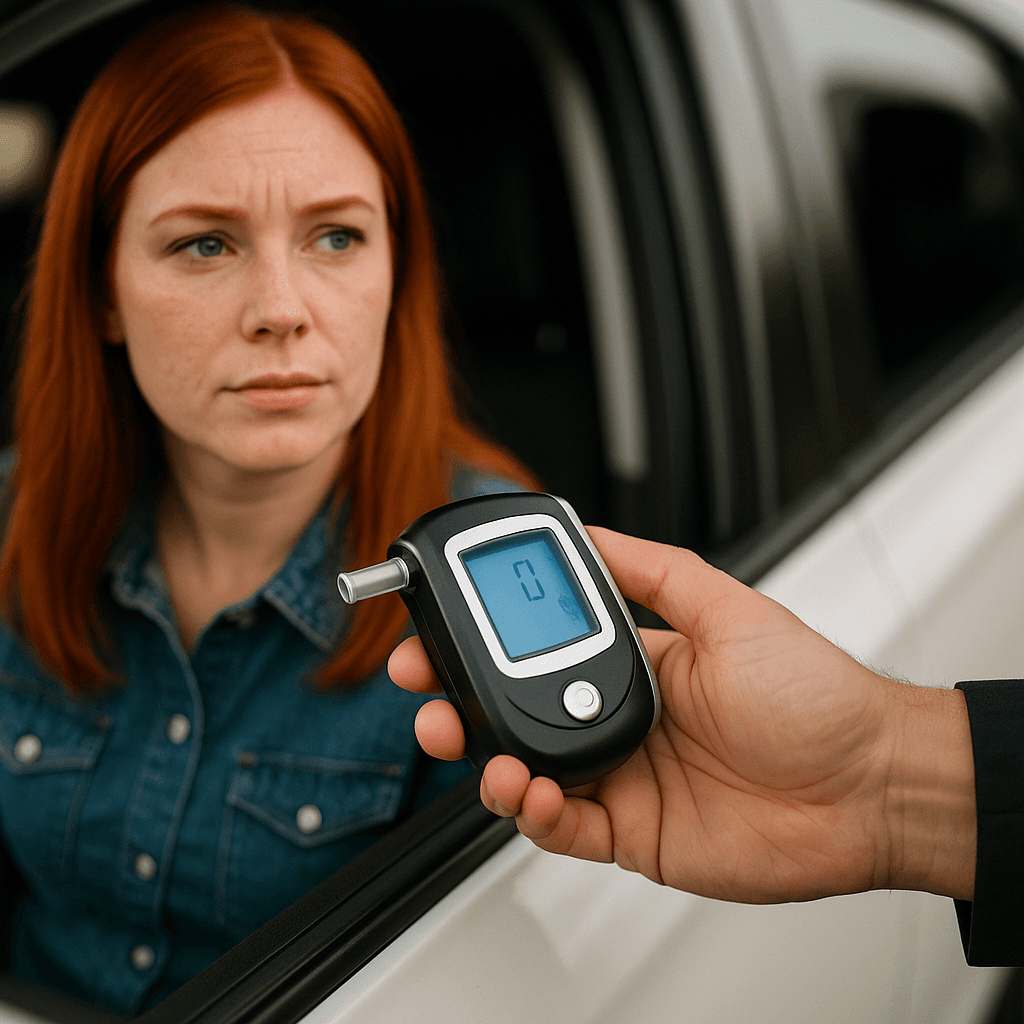
Court-granted Limited License approvals mean little if you can't secure compliant insurance the same week. Minnesota's non-standard carrier landscape determines whether you drive next Monday or wait three more weeks.
Why Minnesota Limited License Approval Doesn't Mean You Can Drive Yet
The district court grants your Limited License petition. The judge signs the order. You walk out of the courthouse with a 72-hour window to install your Ignition Interlock Device and secure compliant insurance before your approved driving privileges activate. Then you call carriers.
Most standard carriers (State Farm, Allstate, Progressive on standard-tier policies) won't bind coverage on a suspended license even with court approval. Minnesota Statutes § 171.30 requires proof of insurance and IID installation before the Limited License becomes valid—not after. The court order alone doesn't activate driving authority until both requirements are satisfied and DVS processes the Limited License enrollment.
Non-standard carriers write suspended-license policies with IID endorsements, but Minnesota's non-standard market has specific binding timelines that most petitioners don't account for when scheduling their court hearings. Bristol West, Dairyland, The General, and National General dominate Minnesota's non-standard auto space. Bristol West and Dairyland typically bind same-day or next-day if you call before 2 PM Central with your court order in hand, IID installer appointment confirmed, and payment ready. The General and National General average 24-72 hour binding windows because underwriters manually review Limited License documentation.
What Court-Approved Limited License Documentation Actually Requires for Insurance Binding
You need four items before any non-standard carrier will bind your Limited License policy: the signed court order specifying permitted routes and hours, proof of IID installation appointment scheduled within 72 hours, an active Minnesota driver's license number (even though suspended), and payment for the first month plus SR-22 filing fee if your suspension trigger requires it.
DUI-related Limited Licenses require SR-22 certificates under Minnesota Statutes § 171.04 subd. 1(10). Uninsured-driving Limited Licenses require SR-22. Points-accumulation and unpaid-fines Limited Licenses typically do not require SR-22 unless your underlying violation included at-fault property damage or injury. The court order doesn't specify SR-22 requirement—that determination comes from DVS records tied to your suspension trigger.
Carriers cannot bind coverage before the IID installation appointment is confirmed because Minnesota law makes the IID a condition precedent to Limited License validity. If you schedule a court hearing for Monday but can't get an IID installer appointment until Friday, no carrier will bind Monday coverage. Smart Start and Intoxalock dominate Minnesota's IID installer market; both require 3-5 business days advance booking in Twin Cities metro, 5-10 business days outstate.
Compare car insurance rates in your state
Get quotes from licensed carriers — no obligation, no spam, results in minutes.
Get Your Free Quote✓ No Obligation Required✓ Licensed Carriers Only✓ Available Nationwide✓ Free to Compare
How Minnesota Non-Standard Carrier Underwriting Treats Different Limited License Triggers
Bristol West writes all Limited License triggers in Minnesota with minimal underwriting friction. DUI Limited Licenses, uninsured-driving Limited Licenses, points-accumulation Limited Licenses, and unpaid-fines Limited Licenses all bind at standard non-standard rates ($140-$240/month for state minimum liability plus IID endorsement). Bristol West does not escalate premiums based on Limited License trigger type—only the underlying violation history.
Dairyland separates DUI Limited Licenses into first-offense and repeat-offense tiers. First DUI with Limited License approval: $160-$210/month. Second or subsequent DUI: $220-$320/month. Dairyland applies the higher tier even if your prior DUI occurred in a different state, because Minnesota DVS records show lifetime DUI count and Dairyland underwrites to that count.
The General and National General both require manual underwriting review for any Limited License tied to DUI with BAC above 0.16 or DUI with minor passenger. These reviews add 48-72 hours to binding timelines and sometimes result in declinations if your violation occurred within the past 90 days. Both carriers write standard DUI Limited Licenses (BAC 0.08-0.15, no aggravating factors) without manual review at $150-$230/month.
What Minnesota's IID Requirement Does to Non-Standard Premium Structures
Every Minnesota Limited License for DWI-related revocation requires an Ignition Interlock Device per Minnesota Statutes § 171.306. The IID itself costs $75-$125 installation plus $65-$95/month monitoring. That cost is separate from your insurance premium, but carriers price the IID endorsement into your policy.
Non-standard carriers charge $15-$35/month for the IID endorsement on top of base premium. The endorsement is not optional—it's a mandatory coverage extension that confirms the carrier will cover claims even if the IID malfunctions or you drive outside permitted hours. Without the endorsement, your policy excludes claims that occur during Limited License driving.
Bristol West charges a flat $20/month IID endorsement regardless of DUI count or BAC. Dairyland scales the endorsement: $15/month for first DUI, $30/month for repeat DUI. The General charges $25/month flat. National General charges $30/month and requires proof of IID calibration every 60 days or the endorsement lapses, which triggers automatic Limited License revocation under Minnesota DVS monitoring rules.
How to Secure Non-Standard Coverage Before Your Court Hearing Date
Call non-standard carriers 7-10 days before your Limited License court hearing. Provide your driver's license number, suspension trigger, anticipated court date, and requested driving routes. Carriers will pre-quote and pre-underwrite your application so binding occurs within hours of court approval, not days.
Bristol West and Dairyland both offer pre-approval quotes valid for 30 days. You complete the application, provide payment method, and receive a conditional approval letter stating coverage will bind the moment you upload your signed court order and IID appointment confirmation. This eliminates the 24-72 hour binding lag that causes most petitioners to miss their initial Limited License activation window.
If your court hearing is scheduled for a Friday, secure your IID installer appointment for the following Monday or Tuesday—not the same day. IID installers require 45-90 minutes per appointment and Minnesota law requires the device to be installed and photographed before DVS will process your Limited License enrollment. Binding insurance, installing the IID, and driving to DVS to finalize enrollment all within the same 72-hour window creates cascading delays. Space these steps across 5-7 days.
What Happens When Non-Standard Carriers Decline Your Limited License Application
Declinations occur most often when your underlying violation included injury, your suspension is less than 30 days old, or your court order specifies routes that cross state lines. Minnesota non-standard carriers won't cover Limited License holders who drive into Wisconsin or Iowa for work, because the Limited License jurisdiction ends at the state border and out-of-state claims fall outside policy territory.
If Bristol West, Dairyland, The General, and National General all decline, you have two options: petition the court to modify your Limited License routes to stay within Minnesota, or apply to Minnesota Automobile Insurance Plan (MAIP), the state's assigned-risk pool. MAIP accepts all Limited License holders regardless of violation history but charges 40-60% higher premiums than voluntary non-standard carriers. MAIP policies take 10-15 business days to bind, which delays your Limited License activation.
Multiple declinations also signal that your court-approved routes may not align with standard non-standard underwriting appetite. If your petition requests 24-hour driving authority or includes recreational routes (not just employment, medical, school, or treatment), carriers interpret that as high-risk exposure and decline. Courts grant those petitions, but insurers won't cover them.
How Minnesota No-Fault PIP Requirements Interact with Limited License Policies
Minnesota is a no-fault state under Minn. Stat. § 65B.41-65B.71. Every auto policy must include $40,000 Personal Injury Protection (PIP) coverage per person, $20,000 in accidental death benefits, $20,000 in disability/loss-of-income benefits, and $20,000 in replacement services coverage. These minimums apply to Limited License policies.
Non-standard carriers cannot sell liability-only policies in Minnesota even if your Limited License only authorizes driving to work. The no-fault PIP requirement applies to all registered vehicles, and your Limited License requires proof of insurance on the vehicle you'll drive under the court order. If you don't own a vehicle, non-owner SR-22 policies provide state minimum liability ($30,000 bodily injury per person, $60,000 per accident, $10,000 property damage) plus SR-22 filing but exclude PIP. Non-owner policies only work for Limited License holders who will drive employer-owned or borrowed vehicles exclusively.
Bristol West, Dairyland, The General, and National General all include Minnesota's mandatory PIP and uninsured motorist coverage in their non-standard Limited License policies. This adds $30-$50/month to your premium compared to liability-only states. You cannot waive PIP or uninsured motorist coverage to reduce cost—Minnesota law makes both mandatory.